
Quick Answer
Can Dogs Take Human Painkillers Safely? No, dogs should not take human painkillers unless a veterinarian specifically instructs you to do so. Many medications that are safe for people—including ibuprofen, naproxen, acetaminophen (Tylenol®), and diclofenac—can cause life-threatening poisoning in dogs. Even medications that are sometimes prescribed for dogs should only be given at the correct veterinary dose. If your dog accidentally receives a human painkiller, contact your veterinarian or an emergency animal hospital immediately.
When Owners Commonly Ask This Question
Almost every dog owner eventually faces this situation.
Their dog appears to be:
- Limping
- Crying
- Recovering from surgery
- Struggling with arthritis
- Injured after exercise
Many owners look into their medicine cabinet and wonder:
“Can I give my dog one of my painkillers?”
Unfortunately, this well-intentioned decision can become a medical emergency.
Can Dogs Take Human Painkillers Safely?
Can Dogs Safely Take Human Painkillers?
In most cases, no.
Many human pain medications affect dogs very differently than they affect people.
Some may cause:
- Stomach ulcers
- Internal bleeding
- Kidney damage
- Liver injury
- Neurological problems
- Death
Even small amounts can be dangerous depending on the medication and the dog’s size.
Why Are Human Painkillers Dangerous for Dogs?
Dogs metabolize medications differently than humans.
A dose that seems small to a person may overwhelm a dog’s:
- Liver
- Kidneys
- Digestive system
- Nervous system
Some medications also remain in a dog’s body much longer than expected.
Which Human Painkillers Are Most Dangerous?
Several common medications should never be given without veterinary guidance.
Common Human Painkillers
| Medication | Safe Without Veterinary Advice? |
|---|---|
| Ibuprofen | ❌ No |
| Naproxen | ❌ No |
| Diclofenac | ❌ No |
| Aspirin | ❌ Not unless prescribed |
| Acetaminophen (Tylenol®) | ❌ No |
Many of these medications are among the most common causes of accidental pet poisoning.
Is Ibuprofen Safe for Dogs?
No.
Ibuprofen is one of the most dangerous over-the-counter medications for dogs.
It may cause:
- Vomiting
- Stomach ulcers
- Bloody stools
- Kidney failure
- Seizures
- Collapse
Related PMMS guide:
Is Tylenol Safe for Dogs?
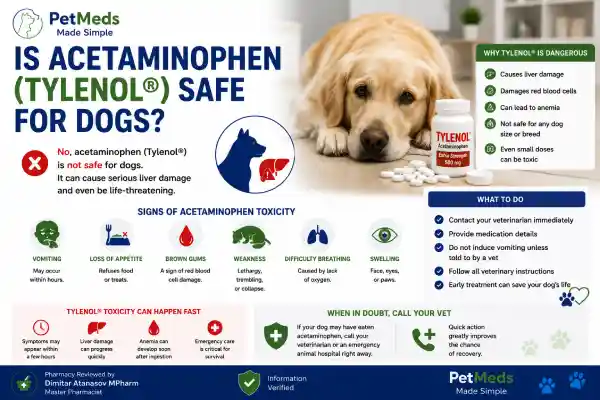
Generally, no.
Acetaminophen (Tylenol®) can damage:
- The liver
- Red blood cells
Affected dogs may develop:
- Weakness
- Difficulty breathing
- Facial swelling
- Brown gums
- Collapse
Related PMMS guide:
What About Aspirin?
Aspirin is different.
Veterinarians occasionally prescribe aspirin for specific conditions.
However:
- The dose differs from human recommendations.
- Not every dog can safely receive aspirin.
- Aspirin should never replace veterinary pain management.
Never start aspirin without veterinary approval.
Can Prescription Human Pain Medications Be Dangerous?
Absolutely.
Many prescription medications are extremely dangerous for dogs.
Examples include:
- Opioids
- Combination pain medications
- Extended-release tablets
- Strong anti-inflammatory drugs
These medications require immediate veterinary guidance.
Why Is the Correct Dose So Important?
Dogs vary enormously in size.
A dose appropriate for a 70-kg adult human could be toxic to:
- A Chihuahua
- A Yorkshire Terrier
- A Toy Poodle
Even larger dogs can become seriously ill if the wrong medication or dose is used.
Could One Pill Cause Poisoning?
Yes.
For some medications, a single tablet is enough to cause severe poisoning in a small dog.
Risk depends on:
- Medication type
- Tablet strength
- Dog’s body weight
- Overall health
Never assume “just one pill” is safe.
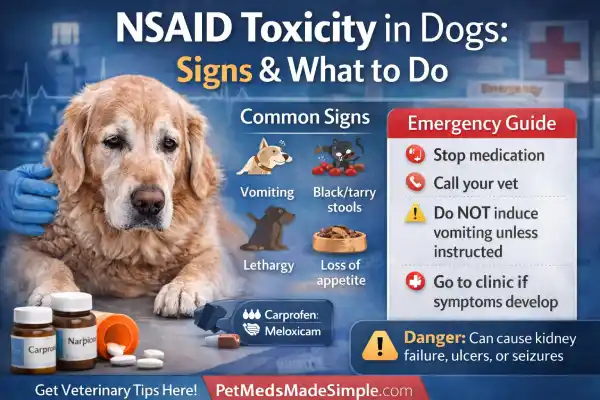
What Happens If a Dog Accidentally Eats Human Painkillers?
Possible symptoms include:
- Vomiting
- Loss of appetite
- Lethargy
- Weakness
- Bloody vomit
- Bloody diarrhea
- Tremors
- Seizures
- Collapse
Some signs appear within hours, while kidney or liver injury may develop more gradually.
Which Dogs Are Most at Risk?
Higher-risk dogs include:
- Puppies
- Senior dogs
- Dogs with kidney disease
- Dogs with liver disease
- Small breeds
- Dogs taking several medications
These dogs may develop severe complications more quickly.
Related Symptoms Owners Often Search For
Owners researching human painkillers also commonly search:
- Can Dogs Take Tylenol?
- Can Dogs Take Ibuprofen Accidentally?
- Can NSAIDs Cause Kidney Problems in Dogs?
- Can NSAIDs Cause Liver Damage in Dogs?
- Why Is My Dog Suddenly Worse After Medication?
- Why Is My Dog Weak After Pain Medication?
- Why Is My Dog Breathing Hard After Medication?
- Can Dogs Take Pain Medication Long-Term?
- Why Does Pain Medication Stop Working?
- What Happens If Dogs Overdose on Pain Medication?
What Should Owners Do If Their Dog Eats a Human Painkiller?

If you believe your dog has swallowed a human pain medication, act immediately.
Do not wait for symptoms to appear.
Follow These Steps
- Remove any remaining tablets.
- Check the medication name and strength.
- Estimate how many tablets may have been swallowed.
- Contact your veterinarian or an emergency veterinary hospital immediately.
- Follow their instructions carefully.
Early treatment often prevents serious complications.
Should Owners Make Their Dog Vomit?
Not always.
Although inducing vomiting may sometimes be appropriate, it is not safe in every situation.
Vomiting should only be induced if recommended by a veterinarian because:
- Some medications increase the risk of aspiration.
- Dogs showing neurological signs may choke.
- Certain extended-release medications require different treatment.
Always seek professional advice first.
How Do Veterinarians Treat Human Painkiller Poisoning?
Treatment depends on:
- The medication involved
- The amount swallowed
- How recently exposure occurred
- Your dog’s symptoms
Treatment May Include
| Treatment | Purpose |
|---|---|
| Induced vomiting | Remove medication before absorption |
| Activated charcoal | Reduce further absorption |
| Intravenous fluids | Protect the kidneys and maintain hydration |
| Blood tests | Monitor liver and kidney function |
| Gastroprotectants | Help prevent stomach ulcers |
| Oxygen therapy | Support dogs with breathing problems |
| Hospitalization | Continuous monitoring and supportive care |
Prompt treatment greatly improves the prognosis.
Could Blood Tests Be Necessary?
Yes.
Laboratory testing is often essential after ingestion of human pain medications.
Your veterinarian may evaluate:
- Kidney function
- Liver enzymes
- Red blood cell health
- Electrolytes
- Hydration status
- Blood clotting (when indicated)
Some abnormalities develop hours after exposure, making follow-up testing important.
Can Dogs Recover From Human Painkiller Poisoning?
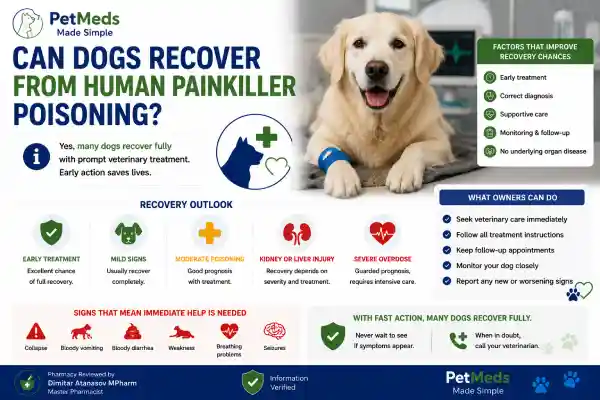
Fortunately, many dogs recover completely when treatment begins early.
Prognosis
| Situation | Outlook |
|---|---|
| Early treatment | Excellent |
| Mild stomach irritation | Excellent |
| Moderate poisoning | Good |
| Kidney injury | Variable |
| Liver injury | Variable |
| Severe overdose | Guarded |
The sooner veterinary care begins, the better the chance of a full recovery.
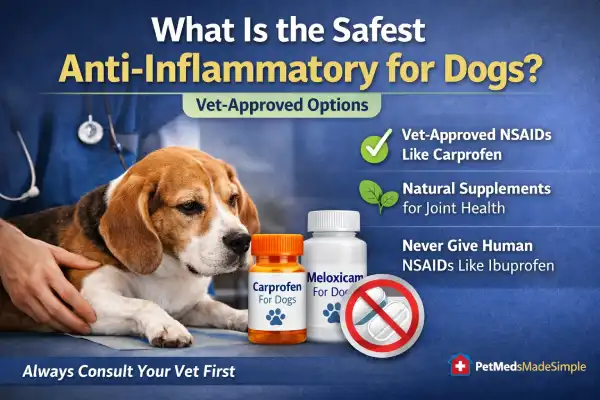
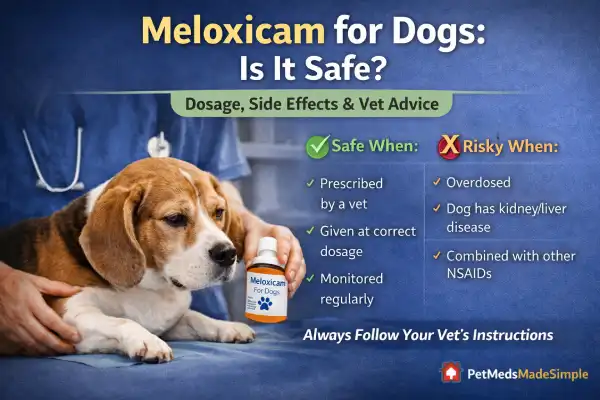
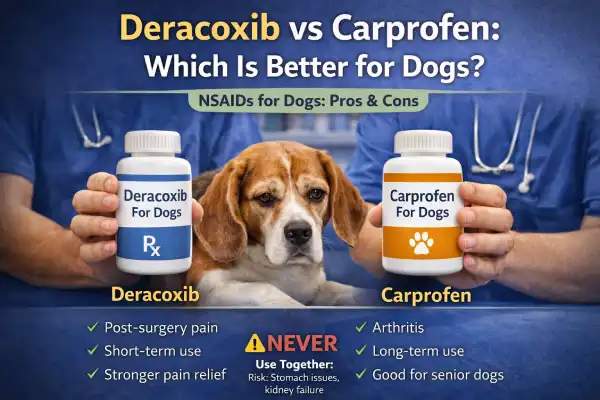
Are Some Pain Medications Safer Than Others?
Yes.
Veterinarians prescribe medications that have been specifically studied for use in dogs.
Examples include:
- Carprofen
- Meloxicam
- Firocoxib
- Deracoxib
- Grapiprant
These medications are still not risk-free, but they are considerably safer than giving human painkillers without guidance.
Can Owners Use Natural Pain Remedies Instead?
Some supplements and supportive therapies may help certain dogs.
Examples include:
- Weight management
- Physical rehabilitation
- Omega-3 fatty acids
- Joint-support supplements
- Veterinary-approved rehabilitation exercises
However, natural products should never replace veterinary treatment for severe pain.
What Should Owners Monitor After Accidental Exposure?
Even if your dog initially appears normal, continue watching closely.
Monitor For
| Symptom | Monitor? |
|---|---|
| Vomiting | Yes |
| Appetite | Yes |
| Energy level | Yes |
| Drinking | Yes |
| Urination | Yes |
| Bloody stool | Yes |
| Weakness | Yes |
| Breathing changes | Yes |
Some toxic effects may not become obvious until several hours later.
When Should Owners Contact Their Veterinarian?
Immediately if:
- Any human painkiller was swallowed
- You are unsure which medication was involved
- Your dog develops vomiting
- Bloody diarrhea occurs
- Weakness develops
- Your dog refuses food
- Your dog seems confused or sleepy
It is always safer to call, even if you believe only a small amount was consumed.
What Symptoms Require Emergency Care?
Seek emergency veterinary treatment immediately if your dog develops:
Emergency Signs
| Symptom | Emergency? |
|---|---|
| Collapse | Yes |
| Difficulty breathing | Yes |
| Seizures | Yes |
| Bloody vomiting | Yes |
| Black or bloody stools | Yes |
| Severe weakness | Yes |
| Unresponsiveness | Yes |
These symptoms may indicate life-threatening poisoning.
Bottom Line
Can dogs take human painkillers safely? In most cases, no. Many human pain medications—including ibuprofen, naproxen, diclofenac, and acetaminophen (Tylenol®)—can cause severe poisoning in dogs, even at relatively small doses. Dogs process these medications differently than people, making accidental exposure potentially life-threatening. If your dog receives any human painkiller without veterinary instruction, contact your veterinarian immediately rather than waiting for symptoms to appear.
Veterinarian Takeaway
Human pain medications should never be considered safe alternatives to veterinary pain relief. While a few medications may occasionally be prescribed under specific circumstances, the correct drug and dose must always be determined by a veterinarian. Rapid action after accidental exposure can dramatically improve the likelihood of a full recovery.
Frequently Asked Questions – Can Dogs Take Human Painkillers Safely
Can dogs take human painkillers safely?
Generally, no. Most human pain medications can be dangerous or even fatal for dogs if given without veterinary supervision.
Is ibuprofen safe for dogs?
No. Ibuprofen is one of the most common causes of medication poisoning in dogs.
Is Tylenol safe for dogs?
No. Acetaminophen (Tylenol®) can cause serious liver injury and damage to red blood cells.
What if my dog swallowed one painkiller tablet?
Contact your veterinarian immediately. Even a single tablet can be dangerous, especially for small dogs.
Should I wait for symptoms before calling my veterinarian?
No. Early treatment is much more effective than waiting for symptoms to develop.
Can dogs recover from painkiller poisoning?
Yes. Many dogs recover completely when treated promptly.
Will my dog need blood tests?
Often, yes. Blood work helps detect liver or kidney injury and guides treatment.
Are veterinary NSAIDs safer?
Yes. Veterinary NSAIDs are specifically formulated and dosed for dogs but still require monitoring.
Can I use aspirin instead?
Only if your veterinarian specifically recommends it. Aspirin is not appropriate for every dog.
When is accidental ingestion an emergency?
Collapse, seizures, bloody vomiting, black stools, difficulty breathing, severe weakness, or unresponsiveness require immediate emergency veterinary care.
Reviewed By
Dimitar Atanasov, MPharm
Master Pharmacist | Medication Safety Educator
Dr. Valcho, DVM
Veterinary Consultant | 30+ Years of Clinical Experience
Editorial Policy
This article follows the PetMedsMadeSimple editorial standards for evidence-based veterinary medication education, medication safety, and responsible pet-owner guidance.
Sources
- Plumb’s Veterinary Drug Handbook, 10th Edition.
- Merck Veterinary Manual – Toxicity Associated with Human NSAIDs and Analgesics in Dogs.
- American Animal Hospital Association (AAHA) Pain Management Guidelines for Dogs and Cats.
- American Veterinary Medical Association (AVMA) Client Education Resources.
- Veterinary Pharmacology and Therapeutics, 11th Edition.
- Small Animal Clinical Pharmacology and Therapeutics.
- Veterinary Information Network (VIN).
- Journal of Veterinary Emergency and Critical Care.
- Frontiers in Veterinary Science.
- JAVMA – Companion Animal Toxicology and Pain Management Literature.
Medical Review Statement
This article was pharmacy-reviewed by Dimitar Atanasov, MPharm, and veterinary-reviewed by Dr. Valcho, DVM, using current veterinary pharmacology references, toxicology guidelines, canine pain-management recommendations, and published veterinary literature available at the time of review.
images created with AI – Can Dogs Take Human Painkillers Safely