Quick Answer
Why is my dog not improving on pain medication? A dog may not improve on pain medication because the pain is too severe, the diagnosis is incomplete, the medication dose or schedule is not ideal, the condition is worsening, or another problem such as infection, nerve pain, arthritis, spinal disease, or organ illness is present. Pain medication can reduce discomfort, but it does not always fix the underlying cause. If your dog is still limping, crying, weak, restless, refusing food, or getting worse, your veterinarian should reassess the treatment plan.
When Owners Commonly Ask This Question
Pain medication is usually prescribed because a dog is uncomfortable.
Owners often expect to see clear improvement within a few hours or days.
But sometimes the dog still seems:
- Limping
- Crying
- Panting
- Restless
- Weak
- Unable to sleep
- Reluctant to walk
- Sensitive to touch
- Worse instead of better
This can be very frustrating and scary.
Many owners ask:
“Why is my dog not improving on pain medication if the medicine is supposed to help?”
The answer is not always simple. Pain medication may be helping partially, but the underlying problem may still be active.
Can Pain Medication Fail to Work in Dogs?
Yes.
Pain medication can sometimes seem ineffective.
This does not always mean the drug is “bad” or that the veterinarian made the wrong choice.
It may mean:
- The pain source is more serious than expected.
- The condition needs more time.
- A different type of pain is present.
- Additional treatment is needed.
- The dog needs rechecking.
- The medication is not enough by itself.
Pain control in dogs often requires a complete plan, not just one tablet.
Why Is My Dog Not Improving on Pain Medication?
Is the Pain Medication Treating the Right Type of Pain?
This is one of the most important questions.
Different pain types may respond differently to medication.
Common Pain Types in Dogs
| Pain Type | Examples | Medication Response |
|---|---|---|
| Inflammatory pain | Arthritis, soft tissue injury | Often responds to NSAIDs |
| Nerve pain | Disc disease, spinal pain | May need gabapentin or similar drugs |
| Surgical pain | Postoperative pain | May need multimodal treatment |
| Cancer pain | Tumors, bone pain | Often needs stronger planning |
| Infection-related pain | Abscess, dental disease | Needs treatment of infection |
If the pain medication does not match the pain type, improvement may be limited.
Could the Diagnosis Be Incomplete?
Yes.
Sometimes the first visible symptom is only part of the problem.
For example, a dog that appears to have a simple limp may actually have:
- Cruciate ligament injury
- Hip arthritis
- Spinal pain
- Nerve compression
- Bone infection
- Paw injury
- Cancer-related pain
Pain medication may reduce discomfort slightly but not resolve the main problem.
Related PMMS guides:
- Why Is My Dog Still Limping After Medication?
- Why Is My Dog Suddenly Worse After Medication?
- Why Is My Dog in Pain? Signs, Causes & When to Go to the Vet
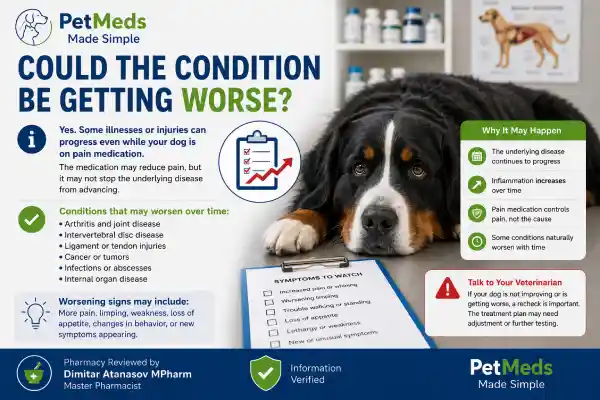
Could the Condition Be Getting Worse?
Yes.
Sometimes the medication is working, but the disease is progressing faster than the medication can control.
This may happen with:
- Severe arthritis flare-ups
- Disc disease
- Joint injuries
- Fractures
- Internal inflammation
- Infection
- Cancer
- Neurological disease
A dog that is worsening despite pain medication needs veterinary reassessment.
Could the Dose or Schedule Need Adjustment?
Possibly.
Some dogs need individualized dosing plans.
A medication may seem ineffective if:
- The dose is too low
- Doses are spaced too far apart
- The dog misses doses
- The medication wears off too quickly
- The dog vomits after receiving it
- The dog refuses part of the dose
However, owners should never increase the dose on their own.
Changing pain medication without veterinary guidance can be dangerous.
Could the Medication Need More Time?
Sometimes.
Not every pain medication produces dramatic improvement immediately.
Some dogs improve gradually over several days, especially with:
- Chronic arthritis
- Soft tissue injuries
- Recovery after surgery
- Inflammatory conditions
- Long-term pain syndromes
General Timeline
| Situation | Improvement May Take |
|---|---|
| Mild injury | 24–72 hours |
| Arthritis flare | Several days |
| Postoperative pain | Gradual improvement |
| Nerve pain | Variable |
| Severe orthopedic disease | May need further treatment |
If your dog shows no improvement at all, or symptoms worsen, contact your veterinarian.
Could Nerve Pain Be Involved?
Yes.
Nerve pain can be difficult to recognize.
It may appear as:
- Sudden crying
- Sensitivity to touch
- Weak back legs
- Wobbliness
- Reluctance to move
- Pain that seems disproportionate
- Pain that comes and goes
NSAIDs may not fully control nerve pain.
Some dogs need medications such as gabapentin as part of a broader veterinary pain plan.
Related PMMS guides:
- Can Gabapentin Cause Weak Back Legs?
- Why Is My Dog Still in Pain on Gabapentin?
- Can Dogs Take Gabapentin and NSAIDs Together?
Could Arthritis Be More Advanced Than Expected?
Absolutely.
Arthritis is one of the most common reasons dogs receive pain medication.
But advanced arthritis often requires more than one approach.
A dog with arthritis may need:
- Weight management
- Controlled exercise
- Joint support
- Physical therapy
- Environmental changes
- Medication monitoring
- Periodic treatment adjustments
Pain medication may help, but it may not make an older dog move like a young dog again.
Could the Dog Be Reinjuring the Area?
Yes.
Some dogs feel slightly better and then become too active too soon.
This can lead to:
- New limping
- Worse inflammation
- Delayed healing
- Muscle strain
- Repeated flare-ups
Rest and activity restriction are often just as important as medication.
If your veterinarian recommended limited exercise, leash walks, crate rest, or restricted jumping, those instructions matter.
Could the Pain Medication Be Wearing Off Too Soon?
Possibly.
Some owners notice their dog improves after a dose but worsens before the next dose is due.
This may suggest:
- The medication effect is not lasting long enough
- The pain is severe
- The dosing schedule needs reassessment
- Another medication may be needed
- The diagnosis needs review
Do not shorten the dosing interval unless your veterinarian specifically instructs you.
Could Side Effects Make the Dog Look Worse?
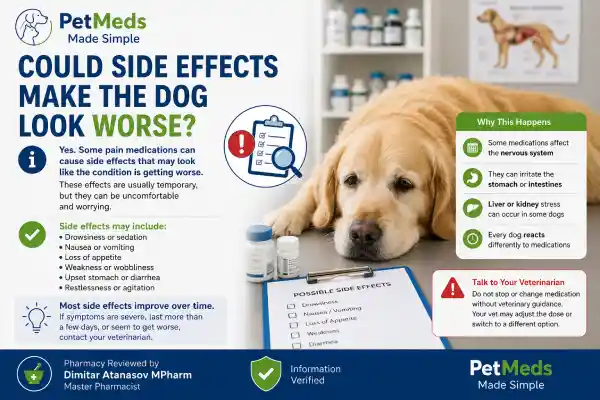
Yes.
Sometimes a dog is improving in pain but looks worse because of medication side effects.
Possible side effects may include:
- Sleepiness
- Weakness
- Wobbliness
- Reduced appetite
- Vomiting
- Diarrhea
- Confusion
- Restlessness
Owners may interpret these signs as “Why Is My Dog Not Improving on Pain Medication.”
Related PMMS guides:
- Why Is My Dog Weak After Pain Medication?
- Why Does My Dog Sleep All Day After Pain Medication?
- Can Pain Medication Cause Depression in Dogs?
- Why Is My Dog Breathing Hard After Medication?
Could Another Illness Be Affecting Recovery?
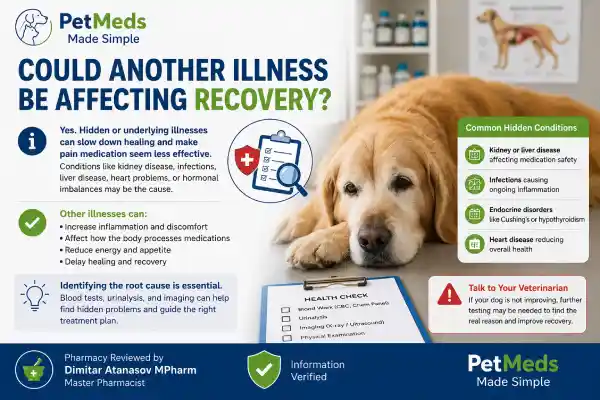
Yes.
Dogs with other health problems may recover more slowly.
Examples include:
- Kidney disease
- Liver disease
- Heart disease
- Diabetes
- Infection
- Dehydration
- Cancer
- Neurological disease
These conditions can make pain harder to control and may also affect which medications are safe.
Are Senior Dogs More Difficult to Treat?
Often, yes.
Senior dogs commonly have more than one problem at the same time.
For example, an older dog may have:
- Arthritis
- Kidney changes
- Muscle loss
- Dental disease
- Heart disease
- Reduced mobility
- Medication sensitivity
This makes pain management more complicated.
A senior dog may need careful blood work, medication adjustments, and follow-up visits.
Related Symptoms Owners Often Search For
Owners researching why their dog is not improving on pain medication also commonly search:
- Why Is My Dog Still Limping After Medication?
- Why Is My Dog Crying Even After Pain Medication?
- Why Is My Dog Weak After Pain Medication?
- Why Is My Dog Suddenly Worse After Medication?
- Why Is My Dog Breathing Hard After Medication?
- Why Does My Dog Sleep All Day After Pain Medication?
- Can Pain Medication Cause Depression in Dogs?
- Can Pain Medication Cause Aggression in Dogs?
- Can Dogs Take Pain Medication Long-Term?
- Why Does Pain Medication Stop Working?
When Should Owners Contact Their Veterinarian?
Some dogs simply need more time to recover, but others require immediate reassessment.
If your dog is not improving on pain medication, contact your veterinarian if:
- Shows no improvement after several days of treatment
- Appears to be getting more painful
- Refuses to walk or bear weight
- Develops severe weakness
- Begins vomiting or has persistent diarrhea
- Stops eating for more than 24 hours
- Has difficulty breathing
- Cries continuously despite medication
- Collapses or becomes unresponsive
A lack of improvement should never be ignored, especially if symptoms are worsening.
How Do Veterinarians Evaluate Dogs That Are Not Improving?
Why Is My Dog Not Improving on Pain Medication? When a dog does not respond to pain medication, veterinarians often reassess the entire case rather than simply changing medications.
Evaluation may include:
- A complete physical examination
- Orthopedic examination
- Neurological assessment
- Pain localization
- Blood tests
- X-rays
- Ultrasound or advanced imaging when indicated
- Review of all current medications
- Assessment of hydration and body condition
Sometimes the original diagnosis changes after additional testing.
Could Blood Tests Help?
Yes.
Blood work is especially important in dogs that:
- Are taking NSAIDs long-term
- Are senior dogs
- Have kidney disease
- Have liver disease
- Show vomiting or poor appetite
- Need medication adjustments
Routine blood testing helps veterinarians monitor organ function and determine whether treatment remains safe.
Should Owners Give the Next Dose?
Usually, yes—but only as prescribed.
Do not:
- Double the dose
- Give medication earlier than instructed
- Combine pain medications without veterinary advice
- Add human painkillers
If your dog appears worse after medication, contact your veterinarian before making any changes.
Can Multiple Treatments Work Better Than One?
Often, yes.
Veterinarians frequently use a multimodal pain management approach.
Depending on the condition, treatment may include:
- NSAIDs
- Gabapentin
- Physical rehabilitation
- Weight management
- Joint supplements
- Laser therapy
- Controlled exercise
- Environmental modifications
- Surgery when necessary
Combining appropriate therapies often provides better pain control than relying on a single medication.
Emergency Warning Signs
Seek emergency veterinary care immediately if your dog develops:
- Difficulty breathing
- Collapse
- Seizures
- Pale or white gums
- Severe weakness
- Continuous vomiting
- Bloody diarrhea
- Inability to stand
- Severe abdominal swelling
- Loss of consciousness
These signs may indicate a serious medical emergency rather than uncontrolled pain alone.Why Is My Dog Not Improving on Pain Medication
Veterinarian Takeaway
Pain medication is only one part of treating pain.
If your dog is not improving, it does not always mean the medication has failed. It may mean the diagnosis needs to be revisited, the pain is more complex than expected, or additional treatments are needed. If your dog is not improving on pain medication, avoid increasing the dose on your own.
The most important step is to keep your veterinarian informed about any lack of improvement or worsening symptoms rather than adjusting medications at home. Why Is My Dog Not Improving on Pain Medication
Bottom Line
Why is my dog not improving on pain medication? The answer depends on the underlying condition, do not assume that more medication is the answer. Persistent pain, worsening symptoms, or new clinical signs often indicate that your dog needs a veterinary recheck.
Early reassessment can identify complications, confirm the diagnosis, and help your veterinarian develop a more effective pain management plan while keeping your dog safe.Why Is My Dog Not Improving on Pain Medication
Frequently Asked Questions – Why Is My Dog Not Improving on Pain Medication
How long should pain medication take to work in dogs?
It depends on the medication and the underlying condition. Some dogs improve within hours, while chronic conditions may take several days before noticeable improvement occurs.
Why is my dog still limping after taking pain medication?
Pain medication can reduce discomfort but does not repair injured bones, ligaments, joints, or nerves. Persistent limping should be evaluated by a veterinarian.
Can I give an extra dose if my dog still seems painful?
No. Never increase the dose or frequency without veterinary guidance.
Could my dog need a different pain medication?
Yes. Some dogs respond better to a different medication or a combination of therapies depending on the type of pain.
Can arthritis pain become resistant to medication?
Arthritis often progresses over time, meaning treatment plans may need adjustment even if a medication previously worked well.
Why does my dog seem worse after taking pain medication?
This may be due to medication side effects, disease progression, dehydration, or another underlying condition that requires veterinary assessment.
Is nerve pain harder to control?
Yes. Neuropathic pain often requires medications such as gabapentin in addition to traditional anti-inflammatory drugs.
Can pain medication hide a serious problem?
Yes. Medication may temporarily reduce discomfort while the underlying disease continues to worsen.
When should I seek emergency care?
Seek immediate veterinary attention if your dog has difficulty breathing, collapses, experiences seizures, becomes unresponsive, or develops severe vomiting or weakness.
Why Is My Dog Not Improving on Pain Medication ?
Many dogs do improve after the treatment plan is adjusted. Early veterinary reassessment offers the best chance of identifying the cause and improving your dog’s comfort.
Sources
- Plumb’s Veterinary Drug Handbook
- Merck Veterinary Manual
- Veterinary Pharmacology and Therapeutics
- Small Animal Clinical Pharmacology
- American Animal Hospital Association (AAHA)
- American Veterinary Medical Association (AVMA)
- Veterinary Information Network (VIN)
- Frontiers in Veterinary Science
- JAVMA
- Veterinary Anaesthesia and Analgesia
Medical Review Statement
This article was written and pharmacy-reviewed by Dimitar Georgiev Atanasov, MPharm (Bulgarian Pharmaceutical Union, UIN: 0210000586) and independently veterinary-reviewed by Dr. Valcho Georgiev Valchev, DVM (Bulgarian Veterinary Union, Registration No. 28000115) to ensure medical accuracy, medication safety, and consistency with current veterinary standards.
Important Medical Disclaimer
PetMedsMadeSimple.com provides educational information only and does not replace professional veterinary advice, diagnosis, or treatment.
The information in this article has been written by Dimitar Georgiev Atanasov, MPharm (UIN: 0210000586) and independently veterinary-reviewed by Dr. Valcho Georgiev Valchev, DVM (Bulgarian Veterinary Union Registration No. 28000115) to help pet owners better understand veterinary medications and medication-related safety concerns.
Every dog is unique, and treatment decisions should always be made by a licensed veterinarian who has examined your pet.
Never start, stop, increase, decrease, or combine medications without veterinary guidance.
If your dog develops severe pain, collapse, seizures, difficulty breathing, persistent vomiting, pale gums, loss of consciousness, or any other emergency symptoms, seek immediate veterinary care.
For more information about how we create and review our content, please read our Editorial Policy, Medical Review Process, and About Us pages.
Images created with AI – Why Is My Dog Not Improving on Pain Medication