Quick Answer
Why is my dog still having seizures on medication? Dogs may continue having seizures despite medication for several reasons. The medication may not have reached an effective blood level yet, the dose may need adjustment, doses may have been missed, or the underlying epilepsy may be difficult to control. Some dogs experience breakthrough seizures even while receiving appropriate treatment. Persistent seizures should always be discussed with your veterinarian because additional testing, blood monitoring, medication adjustments, or combination therapy may be needed.
When Owners Commonly Ask This Question
Many owners begin searching “Why Is My Dog Still Having Seizures on Medication?” after one of these situations:
- “My dog had another seizure after starting phenobarbital.”
- “Keppra doesn’t seem to be working.”
- “My dog had a seizure even though I never missed a dose.”
- “The medication worked for months but now the seizures are back.”
- “Should I increase the medication?”
- “Does this mean my dog is getting worse?”
Watching your dog experience another seizure after starting treatment is understandably frightening.
However, one seizure does not automatically mean the medication has failed.
Many dogs require treatment adjustments before optimal seizure control is achieved.
Could a Missed Dose Cause Another Seizure?
Can Dogs Still Have Seizures While Taking Medication?

Yes.
One of the biggest misconceptions is that seizure medication should eliminate every seizure immediately.
Unfortunately, epilepsy rarely works that way.
Even dogs receiving excellent veterinary care may occasionally experience:
- Breakthrough seizures
- Cluster seizures
- Seizures triggered by illness
- Seizures triggered by stress
- Medication adjustments
- Disease progression
The goal of treatment is usually to:
- Reduce seizure frequency
- Reduce seizure severity
- Shorten seizure duration
- Improve quality of life
- Minimize medication side effects
Complete seizure elimination is possible for some dogs, but not every patient achieves total seizure freedom.
What Are Breakthrough Seizures?
A breakthrough seizure is a seizure that occurs despite ongoing treatment with anti-seizure medication.
This is one of the most common reasons owners search Why Is My Dog Still Having Seizures on Medication?
Breakthrough seizures do not always indicate treatment failure.
Instead, they may suggest that:
- Medication levels are changing.
- The dose requires adjustment.
- Another illness is affecting seizure control.
- Additional medication may be necessary.
- The epilepsy has become more difficult to manage.
Many dogs continue to live happy lives despite occasional breakthrough seizures when their treatment plan is carefully monitored.
Does Seizure Medication Work Immediately?
Not always.
Different seizure medications begin working at different speeds.
Some medications act within hours, while others require days or even weeks before reaching stable therapeutic levels.
| Medication | Time to Reach Stable Effect |
|---|---|
| Levetiracetam (Keppra) | Often within hours |
| Phenobarbital | Several days to approximately two weeks |
| Potassium Bromide | Several weeks to months without a loading dose |
| Zonisamide | Usually several days |
Because of these differences, veterinarians often explain that early seizures do not necessarily mean treatment has failed.
For more detailed information about individual medications, see our PMMS guides:
- Phenobarbital for Dogs: Uses, Dosage, Side Effects & Safety
- Levetiracetam (Keppra) for Dogs
- Potassium Bromide for Dogs
- Zonisamide for Dogs
Could the Medication Dose Be Too Low?
Yes.
Finding the correct seizure medication dose is rarely a one-size-fits-all process.
Several factors influence dosing, including:
- Body weight
- Age
- Liver function
- Kidney function
- Other medications
- Individual metabolism
- Type of epilepsy
Some dogs metabolize medications much faster than others.
A dose that works perfectly for one dog may not provide adequate seizure control for another.
This is why veterinarians frequently adjust seizure medications after evaluating the dog’s response.
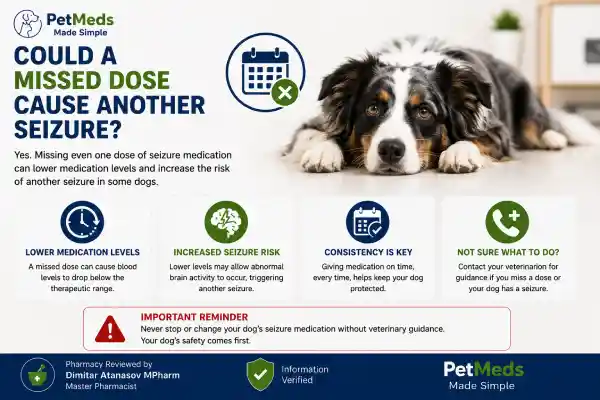
Could a Missed Dose Cause Another Seizure?
Absolutely.
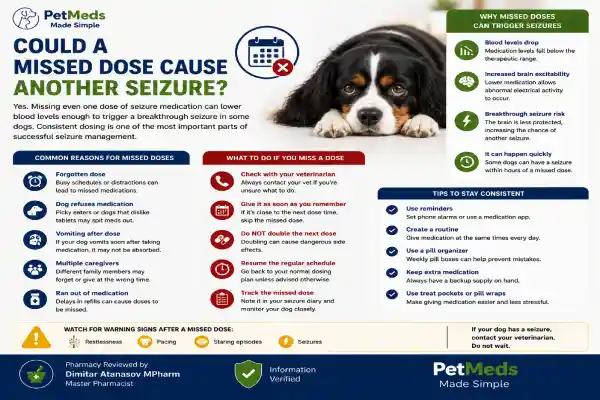
Missing even one dose can reduce medication levels enough for seizures to occur in some dogs.
Common reasons include:
- Forgotten doses
- Vomiting shortly after medication
- Dogs refusing tablets
- Incorrect dosing schedules
- Running out of medication
- Administration errors by multiple family members
For medications like phenobarbital and levetiracetam, maintaining consistent dosing is one of the most important parts of successful seizure management.
If your dog misses a dose, never double the next dose unless specifically instructed by your veterinarian.
Do Dogs Sometimes Need More Than One Seizure Medication?
Yes.
Many dogs eventually benefit from combination therapy.
Your veterinarian may combine medications when one drug alone no longer provides adequate seizure control.
Examples include:
- Phenobarbital + Keppra
- Phenobarbital + Potassium Bromide
- Keppra + Zonisamide
- Triple-drug therapy in difficult cases
Each medication works through different mechanisms within the brain.
Using lower doses of multiple medications sometimes provides better seizure control while reducing side effects compared with dramatically increasing one medication alone.
Could Blood Levels Be Too Low?
Yes.
This is especially important for medications such as:
- Phenobarbital
- Potassium Bromide
Veterinarians commonly perform therapeutic drug monitoring to determine whether medication concentrations remain within the recommended treatment range.
Blood testing helps answer important questions such as:
- Is the medication being absorbed properly?
- Is the current dose high enough?
- Has the body started clearing the medication more quickly?
- Would increasing the dose be beneficial?
This is one reason regular monitoring visits are an essential part of long-term epilepsy management.
Can Another Illness Trigger Seizures?
Definitely.
Not every seizure occurring during treatment is caused by epilepsy alone.
Veterinarians also consider conditions such as:
- Liver disease
- Kidney disease
- Low blood sugar
- Electrolyte imbalances
- Brain inflammation
- Brain tumors
- Head trauma
- High blood pressure
- Toxicity
- Infectious diseases
If a dog that has been well controlled suddenly begins having frequent seizures again, your veterinarian may recommend additional diagnostic testing rather than immediately changing medications.
Could the Epilepsy Be Progressing?
Sometimes.
Idiopathic epilepsy can change over time.
Although many dogs remain stable for years, others gradually develop:
- More frequent seizures
- Longer seizures
- Cluster seizures
- Reduced response to medication
This progression does not necessarily mean treatment has failed.
Instead, it often means the treatment plan needs to evolve alongside the disease.
Regular rechecks help veterinarians recognize these changes before they become emergencies.
Common Signs That Medication May Need Adjustment
Owners should monitor for changes such as:
| Sign | Possible Meaning |
|---|---|
| More frequent seizures | Medication may need adjustment |
| Longer seizure duration | Veterinary reassessment recommended |
| Cluster seizures | Requires prompt veterinary attention |
| Increased recovery time | Medication or disease progression |
| New neurological signs | Further diagnostics may be needed |
| More severe post-seizure confusion | Discuss with your veterinarian |
Careful record-keeping often provides valuable information during follow-up appointments.
Should Owners Keep a Seizure Diary?
Absolutely.
A seizure diary is one of the most valuable tools for managing epilepsy.
Record:
- Date
- Time
- Seizure duration
- Medication times
- Missed doses
- Appetite
- Activity level
- Recovery time
- Possible triggers
This information helps your veterinarian identify patterns that may not otherwise be obvious.
Can Dogs Become Resistant to Seizure Medication?
This is one of the most common concerns owners have after asking “Why Is My Dog Still Having Seizures on Medication?”
The answer is sometimes but not in the way many people think.
Unlike bacteria becoming resistant to antibiotics, dogs do not usually become “immune” to seizure medications.
Instead, veterinarians may observe:
- Changes in how the body metabolizes medication
- Progression of the underlying epilepsy
- Development of more severe seizure patterns
- Reduced effectiveness of the current treatment plan
Some dogs eventually require:
- Higher doses
- Additional medications
- More frequent monitoring
- Referral to a veterinary neurologist
This is why long-term epilepsy management often changes over time.
What Is Drug-Resistant Epilepsy?
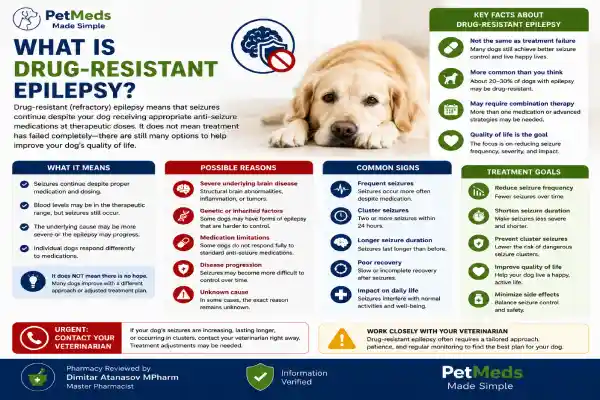
Some dogs have drug-resistant (refractory) epilepsy.
This means seizures continue despite receiving appropriate anti-seizure medications at therapeutic doses.
Drug-resistant epilepsy does not mean treatment has failed completely.
Instead, treatment goals often shift toward:
- Reducing seizure frequency
- Shortening seizure duration
- Preventing cluster seizures
- Improving quality of life
- Minimizing medication side effects
Many dogs with refractory epilepsy still enjoy an excellent quality of life with individualized treatment plans.
Could Stress Trigger Seizures Even While on Medication?
Yes.
Medication reduces seizure risk, but it cannot eliminate every possible trigger.
Stressful situations that may contribute include:
- Boarding
- Veterinary visits
- Loud fireworks
- Thunderstorms
- Major household changes
- Traveling
- Illness
- Pain
- Sleep disruption
Some dogs are much more sensitive to these triggers than others.
Reducing unnecessary stress is an important part of seizure management.
Can Illness Reduce Seizure Control?
Absolutely.
Dogs experiencing another illness may suddenly have more seizures even though their medication has not changed.
Examples include:
- Fever
- Severe infections
- Liver disease
- Kidney disease
- Pancreatitis
- Diabetes
- Electrolyte abnormalities
- Hormonal disorders
For this reason, veterinarians often investigate the entire patient rather than focusing only on the seizure medication.
Could Medication Interactions Affect Seizure Control?
Yes.
Some medications may alter how anti-seizure drugs are absorbed or metabolized.
Potential interactions may occur with:
- Certain antibiotics
- Antifungal medications
- Corticosteroids
- Sedatives
- Pain medications
- Herbal supplements
- CBD products
Never begin a new medication without informing your veterinarian about every prescription, supplement, and over-the-counter product your dog receives.
You may also find these PMMS articles helpful:
Understanding medication interactions helps prevent avoidable seizure breakthroughs.
Can Liver or Kidney Disease Affect Medication Levels?
Yes.
Many anti-seizure medications depend on healthy liver or kidney function.
Changes in these organs may:
- Increase medication levels
- Reduce medication clearance
- Increase side effects
- Reduce seizure control
- Require dosage adjustments
This is one reason routine blood testing is recommended for dogs receiving long-term seizure medication.
How Often Should Blood Levels Be Checked?
Monitoring schedules vary depending on the medication and the individual dog.
A typical plan may include:
| Medication | Typical Monitoring |
|---|---|
| Phenobarbital | Initial level after reaching steady state, then periodically |
| Potassium Bromide | Regular therapeutic monitoring |
| Levetiracetam | Blood monitoring less commonly required |
| Zonisamide | Monitoring when clinically indicated |
Your veterinarian may recommend more frequent testing if:
- Seizures increase
- Side effects develop
- Another medication is added
- Liver or kidney disease is suspected
What If Blood Levels Are Normal?
Normal blood levels do not always guarantee complete seizure control.
Some dogs continue having seizures despite therapeutic medication concentrations.
Possible explanations include:
- Drug-resistant epilepsy
- Disease progression
- New neurological disease
- Brain tumors
- Metabolic disorders
- Individual variation
This is why treatment decisions are based on both blood test results and your dog’s clinical signs.
Could Cluster Seizures Mean the Medication Needs Adjustment?
Yes.
Cluster seizures are defined as two or more seizures occurring within approximately 24 hours.
They increase the risk of complications and often indicate that the current treatment plan should be reviewed.
Owners should never assume cluster seizures are “normal.”
Instead, contact your veterinarian promptly.
Dogs experiencing repeated cluster seizures may require:
- Emergency treatment
- Hospitalization
- Rescue medications
- Long-term medication adjustments
What Is Status Epilepticus?

Status epilepticus is a life-threatening emergency.
It generally refers to:
- A seizure lasting longer than about five minutes, or
- Multiple seizures without full recovery between episodes.
Without rapid treatment, prolonged seizures can cause:
- Brain injury
- Dangerous increases in body temperature
- Organ damage
- Death
Every owner of a dog with epilepsy should know how to recognize this emergency.
What Should Owners Do During a Seizure?
Stay as calm as possible.
Your priorities should be:
- Move dangerous objects away.
- Keep your dog away from stairs.
- Dim bright lights if possible.
- Reduce loud noises.
- Do not place your hands inside your dog’s mouth.
- Time the seizure.
- Record a video if it is safe to do so.
- Contact your veterinarian afterward if advised.
Many owners instinctively try to hold their dog still, but this is unnecessary and may increase the risk of injury.
Should Owners Ever Increase the Medication Themselves?
No.
Owners should never increase seizure medication without veterinary guidance.
Increasing doses without appropriate monitoring may lead to:
- Excessive sedation
- Liver injury
- Poor coordination
- Weakness
- Serious adverse effects
Instead, your veterinarian may recommend:
- Blood testing
- Dose adjustments
- Additional medications
- Referral to a veterinary neurologist
Treatment decisions should always be based on the complete clinical picture.
Signs That Seizure Control May Be Improving
Not every improvement means seizures disappear completely.
Positive signs include:
| Improvement | Why It Matters |
|---|---|
| Longer time between seizures | Better seizure control |
| Shorter seizures | Reduced neurological stress |
| Faster recovery | Improved brain recovery |
| Better appetite | Improved overall health |
| Increased activity | Better quality of life |
| Fewer emergency visits | More stable epilepsy |
For many dogs, these improvements are realistic treatment goals even if occasional seizures still occur.
Can Dogs Eventually Stop Seizure Medication?
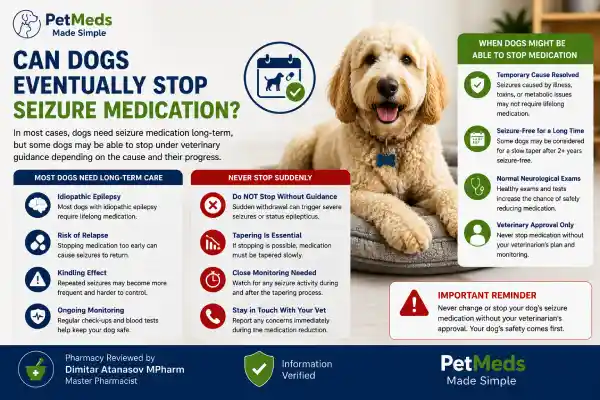
In most cases, no.
One of the most common questions owners ask after searching “Why Is My Dog Still Having Seizures on Medication?” is whether treatment will eventually end.
For dogs diagnosed with idiopathic epilepsy, seizure medication is often a lifelong commitment.
Stopping treatment without veterinary supervision can significantly increase the risk of:
- More frequent seizures
- Cluster seizures
- Status epilepticus
- Serious neurological complications
However, every dog is different.
Some dogs receiving seizure medication for seizures caused by temporary illnesses or toxins may eventually have their medication reduced or discontinued under close veterinary guidance.
Can Seizure Medication Be Changed?
Yes.
If your dog’s seizures continue despite treatment, your veterinarian may recommend changing the treatment plan rather than simply increasing the dose.
Possible options include:
- Switching medications
- Adding a second medication
- Adjusting dosing intervals
- Performing therapeutic drug monitoring
- Investigating another underlying disease
Treatment decisions are always individualized.
There is no single “best” seizure medication for every dog.
What Tests May Be Recommended?
If seizures continue despite medication, your veterinarian may recommend additional diagnostic testing.
Common tests include:
| Test | Purpose |
|---|---|
| Complete Blood Count (CBC) | Detect infection or inflammation |
| Blood Chemistry Panel | Evaluate liver and kidney function |
| Blood Glucose | Detect hypoglycemia |
| Electrolytes | Identify metabolic abnormalities |
| Phenobarbital Blood Level | Confirm therapeutic concentration |
| Potassium Bromide Level | Assess treatment effectiveness |
| Urinalysis | Evaluate overall health |
| Blood Pressure | Detect hypertension |
| MRI or CT Scan | Investigate structural brain disease |
| Cerebrospinal Fluid (CSF) Analysis | Evaluate inflammatory brain disorders |
Not every dog requires advanced imaging, but these tests become increasingly important if seizures suddenly worsen or new neurological abnormalities appear.
Can Brain Tumors Cause Seizures Despite Medication?
Unfortunately, yes.
Although idiopathic epilepsy is the most common cause of seizures in younger dogs, older dogs that suddenly develop seizures may have another underlying neurological condition.
Possible causes include:
- Brain tumors
- Brain inflammation
- Stroke
- Congenital abnormalities
- Previous head trauma
Anti-seizure medications may reduce seizure frequency but cannot eliminate seizures caused by progressive structural brain disease.
Your veterinarian will consider your dog’s:
- Age
- Neurological examination
- Medical history
- Blood test results
- Response to medication
before recommending advanced imaging.
Does Age Affect Seizure Control?
Absolutely.
Puppies, adult dogs, and senior dogs may all respond differently to seizure medication.
Older dogs often experience:
- Slower drug metabolism
- Additional medical conditions
- Multiple medications
- Reduced liver function
- Reduced kidney function
These factors sometimes require more frequent monitoring and individualized treatment plans.
Can Diet Influence Seizure Control?

In some dogs, nutrition may play a supportive role.
Although diet rarely replaces medication, maintaining consistent nutrition can help overall health.
Veterinarians may recommend:
- Consistent feeding schedules
- Avoiding sudden dietary changes
- Maintaining healthy body weight
- Preventing low blood sugar
- Omega-3 fatty acids when appropriate
- Prescription neurological diets in selected cases
Owners should never begin supplements without veterinary approval because some products may interact with seizure medications.
Can Lack of Sleep Trigger More Seizures?
Yes.
Adequate rest is extremely important for dogs with epilepsy.
Poor sleep may increase neurological stress in susceptible dogs.
Try to provide:
- A predictable daily routine
- Regular sleep schedules
- Quiet resting areas
- Minimal nighttime disturbances
- Reduced stress whenever possible
While sleep alone will not prevent epilepsy, it supports overall neurological health.
Home Care Tips for Dogs with Epilepsy
Daily management plays a major role in successful seizure control.
Helpful recommendations include:
- Give every dose on time.
- Never stop medication suddenly.
- Keep a seizure diary.
- Schedule regular veterinary checkups.
- Perform recommended blood tests.
- Reduce unnecessary stress.
- Ensure constant access to fresh water.
- Monitor appetite and body weight.
- Watch for medication side effects.
- Keep emergency contact numbers available.
Small daily habits often have a significant impact on long-term seizure management.
Emergency Warning Signs
Owners should seek immediate veterinary care if their dog develops:
| Emergency Sign | Why It Requires Immediate Care |
|---|---|
| Seizure lasting longer than five minutes | Risk of status epilepticus |
| Multiple seizures without full recovery | Medical emergency |
| Collapse | Possible severe neurological disease |
| Difficulty breathing | Life-threatening complication |
| Blue or pale gums | Poor oxygenation |
| Continuous unconsciousness | Requires emergency treatment |
| Severe head trauma during a seizure | Risk of additional injury |
| High body temperature after repeated seizures | Can damage organs |
Do not wait to see if these symptoms improve at home.
Related Symptoms Owners Often Notice
Owners searching Why Is My Dog Still Having Seizures on Medication? often notice additional symptoms.
You may also find these PMMS articles helpful:
- Phenobarbital for Dogs: Uses, Dosage, Side Effects & Safety
- Phenobarbital Dosage for Dogs
- Phenobarbital Side Effects in Dogs
- Levetiracetam (Keppra) for Dogs
- Keppra Dosage for Dogs
- Keppra Side Effects in Dogs
- Potassium Bromide for Dogs
- Potassium Bromide Side Effects in Dogs
- Zonisamide for Dogs
- Zonisamide Side Effects in Dogs
- Dog Seizure Symptoms: Complete Guide
- Can Dogs Suddenly Stop Seizure Medication?
- Can Seizure Medication Cause Weakness in Dogs?
These guides provide more detailed information about seizure medications, side effects, long-term monitoring, and epilepsy management.
Veterinarian Takeaway
Why Is My Dog Still Having Seizures on Medication? Continuing seizures do not automatically mean the medication has failed.
Many dogs experience occasional breakthrough seizures, particularly during the early stages of treatment or while medication doses are being adjusted. Other contributing factors—including missed doses, stress, underlying illness, disease progression, or drug-resistant epilepsy—may also reduce seizure control.
The best approach is to work closely with your veterinarian, maintain consistent medication schedules, keep detailed seizure records, and perform recommended blood monitoring. With individualized treatment, many dogs experience significant improvements in seizure frequency and quality of life.
Bottom Line
If you’ve been asking “Why Is My Dog Still Having Seizures on Medication?”, remember that epilepsy treatment often requires patience.
Finding the right medication, dose, and monitoring schedule can take time.
Never stop seizure medication without veterinary guidance, even if your dog continues having occasional seizures.
Instead, monitor your dog’s progress carefully, attend regular veterinary rechecks, and communicate any changes promptly. With appropriate long-term management, many dogs with epilepsy continue to live active, happy, and fulfilling lives.
Frequently Asked Questions – Could a Missed Dose Cause Another Seizure
Can a dog still have seizures while taking medication?
Yes. Dogs can experience breakthrough seizures even when they are receiving seizure medication correctly. This does not always mean the medication has failed. Some dogs need additional time, dose adjustments, blood level monitoring, or combination therapy before achieving the best possible seizure control.
Why is my dog still having seizures on phenobarbital?
Phenobarbital is one of the most effective anti-seizure medications for dogs, but it does not eliminate seizures in every patient. Possible reasons include:
The blood level is below the therapeutic range.
The dose needs adjustment.
Doses have been missed.
Another illness is affecting seizure control.
Your dog has drug-resistant epilepsy.
Your veterinarian may recommend blood tests before making any changes.
Can Keppra (levetiracetam) stop every seizure?
No.
Levetiracetam (Keppra) significantly reduces seizures in many dogs, but no medication guarantees complete seizure freedom.
Some dogs require:
Higher doses
More frequent dosing
Combination therapy
Long-term monitoring
Can missing one dose cause a seizure?
Yes.
For some dogs, even one missed dose may lower medication levels enough to trigger a breakthrough seizure.
If you accidentally miss a dose:
Contact your veterinarian if you’re unsure what to do.
Do not double the next dose unless specifically instructed.
Resume the normal schedule as directed.
Consistency is one of the most important parts of epilepsy management.
Can stress cause seizures even when my dog is taking medication?
Yes.
Medication reduces seizure risk but cannot eliminate every trigger.
Possible triggers include:
Stress
Illness
Sleep deprivation
Pain
Fireworks
Thunderstorms
Boarding
Major household changes
Keeping your dog’s routine as predictable as possible may help reduce seizure triggers.
Will my dog need seizure medication for life?
Many dogs diagnosed with idiopathic epilepsy require lifelong treatment.
However, every case is different.
Your veterinarian will decide whether medication should continue based on:
Seizure frequency
Underlying cause
Blood test results
Overall health
Long-term response to treatment
Never stop seizure medication without veterinary supervision.
When should I seek emergency veterinary care?
Seek immediate veterinary attention if your dog experiences:
A seizure lasting longer than five minutes
Multiple seizures without recovering between them
Difficulty breathing
Collapse
Loss of consciousness
Blue or pale gums
Severe injury during a seizure
These situations are considered medical emergencies.
Can dogs take more than one seizure medication?
Yes.
Many dogs achieve better seizure control using combination therapy.
Examples include:
Phenobarbital + Keppra
Phenobarbital + Potassium Bromide
Keppra + Zonisamide
Your veterinarian will determine the safest combination based on your dog’s medical history and response to treatment.
Can my dog still have a good quality of life with epilepsy?
Absolutely.
Many dogs with epilepsy live happy, active lives for years with appropriate treatment.
Success depends on:
Consistent medication
Regular veterinary monitoring
Blood testing
Keeping a seizure diary
Promptly reporting changes to your veterinarian
Even dogs that occasionally experience breakthrough seizures often maintain an excellent quality of life.
Sources
- Plumb’s Veterinary Drug Handbook (10th Edition)
- Merck Veterinary Manual – Epilepsy and Seizure Disorders in Dogs
- BSAVA Small Animal Formulary
- Veterinary Pharmacology and Therapeutics (10th Edition)
- Small Animal Clinical Pharmacology
- American College of Veterinary Internal Medicine (ACVIM) Consensus Statement on Seizure Management
- American Animal Hospital Association (AAHA) Clinical Guidelines
- American Veterinary Medical Association (AVMA)
- Veterinary Information Network (VIN)
- Journal of Veterinary Internal Medicine (JVIM)
- Journal of the American Veterinary Medical Association (JAVMA)
- Frontiers in Veterinary Science
Medical Review Statement
This article was pharmacy-reviewed by Dimitar Georgiev Atanasov, MPharm (Bulgarian Pharmaceutical Union, UIN: 0210000586) and independently veterinary-reviewed by Dr. Valcho Georgiev Valchev, DVM (Bulgarian Veterinary Union, Registration No. 28000115) to ensure medical accuracy, medication safety, and consistency with current veterinary guidelines and evidence-based veterinary medicine.
Important Medical Disclaimer
The information provided on PetMedsMadeSimple.com is intended for educational purposes only and should not replace professional veterinary advice, diagnosis, or treatment.
Seizures can be caused by many different medical conditions, and every dog responds differently to anti-seizure medication. Never start, stop, or adjust seizure medications without consulting your veterinarian. If your dog experiences prolonged seizures, repeated seizures without recovery, difficulty breathing, collapse, or any other emergency symptoms, seek immediate veterinary care.
For more information about how our content is researched, written, and medically reviewed, please visit ourEditorial Policy, Medical Review Process, and About Us pages.
Image Disclosure – Could a Missed Dose Cause Another Seizure?
Some images used in this article may be AI-generated or AI-assisted for educational purposes. Every article is independently researched, pharmacy-reviewed by Dimitar Georgiev Atanasov, MPharm, and veterinary-reviewed by Dr. Valcho Georgiev Valchev, DVM. AI-generated illustrations are intended to improve understanding of veterinary conditions and medications and do not depict actual clinical patients.