
Quick Answer
Why is my dog sleeping all day on Keppra? Mild to moderate sleepiness is one of the most commonly reported side effects when dogs begin taking levetiracetam (Keppra) or after the dose is increased. In many dogs, this drowsiness improves within several days as the brain adapts to the medication. However, excessive sleeping may also result from the seizure itself, other anticonvulsants used together with Keppra, underlying illness, or, less commonly, an inappropriate dose. If your dog is difficult to wake, collapses, has repeated seizures, or becomes progressively weaker, prompt veterinary assessment is recommended.
Why Is My Dog Sleeping All Day on Keppra?
Few situations worry owners more than watching an energetic dog suddenly spend most of the day asleep after starting a new seizure medication. It is natural to wonder whether the medication is working, whether the dose is too high, or whether something more serious is happening.
Why is my dog sleeping all day on Keppra? The answer is not always straightforward because sleepiness may be caused by several different factors occurring at the same time.
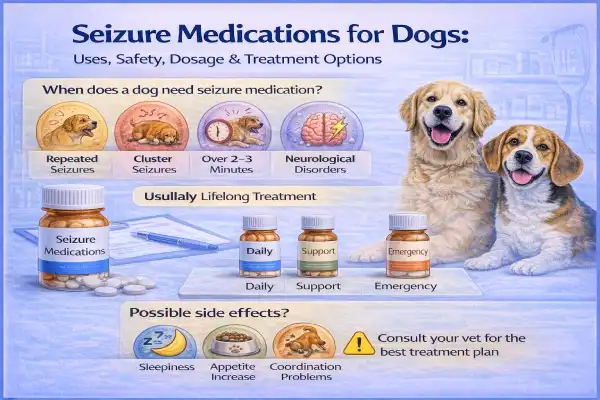
Keppra is generally considered one of the safest anticonvulsants used in dogs. Compared with some older medications, it causes fewer long-term adverse effects and usually has minimal effects on the liver. Even so, because it acts directly on the central nervous system, temporary drowsiness is a recognized side effect, particularly during the first days of treatment.
One important point that owners often overlook is that many epileptic dogs are already exhausted before the first tablet is given. Generalized seizures require intense muscular activity and place enormous metabolic demands on the brain. As a result, some dogs are sleepy because they are recovering from the seizure rather than reacting to the medication itself.
Understanding this difference helps explain why some dogs improve quickly while others require further evaluation.
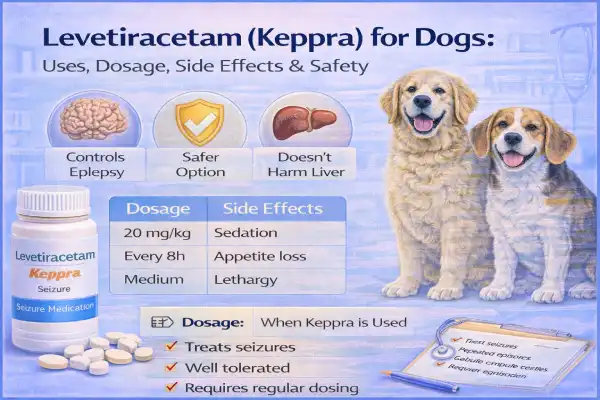
If you’re unfamiliar with this medication, our guide Levetiracetam (Keppra) for Dogs: Uses, Dosage, Side Effects & Safety explains how Keppra works and why veterinarians frequently choose it for long-term seizure management.
Why Is My Dog Sleeping All Day on Keppra?
Is Sleeping More a Normal Side Effect of Keppra?
Yes within reason.
Sleepiness is among the most frequently reported early side effects of levetiracetam in dogs. Fortunately, it is usually mild and temporary.
Veterinarians commonly reassure owners that dogs may appear quieter than usual during the first several days after treatment begins. Some pets simply nap more often, while others spend much of the day resting but still wake easily, eat normally, and remain interested in their surroundings.
This temporary decrease in activity does not necessarily mean the medication is harming the dog. In fact, many dogs gradually return to their normal routine once the nervous system adjusts to stable medication levels.
The degree of sleepiness varies considerably between individuals.
Some dogs show almost no change, while others become noticeably less active for several days before gradually returning to their usual energy level.
How Does Keppra Cause Sleepiness?
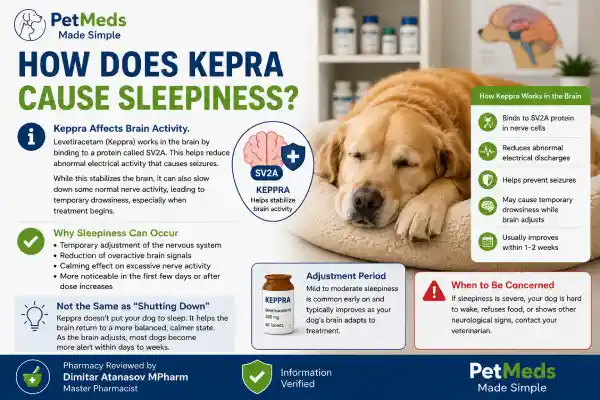
Unlike pain medications that directly suppress consciousness, levetiracetam works by reducing abnormal electrical activity within the brain.
Although researchers are still studying its exact mechanism, Keppra binds to the synaptic vesicle protein SV2A, helping stabilize communication between nerve cells and reducing the likelihood of uncontrolled electrical discharges that trigger seizures.
Because these same nerve pathways influence alertness and normal brain activity, some dogs temporarily become drowsy while adapting to treatment.
Importantly, this does not mean the brain is being “shut down.” Instead, normal neurological activity is adjusting to a medication designed to reduce excessive neuronal excitation.
This distinction explains why mild sleepiness can occur without indicating toxicity.
Could the Seizure Itself Be Responsible?
Very often, yes.
One of the biggest misconceptions is assuming that every symptom appearing after Keppra is automatically caused by the medication.
In reality, many dogs experience a post-ictal phase after a seizure. During this recovery period, the brain gradually returns to its normal state, and dogs may sleep for several hours—or occasionally even longer after severe seizures or seizure clusters.
Typical post-ictal signs include:
- Profound tiredness
- Temporary confusion
- Increased thirst
- Increased appetite
- Mild disorientation
- Slower responses
- Longer periods of sleep
Owners frequently administer the first Keppra dose immediately after a seizure. Because both events occur close together, it is easy to blame the medication when the seizure itself is actually responsible for much of the fatigue.
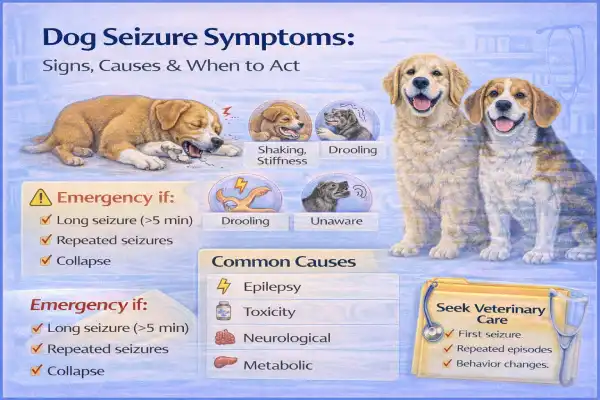
Our article Dog Seizure Symptoms: Signs, Causes & When to Act explains what owners can expect before, during, and after epileptic episodes.
How Can Owners Tell the Difference?
One of the most useful clues is timing.
If the dog slept extensively immediately after a seizure but gradually became more alert over the following day, post-ictal recovery is often the most likely explanation.
If, however, the dog becomes sleepy shortly after every Keppra dose despite not having recent seizures, the medication may be contributing more significantly.
Veterinarians also consider several additional factors.
| Observation | More Suggestive of Post-Ictal Recovery | More Suggestive of Medication Effect |
|---|---|---|
| Sleepiness begins immediately after a seizure | ✓ | |
| Sleepiness follows every Keppra dose | ✓ | |
| Confusion accompanies fatigue | ✓ | Sometimes |
| Dog gradually improves over several days | ✓ | ✓ |
| Sleepiness worsens after increasing the dose | ✓ |
The distinction is not always absolute, which is why your veterinarian evaluates the complete clinical picture rather than relying on a single symptom.
Does Every Dog React the Same Way?
No.
Just as people respond differently to medications, dogs vary considerably in their sensitivity to anticonvulsants.
Several factors influence how sleepy a dog may become, including:
- Age
- Overall health
- Kidney function
- Severity of epilepsy
- Concurrent medications
- Individual neurological sensitivity
Senior dogs and patients with multiple medical conditions sometimes require closer monitoring because they may adapt more slowly to neurological medications.
How Long Does Keppra Sleepiness Usually Last?
One of the first questions owners ask after starting treatment is not simply “Why is my dog sleeping all day on Keppra?”, but also “How long will this last?”
Fortunately, for most dogs the answer is reassuring.
If the sleepiness is caused by normal adjustment to levetiracetam, it often begins during the first few days of treatment and gradually improves as the nervous system adapts. Many dogs become noticeably brighter within one to two weeks without any change in medication.
The exact timeline depends on several factors, including the dog’s age, seizure frequency, overall health, and whether other anticonvulsants are being given at the same time.
Persistent or worsening sleepiness, however, deserves further investigation because it may indicate that another factor is contributing.
Could the Keppra Dose Be Too High?

Yes, although this is less common than many owners expect.
Levetiracetam has a relatively wide safety margin in dogs, which is one reason it has become a popular choice for epilepsy management. Nevertheless, an individual dog may occasionally be more sensitive to the prescribed dose.
Veterinarians consider several questions when evaluating excessive sleepiness:
- Was the dose recently increased?
- Has the dog’s body weight changed?
- Is the medication being given at the correct interval?
- Is another anticonvulsant being used simultaneously?
- Has kidney function changed?
Rather than assuming the medication is “too strong,” your veterinarian will evaluate these factors before recommending any adjustment.
Changing the dose without professional guidance may reduce seizure control and increase the risk of breakthrough seizures.
Can Other Seizure Medications Increase Sleepiness?
Absolutely.
Many epileptic dogs receive more than one anticonvulsant because combination therapy often provides better seizure control than a single medication.
Although Keppra alone is usually well tolerated, combining it with other neurological medications may increase overall sedation.
Examples include:
- Phenobarbital
- Potassium bromide
- Gabapentin
- Diazepam (during emergency seizure management)
When several medications influence the central nervous system simultaneously, the effects can become additive.
This does not necessarily indicate that any individual medication is inappropriate—it simply reflects the combined effect of multiple drugs acting on the brain.
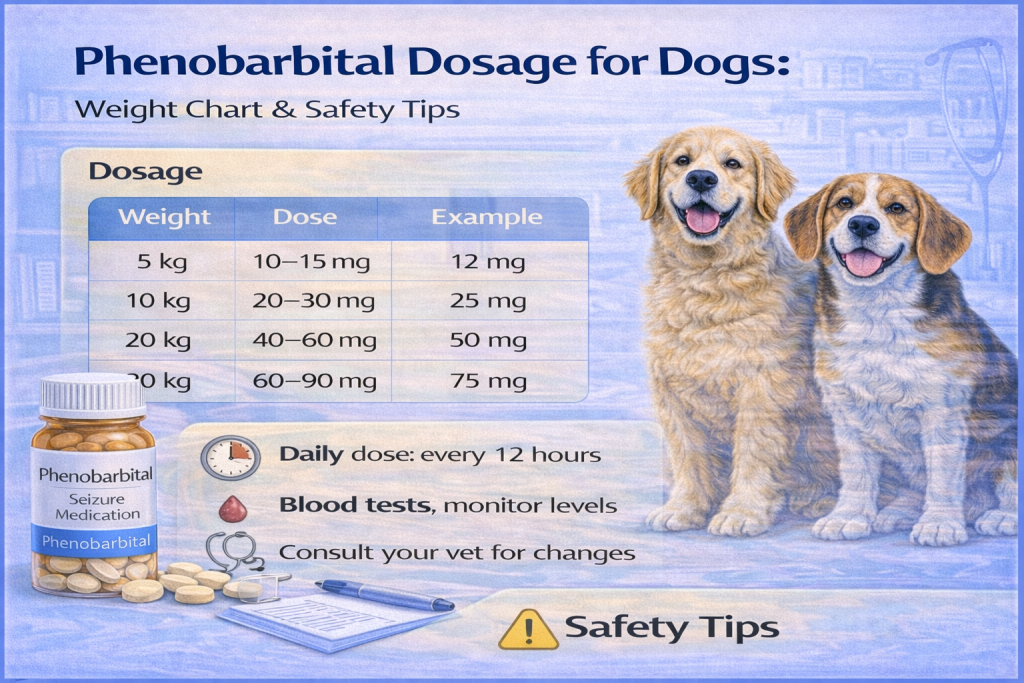
If your dog is receiving phenobarbital, our articles Phenobarbital for Dogs: Uses, Dosage, Side Effects & Safety and Phenobarbital Side Effects in Dogs: What to Watch For explain how this medication may also contribute to drowsiness.
Could Kidney Disease Make Keppra Last Longer?
Yes.
This is one of the most overlooked aspects of levetiracetam therapy.
Unlike phenobarbital, which is primarily metabolized by the liver, Keppra is eliminated largely through the kidneys. When kidney function declines, the medication may remain in the body longer than expected.
Older dogs are particularly important to monitor because age-related kidney changes may alter how efficiently the drug is cleared.
Your veterinarian may recommend blood work if excessive sleepiness develops unexpectedly, especially in senior patients or dogs with known kidney disease.
Importantly, this does not mean every sleepy dog has kidney disease. It simply represents one possible explanation that should be considered when the clinical picture does not fit the expected adjustment period.
When Is Sleeping Too Much No Longer Normal?
Mild drowsiness is expected in some dogs.
Extreme lethargy is not.
Owners should pay attention to the difference between a dog that simply sleeps more and a dog that appears difficult to wake, refuses food, cannot stand normally, or seems progressively weaker.
The following table may help distinguish expected adjustment from signs requiring veterinary attention.
| Usually Expected | Needs Veterinary Assessment |
|---|---|
| Sleeping more than usual | Difficult to wake |
| Wakes easily for meals | Refuses food completely |
| Walks normally when awake | Cannot stand or repeatedly collapses |
| Gradual improvement | Progressive worsening |
| Normal breathing | Labored breathing or severe weakness |
| Responds to family members | Appears mentally unresponsive |
If your dog’s tiredness is accompanied by weakness, our guide Why Is My Dog Weak After Seizure Medication? discusses additional warning signs that should not be ignored.
Could My Dog Simply Be Catching Up on Sleep?

Surprisingly, yes.
Many epileptic dogs experience disrupted sleep before diagnosis.
Repeated seizures, nighttime seizure activity, post-ictal recovery, hospital visits, and stress can all interfere with normal rest.
Once seizures become better controlled with Keppra, some dogs finally experience uninterrupted sleep for the first time in weeks.
Owners sometimes interpret this as a medication problem when it may actually represent recovery from prolonged neurological stress.
Veterinarians consider this possibility when the dog otherwise appears healthy, eats normally, responds appropriately, and gradually becomes more active over time.
Can Age Affect How Dogs Respond to Keppra?
Yes.
Senior dogs often respond differently to neurological medications than younger adults.
Older patients may:
- Adjust more slowly.
- Sleep longer after starting treatment.
- Have reduced kidney function.
- Receive additional medications for unrelated conditions.
- Recover more slowly after seizures.
For these reasons, veterinarians usually evaluate the whole patient rather than attributing every symptom to Keppra alone.
Could Something Other Than Keppra Be Causing the Sleepiness?
Definitely.
Although owners naturally focus on the newest medication, excessive sleeping has many possible causes.
These include:
- Ongoing seizure activity.
- Brain disease.
- Pain.
- Infection.
- Liver disease.
- Kidney disease.
- Heart disease.
- Hormonal disorders.
- Anemia.
- Other prescribed medications.
A complete examination helps determine whether Keppra is truly responsible or whether another medical condition is affecting your dog’s energy level.
When Should You Contact Your Veterinarian?
Contact your veterinarian promptly if your dog:
- Cannot be awakened normally.
- Stops eating or drinking.
- Becomes unable to stand.
- Develops repeated seizures.
- Experiences cluster seizures.
- Shows severe weakness or collapse.
- Appears progressively less responsive.
- Develops new neurological signs.
Prompt evaluation allows your veterinarian to determine whether the medication should be adjusted or whether another condition requires treatment.
Related Symptoms Owners Often Notice
Owners searching “Why Is My Dog Sleeping All Day on Keppra?” also frequently ask about:
- Keppra Side Effects in Dogs: What to Watch For
- Levetiracetam (Keppra) for Dogs: Uses, Dosage, Side Effects & Safety
- Why Is My Dog Weak After Seizure Medication?
- Why Is My Dog Pacing After Seizure Medication?
- Can Seizure Medication Cause Anxiety?
- Can Seizure Medication Change Dog Personality?
- Dog Seizure Symptoms: Signs, Causes & When to Act
- Phenobarbital vs Levetiracetam (Keppra) for Dogs: Which Seizure Medication Is Better?
Reading these related guides can help owners better understand both normal adjustment to epilepsy treatment and signs that deserve veterinary attention.
Can Dogs Continue Taking Keppra if They Sleep More Than Usual?

In many cases, yes.
One of the most common concerns owners have after asking “Why is my dog sleeping all day on Keppra?” is whether they should stop giving the medication.
For most dogs, the answer is no.
Levetiracetam is prescribed to reduce seizure frequency and protect the brain from recurrent seizure activity. Stopping it suddenly without veterinary guidance can increase the risk of breakthrough seizures and may leave your dog less protected while a new treatment plan is being arranged.
If your dog is sleeping more than usual but:
- wakes easily,
- eats and drinks normally,
- walks without difficulty,
- and the sleepiness is gradually improving,
your veterinarian may simply recommend continued monitoring during the adjustment period.
The goal is always to balance effective seizure control with the fewest possible side effects.
Can Excessive Sleeping Be Prevented?
Not completely, but there are several ways to reduce the likelihood of excessive drowsiness during treatment.
Veterinarians commonly recommend:
- Giving every dose at the same time each day.
- Never skipping or doubling doses.
- Following the prescribed dosing interval carefully.
- Attending recommended follow-up examinations.
- Keeping a seizure diary.
- Reporting significant behavioral changes early.
- Avoiding changes to medication without veterinary advice.
These simple steps help maintain stable drug concentrations and allow veterinarians to recognize potential problems before they become more serious.
How Do Veterinarians Investigate Excessive Sleepiness?
When owners ask “Why is my dog sleeping all day on Keppra?”, veterinarians rarely assume the medication is the only explanation.
Instead, they build a complete clinical picture.
Typical questions include:
| Question | Why It Matters |
|---|---|
| When did the sleepiness begin? | Determines whether it coincides with starting or increasing Keppra. |
| When was the last seizure? | Helps distinguish medication effects from post-ictal recovery. |
| Is your dog difficult to wake? | Evaluates the severity of sedation. |
| Has your dog been eating and drinking normally? | Assesses overall well-being. |
| Is your dog receiving other seizure medications? | Combination therapy may increase drowsiness. |
| Has blood work been performed recently? | Helps identify kidney disease or other medical problems. |
These answers often provide more useful information than the symptom of sleepiness alone.
What Is the Long-Term Outlook?
The prognosis is excellent for most dogs.
Levetiracetam has become one of the most widely used anticonvulsants in veterinary medicine because it combines effective seizure control with a relatively favorable safety profile.
For many dogs, the excessive sleeping seen during the first days of treatment gradually improves without requiring any medication changes.
Long-term success depends on several factors.
| Factor | Influence on Prognosis |
|---|---|
| Good seizure control | Excellent long-term outlook |
| Temporary adjustment to Keppra | Usually resolves within days to weeks |
| Appropriate medication monitoring | Reduces complications |
| Good owner compliance | Improves seizure management |
| Early recognition of side effects | Allows timely treatment adjustments |
Many dogs receiving Keppra continue to enjoy an active, comfortable, and rewarding quality of life for years.
Veterinarian Takeaway
Why is my dog sleeping all day on Keppra? In most cases, mild to moderate sleepiness is a temporary side effect that improves as the brain adjusts to levetiracetam. However, veterinarians also recognize that excessive sleeping may result from recent seizures, post-ictal recovery, combination anticonvulsant therapy, kidney disease, or another underlying medical condition.
The timing of the sleepiness, your dog’s neurological examination, seizure history, concurrent medications, and overall health all help determine whether the medication is the primary cause.
If your dog is difficult to wake, develops progressive weakness, stops eating, has repeated seizures, or shows any other concerning neurological signs, prompt veterinary assessment is essential.
Bottom Line
If you’re asking “Why is my dog sleeping all day on Keppra?”, remember that sleepiness does not automatically mean the medication is unsafe.
Many dogs become temporarily drowsy after starting levetiracetam, particularly during the first several days of treatment. Others are simply recovering from the physical and neurological effects of a recent seizure.
Careful observation, consistent medication administration, regular follow-up appointments, and open communication with your veterinarian usually allow these situations to be managed successfully without compromising seizure control.
With appropriate monitoring, most dogs adapt well to Keppra and continue to live happy, active lives despite their epilepsy.
Frequently Asked Questions – Why Is My Dog Sleeping All Day on Keppra
Why is my dog sleeping all day on Keppra?
The most common reasons include temporary adjustment to levetiracetam, recovery from a recent seizure, combination seizure medications, or another underlying medical condition. Your veterinarian can help determine the exact cause.
Is sleepiness a normal side effect of Keppra?
Yes. Mild sleepiness is one of the more common early side effects and often improves within several days to a few weeks.
How long does Keppra sleepiness usually last?
Most dogs become more alert as they adapt to treatment. Improvement commonly occurs during the first one to two weeks, although the exact timeline varies between individuals.
Can Keppra make senior dogs sleep more?
Yes. Older dogs may adjust more slowly to levetiracetam, particularly if they have reduced kidney function or receive additional medications.
Could the dose be too high?
Possibly, although many other explanations are more common. Your veterinarian will evaluate the dose, seizure history, kidney function, and concurrent medications before making changes.
Can phenobarbital make the sleepiness worse?
Yes. Dogs receiving both phenobarbital and Keppra may experience greater sedation because both medications affect the central nervous system.
Should I stop Keppra if my dog is sleeping a lot?
No. Never discontinue anticonvulsant medication without veterinary advice, as doing so may increase seizure risk.
When should I call my veterinarian?
Contact your veterinarian if your dog cannot be awakened normally, refuses food, becomes progressively weaker, collapses, or experiences repeated seizures.
Can blood tests help?
Although routine Keppra blood-level monitoring is not usually required, blood tests may identify kidney disease or other medical conditions contributing to excessive sleepiness.
Can dogs live normal lives while taking Keppra?
Yes. Most dogs tolerate levetiracetam very well and enjoy an excellent long-term quality of life when seizures are appropriately managed.
Sources
- Plumb’s Veterinary Drug Handbook (10th Edition)
- Merck Veterinary Manual – Seizure Disorders in Dogs
- BSAVA Small Animal Formulary (11th Edition)
- ACVIM Consensus Statement on Seizure Management in Dogs
- Veterinary Pharmacology and Therapeutics (10th Edition)
- Small Animal Clinical Pharmacology
- Journal of Veterinary Internal Medicine (JVIM)
- Journal of the American Veterinary Medical Association (JAVMA)
- Veterinary Information Network (VIN)
- Frontiers in Veterinary Science
Medical Review Statement
This article was pharmacy-reviewed by Dimitar Georgiev Atanasov, MPharm (Bulgarian Pharmaceutical Union, UIN: 0210000586), scientifically reviewed by Gergana Krasimirova Atanasova, MPharm (Bulgarian Pharmaceutical Union, UIN: 0210000587), and independently veterinary-reviewed by Dr. Valcho Georgiev Valchev, DVM (Bulgarian Veterinary Union, Registration No. 28000115) to ensure medical accuracy, medication safety, and consistency with current veterinary guidelines and evidence-based veterinary medicine.
Important Medical Disclaimer
The information provided on PetMedsMadeSimple.com is intended for educational purposes only and should not replace professional veterinary advice, diagnosis, or treatment.
Never start, stop, or adjust your dog’s seizure medication without consulting your veterinarian. If your dog develops repeated seizures, becomes difficult to wake, collapses, has difficulty breathing, or develops any other emergency signs, seek immediate veterinary care.
Image Disclosure
Some images used in this article may be AI-generated or AI-assisted for educational purposes. Every article is independently researched, pharmacy-reviewed by Dimitar Georgiev Atanasov, MPharm, scientifically reviewed by Gergana Krasimirova Atanasova, MPharm, and veterinary-reviewed by Dr. Valcho Georgiev Valchev, DVM. AI-generated illustrations are intended to improve understanding of veterinary diseases and medications and do not depict actual clinical patients.