Dogs

Our comprehensive guides cover the most common categories of medications prescribed for dogs, from everyday essentials to specialized treatments. Whether your pup is dealing with allergies, pain, infections, parasites, or chronic conditions, we break down what each type of medication does, why it’s used, potential side effects (like gastrointestinal upset, lethargy, or more serious risks), common drug interactions, and tips for safe administration.

Can Dogs Become Resistant to Antibiotics

Can Dogs Become Resistant to Antibiotics? Dangerous Mistakes Owners Must Avoid

Can dogs become resistant to antibiotics? Learn how antibiotic resistance develops in dogs, including dangerous medication mistakes owners should avoid, warning signs of resistant infections, culture testing, treatment failure risks, and how veterinarians help prevent antibiotic-resistant bacteria.

Can Dogs Become Resistant to Antibiotics? Dangerous Mistakes Owners Must Avoid Read More »

What If My Dog Misses Multiple Antibiotic Doses?

What If My Dog Misses Multiple Antibiotic Doses? Warning Signs & What to Do Next

What if your dog misses multiple antibiotic doses? Learn what happens when antibiotic treatment is interrupted in dogs, including infection risks, resistance concerns, warning signs, whether you should double doses, and when to contact your veterinarian immediately.

What If My Dog Misses Multiple Antibiotic Doses? Warning Signs & What to Do Next Read More »

Why Is My Dog Breathing Fast After Antibiotics?

Why Is My Dog Breathing Fast After Antibiotics? Warning Signs Owners Should Know

Why is my dog breathing fast after antibiotics? Learn the most common causes of rapid breathing in dogs after antibiotics, including fever, dehydration, allergic reactions, toxicity, pain, neurological complications, and emergency warning signs that may require immediate veterinary care.

Why Is My Dog Breathing Fast After Antibiotics? Warning Signs Owners Should Know Read More »

What Happens If Dogs Take Too Much Antibiotic?

What Happens If Dogs Take Too Much Antibiotic? Overdose Warning Signs Every Owner Should Know

What happens if dogs take too much antibiotic? Learn the most common signs of antibiotic overdose in dogs, including vomiting, tremors, seizures, weakness, dehydration, kidney complications, and neurological toxicity — plus what owners should do immediately in an emergency.

What Happens If Dogs Take Too Much Antibiotic? Overdose Warning Signs Every Owner Should Know Read More »

Why Is My Dog Drinking More Water After Antibiotics?

Why Is My Dog Drinking More Water After Antibiotics? Warning Signs Owners Should Know

Why is my dog drinking more water after antibiotics? Learn the most common causes of increased thirst in dogs after antibiotics, including dehydration, diarrhea, infection recovery, kidney stress, medication side effects, and toxicity warning signs that may require immediate veterinary care.

Why Is My Dog Drinking More Water After Antibiotics? Warning Signs Owners Should Know Read More »

Can Antibiotics Cause Loss of Appetite in Dogs?

Can Antibiotics Cause Loss of Appetite in Dogs? Warning Signs Owners Should Know

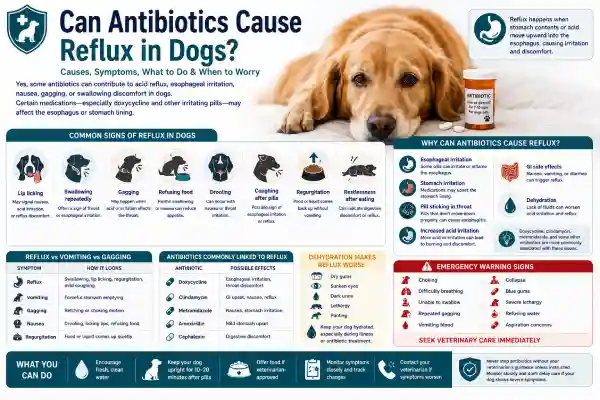
Can antibiotics cause loss of appetite in dogs? Learn why dogs may stop eating after antibiotics, which medications most commonly cause nausea or GI irritation, and which warning signs may signal toxicity, acid reflux, medication interactions, or serious side effects requiring veterinary care.

Can Antibiotics Cause Loss of Appetite in Dogs? Warning Signs Owners Should Know Read More »

Can Antibiotics Interact With Anxiety or Pain Medications

Can Antibiotics Interact With Anxiety or Pain Medications? (Vet-Backed Safety Guide)

Can antibiotics interact with anxiety or pain medications in dogs? Learn which medication combinations may increase the risk of weakness, tremors, neurological side effects, sedation, toxicity, GI irritation, or dangerous drug interactions — including warning signs every dog owner should know.

Can Antibiotics Interact With Anxiety or Pain Medications? (Vet-Backed Safety Guide) Read More »

Why Is My Dog Restless at Night After Antibiotics?

Why Is My Dog Restless at Night After Antibiotics? Warning Signs Owners Should Never Ignore

Why is my dog restless at night after antibiotics? Learn the most common causes of nighttime pacing, panting, anxiety, nausea, acid reflux, neurological side effects, and medication toxicity in dogs after antibiotics — including dangerous warning signs owners should never ignore.

Why Is My Dog Restless at Night After Antibiotics? Warning Signs Owners Should Never Ignore Read More »

Why Is My Dog Crying After Antibiotics

Why Is My Dog Crying After Antibiotics? Warning Signs Every Owner Should Know

Why is my dog crying after antibiotics? Learn the most common causes of whining, vocalization, pacing, nausea, acid reflux, toxicity symptoms, and medication side effects in dogs after antibiotics — including dangerous warning signs every dog owner should know.

Why Is My Dog Crying After Antibiotics? Warning Signs Every Owner Should Know Read More »

Scroll to Top