Dogs

Our comprehensive guides cover the most common categories of medications prescribed for dogs, from everyday essentials to specialized treatments. Whether your pup is dealing with allergies, pain, infections, parasites, or chronic conditions, we break down what each type of medication does, why it’s used, potential side effects (like gastrointestinal upset, lethargy, or more serious risks), common drug interactions, and tips for safe administration.

Can Antibiotics Cause Hyperactivity in Dogs?

Can Antibiotics Cause Hyperactivity in Dogs? (Vet-Backed Guide)

Can antibiotics cause hyperactivity in dogs? Learn why some dogs become restless, anxious, hyper, or unable to settle after antibiotics. Discover which medications are most commonly linked to neurological side effects, pacing, panting, anxiety-like behavior, toxicity warning signs, and when you should contact your veterinarian immediately.

Can Antibiotics Cause Hyperactivity in Dogs? (Vet-Backed Guide) Read More »

Why Does My Dog Drool After Antibiotics?

Why Does My Dog Drool After Antibiotics? (Vet-Backed Guide)

Why does my dog drool after antibiotics? Learn the most common causes of excessive salivation in dogs after antibiotics, including nausea, bitter taste, acid reflux, allergic reactions, and toxicity warning signs. Discover which antibiotics are most likely to cause drooling and when you should contact your veterinarian immediately.

Why Does My Dog Drool After Antibiotics? (Vet-Backed Guide) Read More »

What Does Antibiotic Toxicity Look Like in Dogs?

What Does Antibiotic Toxicity Look Like in Dogs? (Emergency Vet-Backed Guide)

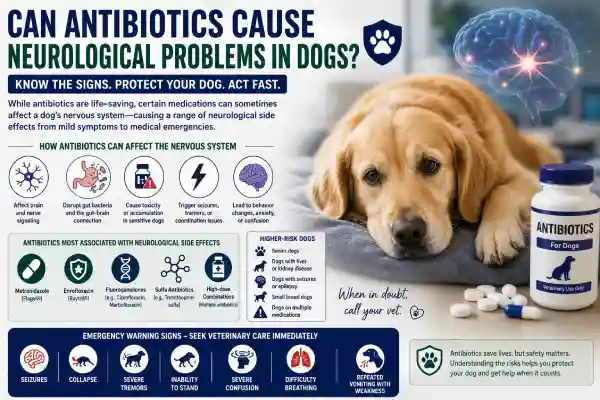
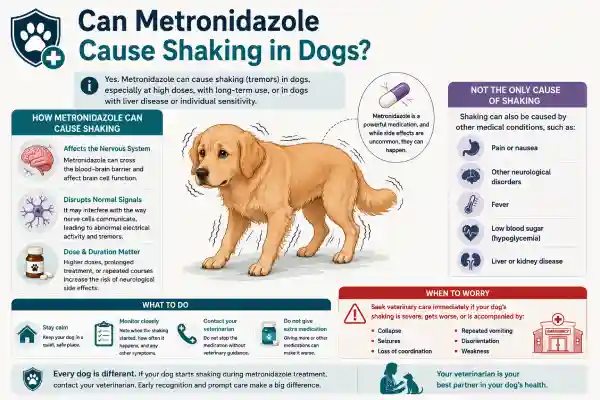
What does antibiotic toxicity look like in dogs? Learn the warning signs of dangerous antibiotic reactions in dogs, including shaking, tremors, seizures, vomiting, neurological symptoms, overdose risks, and emergency treatment options in this complete vet-backed guide.

What Does Antibiotic Toxicity Look Like in Dogs? (Emergency Vet-Backed Guide) Read More »

Scroll to Top