
Quick Answer
Can antibiotics cause stomach pain in dogs? Yes, antibiotics can sometimes cause stomach pain in dogs by irritating the digestive tract, disrupting gut bacteria, causing nausea, gas buildup, cramping, bloating, reflux, or diarrhea. Mild stomach discomfort may improve during treatment, but severe abdominal pain, bloating, vomiting blood, black stool, collapse, or inability to eat require immediate veterinary attention.
Many dog owners become worried when their dog suddenly:
- cries after antibiotics
- acts sensitive around the stomach
- refuses food after medication
- becomes bloated
- stretches repeatedly
- vomits after antibiotics
- curls up and seems uncomfortable
- develops diarrhea or gas
- acts lethargic during treatment
And honestly?
This is one of the MOST common side effects owners notice during antibiotic treatment.
The good news is that mild stomach upset is often temporary.
However, stomach pain may also signal:
- digestive irritation
- nausea
- intestinal cramping
- gut bacteria disruption
- dehydration
- reflux
- severe gastrointestinal reactions
- medication intolerance
This guide explains:
- why antibiotics may cause stomach pain
- how to recognize abdominal discomfort
- which antibiotics are more likely to cause GI symptoms
- dehydration and gut health concerns
- emergency warning signs owners should never ignore
Why Can Antibiotics Cause Stomach Pain in Dogs?
Antibiotics do not only affect harmful bacteria.
They may also disrupt healthy gut bacteria that support:
- digestion
- stomach balance
- nutrient absorption
- intestinal protection
When this balance changes, dogs may develop:
- nausea
- cramping
- bloating
- gas
- diarrhea
- stomach irritation
Common Reasons Antibiotics Cause Stomach Pain
| Cause | Possible Effect |
|---|---|
| Gut bacteria disruption | Gas and diarrhea |
| Stomach irritation | Nausea or pain |
| Acid imbalance | Reflux |
| Medication sensitivity | Cramping |
| Reduced appetite | Weakness |
| Dehydration | Worsened discomfort |
This naturally connects with Why Does My Dog Refuse Food After Antibiotics?, Why Is My Dog Vomiting After Antibiotics?
Can Antibiotics Cause Stomach Pain in Dogs?
What Does Stomach Pain Look Like in Dogs?
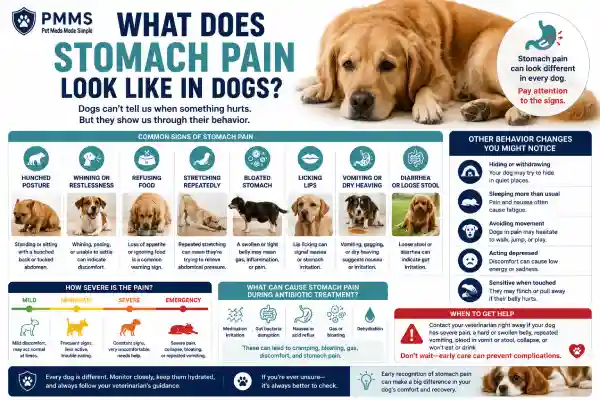
Dogs cannot verbally describe abdominal pain.
Instead, owners may notice behavioral changes.
Signs of Possible Stomach Pain
| Symptom | What Owners May Notice |
|---|---|
| Hunched posture | Belly discomfort |
| Whining or restlessness | Pain |
| Refusing food | Nausea |
| Stretching repeatedly | Abdominal pressure |
| Bloated stomach | Gas or inflammation |
| Licking lips | Nausea |
| Vomiting | Digestive irritation |
| Diarrhea | Gut disruption |
Some dogs may also:
- hide
- shake
- sleep more
- avoid movement
- seem depressed
This strongly connects with:
- Can Antibiotics Cause Weakness in Dogs?
- Why Does My Dog Sleep All Day After Antibiotics?
- Can Antibiotics Affect Dog Behavior?
Can Antibiotics Cause Gas or Bloating?
Absolutely.
Antibiotics may disrupt the natural balance of intestinal bacteria.
This may lead to:
- excessive gas
- abdominal pressure
- bloating
- rumbling stomach noises
- cramping
Dogs may appear:
- uncomfortable
- restless
- sensitive around the abdomen
Some owners mistake bloating for simple stomach upset.
But severe bloating can sometimes become dangerous.
Which Antibiotics Commonly Cause Stomach Upset?
Some antibiotics are more likely to irritate the digestive tract.
Antibiotics Often Associated With GI Side Effects
| Antibiotic | Common GI Side Effects |
|---|---|
| Metronidazole | Nausea, drooling, appetite loss |
| Doxycycline | Stomach irritation, reflux |
| Clindamycin | Vomiting, diarrhea |
| Amoxicillin | Mild stomach upset |
| Cephalexin | Nausea or loose stool |
This naturally links with:
Can Antibiotics Cause Nausea Instead of True Pain?
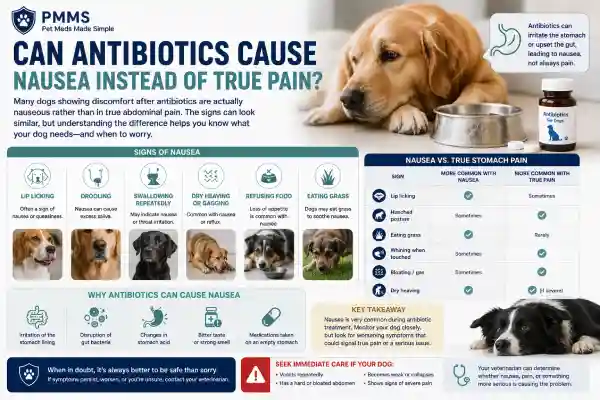
Yes — and this is VERY important.
Many dogs with nausea may appear to have stomach pain.
Signs of nausea include:
- lip licking
- drooling
- swallowing repeatedly
- gagging
- refusing food
- eating grass
- dry heaving
Nausea vs Stomach Pain
| Symptom | More Common With |
|---|---|
| Lip licking | Nausea |
| Hunched posture | Pain |
| Eating grass | Nausea |
| Crying when touched | Abdominal pain |
| Dry heaving | Nausea or reflux |
| Bloating | Gas or intestinal discomfort |
This strongly connects with Why Does My Dog Gag After Medication?
Can Dehydration Make Stomach Pain Worse?
Very easily.
Dogs with:
- vomiting
- diarrhea
- reduced appetite
- fever
may quickly become dehydrated during antibiotic treatment.
Dehydration may worsen:
- cramping
- weakness
- nausea
- reflux
- digestive irritation
Signs of Possible Dehydration
| Symptom | Possible Concern |
|---|---|
| Dry gums | Fluid loss |
| Weakness | Dehydration |
| Sunken eyes | Moderate dehydration |
| Dark urine | Poor hydration |
| Panting | Stress or imbalance |
This naturally links with:
Are Senior Dogs More Sensitive to GI Side Effects?
Yes.
Older dogs often have:
- slower digestion
- more sensitive stomachs
- underlying disease
- dehydration risk
- medication sensitivity
Senior dogs may experience:
- stronger nausea
- appetite loss
- cramping
- bloating
- weakness
This strongly connects with What Is the Safest Antibiotic for Senior Dogs?
What Symptoms Are Emergencies?
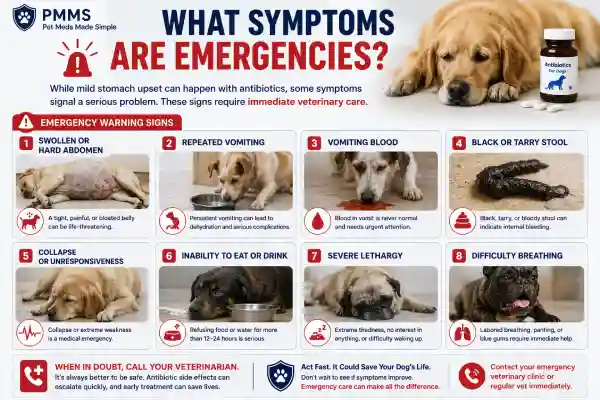
This is the MOST important section.
Seek immediate veterinary care if your dog develops:
- swollen or hard abdomen
- repeated vomiting
- vomiting blood
- black stool
- collapse
- inability to eat or drink
- severe lethargy
- breathing difficulty
- severe pain reactions
Emergency Warning Signs
| Symptom | Emergency Level |
|---|---|
| Hard bloated abdomen | EMERGENCY |
| Vomiting blood | EMERGENCY |
| Black stool | EMERGENCY |
| Collapse | EMERGENCY |
| Severe weakness | Serious |
| Inability to eat | Serious |
| Continuous vomiting | EMERGENCY |
| Breathing difficulty | EMERGENCY |
This naturally links with:
- What Happens If Dogs Take Too Much Antibiotic?
- What Does Antibiotic Toxicity Look Like in Dogs?
- Can Dogs Have Allergic Reactions to Antibiotics?
What Should Owners Do If Their Dog Has Stomach Pain After Antibiotics?
Helpful Steps
| Step | Why It Helps |
|---|---|
| Encourage hydration | Support digestion |
| Give food if approved | Reduce irritation |
| Monitor stool and vomiting | Detect worsening symptoms |
| Keep activity calm | Reduce stress |
| Watch appetite closely | Evaluate recovery |
| Contact your veterinarian if symptoms worsen | Improve safety |
NEVER:
- give human stomach medications
- stop antibiotics suddenly without guidance
- ignore bloating
- force food aggressively
- assume severe pain is normal
How Veterinarians Evaluate Stomach Pain After Antibiotics
Veterinarians may evaluate:
- medication history
- hydration status
- abdominal pain
- vomiting severity
- stool changes
- appetite loss
- infection recovery
- underlying GI disease
Possible tests may include:
- abdominal examination
- bloodwork
- X-rays
- ultrasound
- hydration assessment
- stool testing
FAQ — Can Antibiotics Cause Stomach Pain in Dogs?
Can antibiotics upset a dog’s stomach?
Yes. Antibiotics commonly cause nausea, cramping, bloating, diarrhea, or stomach irritation in some dogs.
Can antibiotics cause gas in dogs?
Absolutely. Gut bacteria disruption may lead to excessive gas or bloating.
Can antibiotics cause abdominal pain?
Yes. Some dogs develop cramping, stomach irritation, or digestive discomfort.
Which antibiotics are hardest on the stomach?
Metronidazole, doxycycline, and clindamycin are often associated with GI side effects.
Can dehydration make stomach pain worse?
Very easily. Dehydration may worsen nausea, weakness, reflux, and cramping.
Are senior dogs more sensitive?
Yes. Older dogs often have more sensitive digestion and may react more strongly to antibiotics.
What symptoms are emergencies?
Vomiting blood, collapse, black stool, severe bloating, breathing difficulty, or inability to eat require immediate veterinary attention.
Should I stop antibiotics if my dog has stomach pain?
Never stop prescription antibiotics without veterinary guidance unless instructed during an emergency evaluation.
Medical Disclaimer
This article is for educational purposes only and does not replace professional veterinary advice, diagnosis, or treatment. The content is written and pharmacist-reviewed to improve medication safety awareness and help dog owners better understand stomach pain, nausea, bloating, diarrhea, dehydration risks, digestive side effects, and emergency warning signs associated with antibiotics in dogs. Always contact your veterinarian if your dog develops severe abdominal pain, collapse, vomiting blood, or worsening symptoms.
Reviewed by
Written by Pet Meds Made Simple Editorial Team
Pharmacy Reviewed by Dimitar Atanasov MPharm
Master Pharmacist | Medication Safety Educator
Last Updated: May 2026
Editorial Policy
At PetMedsMadeSimple.com, all articles are written for educational purposes and reviewed through our pharmacist-led editorial process to improve medication safety awareness for dog owners. Our content is evidence-based, regularly updated, and designed to help readers better understand veterinary medications, side effects, interactions, warning signs, and recovery concerns.Can Antibiotics Cause Stomach Pain in Dogs?
Every article is reviewed for clarity, safety-focused language, and responsible medical communication before publication.
Read our full Editorial Policy here:
👉 Pet Meds Made Simple Editorial Policy