Quick Answer
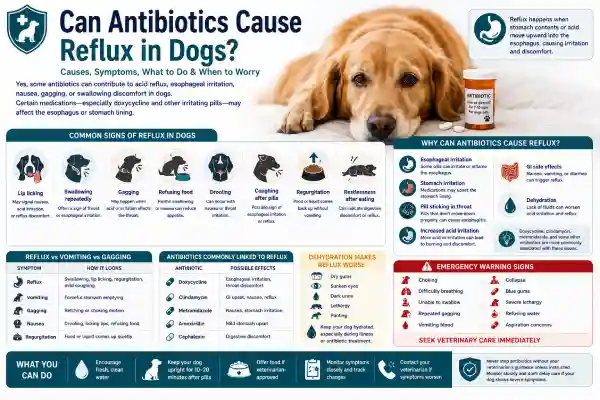
Can antibiotics cause reflux in dogs? Yes, some antibiotics may contribute to acid reflux, esophageal irritation, nausea, gagging, swallowing discomfort, lip licking, or regurgitation in dogs. Certain medications — especially doxycycline and other irritating pills — may affect the esophagus or stomach lining. Severe gagging, choking, repeated vomiting, breathing difficulty, or inability to swallow require immediate veterinary attention.
Many dog owners become worried when their dog suddenly:
- gags after antibiotics
- swallows repeatedly
- licks lips constantly
- acts nauseous after medication
- coughs after taking pills
- regurgitates food or water
- refuses food after antibiotics
- seems uncomfortable after swallowing medication
And honestly?
This is one of the MOST overlooked medication side effects in dogs.
Some dogs may develop:
- acid reflux
- esophageal irritation
- nausea
- throat discomfort
- regurgitation
- painful swallowing
This guide explains:
- why antibiotics may trigger reflux
- reflux vs vomiting vs gagging
- medications commonly associated with esophageal irritation
- dehydration and reflux risks
- warning signs owners should monitor
- emergency symptoms owners should never ignore
What Is Acid Reflux in Dogs?
Acid reflux happens when stomach contents move upward into the esophagus.
This may irritate:
- the throat
- esophagus
- upper digestive tract
Dogs with reflux may develop:
- gagging
- swallowing discomfort
- nausea
- lip licking
- coughing
- regurgitation
Unlike vomiting, reflux may happen:
- quietly
- repeatedly
- after swallowing medication
- after eating
- while lying down
Can Antibiotics Cause Reflux in Dogs?
Why Can Antibiotics Cause Reflux?
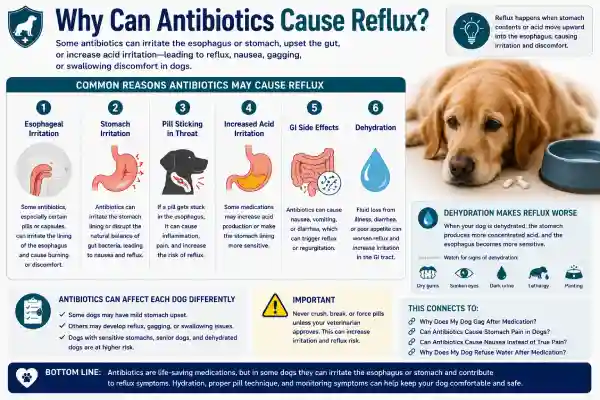
Several medication-related mechanisms may contribute.
Common Causes
| Cause | Possible Effect |
|---|---|
| Esophageal irritation | Painful swallowing |
| Stomach irritation | Nausea and reflux |
| Pill sticking in throat | Esophagitis |
| Increased acid irritation | Burning discomfort |
| GI side effects | Regurgitation or gagging |
| Dehydration | Worsened reflux |
Some antibiotics may irritate the digestive tract more than others.
This strongly connects with:
Reflux vs Vomiting vs Gagging
This is VERY important because owners often confuse these symptoms.
Symptom Comparison Table
| Symptom | Common Appearance |
|---|---|
| Reflux | Swallowing, lip licking, regurgitation |
| Vomiting | Forceful stomach emptying |
| Gagging | Choking or retching motion |
| Nausea | Drooling or refusing food |
| Regurgitation | Food or liquid coming back up quietly |
Many owners describe reflux as:
“my dog keeps swallowing weirdly after antibiotics”
This naturally links with:
- Why Is My Dog Vomiting After Antibiotics?
- Why Does My Dog Refuse Water After Medication?
- Can Dogs Develop Fear of Medication?
Which Antibiotics May Cause More Reflux Problems?
Some medications are more likely to irritate the esophagus or stomach.
Antibiotics Often Associated With Reflux or Esophageal Irritation
| Antibiotic | Possible GI/Reflux Effects |
|---|---|
| Doxycycline | Esophageal irritation |
| Clindamycin | GI upset or reflux |
| Metronidazole | Nausea or stomach irritation |
| Amoxicillin | Mild stomach discomfort |
| Cephalexin | Digestive upset |
Doxycycline deserves special attention because pills may sometimes irritate the esophagus if they do not move down properly.
This strongly connects with:
- Can Dogs Take Human Antibiotics Safely?
- What Does Antibiotic Toxicity Look Like in Dogs?
- Can Antibiotics Cause Confusion in Dogs?
What Does Reflux Look Like in Dogs?
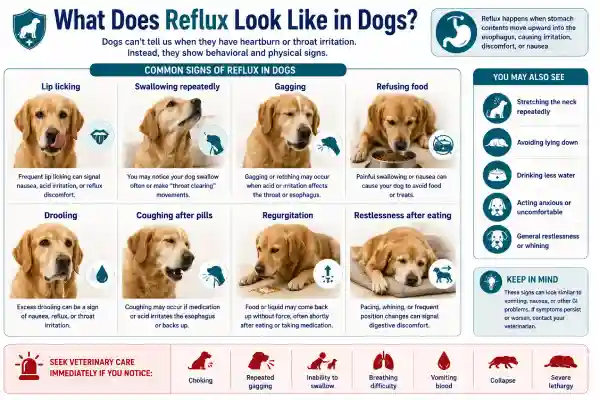
Dogs cannot describe heartburn or throat burning.
Instead, owners may notice behaviors.
Common Signs of Reflux
| Symptom | Possible Meaning |
|---|---|
| Lip licking | Nausea or acid irritation |
| Swallowing repeatedly | Reflux discomfort |
| Gagging | Throat irritation |
| Refusing food | Painful swallowing |
| Drooling | Nausea |
| Coughing after pills | Esophageal irritation |
| Regurgitation | Reflux or swallowing issues |
| Restlessness after eating | Digestive discomfort |
Some dogs may also:
- stretch the neck repeatedly
- avoid lying down
- drink less water
- act fearful around medication
Can Dehydration Make Reflux Worse?
Very easily.
Dogs with:
- diarrhea
- vomiting
- fever
- poor appetite
- reduced drinking
may develop dehydration during antibiotic treatment.
Dehydration may worsen:
- acid irritation
- nausea
- weakness
- throat discomfort
- swallowing problems
Signs of Possible Dehydration
| Symptom | Possible Concern |
|---|---|
| Dry gums | Fluid loss |
| Weakness | Poor hydration |
| Sunken eyes | Moderate dehydration |
| Dark urine | Concentrated urine |
| Panting | Stress or imbalance |
| Lethargy | Worsening dehydration |
This strongly connects with:
Can Reflux Cause Fear of Medication?
Absolutely.
Dogs that experience:
- throat pain
- nausea
- gagging
- burning discomfort
may begin associating:
medication = unpleasant experience
Some dogs may then:
- run away from pills
- refuse treats with medication
- drool before medication
- become anxious at medication time
This naturally links with:
- Can Dogs Develop Fear of Medication?
- Why Does My Dog Gag After Medication?
- Can Antibiotics Affect Dog Behavior?
Are Senior Dogs More Vulnerable?
Yes.
Older dogs often:
- have weaker swallowing reflexes
- experience slower digestion
- dehydrate more easily
- tolerate GI irritation less effectively
Senior dogs may develop:
- stronger reflux symptoms
- appetite loss
- weakness
- swallowing discomfort more easily
This strongly connects with What Is the Safest Antibiotic for Senior Dogs?
What Symptoms Are Emergencies?
This is the MOST important section.
Seek immediate veterinary care if your dog develops:
- choking
- inability to swallow
- repeated gagging
- breathing difficulty
- vomiting blood
- collapse
- blue gums
- severe lethargy
- refusal to drink water
- aspiration concerns
Emergency Warning Signs
| Symptom | Emergency Level |
|---|---|
| Difficulty breathing | EMERGENCY |
| Unable to swallow | EMERGENCY |
| Choking | EMERGENCY |
| Vomiting blood | EMERGENCY |
| Collapse | EMERGENCY |
| Blue gums | EMERGENCY |
| Severe lethargy | Serious |
| Repeated gagging | Serious |
This naturally links with:
What Should Owners Do If Their Dog Has Reflux Symptoms?
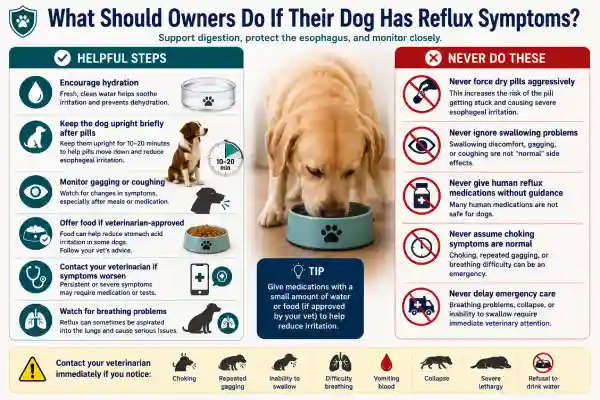
Helpful Steps
| Step | Why It Helps |
|---|---|
| Encourage hydration | Reduce irritation |
| Keep the dog upright briefly after pills | Support swallowing |
| Monitor gagging or coughing | Detect worsening symptoms |
| Offer food if veterinarian-approved | Reduce stomach irritation |
| Contact your veterinarian if symptoms worsen | Improve safety |
| Watch for breathing problems | Detect emergencies |
NEVER:
- force dry pills aggressively
- ignore swallowing problems
- give human reflux medications without guidance
- assume choking symptoms are normal
- delay emergency care during breathing problems
How Veterinarians Evaluate Reflux After Antibiotics
Veterinarians may evaluate:
- medication history
- swallowing ability
- hydration status
- nausea severity
- gagging frequency
- respiratory symptoms
- esophageal irritation
- aspiration risks
Possible tests may include:
- physical examination
- bloodwork
- X-rays
- esophageal evaluation
- medication review
- hydration assessment
FAQ — Can Antibiotics Cause Reflux in Dogs?
Can antibiotics cause acid reflux in dogs?
Yes. Some antibiotics may irritate the stomach or esophagus and contribute to reflux symptoms.
Which antibiotic is most associated with esophageal irritation?
Doxycycline is commonly associated with esophageal irritation if pills become stuck.
Is reflux the same as vomiting?
No. Reflux often involves swallowing, gagging, or regurgitation without forceful vomiting.
Why does my dog keep swallowing after antibiotics?
Repeated swallowing may indicate reflux, nausea, or throat irritation.
Can dehydration worsen reflux?
Absolutely. Dehydration may worsen acid irritation and nausea.
Can reflux make dogs afraid of medication?
Yes. Painful swallowing or nausea may create negative medication associations.
Should I stop antibiotics if my dog has reflux?
Never stop prescription antibiotics without veterinary guidance unless instructed during an emergency evaluation.
Medical Disclaimer
This article is for educational purposes only and does not replace professional veterinary advice, diagnosis, or treatment. The content is written and pharmacist-reviewed to improve medication safety awareness and help dog owners better understand acid reflux, gagging, swallowing discomfort, esophageal irritation, dehydration risks, and emergency warning signs associated with antibiotics in dogs. Always contact your veterinarian if your dog develops choking, breathing difficulty, severe lethargy, or worsening symptoms.Can Antibiotics Cause Reflux in Dogs?
Reviewed by
Written by Pet Meds Made Simple Editorial Team
Pharmacy Reviewed by Dimitar Atanasov MPharm
Master Pharmacist | Medication Safety Educator
Last Updated: May 2026
Editorial Policy
At PetMedsMadeSimple.com, all articles are written for educational purposes and reviewed through our pharmacist-led editorial process to improve medication safety awareness for dog owners. Our content is evidence-based, regularly updated, and designed to help readers better understand veterinary medications, side effects, interactions, warning signs, and recovery concerns.Can Antibiotics Cause Reflux in Dogs?
Every article is reviewed for clarity, safety-focused language, and responsible medical communication before publication.
Read our full Editorial Policy here:
👉 Pet Meds Made Simple Editorial Policy
Sources & Scientific References
- Dogs Naturally Magazine – Acid Reflux in Dogs
- PubMed Central – Gastroesophageal Reflux Research
- AKC – Esophagitis in Dogs
- ToeGrips – Acid Reflux in Dogs
- Merck Veterinary Manual
- American Veterinary Medical Association (AVMA)
- Plumb’s Veterinary Drug Handbook
Image created with AI – Can Antibiotics Cause Reflux in Dogs?