

Quick Answer
Can Amantadine Be Used for Arthritis in Dogs – Yes, amantadine can be used for arthritis in dogs—but only as part of a multimodal pain management strategy. It is most effective when combined with NSAIDs (such as carprofen) or nerve-modulating drugs like gabapentin. Unlike traditional pain medications, amantadine works by reducing central sensitization, a key mechanism in chronic arthritis pain that develops over time.
Why This Question Matters
Most dog owners search this when something isn’t working.
Typically:
- their dog is already on NSAIDs
- pain relief is incomplete
- mobility is still poor
- symptoms are slowly worsening
For example, many dogs are already receiving treatment similar to what’s explained in Carprofen for Dogs: Uses, Dosage & Side Effects, yet still show signs of discomfort.
👉 This is not unusual
👉 And it doesn’t mean the medication is “failing”
It means:
➡️ the type of pain has changed
Can Amantadine Be Used for Arthritis in Dogs?
Understanding Arthritis Pain in Dogs
Arthritis Is Not Just Inflammation
Early-stage arthritis:
- inflammation-driven
- responds well to NSAIDs
But over time:
- pain becomes persistent
- the nervous system adapts
- sensitivity increases
The Two Phases of Arthritis Pain
| Phase | What Happens | Pain Type | Best Treatment |
|---|---|---|---|
| Early | Joint inflammation | Inflammatory pain | NSAIDs |
| Chronic | Nervous system sensitization | Neuropathic/chronic pain | Multimodal therapy |
What Is Central Sensitization?
Central sensitization is the main reason arthritis becomes harder to treat over time.
It means:
- the brain amplifies pain signals
- the pain threshold drops
- even mild movement causes discomfort
This concept is also important in understanding broader pain behavior, as discussed in Why Is My Dog in Pain? Signs, Causes & When to Go to the Vet.
Real-World Example
Two dogs:
- same X-ray results
- same arthritis level
But:
- Dog A → mild discomfort
- Dog B → severe pain
👉 Dog B has central sensitization
How Amantadine Works (Advanced Mechanism)
Amantadine blocks:
👉 NMDA receptors in the nervous system
These receptors are responsible for:
- chronic pain amplification
- pain memory
- hypersensitivity
What Happens When NMDA Is Blocked?
- reduced pain intensity
- improved response to other medications
- decreased chronic pain signaling
👉 It does NOT reduce inflammation
👉 It changes how pain is processed
Why Amantadine Is Used for Arthritis
Most treatments target joints.
Amantadine targets:
👉 the brain’s pain processing system
Key Benefit
It helps when:
- NSAIDs stop being enough
- pain becomes “constant”
- dog is stiff despite treatment
This is why modern protocols often follow strategies similar to those outlined in Best Pain Medication for Dogs with Arthritis (Comparison Guide).
When Do Vets Recommend Amantadine?
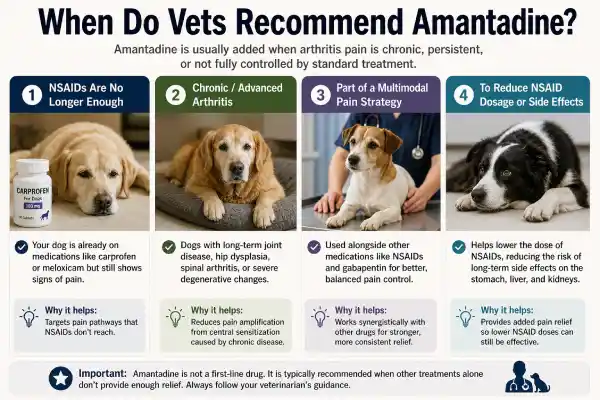
1. NSAIDs Alone Are Not Enough
A very common situation:
- dog is on carprofen or meloxicam
- partial improvement
- still limping or stiff
👉 Amantadine is added
2. Chronic / Advanced Arthritis
Best candidates:
- senior dogs
- long-term joint disease
- hip dysplasia
- spinal arthritis
3. Multimodal Therapy (Modern Gold Standard)
Veterinary medicine today uses:
👉 combination therapy
Instead of increasing one drug, vets combine:
- NSAIDs
- gabapentin
- amantadine
This approach improves outcomes and reduces side effects.
Amantadine vs Other Pain Medications
| Medication | Mechanism | Strength | Role |
|---|---|---|---|
| Carprofen | Anti-inflammatory | Strong | First-line |
| Meloxicam | Anti-inflammatory | Strong | First-line |
| Gabapentin | Nerve modulation | Moderate | Add-on |
| Amantadine | Central sensitization | Moderate | Add-on |
| Opioids | Pain suppression | Strong | Short-term |
Does Amantadine Work Alone?
❌ No — and this is critical
Amantadine alone:
- does not control inflammation
- does not provide fast relief
- does not replace NSAIDs
What It Does Best
- enhances NSAIDs
- improves chronic pain control
- reduces pain amplification
👉 Think of it as a multiplier, not a primary drug
Combination Therapy: What Works Best
Most Effective Combinations
| Combination | Benefit |
|---|---|
| NSAID + Amantadine | Targets inflammation + central pain |
| NSAID + Gabapentin | Adds nerve pain control |
| Triple therapy | Maximum control |
Amantadine is frequently paired with medications like those described in Gabapentin for Dogs: Uses, Dosage & Safety Guide, especially in chronic cases.
How Fast Does Amantadine Work?
| Time | Effect |
|---|---|
| 1–2 days | Initial response |
| 3–5 days | Noticeable improvement |
| 7–10 days | Full effect |
Important Insight
Owners often think:
❌ “It’s not working”
But reality:
✔️ It builds gradually
Signs Amantadine Is Working

Clear Improvements
- less limping
- better mobility
- improved willingness to move
- reduced stiffness
Subtle Signs
- dog stands up easier
- more interaction
- better sleep
Signs It’s NOT Working
- no change after 7–10 days
- persistent stiffness
- ongoing pain behavior
If this happens:
- dose may need adjustment
- therapy may need expansion
Safety and Side Effects
Amantadine is generally well tolerated.
Common Side Effects
- mild sedation
- soft stool
- diarrhea
Rare Side Effects
- agitation
- restlessness
Safety Considerations
- adjust dose in kidney disease
- monitor elderly dogs
- avoid overdose
Long-Term Safety Strategy
Chronic arthritis requires long-term planning.
That’s why many owners explore safer options described in Safest Pain Medication for Dogs (Vet Comparison Guide).
Which Dogs Benefit Most?
Ideal Candidates
- senior dogs
- chronic arthritis
- partial NSAID response
- long-term pain
Less Suitable
- mild arthritis
- acute injuries
- need for rapid relief
Vet Perspective: Is Amantadine Underrated?
Many vets consider it:
👉 underused but highly valuable
Why?
- targets pain differently
- improves long-term outcomes
- reduces reliance on NSAIDs
Common Mistakes Owners Make
- expecting instant results
- stopping too early
- using it alone
- ignoring subtle improvements
Pro Tips for Best Results
- combine with NSAIDs
- give consistently
- allow at least 7 days
- monitor behavior
- reassess regularly
FAQ – Can Amantadine Be Used for Arthritis in Dogs?
Is amantadine effective for arthritis?
Yes, especially for chronic arthritis when used with other medications.
Can it replace NSAIDs?
No. It enhances NSAIDs but does not replace them.
How long does it take to work?
3–7 days for noticeable improvement.
Is it safe long-term?
Yes, under veterinary supervision.
Why is it added later?
Because it targets chronic pain mechanisms that develop over time.
Conclusion
Amantadine plays a crucial role in modern arthritis treatment for dogs, especially in cases where traditional medications are no longer enough. By targeting central sensitization, it helps reduce chronic pain at its source—within the nervous system.
When used as part of a multimodal strategy, amantadine can significantly improve comfort, mobility, and quality of life in dogs suffering from long-term joint disease.Can Amantadine Be Used for Arthritis in Dogs?
Medical Disclaimer
This article is for educational purposes only and does not replace veterinary advice. Always consult your veterinarian before starting or adjusting any medication.Can Amantadine Be Used for Arthritis in Dogs?
Sources
- Plumb’s Veterinary Drug Handbook
- VCA Animal Hospitals
- Veterinary Partner (VIN)
- Journal of Veterinary Pharmacology
Can Amantadine Be Used for Arthritis in Dogs?