Quick Answer
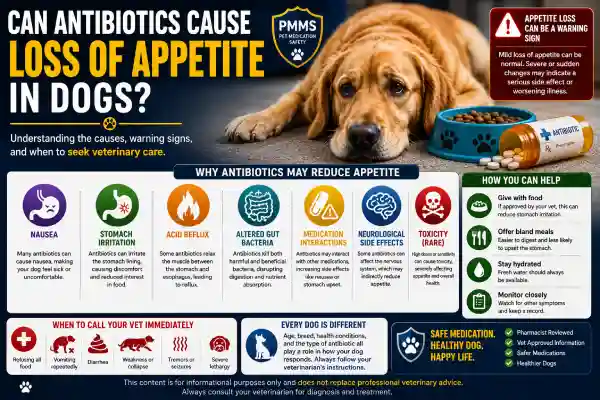
Can antibiotics cause loss of appetite in dogs? Yes antibiotics can sometimes cause appetite loss in dogs due to nausea, stomach irritation, acid reflux, gut bacteria disruption, medication interactions, or neurological side effects. Mild appetite loss may be temporary during treatment, but dogs that completely refuse food or develop vomiting, weakness, tremors, diarrhea, or severe lethargy should be evaluated by a veterinarian immediately.
Few things worry dog owners more than when their dog suddenly:
- Stops eating
- Refuses treats
- Sniffs food and walks away
- Eats much less than normal
- Seems nauseated after medication
And honestly?
Loss of appetite after antibiotics is one of the most common medication-related concerns in dogs.
Sometimes the cause is mild:
- Temporary nausea
- Upset stomach
- Bad medication taste
- Mild digestive irritation
But in other cases, appetite loss may signal:
- Severe GI irritation
- Acid reflux
- Medication intolerance
- Neurological side effects
- Drug interactions
- Toxicity
- Worsening illness
The difficult part is that dogs cannot explain:
“This medication makes me feel sick.”
Instead, owners may notice:
- Lip licking
- Drooling
- Pacing
- Hiding
- Restlessness
- Refusal to eat
- Weakness
- Vomiting
This guide explains:
- Why antibiotics can affect appetite
- Which antibiotics most commonly cause appetite loss
- When reduced appetite is considered normal
- When appetite loss becomes dangerous
- How veterinarians treat medication-related appetite problems
- What warning signs owners should NEVER ignore
Related articles:
- Why Does My Dog Drool After Antibiotics?
- Can Antibiotics Cause Weakness in Dogs?
- Why Is My Dog Restless at Night After Antibiotics?
- What Does Antibiotic Toxicity Look Like in Dogs?
- Can Dogs Take Antibiotics on an Empty Stomach?
For broader guidance:
- Antibiotics for Dogs: Uses, Types, Dosage, Side Effects & Safety Guide
- Safest Antibiotics for Dogs: Vet Comparison Guide
Can Antibiotics Cause Loss of Appetite in Dogs?
Why Do Antibiotics Cause Loss of Appetite?
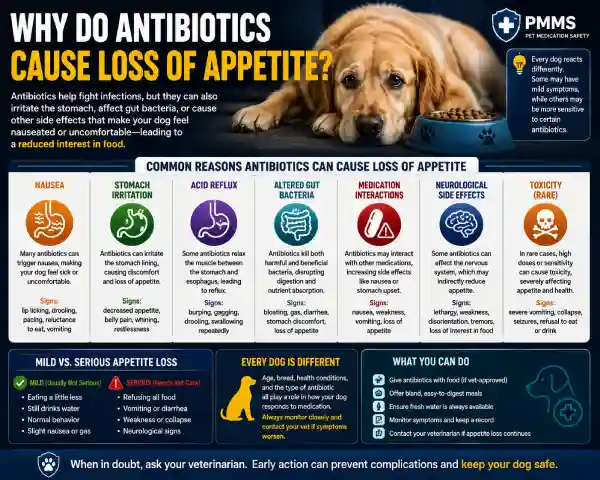
There are several reasons why antibiotics may reduce appetite in dogs.
Common Causes of Appetite Loss
| Cause | Common? | Serious? |
|---|---|---|
| Nausea | Very common | Usually mild |
| Stomach irritation | Common | Mild to moderate |
| Acid reflux | Common | Usually mild |
| Altered gut bacteria | Common | Usually mild |
| Medication interactions | Sometimes | Potentially serious |
| Neurological side effects | Less common | Serious |
| Toxicity | Rare | Emergency |
Many dogs simply feel nauseated or uncomfortable after taking certain antibiotics.
Which Antibiotics Most Commonly Cause Appetite Loss?
Some antibiotics are more likely to trigger GI side effects.
Antibiotics More Commonly Linked to Appetite Loss
| Antibiotic | Common Problem |
|---|---|
| Metronidazole | Nausea and bitter taste |
| Doxycycline | Acid reflux and nausea |
| Clindamycin | GI irritation |
| Clavamox | Digestive upset |
| Enrofloxacin | Neurological and GI effects |
Related:
- Metronidazole Side Effects in Dogs
- Doxycycline Side Effects in Dogs
- Clindamycin Side Effects in Dogs
- Clavamox Side Effects in Dogs
- Enrofloxacin Side Effects in Dogs
Can Nausea Cause Dogs to Stop Eating?
Absolutely.
Nausea is one of the biggest reasons dogs lose interest in food after antibiotics.
Dogs with nausea often:
- Lip lick repeatedly
- Swallow excessively
- Drool
- Pace
- Sniff food but refuse to eat
- Become restless
- Vomit occasionally
Some owners mistake nausea for stubborn behavior.
But many dogs truly feel sick.
Related:
Can Antibiotics Cause Acid Reflux?
Yes — especially certain medications that irritate the stomach or esophagus.
Acid reflux may cause:
- Loss of appetite
- Burping
- Swallowing repeatedly
- Drooling
- Gagging
- Crying at night
- Refusal to lie down
Doxycycline is especially known for causing esophageal irritation in some dogs.
Related:
Can Changes in Gut Bacteria Affect Appetite?
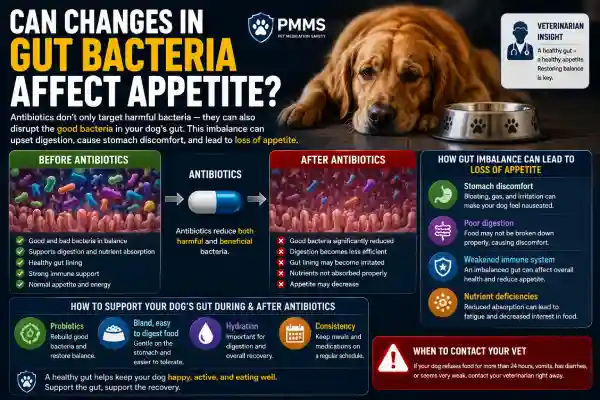
Definitely.
Antibiotics do not only affect harmful bacteria.
They may also disrupt:
- Healthy gut bacteria
- Digestion
- Nutrient absorption
- GI balance
This disruption may cause:
- Bloating
- Gas
- Stomach discomfort
- Diarrhea
- Reduced appetite
Some dogs improve when:
- Antibiotics finish
- GI irritation decreases
- Normal gut balance begins recovering
Is Mild Appetite Loss Normal?
Sometimes yes.
Mild temporary appetite reduction may happen:
- During the first few days
- With GI-sensitive antibiotics
- During mild nausea
- While the body adjusts
If your dog:
- Still drinks water
- Eats small amounts
- Behaves relatively normally
- Improves gradually
the situation may not be dangerous.
But persistent refusal to eat should never be ignored.
When Is Appetite Loss Dangerous?
Appetite loss becomes much more concerning when combined with:
- Vomiting
- Tremors
- Weakness
- Collapse
- Severe diarrhea
- Confusion
- Trouble breathing
- Refusal to drink water
- Severe lethargy
Warning Signs Owners Should Never Ignore
| Symptom | Serious? |
|---|---|
| Refusing all food | Yes |
| Vomiting repeatedly | Yes |
| Severe weakness | Yes |
| Tremors | Serious |
| Collapse | Emergency |
| Seizures | Emergency |
| Severe dehydration | Emergency |
Related:
Can Appetite Loss Be a Sign of Toxicity?
Sometimes yes.
Medication toxicity may affect:
- The nervous system
- The liver
- The GI tract
- Hydration
- Overall metabolism
Dogs with toxicity may show:
- Complete refusal to eat
- Tremors
- Disorientation
- Weakness
- Severe vomiting
- Hyperactivity or confusion
This is more likely with:
- High doses
- Long-term treatment
- Medication interactions
- Liver disease
- Kidney disease
Related:
Can Medication Interactions Reduce Appetite?
Absolutely.
Dogs taking multiple medications may experience:
- Increased nausea
- Sedation
- GI irritation
- Neurological discomfort
- Worsened reflux
This becomes especially important in dogs taking:
- Pain medications
- Anxiety medications
- Seizure medications
- Steroids
- NSAIDs
Which Dogs Are Most at Risk?
Higher-Risk Dogs
| Dog Type | Why Risk Increases |
|---|---|
| Small breeds | Higher medication sensitivity |
| Senior dogs | Slower metabolism |
| Dogs with liver disease | Poor drug processing |
| Dogs with kidney disease | Reduced clearance |
| Dogs with GI disease | Increased stomach irritation |
| Dogs on multiple medications | Higher interaction risk |
How Veterinarians Diagnose Appetite Loss
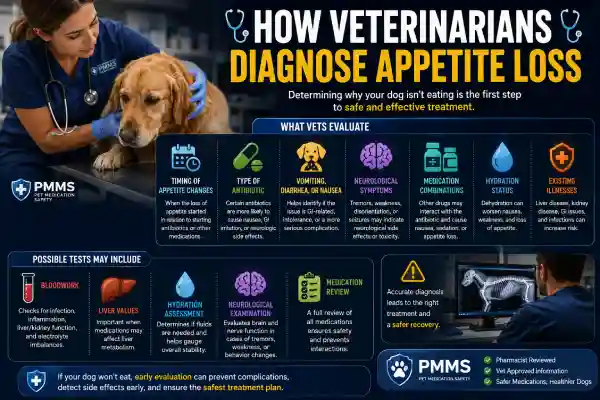
Veterinarians evaluate:
- Timing of appetite changes
- Type of antibiotic
- Vomiting or diarrhea
- Neurological symptoms
- Medication combinations
- Hydration status
- Existing illnesses
Possible testing may include:
- Bloodwork
- Liver values
- Hydration assessment
- Neurological examination
- Medication review
How Is Appetite Loss Treated?
Treatment depends on the underlying cause.
Possible Treatments
| Cause | Possible Treatment |
|---|---|
| Nausea | Anti-nausea medication |
| Acid reflux | GI protectants |
| Gut irritation | Bland diet |
| Medication interaction | Medication adjustment |
| Toxicity | Hospitalization |
| Severe dehydration | IV fluids |
How to Help a Dog Eat While on Antibiotics
Helpful Tips
| Tip | Why It Helps |
|---|---|
| Give food if vet-approved | Reduce GI irritation |
| Offer small meals | Easier digestion |
| Warm food slightly | Improve smell and interest |
| Encourage hydration | Prevent dehydration |
| Monitor symptoms closely | Detect worsening illness |
| Keep medication schedule consistent | Reduce stomach stress |
When Should You Call the Vet Immediately?
Seek veterinary care immediately if your dog:
- Refuses food completely
- Stops drinking water
- Vomits repeatedly
- Develops tremors
- Becomes weak or collapses
- Has trouble breathing
- Shows confusion
- Develops seizures
- Cannot keep medication down
These symptoms may indicate:
- Toxicity
- Severe GI complications
- Neurological reactions
- Dangerous medication interactions
- Worsening infection
FAQ – Can Antibiotics Cause Loss of Appetite in Dogs?
Can antibiotics cause loss of appetite in dogs?
Yes antibiotics may reduce appetite because of nausea, stomach irritation, reflux, or medication side effects.
Is it normal for dogs to eat less while on antibiotics?
Mild temporary appetite reduction can happen, but complete refusal to eat should be monitored carefully.
Which antibiotics most commonly cause appetite loss?
Metronidazole, doxycycline, clindamycin, and Clavamox are commonly linked to GI side effects.
Can antibiotics make dogs nauseous?
Absolutely. Nausea is one of the most common antibiotic side effects in dogs.
Should I stop antibiotics if my dog won’t eat?
Do not stop antibiotics without veterinary guidance unless emergency symptoms develop.
Medical Disclaimer
This article is for educational purposes only and does not replace professional veterinary advice, diagnosis, or treatment. The content is written and pharmacist-reviewed to improve medication safety awareness and help dog owners better understand antibiotic side effects, digestive complications, neurological reactions, toxicity risks, and veterinary medication safety considerations. Always consult your veterinarian before starting, stopping, or changing any medication for your dog.
Sources
- Merck Veterinary Manual
- VIN Veterinary Partner
- American Veterinary Medical Association (AVMA)
- FDA Center for Veterinary Medicine
- AnimalBiome Pet Health Resources
- PetMD Veterinary Health Articles