Quick Answer
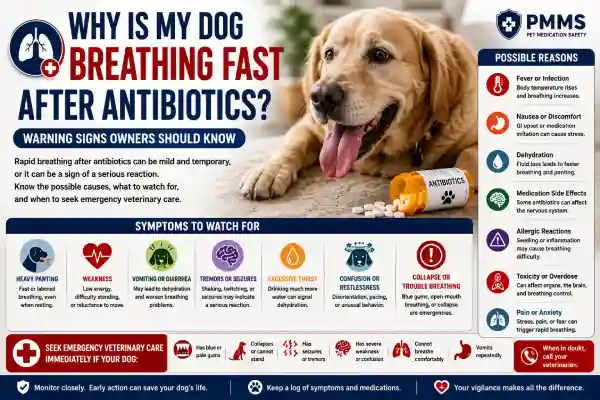
Why is my dog breathing fast after antibiotics? Dogs may breathe fast after antibiotics because of fever, pain, anxiety, dehydration, allergic reactions, nausea, infection recovery, medication side effects, or serious toxicity. Mild temporary rapid breathing may happen during illness recovery, but heavy breathing combined with weakness, tremors, collapse, blue gums, vomiting, or confusion may indicate a dangerous medical emergency requiring immediate veterinary care.
Few things scare dog owners more than suddenly noticing:
- Fast breathing
- Heavy panting
- Rapid chest movement
- Restlessness
- Labored breathing
- Unusual nighttime panting
Especially after starting a new medication.
And honestly?
Rapid breathing after antibiotics can range from:
- Mild temporary stress
to - Severe medical emergency
Sometimes the cause is relatively harmless:
- Fever
- Mild anxiety
- Recovery from infection
- Temporary discomfort
But in other cases, fast breathing may signal:
- Allergic reactions
- Severe dehydration
- Toxicity
- Neurological complications
- Pain
- Worsening infection
- Pneumonia
- Organ stress
The difficult part is that owners often cannot tell:
“Is my dog recovering normally… or getting worse?”
This guide explains:
- Why dogs may breathe fast after antibiotics
- Which symptoms are considered dangerous
- When rapid breathing becomes an emergency
- How veterinarians diagnose breathing problems
- Which antibiotic reactions owners should never ignore
Related articles:
- What Does Antibiotic Toxicity Look Like in Dogs?
- Can Antibiotics Cause Weakness in Dogs?
- Can Antibiotics Cause Hyperactivity in Dogs?
- Why Is My Dog Restless at Night After Antibiotics?
- Can Antibiotics Interact With Anxiety or Pain Medications?
For broader guidance:
- Antibiotics for Dogs: Uses, Types, Dosage, Side Effects & Safety Guide
- Safest Antibiotics for Dogs: Vet Comparison Guide
Why Is My Dog Breathing Fast After Antibiotics?
Can Antibiotics Cause Heavy Breathing in Dogs?
Yes — some dogs may develop rapid breathing or heavy panting after starting antibiotics.
This may happen because of:
- Fever
- Pain
- Stress
- Nausea
- GI discomfort
- Medication reactions
- Toxicity
- Allergic responses
Some antibiotics may also indirectly affect:
- Hydration
- Nervous system activity
- Heart rate
- Oxygen demand
Why Do Dogs Breathe Fast During Infection Recovery?
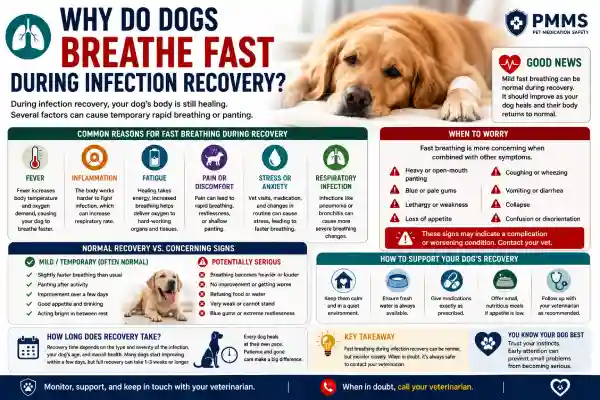
Sometimes the infection itself is responsible.
Dogs recovering from infections may experience:
- Fever
- Inflammation
- Fatigue
- Pain
- Stress on the body
All of these may temporarily increase breathing rate.
Common Infection-Related Causes of Fast Breathing
| Cause | Common? | Serious? |
|---|---|---|
| Fever | Common | Usually mild |
| Pain | Common | Moderate |
| Anxiety | Common | Mild |
| Pneumonia | Less common | Serious |
| Dehydration | Common | Moderate |
| Toxicity | Rare | Emergency |
Can Fever Cause Rapid Breathing?
Absolutely.
Fever increases:
- Body temperature
- Oxygen demand
- Metabolic activity
Dogs may then:
- Pant heavily
- Breathe faster
- Seem restless
- Sleep poorly
- Drink more water
Mild panting from fever may improve as the infection resolves.
Related:
Can Antibiotic Toxicity Cause Heavy Breathing?
Yes — and this can become very serious.
Toxicity may affect:
- The nervous system
- Hydration balance
- Kidney function
- Oxygen delivery
- Electrolytes
Dogs with toxicity may show:
- Heavy panting
- Tremors
- Weakness
- Confusion
- Collapse
- Rapid heart rate
- Neurological symptoms
Related:
Can Allergic Reactions Cause Rapid Breathing?
Absolutely — and this is one of the most dangerous possibilities.
Severe allergic reactions may cause:
- Swelling
- Hives
- Trouble breathing
- Rapid breathing
- Collapse
- Shock
Warning Signs of Allergic Reactions
| Symptom | Emergency? |
|---|---|
| Facial swelling | Serious |
| Blue gums | Emergency |
| Wheezing | Emergency |
| Collapse | Emergency |
| Severe panting | Serious |
| Difficulty breathing | Emergency |
Anaphylaxis requires immediate emergency veterinary care.
Related:
Can Anxiety or Pain Cause Fast Breathing?
Yes.
Dogs experiencing:
- Pain
- Stress
- Discomfort
- Nausea
- Restlessness
may breathe much faster than normal.
Some dogs become:
- Unable to settle
- Restless at night
- Hyper-alert
- Sensitive to noise
- Constantly pacing
Related:
Can Dehydration Cause Heavy Panting?
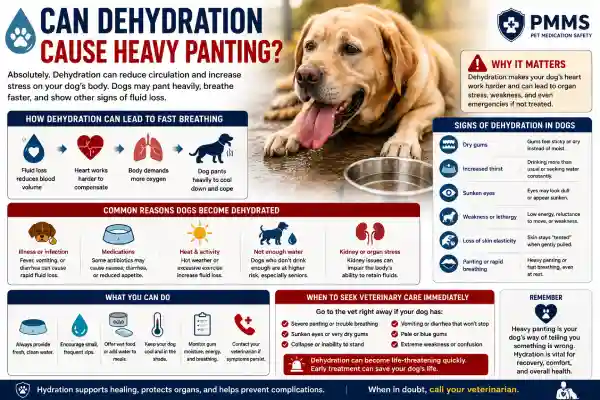
Definitely.
Dehydration may reduce circulation and increase body stress.
Dogs may then:
- Pant excessively
- Breathe rapidly
- Seek water constantly
- Become weak
- Develop dry gums
Signs of Dehydration
| Symptom | Why It Matters |
|---|---|
| Dry gums | Fluid loss |
| Weakness | Reduced circulation |
| Increased thirst | Compensation |
| Sunken eyes | More serious dehydration |
| Lethargy | Systemic stress |
Related:
- Why Is My Dog Drinking More Water After Antibiotics?
- Can Antibiotics Cause Loss of Appetite in Dogs?
Which Antibiotics Are More Commonly Linked to Fast Breathing?
Some medications are more likely to trigger:
- GI discomfort
- Anxiety-like reactions
- Neurological symptoms
- Toxicity
Antibiotics More Commonly Linked to Rapid Breathing
| Antibiotic | Possible Reason |
|---|---|
| Metronidazole | Neurological effects |
| Enrofloxacin | CNS stimulation |
| Clindamycin | GI discomfort |
| Doxycycline | Reflux and nausea |
| Sulfa antibiotics | Allergic reactions |
When Is Fast Breathing Dangerous?
Fast breathing becomes much more concerning when combined with:
- Weakness
- Tremors
- Collapse
- Vomiting
- Blue gums
- Severe lethargy
- Seizures
- Confusion
- Trouble standing
Warning Signs Owners Should Never Ignore
| Symptom | Emergency? |
|---|---|
| Blue or pale gums | YES |
| Collapse | YES |
| Seizures | YES |
| Severe weakness | Serious |
| Trouble breathing | Emergency |
| Confusion | Serious |
| Tremors | Serious |
What Symptoms Should Owners Watch For?

Important Symptoms to Monitor
| Symptom | Possible Meaning |
|---|---|
| Panting nonstop | Stress or toxicity |
| Tremors | Neurological reaction |
| Vomiting | GI side effects |
| Increased thirst | Dehydration |
| Weakness | Serious illness |
| Restlessness | Anxiety or discomfort |
How Veterinarians Diagnose Rapid Breathing
Veterinarians evaluate:
- Breathing rate
- Oxygen levels
- Lung sounds
- Heart rate
- Medication history
- Neurological symptoms
- Hydration status
- Fever
Possible testing may include:
- Chest X-rays
- Bloodwork
- Oxygen monitoring
- Neurological examination
- Hydration assessment
- Medication review
How Is Rapid Breathing Treated?
Treatment depends on the underlying cause.
Possible Treatments
| Cause | Possible Treatment |
|---|---|
| Fever | Infection management |
| Pain | Pain control |
| Dehydration | IV fluids |
| Allergic reaction | Emergency medications |
| Toxicity | Hospitalization |
| Pneumonia | Intensive treatment |
| Anxiety | Supportive care |
What Should Owners Do Immediately?
Helpful First Steps
| Step | Why It Helps |
|---|---|
| Keep your dog calm | Reduce oxygen demand |
| Monitor breathing closely | Detect worsening symptoms |
| Check gum color | Evaluate oxygenation |
| Offer water if safe | Prevent dehydration |
| Contact your veterinarian | Improve safety |
| Watch for neurological symptoms | Detect toxicity |
Do NOT:
- Give human medications
- Force activity
- Ignore worsening breathing
- Delay emergency care if symptoms escalate
When Should You Go to the Emergency Vet Immediately?
Seek emergency veterinary care immediately if your dog:
- Cannot breathe comfortably
- Has blue or gray gums
- Collapses
- Has seizures
- Cannot stand
- Shows confusion
- Develops severe tremors
- Has nonstop rapid breathing
- Stops responding normally
These symptoms may indicate:
- Severe allergic reaction
- Toxicity
- Respiratory distress
- Neurological emergency
- Shock
FAQ – Why Is My Dog Breathing Fast After Antibiotics?
Can antibiotics cause heavy breathing in dogs?
Yes antibiotics may indirectly cause rapid breathing through fever, pain, nausea, anxiety, allergic reactions, or toxicity.
How long does it take for dogs to recover from antibiotics?
Many dogs improve within several days, but recovery depends on the infection and overall health.
When should I worry about rapid breathing in dogs?
Rapid breathing becomes more concerning when combined with weakness, tremors, blue gums, collapse, vomiting, or confusion.
What are the symptoms of antibiotic toxicity in dogs?
Symptoms may include vomiting, tremors, weakness, confusion, seizures, dehydration, collapse, and heavy breathing.
Can allergic reactions cause fast breathing?
Absolutely. Severe allergic reactions may cause dangerous breathing problems and require emergency veterinary care.
Medical Disclaimer
This article is for educational purposes only and does not replace professional veterinary advice, diagnosis, or treatment. The content is written and pharmacist-reviewed to improve medication safety awareness and help dog owners better understand antibiotic side effects, respiratory symptoms, allergic reactions, dehydration, neurological complications, toxicity risks, and emergency veterinary warning signs. Always contact your veterinarian immediately if your dog develops rapid or difficult breathing.Why Is My Dog Breathing Fast After Antibiotics?