

Quick Answer
Can antibiotics affect dog behavior? Yes some antibiotics may affect dog behavior by causing nausea, discomfort, neurological side effects, gut microbiome disruption, weakness, restlessness, anxiety, confusion, or sleep changes. Some dogs may appear clingy, restless, aggressive, disoriented, hyperactive, or unusually tired during antibiotic treatment. Severe behavioral changes accompanied by tremors, seizures, wobbling, collapse, or confusion may indicate a serious neurological reaction and require immediate veterinary care.
Many dog owners become alarmed when their dog suddenly:
- Acts anxious
- Seems confused
- Becomes restless
- Starts pacing
- Acts aggressive
- Sleeps more than usual
- Seems “not like themselves”
after starting antibiotics.
And honestly?
Those concerns are valid.
Some behavioral changes may happen because the dog:
- Feels sick
- Has nausea
- Feels weak
- Is stressed from illness
- Has gut discomfort
- Is reacting neurologically to medication
The difficult part is figuring out:
“Is this temporary discomfort… or something dangerous?”
Some behavioral changes are mild and temporary.
Others may indicate:
- Neurological toxicity
- Medication reactions
- Severe illness progression
- Brain or nervous system involvement
This guide explains:
- Why antibiotics may affect dog behavior
- Which medications are more likely to cause behavioral changes
- Which symptoms are emergencies
- How long behavioral changes may last
- When owners should contact the veterinarian immediately
Related articles:
- Why Does My Dog Shake After Metronidazole?
- Can Antibiotics Cause Hyperactivity in Dogs?
- Why Is My Dog Restless at Night After Antibiotics?
- How Long Do Antibiotic Side Effects Last in Dogs?
- What Does Antibiotic Toxicity Look Like in Dogs?
- Can Dogs Take Probiotics With Antibiotics?
For broader guidance:
- Antibiotics for Dogs: Uses, Types, Dosage, Side Effects & Safety Guide
- Safest Antibiotics for Dogs: Vet Comparison Guide
Can Antibiotics Affect Dog Behavior?
Can Antibiotics Really Affect Dog Behavior?
Yes — in some dogs, antibiotics may affect:
- Mood
- Energy level
- Sleep patterns
- Anxiety levels
- Coordination
- Mental alertness
- Comfort level
Behavioral changes may happen because:
- The dog feels physically unwell
- The medication affects the nervous system
- Gut bacteria become disrupted
- Sleep becomes disturbed
- Pain or infection worsens
- The body experiences stress
Some dogs may become:
- More clingy
- More irritable
- More anxious
- Restless
- Hyperactive
- Withdrawn
- Confused
Why Do Dogs Act Strange After Antibiotics?
This is one of the MOST common owner concerns.
Dogs cannot explain:
- Nausea
- Dizziness
- Weakness
- Brain fog
- GI discomfort
- Anxiety
- Neurological symptoms
Instead, they may show behavioral changes.
Common Reasons Dogs Behave Differently
| Cause | Possible Behavioral Change |
|---|---|
| Nausea | Restlessness, pacing |
| GI discomfort | Irritability |
| Weakness | Withdrawal |
| Neurological side effects | Confusion |
| Sleep disruption | Hyperactivity |
| Pain or infection | Anxiety |
Can Antibiotics Cause Anxiety or Restlessness?
Absolutely.
Some dogs may:
- Pace
- Whine
- Refuse to settle
- Wake frequently
- Follow owners constantly
- Act nervous
- Become clingy
This may happen because of:
- Nausea
- Abdominal discomfort
- Sleep disruption
- Neurological stimulation
- Stress from illness
Signs of Anxiety or Restlessness
| Symptom | Common? |
|---|---|
| Pacing | Common |
| Panting | Common |
| Whining | Sometimes |
| Clinginess | Common |
| Trouble sleeping | Common |
| Hypervigilance | Sometimes |
Related:
- Why Is My Dog Restless at Night After Antibiotics?
- Why Is My Dog Panting at Night After Antibiotics?
Can Antibiotics Cause Aggression in Dogs?
Sometimes indirectly.
Dogs in pain or discomfort may become:
- Irritable
- Defensive
- Snappy
- Easily startled
Neurological effects may also contribute to:
- Confusion
- Fear responses
- Unusual behavior
Possible Causes of Aggression
| Cause | Why It Happens |
|---|---|
| Pain | Defensive behavior |
| Nausea | Irritability |
| Confusion | Fear response |
| Neurological symptoms | Abnormal reactions |
| Sleep deprivation | Increased stress |
Aggression accompanied by:
- confusion
- tremors
- wobbling
- seizures
may indicate a more serious problem.Can Antibiotics Affect Dog Behavior?
Can Antibiotics Cause Hyperactivity?
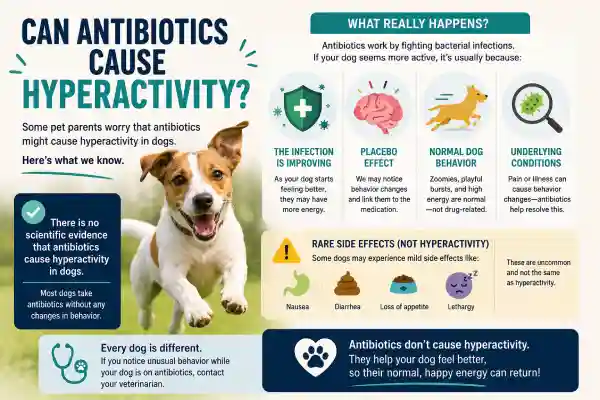
Yes — some dogs may become:
- Restless
- Hyper-alert
- Unable to relax
- More reactive
- Overstimulated
This may occur because of:
- GI discomfort
- Anxiety
- Sleep disruption
- Neurological stimulation
Certain antibiotics — especially metronidazole — are more associated with neurological side effects.
Related:
Can Metronidazole Cause Behavioral Changes?
Absolutely.
Metronidazole is one of the antibiotics most commonly associated with:
- Neurological side effects
- Behavioral changes
- Tremors
- Confusion
- Wobbling
- Disorientation
Some dogs may appear:
- “Spacey”
- Unsteady
- Anxious
- Hyperactive
- Weak
- Mentally altered
Possible Metronidazole Neurological Signs
| Symptom | Serious? |
|---|---|
| Tremors | Serious |
| Wobbling | Serious |
| Eye twitching | Serious |
| Confusion | Serious |
| Seizures | Emergency |
| Collapse | Emergency |
Related:
Can Gut Bacteria Affect Mood and Behavior?
This is a HUGE modern veterinary medicine topic.
The gut and brain communicate through what is often called:
the gut-brain axis.
Antibiotics may disrupt:
- Healthy gut bacteria
- Digestion
- GI signaling
- Stress responses
Some researchers believe microbiome disruption may influence:
- Mood
- Anxiety
- Sleep
- Energy
- Behavior
This is one reason some veterinarians recommend:
- Probiotics
- Bland diets
- GI support during recovery
Related:
Which Dogs Are More Sensitive to Behavioral Side Effects?

Some dogs may be more vulnerable to:
- Neurological reactions
- Anxiety
- Medication sensitivity
- GI discomfort
Higher Risk Dogs
| Dog Type | Why Risk Increases |
|---|---|
| Senior dogs | Slower metabolism |
| Small dogs | Higher sensitivity |
| Dogs with liver disease | Reduced drug clearance |
| Dogs with neurological disease | Increased vulnerability |
| Dogs receiving high doses | Greater toxicity risk |
What Behavioral Changes Are Emergencies?
This section is CRITICAL.
Some behavioral changes may signal:
- Neurological toxicity
- Brain involvement
- Severe medication reaction
Emergency Warning Signs
| Symptom | Emergency? |
|---|---|
| Seizures | YES |
| Collapse | YES |
| Severe confusion | YES |
| Unresponsiveness | YES |
| Severe tremors | YES |
| Trouble standing | Serious |
| Severe disorientation | Serious |
Related:
Why Do Some Dogs Sleep More After Antibiotics?
Some dogs become:
- Tired
- Weak
- Less active
- Sleepier than usual
Possible reasons include:
- Infection recovery
- Nausea
- Reduced appetite
- Dehydration
- Medication fatigue
Mild tiredness may happen temporarily.
However:
extreme lethargy should NEVER be ignored.
Can Antibiotics Affect Sleep?
Yes.
Some dogs may:
- Wake repeatedly
- Pace at night
- Struggle to relax
- Sleep excessively
- Seem restless during bedtime
This may happen because of:
- GI discomfort
- Anxiety
- Pain
- Neurological stimulation
- Fever
- Medication side effects
How Long Can Behavioral Changes Last?
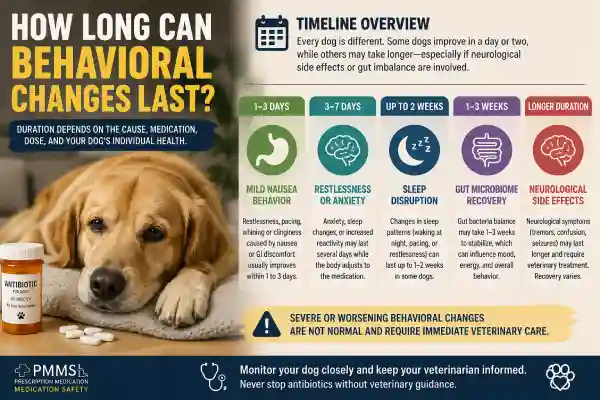
This depends on:
- The antibiotic used
- Dose size
- Treatment duration
- Severity of side effects
- Overall health
- Presence of neurological symptoms
Typical Recovery Timeline
| Behavioral Change | Possible Duration |
|---|---|
| Mild nausea behavior | 1–3 days |
| Restlessness | Several days |
| Sleep disruption | Variable |
| Neurological symptoms | Potentially longer |
| Severe toxicity | Veterinary treatment required |
Related:
What Should Owners Do If Their Dog Behaves Strangely?
Important Steps
| Step | Why It Helps |
|---|---|
| Monitor symptoms carefully | Detect worsening signs |
| Watch appetite and hydration | Evaluate illness severity |
| Keep your dog calm | Reduce stress |
| Contact your veterinarian | Important guidance |
| Watch for neurological signs | Detect emergencies |
Do NOT:
- Give human calming medications
- Ignore worsening symptoms
- Double medication doses
- Delay emergency care
How Veterinarians Evaluate Behavioral Changes
Veterinarians may assess:
- Medication history
- Dosage
- Timing of symptoms
- Neurological status
- Hydration
- Appetite
- Liver function
- Infection severity
Possible testing may include:
- Bloodwork
- Neurological examination
- Medication review
- GI assessment
When Should Owners Contact the Vet Immediately?
Seek veterinary care immediately if your dog develops:
- Seizures
- Collapse
- Severe confusion
- Severe tremors
- Unresponsiveness
- Trouble breathing
- Repeated vomiting
- Severe weakness
- Loss of coordination
These symptoms may indicate:
- Neurological toxicity
- Severe medication reaction
- Worsening infection
- Dangerous illness progression
FAQ – Can Antibiotics Affect Dog Behavior?
Can antibiotics make dogs act weird?
Yes some dogs may appear anxious, restless, confused, clingy, hyperactive, or unusually tired during antibiotic treatment.
Can antibiotics cause anxiety in dogs?
Some dogs may become anxious because of nausea, GI discomfort, sleep disruption, or neurological side effects.
Can metronidazole change dog behavior?
Absolutely. Metronidazole is known to potentially cause neurological and behavioral side effects in some dogs.
Can antibiotics cause aggression in dogs?
Sometimes indirectly. Dogs in pain, nausea, confusion, or neurological distress may become irritable or defensive.
Can antibiotics affect the brain?
Some antibiotics especially metronidazole — may affect the nervous system and brain in sensitive dogs.
Can gut bacteria affect dog behavior?
Potentially yes. The gut-brain axis may influence mood, stress responses, and behavior.
How long do behavioral side effects last?
Mild behavioral changes may improve within several days, while severe neurological symptoms require immediate veterinary care.
What behavioral changes are emergencies?
Seizures, collapse, severe tremors, severe confusion, trouble standing, or unresponsiveness are emergencies.
Why is my dog restless at night after antibiotics?
Possible causes include nausea, anxiety, GI discomfort, fever, sleep disruption, or neurological stimulation.
Should I stop antibiotics if my dog acts strange?
Never stop prescription medication without veterinary guidance unless instructed during an emergency situation.
Medical Disclaimer
This article is for educational purposes only and does not replace professional veterinary advice, diagnosis, or treatment. The content is written and pharmacist-reviewed to improve medication safety awareness and help dog owners better understand behavioral changes associated with antibiotics, neurological side effects, gut-brain interactions, anxiety, restlessness, toxicity risks, and veterinary medication safety considerations. Always contact your veterinarian if your dog develops unusual behavioral or neurological symptoms during antibiotic treatment.Can Antibiotics Affect Dog Behavior?
Sources
- VCA Animal Hospitals
- Merck Veterinary Manual
- American Veterinary Medical Association (AVMA)
- PubMed Central – Gut-Brain Axis Research
Images created with AI – Can Antibiotics Affect Dog Behavior?