Quick Answer
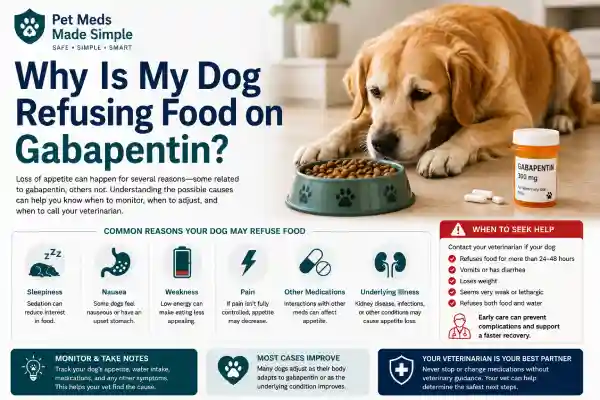
Why is my dog refusing food on gabapentin? Some dogs may eat less or temporarily refuse food while taking gabapentin due to sedation, nausea, underlying illness, pain, medication interactions, or changes in routine. In many cases the problem is not the medication itself but the condition being treated. However, persistent appetite loss should always be discussed with a veterinarian.
Why is my dog refusing food on gabapentin?
A dog may refuse food on gabapentin because of medication-related sleepiness, nausea, weakness, underlying disease, pain, anxiety, or interactions with other medications. While mild appetite changes can occur, prolonged refusal to eat or complete loss of appetite requires veterinary evaluation.
When Owners Commonly Ask This
Owners often search why is my dog refusing food on gabapentin after noticing:
- Sniffing food but walking away
- Eating much less than usual
- Skipping meals
- Refusing treats
- Sleeping more and eating less
- Taking medication and suddenly losing interest in food
Many owners become concerned because appetite changes are often one of the first noticeable signs that something may be wrong.
Why Is My Dog Refusing Food on Gabapentin?
Can Gabapentin Directly Cause Appetite Loss?
Sometimes.
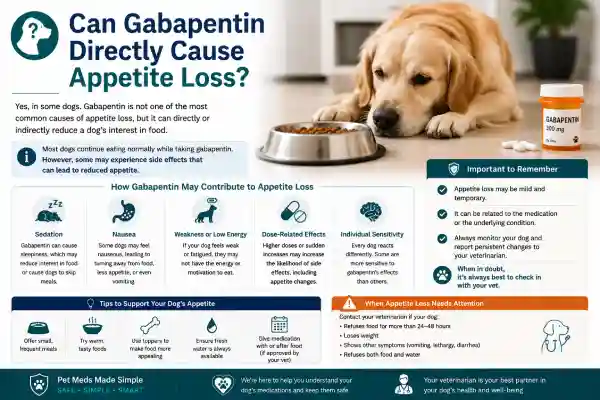
Gabapentin is not usually considered one of the most common causes of appetite loss in dogs.
However, some dogs may experience:
- Reduced interest in food
- Mild nausea
- Sedation
- Behavioral changes
These effects can indirectly reduce appetite.
Most dogs continue eating normally while taking gabapentin.
Could Sleepiness Reduce Appetite?
Absolutely.
This is one of the most common explanations.
A dog that feels sleepy may:
- Skip meals
- Show less excitement about food
- Stay in bed longer
- Ignore feeding time
Owners may interpret this as appetite loss when the dog is actually experiencing medication-related sedation.
Related article:
Why Does My Dog Sleep So Much on Gabapentin?
Could Nausea Be Involved?
Yes.
Although not every dog develops nausea, some may experience:
- Lip licking
- Drooling
- Turning away from food
- Eating grass
- Occasional vomiting
A nauseous dog often appears interested in food initially but refuses it when offered.
Related article:
Why Is My Dog Vomiting After Gabapentin?
Could Weakness Affect Eating?
Surprisingly, yes.
Dogs experiencing weakness may:
- Have less energy to get up
- Be reluctant to walk to the food bowl
- Appear uninterested in meals
In these cases the problem may be mobility rather than appetite.
Related article:
Why Is My Dog Weak After Gabapentin?
Could My Dog Simply Still Be in Pain?
Absolutely.
Many owners automatically assume the medication is causing the problem.
However, appetite loss is also common in dogs experiencing:
- Chronic pain
- Arthritis
- Injury
- Surgical recovery
If pain remains poorly controlled, appetite may decline.
Could Anxiety Cause Appetite Changes?
Yes.
Anxiety can significantly affect eating habits.
Some anxious dogs may:
- Skip meals
- Eat less
- Become picky eaters
- Ignore food during stressful situations
The underlying anxiety disorder may contribute to appetite changes even while receiving treatment.
Could a Dose Increase Trigger Appetite Changes?
Sometimes.
Owners often report appetite changes after:
- Starting gabapentin
- Increasing the dose
- Adding another medication
This does not automatically mean the medication is unsafe, but it is worth discussing with a veterinarian.
Could Other Medications Be Responsible?
Very often.
Many dogs taking gabapentin are also prescribed:
- Trazodone
- NSAIDs
- Antibiotics
- Seizure medications
- Other pain medications
Sometimes the appetite loss is related to another medication rather than gabapentin itself.
Related articles:
Could Senior Dogs Be More Sensitive?
Yes.
Older dogs may be more susceptible to:
- Sedation
- Medication side effects
- Kidney disease
- Underlying illness
As a result, appetite changes may be more noticeable in senior dogs.
Related article:
Can Senior Dogs Take Gabapentin Safely?
Could Kidney Disease Affect Appetite?
Absolutely.
Dogs with kidney disease may experience:
- Nausea
- Appetite loss
- Weight loss
- Increased sensitivity to medications
Owners sometimes blame gabapentin when the real issue is an underlying kidney condition.
Could Confusion Cause a Dog to Ignore Food?
Sometimes.
A confused or disoriented dog may:
- Forget about meals
- Wander away from food
- Seem distracted
- Show reduced interest in normal routines
Related article:
Why Is My Dog Confused After Gabapentin?
What Should Owners Monitor?
Pay attention to:
- Appetite changes
- Water intake
- Vomiting
- Activity level
- Weight changes
- Medication timing
- Stool quality
These details can help veterinarians identify the underlying cause.
How Veterinarians Evaluate Appetite Loss
When owners ask why is my dog refusing food on gabapentin, veterinarians try to determine whether the appetite loss is caused by:
- The medication itself
- Sedation
- Nausea
- Pain
- Anxiety
- Kidney disease
- Medication interactions
- An unrelated illness
A veterinary evaluation may include:
- Medication review
- Physical examination
- Pain assessment
- Weight monitoring
- Blood work
- Kidney and liver testing
One of the most important questions is:
“Did the appetite loss begin before or after starting gabapentin?”
The timing often provides valuable clues.
Could Overdose Cause Refusal to Eat?
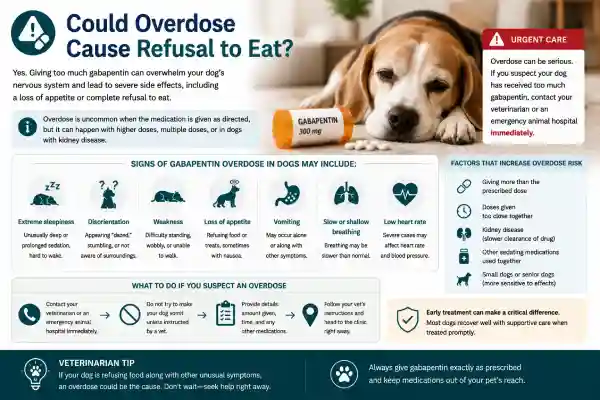
Yes.
Dogs experiencing gabapentin overdose may develop:
- Severe sedation
- Confusion
- Weakness
- Reduced interest in food
- Vomiting
In many cases, the dog feels too sleepy or disoriented to eat normally.
Related article:
Can Dogs Overdose on Gabapentin?
Could Appetite Improve As the Body Adjusts?
Often, yes.
Many dogs experience mild side effects during:
- The first few days of treatment
- Dose increases
- Medication changes
As the body adapts, appetite may gradually return to normal.
This is especially true when appetite loss is related to mild sedation.
Could Refusing Food Be Temporary?
Absolutely.
Some dogs skip:
- One meal
- Part of a meal
- A day of reduced eating
before returning to normal eating habits.
However, prolonged refusal to eat should never be ignored.
Could Dehydration Become a Concern?
Yes.
A dog that refuses food and drinks less water may become dehydrated.
Warning signs include:
- Dry gums
- Lethargy
- Sunken eyes
- Weakness
- Reduced urination
This is one reason veterinarians pay close attention to appetite changes.
Could Weight Loss Follow Appetite Loss?
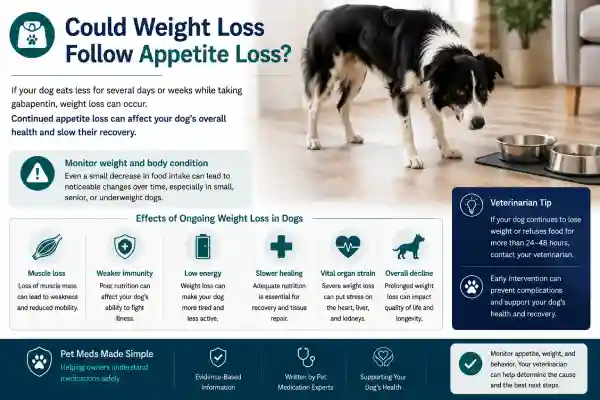
Certainly.
If reduced eating continues for several days or weeks, dogs may develop:
- Weight loss
- Muscle loss
- Reduced energy
- Slower recovery from illness
Long-term appetite changes deserve veterinary attention.
When Does Refusing Food Become an Emergency?
Mild appetite reduction is not always an emergency.
However, immediate veterinary care is recommended if appetite loss occurs with:
Repeated Vomiting
Particularly if food and water cannot be kept down.
Collapse
Any collapse requires urgent evaluation.
Severe Weakness
Inability to stand or walk normally.
Breathing Problems
Abnormal breathing should never be ignored.
Severe Dehydration
Especially in older dogs.
Complete Refusal of Food and Water
This situation requires prompt veterinary assessment.
Could the Underlying Condition Be More Important Than the Medication?
Very often.
Sometimes owners focus on gabapentin while the real cause is:
- Progressive arthritis
- Cancer
- Kidney disease
- Infection
- Recovery from surgery
- Chronic pain
This is why a complete veterinary evaluation is important when appetite loss persists.
Related Symptoms Owners Often Search For
Owners searching why is my dog refusing food on gabapentin often search for:
Vomiting
Related article: Why Is My Dog Vomiting After Gabapentin?
Weakness
Related article: Why Is My Dog Weak After Gabapentin?
Confusion
Related article: Why Is My Dog Confused After Gabapentin?
Acting Strange
Related article: Why Is My Dog Acting Strange on Gabapentin?
Sleeping More
Related article: Why Does My Dog Sleep So Much on Gabapentin?
Personality Changes
Related article: Can Gabapentin Affect Dog Personality?
Breathing Problems
Related article: Can Gabapentin Cause Breathing Problems in Dogs?
Shaking
Related article: Why Does My Dog Shake Before Gabapentin Wears Off?
Overdose
Related article: Can Dogs Overdose on Gabapentin?
Senior Dog Safety
Related article: Can Senior Dogs Take Gabapentin Safely?
What Questions Should Owners Ask Their Veterinarian?
Helpful questions include:
- Could gabapentin be affecting my dog’s appetite?
- Is nausea contributing to the problem?
- Could another medication be responsible?
- Should blood work be performed?
- Is my dog dehydrated?
- At what point should appetite loss be considered an emergency?
Keeping a daily record of food intake can be very helpful.
Veterinarian Takeaway
Why is my dog refusing food on gabapentin? Appetite loss may be related to sedation, nausea, weakness, medication interactions, underlying disease, or the condition being treated rather than the medication itself. Mild reductions in appetite sometimes improve as dogs adjust to treatment, but prolonged refusal to eat should always be evaluated by a veterinarian.
Bottom Line
If you’re wondering why is my dog refusing food on gabapentin, several explanations may be possible.
Common causes include:
- Sleepiness
- Nausea
- Weakness
- Anxiety
- Kidney disease
- Medication interactions
- Underlying illness
- Pain
- Overdose situations
While some dogs experience temporary appetite changes, persistent refusal to eat deserves veterinary attention.
Frequently Asked Questions – Why Is My Dog Refusing Food on Gabapentin
Can gabapentin cause appetite loss in dogs?
Yes. Some dogs may experience reduced appetite, although it is not among the most common side effects.
Is it normal for my dog to skip one meal on gabapentin?
A single missed meal may not be serious, but continued appetite loss should be discussed with a veterinarian.
Can sleepiness make dogs eat less?
Absolutely. Sedation may reduce interest in food.
Could nausea be causing my dog to refuse food?
Yes. Nausea is a common reason dogs lose interest in eating.
Are senior dogs more sensitive?
Often yes. Older dogs may experience more noticeable medication effects.
Could kidney disease affect appetite?
Yes. Kidney disease commonly contributes to appetite loss.
Can overdose cause appetite changes?
Yes. Overdose may lead to severe sedation, confusion, and refusal to eat.
Should I stop gabapentin if my dog refuses food?
No. Never stop medication without veterinary guidance.
How long should I wait before calling my veterinarian?
If appetite loss lasts more than a day, worsens, or occurs with other symptoms, contact your veterinarian.
When is appetite loss an emergency?
Seek immediate veterinary care if appetite loss occurs with collapse, severe weakness, repeated vomiting, dehydration, breathing difficulties, or refusal of both food and water.
Reviewed By
Pharmacy Reviewed By
Dimitar Atanasov, MPharm
Master Pharmacist | Medication Safety Educator
Editorial Policy
At Pet Meds Made Simple, we are committed to providing accurate, evidence-based information about pet medications, veterinary treatments, medication safety, and common health concerns that affect dogs and cats.
Our content is researched using veterinary reference texts, peer-reviewed veterinary literature, clinical guidelines, and trusted veterinary organizations. Every article is written with the goal of helping pet owners better understand their pet’s medications while supporting—not replacing—the advice of their veterinarian.
Read our full Editorial Policy:
Pet Meds Made Simple Editorial Policy
Sources
- Plumb’s Veterinary Drug Handbook
- American Animal Hospital Association (AAHA)
- American Veterinary Medical Association (AVMA)
- Merck Veterinary Manual
- Veterinary Pharmacology and Therapeutics
- Small Animal Clinical Pharmacology
- Journal of the American Veterinary Medical Association (JAVMA)
- Frontiers in Veterinary Science
- Veterinary Anaesthesia and Analgesia
- Veterinary Information Network (VIN)
Medical Review Statement
This article was pharmacy-reviewed by Dimitar Atanasov, MPharm, Master Pharmacist, using current veterinary pharmacology references, canine medication-safety guidelines, nutritional support resources, and published veterinary literature available at the time of review.