Quick Answer
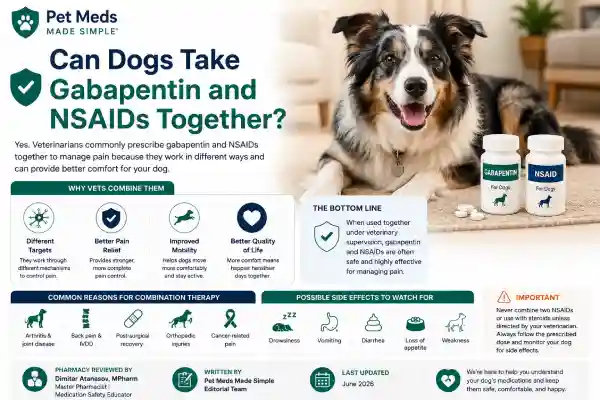
Can Dogs Take Gabapentin and NSAIDs Together? Yes, dogs can often take gabapentin and NSAIDs together when prescribed by a veterinarian. This combination is commonly used for arthritis, chronic pain, orthopedic injuries, and post-surgical recovery because the medications work in different ways. Gabapentin primarily targets nerve-related pain, while NSAIDs reduce inflammation. Most dogs tolerate the combination well, but owners should monitor for excessive sedation, weakness, vomiting, diarrhea, or appetite changes and contact their veterinarian if concerning symptoms develop.
Why Owners Ask This Question
Many dog owners become concerned when they discover that their veterinarian has prescribed two pain medications at the same time.
A typical situation sounds something like this:
“My dog is already taking carprofen. Why does my veterinarian also want to add gabapentin?”
Others wonder:
- Is this too much medication?
- Can these drugs interact?
- Will my dog become overly sedated?
- Could this damage the kidneys or liver?
- Is it safe for long-term use?
These are reasonable concerns.
The good news is that veterinarians frequently prescribe gabapentin alongside NSAIDs because the medications work differently and often complement each other.
Understanding why these medications are combined can help owners feel more confident about their dog’s treatment plan.
Can Dogs Take Gabapentin and NSAIDs Together?
What Is Gabapentin?
Gabapentin is a medication commonly used in veterinary medicine to help manage chronic pain, nerve pain, anxiety, and certain seizure disorders.
Although originally developed for human medicine, gabapentin has become one of the most frequently prescribed medications for dogs.
How Gabapentin Works
Unlike NSAIDs, gabapentin does not reduce inflammation.
Instead, it works by affecting how pain signals travel through the nervous system.
This makes it especially useful for:
- Nerve pain
- Chronic pain conditions
- Arthritis-related discomfort
- Back pain
- Intervertebral Disc Disease (IVDD)
Owners interested in using gabapentin for chronic pain management often discover that it works best when combined with other therapies.
Common Conditions Treated With Gabapentin
| Condition | Common Use |
|---|---|
| Arthritis | Yes |
| IVDD | Yes |
| Hip Dysplasia | Yes |
| Cancer Pain | Yes |
| Anxiety | Yes |
| Seizure Disorders | Sometimes |
One of the most common gabapentin dosage guidelines for dogs involves using the medication as part of a larger pain-management strategy rather than as a standalone treatment.
What Are NSAIDs for Dogs?
NSAID stands for Non-Steroidal Anti-Inflammatory Drug.
These medications reduce inflammation, swelling, and pain.
They are considered some of the most effective medications for orthopedic pain and arthritis in dogs.
Common Veterinary NSAIDs
| NSAID | Common Brand | Primary Use |
|---|---|---|
| Carprofen | Rimadyl | Arthritis, pain |
| Meloxicam | Metacam | Arthritis, inflammation |
| Firocoxib | Previcox | Osteoarthritis |
| Deracoxib | Deramaxx | Post-surgical pain |
| Galliprant | Galliprant | Osteoarthritis |
If you’re unfamiliar with these medications, our guide to understanding dog pain medications provides a more detailed overview.
How NSAIDs Work
NSAIDs block enzymes involved in inflammation.
As inflammation decreases:
- Pain often improves
- Mobility may increase
- Swelling may decrease
- Quality of life may improve
However, NSAIDs do not specifically target nerve pain the way gabapentin does.
Can Dogs Take Gabapentin and NSAIDs Together?
Yes.
Veterinarians commonly prescribe gabapentin and NSAIDs together.
In fact, this combination is considered a cornerstone of multimodal pain management in veterinary medicine.
Because the medications work through different mechanisms, they often provide better pain control when used together.
Think of it this way:
An NSAID targets inflammation.
Gabapentin targets pain signaling within the nervous system.
Together, they address different components of pain.
This allows veterinarians to improve comfort without necessarily increasing the dosage of either medication.
Why Veterinarians Combine Gabapentin and NSAIDs
Pain is rarely caused by a single process.
For example, a dog with arthritis may experience:
- Joint inflammation
- Cartilage degeneration
- Muscle tension
- Chronic pain signaling
- Nerve sensitization
A single medication may not adequately address all these factors.
Benefits of Combination Therapy
| Benefit | Gabapentin | NSAID |
|---|---|---|
| Reduces Inflammation | No | Yes |
| Targets Nerve Pain | Yes | No |
| Helps Chronic Pain | Yes | Yes |
| Improves Mobility | Indirectly | Directly |
| Useful for Arthritis | Yes | Yes |
By combining the two medications, veterinarians can often achieve better pain control than with either medication alone.
Conditions Commonly Treated With This Combination
Arthritis
Arthritis is probably the most common reason veterinarians prescribe gabapentin and NSAIDs together.
NSAIDs reduce joint inflammation.
Gabapentin helps manage chronic pain pathways that may develop over time.
Many owners researching safest pain medication options for dogs discover that multimodal therapy is often recommended for senior dogs with arthritis.
Hip Dysplasia
Dogs with hip dysplasia frequently experience both inflammatory pain and chronic discomfort.
Combination therapy often provides better mobility and comfort.
Intervertebral Disc Disease (IVDD)
IVDD frequently causes nerve-related pain.
Gabapentin is especially valuable in these cases.
NSAIDs may also help reduce inflammation surrounding affected spinal tissues.
Post-Surgical Recovery
After orthopedic surgery, veterinarians commonly prescribe:
- Gabapentin
- An NSAID
- Additional pain medications if needed
The goal is to maximize comfort while minimizing suffering during recovery.
Cancer Pain
Cancer pain can involve:
- Inflammation
- Tissue damage
- Nerve involvement
Combination therapy is often used as part of a comprehensive pain-management plan.
Gabapentin vs NSAIDs: What’s the Difference?
Many owners assume gabapentin and NSAIDs are essentially the same medication.
They are not.
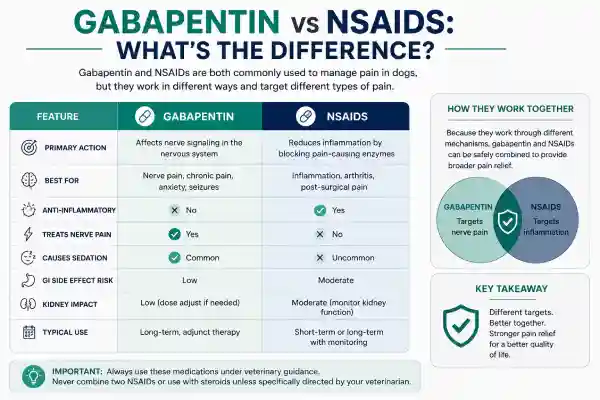
Side-by-Side Comparison
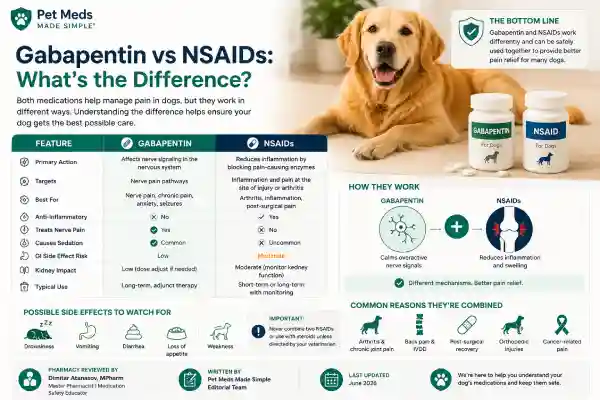
| Feature | Gabapentin | NSAIDs |
|---|---|---|
| Anti-inflammatory | No | Yes |
| Nerve Pain Relief | Yes | No |
| Arthritis Treatment | Yes | Yes |
| Causes Sedation | Common | Uncommon |
| Kidney Risk | Low | Moderate |
| GI Side Effects | Low | Moderate |
| Used for Anxiety | Yes | No |
This is why veterinarians often prescribe both medications together rather than choosing one or the other.
What Side Effects Should Owners Watch For?
Most dogs tolerate the combination well.
However, side effects can occur.
Sedation
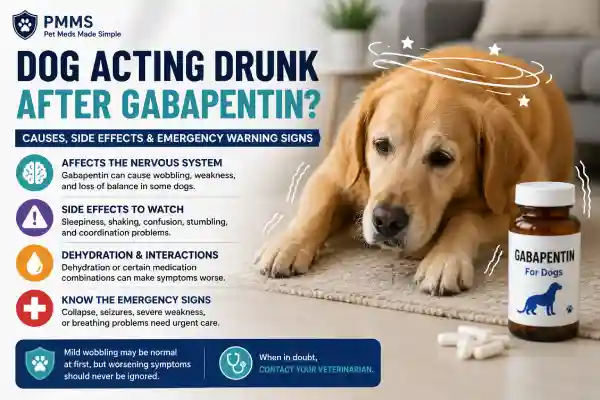
Sedation is one of the most common common gabapentin side effects in dogs.
Signs may include:
- Sleeping more than usual
- Reduced activity
- Slower responses
- Mild lethargy
Weakness
Some dogs experience temporary wobbliness.
Owners researching gabapentin-related weakness in dogs often notice symptoms shortly after starting treatment.
Vomiting
Vomiting may occur with NSAIDs and occasionally with gabapentin.
Diarrhea
Digestive upset is more commonly associated with NSAIDs.
Appetite Changes
Some dogs temporarily eat less after starting medication.
When Does the Combination Become Risky?
Most healthy dogs tolerate these medications well.
However, some dogs require additional monitoring.
Dogs With Kidney Disease
NSAIDs can affect kidney function.
Veterinarians may recommend periodic bloodwork.
Dogs With Liver Disease
Dogs with pre-existing liver disease may require adjusted treatment plans.
Senior Dogs
Older dogs are more likely to have underlying medical conditions.
Regular monitoring is often recommended.
Dogs With Stomach Ulcers
NSAIDs may increase the risk of gastrointestinal complications.
Dehydrated Dogs
Adequate hydration is important when dogs receive NSAIDs.
What Medications Should Never Be Combined With NSAIDs?
Interestingly, gabapentin is usually not the problem.
The bigger concern involves combining NSAIDs with other medications that increase gastrointestinal risk.
Important Safety Table
| Medication Combination | Recommended? |
|---|---|
| Gabapentin + NSAID | Yes |
| Carprofen + Meloxicam | No |
| NSAID + Prednisone | No |
| NSAID + Dexamethasone | No |
| Two NSAIDs Together | No |
Owners reading our carprofen versus meloxicam comparison guide often learn that NSAIDs should generally not be combined with each other.
Emergency Warning Signs That Require Immediate Veterinary Attention
Contact a veterinarian immediately if your dog develops:
- Collapse
- Difficulty breathing
- Severe weakness
- Black or tarry stools
- Repeated vomiting
- Seizures
- Refusal to eat for more than 24 hours
- Extreme lethargy
- Sudden behavioral changes
These symptoms may indicate a serious reaction or unrelated medical emergency.
Can Dogs Stay on Gabapentin and NSAIDs Long-Term?
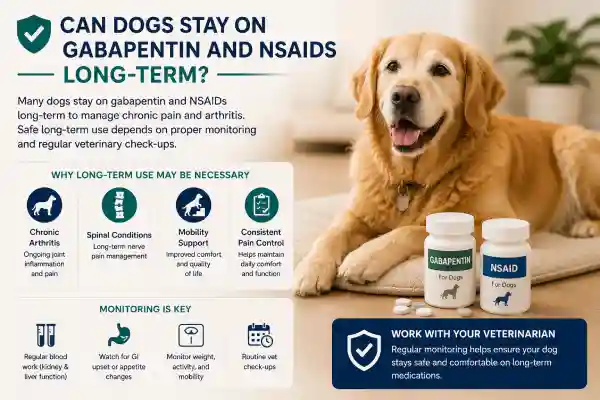
Yes.
Many dogs remain on both medications for months or even years.
This is especially common in:
- Arthritis patients
- Senior dogs
- Dogs with chronic orthopedic disease
- Dogs with mobility issues
Veterinarians may recommend:
- Regular examinations
- Bloodwork monitoring
- Medication reviews
- Dosage adjustments as needed
Long-term treatment should always be supervised by a veterinarian.
When Owners Commonly Ask This
Dog owners commonly ask this question when:
- Their dog has arthritis.
- Their veterinarian prescribes multiple medications.
- Their dog recently had surgery.
- They are worried about medication interactions.
- Their dog seems sleepy after treatment.
- They are comparing treatment options.
- They are researching alternatives to surgery.
Bottom Line
Gabapentin and NSAIDs are commonly prescribed together in veterinary medicine and are often highly effective for managing arthritis, chronic pain, orthopedic injuries, IVDD, and post-surgical discomfort. Because they work through different mechanisms, they frequently provide better pain relief together than either medication alone. Most dogs tolerate the combination well when used under veterinary supervision, but owners should monitor for side effects and follow their veterinarian’s recommendations carefully.Can Dogs Take Gabapentin and NSAIDs Together
Veterinarian Takeaway
Gabapentin and NSAIDs are among the most frequently combined medications in canine pain management. The combination is generally considered safe and effective because each medication targets a different aspect of pain. While mild sedation may occur, serious side effects are uncommon when the medications are used appropriately and monitored by a veterinarian.Can Dogs Take Gabapentin and NSAIDs Together
Frequently Asked Questions – Can Dogs Take Gabapentin and NSAIDs Together
Can dogs take gabapentin and carprofen together?
Yes. This is one of the most common pain-management combinations used in dogs.
Can dogs take gabapentin and meloxicam together?
Yes. Veterinarians frequently prescribe these medications together.
Is gabapentin safer than NSAIDs?
They have different risks and benefits, so neither is universally safer.
Can I give both medications at the same time?
Follow your veterinarian’s instructions regarding timing and dosage.
Why is my dog sleepy after taking gabapentin and an NSAID?
Gabapentin is usually the more likely cause of sedation.
Can this combination treat arthritis?
Yes. Arthritis is one of the most common reasons veterinarians use this combination.
Can senior dogs take both medications?
Yes, although monitoring may be recommended.
Does gabapentin reduce inflammation?
No. Gabapentin primarily affects pain signaling.
How long can dogs stay on both medications?
Some dogs remain on combination therapy long-term under veterinary supervision.
What if my dog misses a dose?
Contact your veterinarian for guidance.
Reviewed By
Dimitar Atanasov, MPharm
Master Pharmacist | Medication Safety Educator
Dimitar has extensive experience in pharmacy practice, medication counseling, and medication safety education. His work focuses on helping pet owners better understand veterinary medications, potential side effects, and safe medication use.
Editorial Policy
PetMedsMadeSimple follows a strict editorial process designed to provide accurate, practical, and easy-to-understand medication information for pet owners. Articles are developed using veterinary pharmacology references, peer-reviewed literature, and trusted veterinary resources and are reviewed for accuracy and clarity before publication.Can Dogs Take Gabapentin and NSAIDs Together
Sources
- Plumb’s Veterinary Drug Handbook
- Merck Veterinary Manual
- Veterinary Pharmacology and Therapeutics
- American Animal Hospital Association (AAHA)
- American Veterinary Medical Association (AVMA)
- Veterinary Information Network (VIN)
- JAVMA
- Frontiers in Veterinary Science
Medical Review Statement
This article was pharmacy-reviewed by Dimitar Atanasov, MPharm, Master Pharmacist, using current veterinary pharmacology references, canine pain-management guidelines, and published veterinary literature available at the time of review.
Images created with AI – Can Dogs Take Gabapentin and NSAIDs Together