Quick Answer
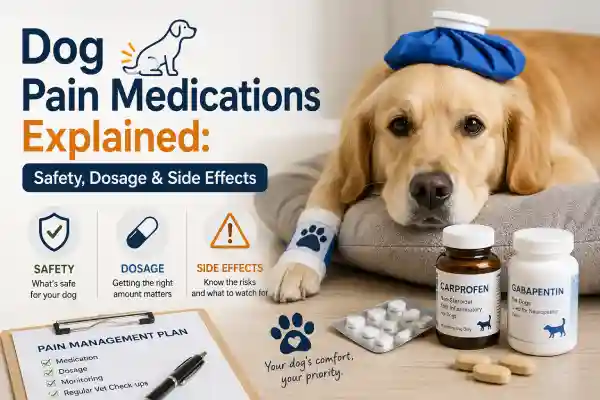
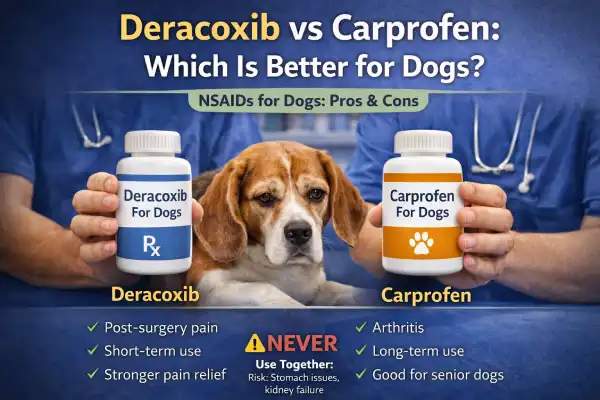
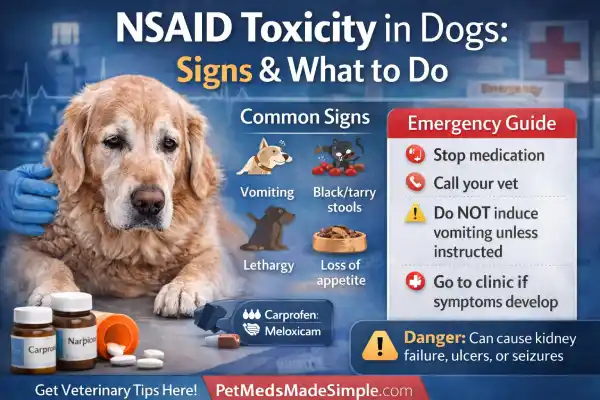
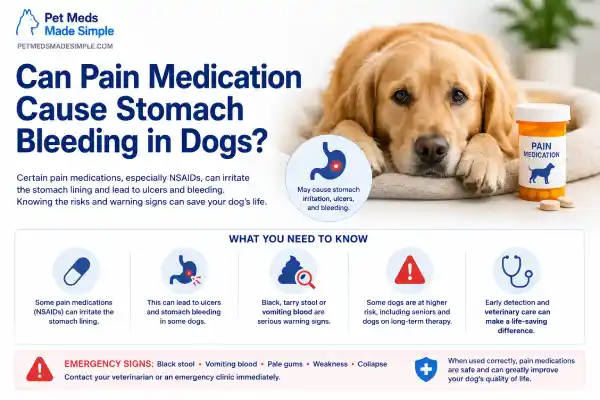
Yes, pain medication can cause stomach bleeding in dogs. The risk is highest with nonsteroidal anti-inflammatory drugs (NSAIDs) such as carprofen, meloxicam, deracoxib (Deramaxx), firocoxib (Previcox), and aspirin. While most dogs tolerate these medications well when used properly, some may develop stomach irritation, ulcers, or gastrointestinal bleeding. Black stools, vomiting blood, pale gums, weakness, or collapse should be treated as emergencies and evaluated by a veterinarian immediately.
Can pain medication cause stomach bleeding in dogs?
Yes. Certain pain medications, particularly NSAIDs, can damage the protective lining of the stomach and intestines, leading to ulcers and bleeding. The risk increases with overdoses, long-term use, dehydration, steroid use, or pre-existing gastrointestinal disease.
When Owners Commonly Ask This
Many owners search for this question after noticing symptoms such as:
- Black stools
- Vomiting
- Blood in vomit
- Loss of appetite
- Weakness
- Pale gums
A common scenario is a dog taking an NSAID for arthritis or surgery recovery that suddenly develops digestive problems.
Because stomach bleeding can become life-threatening, this is one of the most important medication side effects for dog owners to understand.
Can Pain Medication Cause Stomach Bleeding in Dogs?
What Is Stomach Bleeding?
Stomach bleeding occurs when blood vessels within the stomach or upper intestinal tract become damaged.
In dogs taking pain medication, this usually happens because stomach ulcers develop.
Possible Sources of Bleeding
| Source | Description |
|---|---|
| Stomach ulcer | Most common |
| Intestinal ulcer | Common |
| Severe stomach irritation | Possible |
| Medication overdose | Increased risk |
| Drug interactions | Increased risk |
Even small amounts of bleeding can become serious if they continue for several days.
Which Pain Medications Can Cause Stomach Bleeding?
Not all pain medications carry the same risk.
Common Dog Pain Medications
| Medication | Stomach Bleeding Risk |
|---|---|
| Carprofen | Low to Moderate |
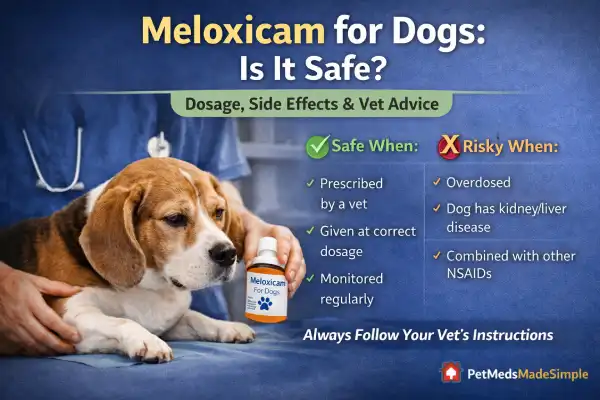
| Meloxicam | Low to Moderate |
| Deramaxx (Deracoxib) | Low to Moderate |
| Previcox (Firocoxib) | Low to Moderate |
| Galliprant | Lower |
| Aspirin | Higher |
| Ibuprofen | Very High |
| Naproxen | Very High |
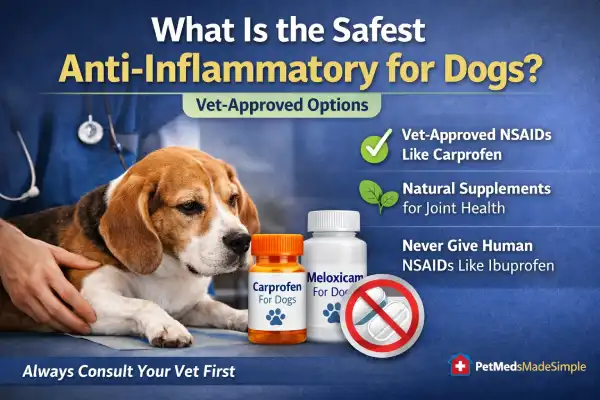
Human medications such as ibuprofen and naproxen are especially dangerous for dogs.
Related reading:
Why Do NSAIDs Cause Stomach Bleeding?
NSAIDs work by blocking enzymes involved in inflammation and pain.
Unfortunately, these same enzymes help protect the stomach lining.
What Normally Protects the Stomach?
- Mucus production
- Blood flow to the stomach wall
- Protective prostaglandins
- Tissue repair mechanisms
When these protective systems are reduced, ulcers may develop.
How Ulcers Form
| Step | What Happens |
|---|---|
| NSAID administration | Pain relief begins |
| Protective prostaglandins decrease | Stomach protection reduced |
| Irritation develops | Stomach lining becomes vulnerable |
| Ulcer forms | Tissue damage occurs |
| Bleeding begins | Blood vessels become exposed |
What Are the Signs of Stomach Bleeding?
Recognizing symptoms early can save a dog’s life.
Common Symptoms
| Symptom | Why It Happens |
|---|---|
| Black stool (melena) | Digested blood |
| Vomiting blood | Active bleeding |
| Weakness | Blood loss |
| Pale gums | Anemia |
| Loss of appetite | Stomach irritation |
| Lethargy | Reduced oxygen delivery |
| Collapse | Severe blood loss |
Black stool is one of the most important warning signs.
What Does Black Stool Look Like?
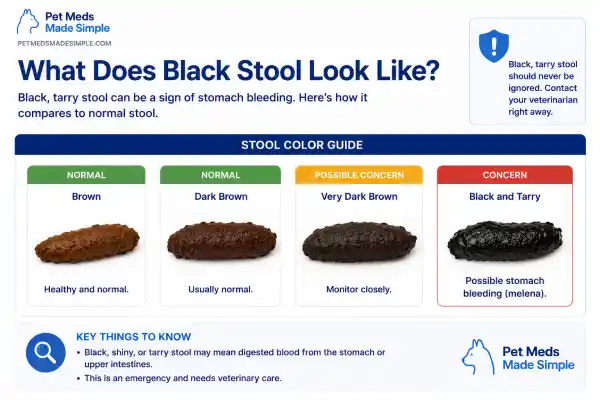
Many owners miss this symptom.
Melena often appears:
- Black
- Tarry
- Sticky
- Shiny
Stool Comparison
| Stool Appearance | Possible Meaning |
|---|---|
| Normal brown | Usually normal |
| Dark brown | Usually normal |
| Black and tarry | Possible stomach bleeding |
| Bright red blood | Lower GI bleeding |
Black stool should never be ignored in a dog receiving pain medication.
Is Vomiting Blood Always an Emergency?
Yes.
Blood in vomit can indicate:
- Active ulceration
- Severe stomach irritation
- Significant gastrointestinal bleeding
Emergency Symptoms
| Symptom | Emergency? |
|---|---|
| Mild nausea | No |
| Single vomit episode | Monitor |
| Vomiting blood | Yes |
| Black stool | Yes |
| Collapse | Yes |
| Pale gums | Yes |
If blood appears in vomit, veterinary care should be sought immediately.
Are Some Dogs More At Risk Than Others?
Yes.
Certain dogs have a higher risk of complications.
Higher-Risk Dogs
| Risk Factor | Increases Risk? |
|---|---|
| Senior dogs | Yes |
| Kidney disease | Yes |
| Liver disease | Yes |
| Previous ulcers | Yes |
| Dehydration | Yes |
| Long-term NSAID use | Yes |
| Steroid use | Yes |
Veterinarians often monitor these patients more closely.
Can Long-Term Use Increase Risk?
Absolutely.
While many dogs take NSAIDs safely for months or years, long-term exposure increases the chance of gastrointestinal complications.
Factors That Increase Risk Over Time
- Higher doses
- Multiple medications
- Chronic disease
- Poor hydration
- Advanced age
Related reading:
Can Dogs Take Pain Medication Long-Term?
Can Stomach Bleeding Happen Suddenly?
Yes.
Some dogs develop symptoms with little warning.
Owners may see:
- Normal behavior one day
- Black stool the next day
- Vomiting blood shortly afterward
This is why regular monitoring is important whenever dogs take NSAIDs.
Could Steroids and NSAIDs Together Increase the Risk?
Yes.
In fact, combining steroids and NSAIDs is one of the biggest risk factors for stomach ulcers and gastrointestinal bleeding in dogs.
Common Steroids
- Prednisone
- Prednisolone
- Dexamethasone
- Methylprednisolone
Why the Combination Is Dangerous
Both medications can reduce the stomach’s natural protective mechanisms.
Risk Comparison
| Medication Situation | Ulcer Risk |
|---|---|
| NSAID alone | Moderate |
| Steroid alone | Moderate |
| NSAID + Steroid | High |
| NSAID + Steroid + Dehydration | Very High |
Veterinarians generally avoid combining these medications unless absolutely necessary.
Can Galliprant Cause Stomach Bleeding?
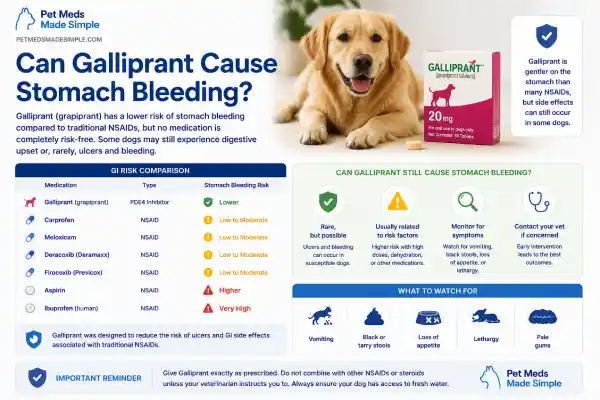
Galliprant is often considered gentler on the digestive tract than traditional NSAIDs.
However, no pain medication is completely risk-free.
Galliprant Compared to Traditional NSAIDs
| Medication | GI Risk |
|---|---|
| Galliprant | Lower |
| Carprofen | Moderate |
| Meloxicam | Moderate |
| Deramaxx | Moderate |
| Aspirin | Higher |
Galliprant may still cause digestive upset in some dogs, but severe ulceration appears less common compared with many traditional NSAIDs.
How Do Veterinarians Diagnose Stomach Bleeding?
Diagnosis often begins with a careful history and physical examination.
Questions Your Veterinarian May Ask
- What medication is your dog taking?
- How long has treatment been ongoing?
- Has any dose been missed or doubled?
- Has vomiting occurred?
- What color are the stools?
Diagnostic Tests
| Test | Purpose |
|---|---|
| Physical examination | Assess overall condition |
| Gum color evaluation | Check for anemia |
| Blood tests | Evaluate blood loss |
| Fecal examination | Detect bleeding |
| Imaging | Assess complications |
| Endoscopy | Visualize ulcers |
The sooner bleeding is identified, the better the outcome tends to be.
What Does Treatment Usually Involve?
Treatment depends on severity.
Mild Cases
May involve:
- Stopping the offending medication
- Gastroprotective medications
- Close monitoring
- Dietary adjustments
Severe Cases
May require:
- Hospitalization
- Intravenous fluids
- Blood transfusions
- Intensive monitoring
Common Treatments
| Treatment | Purpose |
|---|---|
| IV fluids | Support circulation |
| Gastroprotectants | Protect ulcers |
| Anti-nausea medications | Control vomiting |
| Blood transfusion | Replace lost blood |
| Monitoring | Prevent complications |
Can Dogs Recover From Stomach Bleeding?
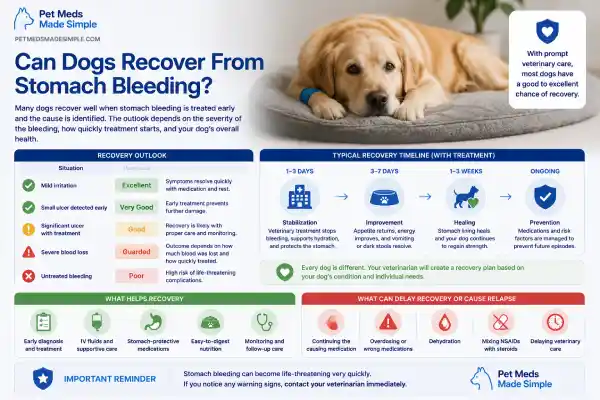
Many dogs recover well when treatment begins early.
The prognosis depends on:
- Severity of bleeding
- Speed of diagnosis
- Overall health
- Underlying disease
- Amount of blood lost
Recovery Outlook
| Situation | Prognosis |
|---|---|
| Mild irritation | Excellent |
| Small ulcer detected early | Very Good |
| Significant ulcer with treatment | Good |
| Severe blood loss | Guarded |
| Untreated bleeding | Poor |
Early veterinary intervention dramatically improves outcomes.
Could Dehydration Increase the Risk?
Yes.
Dehydration can reduce blood flow to the stomach lining, making ulcers more likely to develop.
Common Causes of Dehydration
- Vomiting
- Diarrhea
- Poor water intake
- Illness
- Hot weather
Risk Factors Combined
| Risk Factor | Ulcer Risk |
|---|---|
| NSAID alone | Moderate |
| NSAID + Dehydration | Higher |
| NSAID + Kidney Disease | Higher |
| NSAID + Steroids | High |
| NSAID + Steroids + Dehydration | Very High |
When Should Owners Contact Their Veterinarian?
Owners should contact their veterinarian immediately if a dog taking pain medication develops:
- Black stools
- Vomiting blood
- Pale gums
- Weakness
- Loss of appetite
- Persistent vomiting
- Sudden lethargy
Call Your Veterinarian If
| Symptom | Call Vet? |
|---|---|
| Mild decreased appetite | Yes |
| Repeated vomiting | Yes |
| Black stool | Immediately |
| Pale gums | Immediately |
| Vomiting blood | Immediately |
| Collapse | Emergency |
When Does Stomach Bleeding Become an Emergency?
Stomach bleeding should always be taken seriously.
Some symptoms require emergency treatment without delay.
Emergency Warning Signs
- Vomiting blood
- Black tarry stools
- Collapse
- Severe weakness
- Pale or white gums
- Difficulty standing
- Rapid breathing
Emergency Symptoms Table
| Symptom | Emergency? |
|---|---|
| Mild nausea | No |
| Single vomiting episode | Monitor |
| Black stool | Yes |
| Vomiting blood | Yes |
| Pale gums | Yes |
| Collapse | Yes |
| Severe weakness | Yes |
Related Symptoms Owners Often Search For
Owners concerned about stomach bleeding frequently search for:
- Can Dogs Take Pain Medication Long-Term?
- What Happens If Dogs Overdose on Pain Medication?
- Can Dogs Take Ibuprofen Accidentally?
- Why Is My Dog Weak After Pain Medication?
- Why Is My Dog Still Limping After Medication?
- Safest Pain Medication for Dogs
- Best Pain Medication for Dogs with Arthritis
Bottom Line
Can pain medication cause stomach bleeding in dogs? Yes. NSAIDs and other pain medications can sometimes damage the protective lining of the stomach and intestines, leading to ulcers and gastrointestinal bleeding. Although most dogs tolerate these medications safely when used appropriately, black stools, vomiting blood, pale gums, weakness, or collapse should always be treated as medical emergencies.Can Pain Medication Cause Stomach Bleeding in Dogs?
Veterinarian Takeaway
Pain medications play an important role in managing arthritis, injuries, and post-surgical discomfort in dogs. However, owners should understand that gastrointestinal bleeding is one of the most serious potential side effects of NSAID therapy. Monitoring appetite, stool color, energy level, and overall behavior can help identify problems early and improve the likelihood of a successful recovery.Can Pain Medication Cause Stomach Bleeding in Dogs?
Frequently Asked Questions – Can Pain Medication Cause Stomach Bleeding in Dogs?
Can carprofen cause stomach bleeding in dogs?
Yes. Although uncommon, stomach ulcers and bleeding are recognized potential side effects of carprofen.
Is meloxicam associated with stomach ulcers?
Yes. Like other NSAIDs, meloxicam can occasionally contribute to ulcer formation.
What does black stool mean in dogs?
Black, tarry stool may indicate digested blood from the stomach or upper intestines.
Is vomiting blood always serious?
Yes. Blood in vomit should be evaluated by a veterinarian immediately.
Can stomach bleeding happen after one dose?
Rarely, yes. However, risk generally increases with repeated exposure.
Are senior dogs at greater risk?
Yes. Older dogs often have a higher risk of medication-related complications.
Can dehydration make ulcers worse?
Yes. Dehydration can increase the risk of stomach injury.
Is Galliprant safer for the stomach?
Galliprant generally has a lower gastrointestinal risk profile than many traditional NSAIDs, but side effects can still occur.
Can stomach bleeding be treated successfully?
Many dogs recover well when treatment starts early.
When should I seek emergency care?
Immediately if your dog develops black stool, vomiting blood, pale gums, collapse, or severe weakness.
Reviewed By
Pharmacy Reviewed By
Dimitar Atanasov, MPharm
Master Pharmacist | Medication Safety Educator
Editorial Policy
At Pet Meds Made Simple, we are committed to providing accurate, evidence-based information about pet medications, veterinary treatments, medication safety, and common health concerns affecting dogs and cats.Can Pain Medication Cause Stomach Bleeding in Dogs?
For more information, see our Editorial Policy:
Sources
- Plumb’s Veterinary Drug Handbook
- Merck Veterinary Manual
- American Animal Hospital Association (AAHA)
- Veterinary Information Network (VIN)
- Small Animal Clinical Pharmacology
- Veterinary Pharmacology and Therapeutics
- JAVMA
- Frontiers in Veterinary Science
- Veterinary Anaesthesia and Analgesia
- Clinical Veterinary Advisor: Dogs and Cats
Medical Review Statement
This article was pharmacy-reviewed by Dimitar Atanasov, MPharm, Master Pharmacist, using current veterinary pharmacology references, canine pain-management guidelines, NSAID safety literature, and published veterinary research available at the time of review.Can Pain Medication Cause Stomach Bleeding in Dogs?
Images created wih AI – Can Pain Medication Cause Stomach Bleeding in Dogs?