
Quick Answer
Can seizure medication cause depression in dogs? Seizure medication can cause depression-like behavior, including excessive sleepiness, reduced enthusiasm, withdrawal from family activities, and decreased interest in play. However, true clinical depression is uncommon. In many dogs, these changes are temporary and occur while the brain adjusts to anticonvulsant therapy. Similar signs may also result from recent seizures, the post-ictal recovery period, or the neurological disease itself, making veterinary evaluation essential whenever behavior changes significantly.
Can Seizure Medication Cause Depression in Dogs?
Can Seizure Medication Cause Depression in Dogs?
Few situations worry dog owners more than watching their normally happy companion suddenly become quiet, withdrawn, or uninterested in everyday life.
After starting seizure medication, many owners begin asking questions such as:
- “Can seizure medication cause depression in dogs?”
- “Why doesn’t my dog want to play anymore?”
- “Has phenobarbital changed my dog’s personality?”
- “My dog just sleeps all day is this normal?”
- “Did the medication make my dog emotionally numb?”
These concerns are understandable.
Behavioral changes often feel more frightening than physical side effects because owners know their dog’s normal personality extremely well. Even subtle differences less tail wagging, reduced excitement before walks, or spending more time alone—can be alarming.
Fortunately, the answer is usually more reassuring than many owners expect.
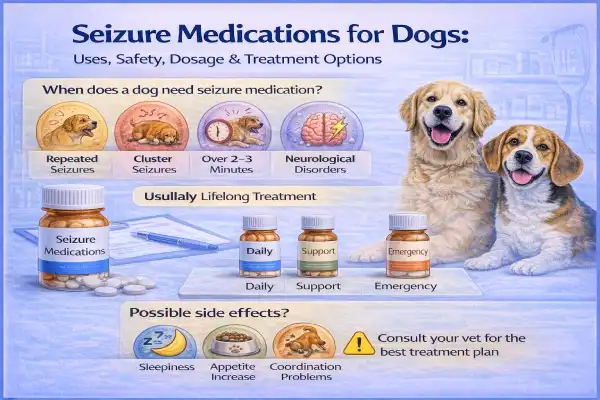
In most cases, seizure medications do not cause true depression, but they can temporarily affect alertness, activity level, and behavior while the brain adapts to treatment.
Understanding why this happens begins with understanding what seizure medications actually do inside the brain.
If your dog has recently started epilepsy treatment, you may also find our guides on Phenobarbital for Dogs: Uses, Dosage, Side Effects & Safety, Levetiracetam (Keppra) for Dogs, Can Dogs Miss a Dose of Seizure Medication?, and Why Is My Dog Crying After a Seizure? helpful, as many of these topics overlap.
What Do Owners Actually Mean by “Depression”?
One of the biggest challenges with this topic is that the word “depression” means different things to different people.
Veterinarians rarely diagnose depression based on a single symptom.
Instead, owners often use the word to describe any noticeable change in their dog’s normal personality.
For example:
| What Owners Notice | What It May Actually Represent |
|---|---|
| Sleeping all day | Medication-related sedation |
| Less interest in toys | Temporary lethargy |
| Doesn’t greet family | Fatigue after seizures |
| Avoids interaction | Stress, anxiety, or post-ictal recovery |
| Seems emotionally flat | Reduced neurological stimulation |
| Doesn’t enjoy walks | Weakness, sedation, or another illness |
This distinction is important because the treatment depends entirely on the underlying cause.
A sleepy dog recovering from newly started phenobarbital requires a very different approach than a dog with uncontrolled epilepsy or liver disease.
How Do Seizure Medications Work?
To answer “Can Seizure Medication Cause Depression in Dogs?”, we first need to understand why these medications affect behavior at all.
Every seizure medication has one primary goal:
Reduce abnormal electrical activity inside the brain.
During a seizure, millions of neurons begin firing uncontrollably.
Anticonvulsants work by calming these excessive electrical signals before they spread.
Different medications accomplish this in different ways.
Some:
- Enhance inhibitory neurotransmitters such as GABA.
- Block sodium channels.
- Reduce calcium influx.
- Limit excessive neurotransmitter release.
- Stabilize overactive neurons.
Although these actions reduce seizures, they may also temporarily influence normal brain activity.
That is why many dogs become:
- Sleepier
- Less energetic
- Slower to respond
- More relaxed
- Less reactive to environmental stimuli
These effects are often expected during the first weeks of therapy.
Why Can Seizure Medication Make Dogs Seem Depressed?
Most seizure medications reduce neuronal excitability.
While this protects the brain from seizures, it can also decrease overall stimulation of the central nervous system.
Think of it like turning down the volume on an overly loud speaker.
The unwanted electrical activity becomes quieter—but so do many normal signals until the brain adjusts.
This temporary reduction in neurological activity may lead owners to notice:
- More sleeping
- Less excitement
- Reduced playfulness
- Slower reactions
- Less interest in food or toys
- More time resting
Fortunately, these effects often improve as the nervous system adapts.
Is It Really Depression or Just Sedation?
This is one of the most important questions in veterinary neurology.
Although owners often search “Can Seizure Medication Cause Depression in Dogs?”, veterinarians first ask whether the dog is actually experiencing sedation rather than depression.
The two can appear remarkably similar.
| Sedation | True Depression-Like Behavior |
|---|---|
| Wants to sleep | Appears emotionally withdrawn |
| Easily awakened | May show reduced interest even when awake |
| Usually improves after dose stabilization | May persist despite medication adjustment |
| Appetite often remains normal or increases | Appetite may decrease |
| Temporary medication effect | May have multiple possible causes |
Recognizing this difference helps prevent unnecessary medication changes.
Dogs that are simply sleepy often improve without requiring a completely different treatment plan.
Which Seizure Medications Are Most Likely to Affect Behavior?
Not every anticonvulsant produces the same neurological effects.
Some medications are much more likely to cause temporary behavioral changes.
| Medication | Common Behavioral Effects | Frequency |
|---|---|---|
| Phenobarbital | Sleepiness, lethargy, reduced activity | Common |
| Potassium Bromide | Sedation, weakness, slower responses | Common |
| Levetiracetam (Keppra) | Mild sleepiness, occasional behavioral changes | Uncommon |
| Zonisamide | Fatigue, decreased activity | Occasional |
| Gabapentin (adjunct therapy) | Sedation, calmer behavior | Common |
Owners who would like detailed information about these medications may also find our articles Can Seizure Medication Damage the Liver?, Why Is My Dog Hungry All the Time on Phenobarbital?, Gabapentin for Dogs, and Can Dogs Take Gabapentin Long-Term Safely? useful while comparing treatment options.
Phenobarbital Is the Most Common Cause of Depression-Like Behavior
Among all canine seizure medications, phenobarbital is probably the one most frequently associated with temporary behavioral changes.
This does not mean it is unsafe.
In fact, phenobarbital remains one of the most effective first-line anticonvulsants available for dogs with epilepsy.
However, because it enhances GABA-mediated inhibition throughout the brain, many dogs initially experience:
- Increased sleep
- Reduced energy
- Less excitement
- Mild mental slowing
- Longer resting periods
- Temporary reduction in activity
Owners sometimes interpret these completely expected neurological effects as depression.
Fortunately, the majority of dogs begin improving over the following several weeks as their nervous system adapts to the medication.
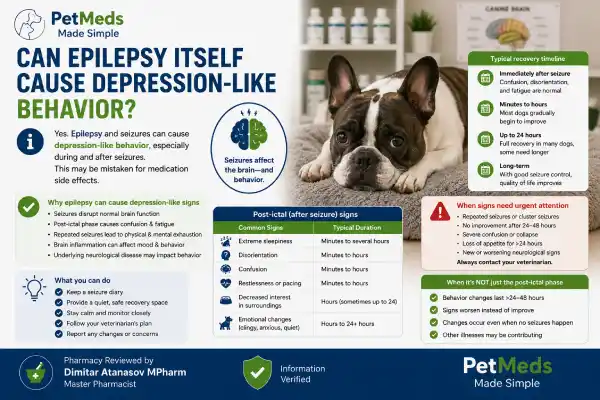
Can Epilepsy Itself Cause Depression-Like Behavior?
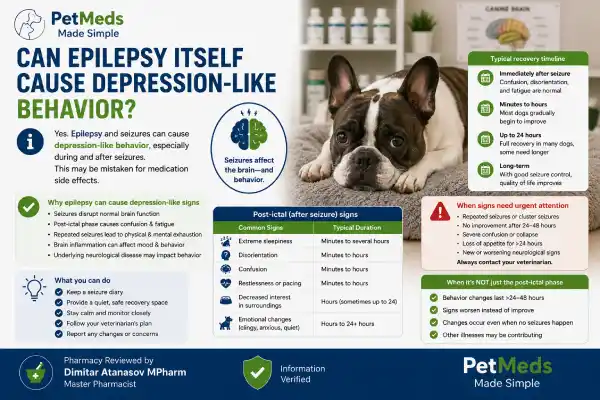
Absolutely.
One of the biggest mistakes owners make is assuming the medication is always responsible.
In reality, epilepsy itself can significantly affect behavior.
Dogs experiencing repeated seizures often become exhausted both physically and neurologically.
Following a seizure, many enter the post-ictal phase, a recovery period that may last from several minutes to many hours.
During this time dogs may appear:
- Quiet
- Confused
- Disoriented
- Withdrawn
- Less interested in interaction
- More anxious
- Extremely tired
These signs can closely resemble depression even though they are actually part of normal post-seizure recovery.
For this reason, veterinarians always evaluate:
- Recent seizure frequency
- Timing of medication administration
- Duration of behavioral changes
- Neurological examination findings
- Overall medical history
before concluding that seizure medication is responsible.
Why the First Few Weeks Are the Most Challenging
The first month of anticonvulsant therapy is often the period when owners notice the greatest behavioral changes.
Fortunately, it is also when many dogs adapt most successfully.
During this adjustment phase, the brain gradually learns to function with a more stable level of neuronal activity.
As adaptation occurs, owners frequently report gradual improvements in:
- Alertness
- Playfulness
- Tail wagging
- Interest in family activities
- Responsiveness
- Daily routine
This adaptation period varies between individual dogs and depends on the specific medication, dosage, age, concurrent diseases, and overall neurological health.
Could the Dose Be Too High?
Yes.
One of the most overlooked reasons owners search “Can Seizure Medication Cause Depression in Dogs?” is that their dog’s medication dose may simply be higher than necessary.
Every dog metabolizes anticonvulsants differently. Two dogs receiving exactly the same dose may have completely different blood concentrations and therefore very different side effects.
If blood levels become too high, dogs may experience much more than mild sleepiness.
Common signs include:
- Excessive sleeping
- Difficulty waking up
- Poor coordination
- Walking into furniture
- Weakness
- Less interest in family interaction
- Reduced appetite (less common)
- Confusion
- Slow responses to commands
Fortunately, veterinarians can often determine whether the dosage is appropriate through physical examinations and therapeutic drug monitoring.
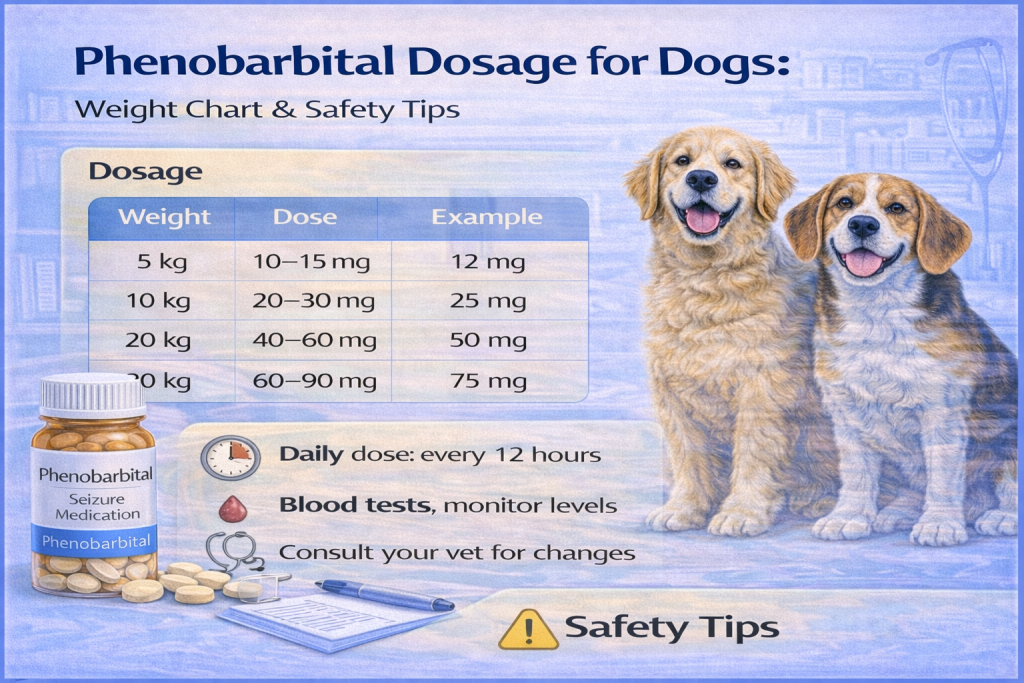
Dogs receiving long-term phenobarbital should undergo routine blood testing to ensure the medication remains within the therapeutic range.
If you’ve noticed other medication-related changes, our articles Why Is My Dog Hungry All the Time on Phenobarbital? and Can Seizure Medication Damage the Liver? explain additional side effects that often occur alongside behavioral changes.
Does the Type of Seizure Medication Matter?
Absolutely.
Different anticonvulsants affect different neurotransmitters and brain pathways, meaning some are more likely to produce temporary behavioral changes than others.
Although all seizure medications aim to reduce abnormal electrical activity, they do not work in exactly the same way.
Phenobarbital
Phenobarbital enhances the effects of GABA, the brain’s primary inhibitory neurotransmitter.
Because of this, many dogs initially experience:
- Sleepiness
- Reduced activity
- Longer naps
- Mild mental slowing
- Temporary personality changes
Fortunately, these effects often improve during the first month of therapy.
Potassium Bromide
Potassium bromide works differently from phenobarbital but also slows neuronal activity.
Dogs receiving bromide may develop:
- Generalized lethargy
- Weakness
- Reduced enthusiasm
- Poor coordination
- Longer recovery after exercise
Because bromide has an exceptionally long half-life, side effects may take several weeks to stabilize.
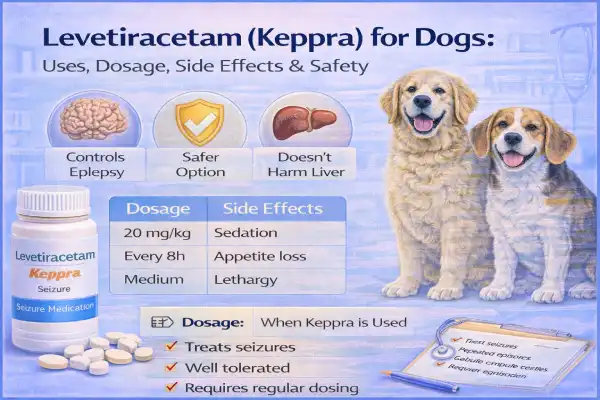
Levetiracetam (Keppra)
Levetiracetam is generally considered one of the best-tolerated seizure medications.
Most dogs remain bright and interactive.
However, some owners still notice:
- Mild fatigue
- Increased sleeping
- Temporary quiet behavior
- Slight personality changes
These effects are usually milder than those associated with phenobarbital.
Zonisamide
Most dogs tolerate zonisamide well.
Possible behavioral changes include:
- Mild tiredness
- Reduced activity
- Less interest in vigorous exercise
- Temporary lethargy
Severe behavioral effects are uncommon.
Gabapentin
Although gabapentin is primarily known as a pain medication, veterinarians sometimes prescribe it as part of seizure management.
Gabapentin commonly produces:
- Calm behavior
- Sleepiness
- Reduced activity
- Increased relaxation
Owners often mistake these expected effects for depression.
If your dog also receives gabapentin, our guide Can Dogs Take Gabapentin Long-Term Safely? explains what to expect during prolonged treatment.
Comparison of Common Seizure Medications
| Medication | Most Common Behavioral Effect | Usually Temporary? | Routine Blood Monitoring? |
|---|---|---|---|
| Phenobarbital | Sedation, reduced activity | Yes | Yes |
| Potassium Bromide | Lethargy, weakness | Yes | Yes |
| Levetiracetam | Mild sleepiness | Usually | Not routinely |
| Zonisamide | Fatigue | Usually | Sometimes |
| Gabapentin | Sedation | Usually | No |
Can Multiple Seizure Medications Make Behavioral Changes Worse?
Yes.
Dogs with difficult-to-control epilepsy often require more than one anticonvulsant.
Combination therapy may include:
- Phenobarbital + Potassium Bromide
- Phenobarbital + Levetiracetam
- Phenobarbital + Zonisamide
- Levetiracetam + Zonisamide
- Phenobarbital + Gabapentin
While combining medications often provides better seizure control, it may also increase the likelihood of:
- Sleepiness
- Slower reactions
- Weakness
- Reduced activity
- Temporary behavioral changes
Veterinarians carefully balance seizure control against quality of life when adjusting combination therapy.
Owners concerned about missed doses should also read Can Dogs Miss a Dose of Seizure Medication?, as inconsistent dosing can lead to seizure recurrence and further complicate behavioral assessment.
Could Liver Disease Make My Dog Look Depressed?

Yes.
This is an important consideration for dogs receiving phenobarbital over many months or years.
Phenobarbital is metabolized primarily by the liver.
If liver function begins to decline, the medication may accumulate more readily, increasing neurological side effects.
Dogs with developing liver dysfunction may show:
- Increased sleepiness
- Reduced interaction
- Poor coordination
- Loss of appetite
- Vomiting
- Weight loss
- Confusion in severe cases
For this reason, veterinarians routinely monitor:
| Recommended Test | Why It Matters |
|---|---|
| ALT | Detects liver cell injury |
| ALP | Commonly increases during long-term phenobarbital therapy |
| AST | Assesses liver and muscle health |
| Albumin | Evaluates liver function |
| Bile Acids | Measures functional liver performance |
| Phenobarbital Blood Level | Confirms therapeutic concentration |
Routine blood testing allows problems to be identified long before severe clinical signs develop.
Could My Dog Be Recovering From a Seizure Instead?
This possibility should never be overlooked.
Many owners searching “Can Seizure Medication Cause Depression in Dogs?” are actually observing the post-ictal phase, not a medication side effect.
Following a seizure, the brain temporarily needs time to recover.
During this recovery period dogs may appear:
- Extremely tired
- Quiet
- Confused
- Less affectionate
- Restless
- Anxious
- Disoriented
- Slow to recognize familiar people
Some dogs even vocalize or pace after seizures, which is discussed in our guide Why Is My Dog Crying After a Seizure?
The duration of the post-ictal phase varies considerably.
| Recovery Stage | Typical Duration |
|---|---|
| Mild confusion | Minutes to 1 hour |
| Sleepiness | Several hours |
| Temporary behavioral changes | Up to 24 hours |
| Complete recovery | Usually within 24 hours (varies by dog) |
If behavioral changes occur immediately after seizures and gradually improve, the seizures themselves may be more responsible than the medication.
Could My Dog Simply Be Adjusting to Treatment?

Fortunately, yes.
The first two to four weeks are often the most challenging.
During this period, the brain gradually adapts to the anticonvulsant.
Many owners notice steady improvements in:
- Energy
- Alertness
- Interest in toys
- Tail wagging
- Interaction with family
- Willingness to exercise
- Overall personality
This adaptation period differs from dog to dog.
Age, breed, liver function, concurrent medications, seizure severity, and individual sensitivity all influence how quickly dogs return to their normal routines.
For many families, understanding that these changes are often temporary provides significant reassurance while continuing the medication that protects their dog from potentially life-threatening seizures.
How Do Veterinarians Evaluate Depression-Like Behavior?
When owners ask “Can Seizure Medication Cause Depression in Dogs?”, veterinarians rarely assume the medication is responsible immediately.
Instead, they try to answer a more important question:
“What is causing this dog’s behavioral change?”
Several different problems can produce nearly identical symptoms.
A dog that seems quiet or withdrawn may actually be experiencing:
- Medication-related sedation
- Recovery after recent seizures
- Uncontrolled epilepsy
- Liver dysfunction
- Pain
- Another neurological disease
- An unrelated medical illness
This is why a systematic evaluation is so important.
A veterinarian may perform:
- Complete physical examination
- Neurological examination
- Review of seizure history
- Medication review
- Blood chemistry profile
- Complete blood count (CBC)
- Therapeutic drug monitoring
- Liver function testing
- Kidney function testing
- Blood pressure measurement if indicated
For dogs receiving long-term phenobarbital, monitoring blood concentrations is considered one of the most valuable tools for balancing seizure control with quality of life.
Temporary Adjustment vs. A Serious Problem
One of the biggest concerns owners have is knowing whether their dog’s behavior is part of the normal adjustment period or whether something more serious is developing.
Fortunately, several clues can help distinguish the two.
| Usually Part of Normal Adjustment | May Require Immediate Veterinary Evaluation |
|---|---|
| Mild sleepiness | Cannot be awakened normally |
| Slightly reduced activity | Unable to stand or walk |
| Sleeping more during the first weeks | Progressive worsening every day |
| Less excitement for several days | Complete loss of appetite |
| Gradual improvement over time | Repeated vomiting |
| Responds normally when awakened | Difficulty breathing |
| Continues eating and drinking | Collapse or repeated seizures |
The most reassuring sign is gradual improvement.
Dogs that become a little brighter every few days are usually adapting successfully to treatment.
Can Seizure Medication Permanently Change a Dog’s Personality?
Fortunately, permanent personality changes caused solely by anticonvulsant medication are considered uncommon.
Most dogs gradually regain their normal personality once:
- Blood drug concentrations stabilize.
- The nervous system adapts.
- Seizures become better controlled.
- Medication adjustments are completed.
Owners often notice improvements such as:
- More tail wagging
- Increased curiosity
- Greater enthusiasm for walks
- More interest in toys
- Increased interaction with family members
- Better responsiveness
If personality changes continue for several months despite stable seizure control, your veterinarian may recommend additional investigation.
Which Dogs Are Most Sensitive to Behavioral Side Effects?
Not every dog reacts to seizure medication in the same way.
Certain patients appear more likely to develop noticeable behavioral changes.
Risk factors include:
| Risk Factor | Why It Matters |
|---|---|
| Senior dogs | Slower drug metabolism and increased neurological sensitivity |
| Liver disease | Reduced medication clearance |
| Kidney disease | May affect elimination of some anticonvulsants |
| Multiple seizure medications | Additive sedative effects |
| High phenobarbital blood concentrations | Greater neurological depression |
| Frequent cluster seizures | Longer recovery periods |
| Toy breeds | Individual dose sensitivity may be greater |
| Dogs with pre-existing neurological disease | Brain already under additional stress |
These dogs often require closer monitoring during the first weeks of treatment.
Can Anxiety Be Mistaken for Depression?

Yes.
Interestingly, not every behavioral change involves excessive sleepiness.
Some dogs become:
- More clingy
- Restless
- Nervous
- Easily startled
- Less confident
- More vocal
Owners sometimes interpret these changes as depression when they may actually represent:
- Anxiety
- Post-ictal confusion
- Stress after repeated seizures
- Adjustment to new medication
This illustrates why behavior alone rarely identifies the underlying cause.
Can Blood Levels Explain Behavioral Changes?
Absolutely.
One advantage of medications such as phenobarbital is that veterinarians can directly measure blood concentrations.
Therapeutic drug monitoring helps answer important questions:
- Is the dose too low?
- Is the dose too high?
- Is the medication being absorbed properly?
- Has metabolism changed over time?
Without measuring blood concentrations, adjusting treatment becomes largely guesswork.
This is why routine monitoring remains a cornerstone of long-term epilepsy management.
What Can Owners Do at Home?
Although owners should never change seizure medication without veterinary advice, there are many ways to help monitor recovery.
Useful recommendations include:
- Give medication at exactly the same time every day.
- Never skip doses.
- Keep a seizure diary.
- Record behavioral changes.
- Monitor appetite and water intake.
- Weigh your dog regularly.
- Record any new neurological signs.
- Attend all scheduled blood tests.
- Report worsening symptoms promptly.
Keeping written records often helps identify subtle trends that are difficult to remember weeks later.
When Should You Contact Your Veterinarian?
Mild behavioral changes are common during the first weeks of anticonvulsant therapy.
However, veterinary advice should be sought promptly if your dog:
- Becomes impossible to wake.
- Cannot stand.
- Stops eating completely.
- Develops repeated vomiting.
- Has difficulty breathing.
- Experiences multiple seizures despite medication.
- Suddenly becomes aggressive.
- Appears progressively less responsive.
- Shows yellow discoloration of the eyes or gums.
- Develops severe weakness.
Early intervention often prevents more serious complications.
Related Symptoms Owners Often Notice
Owners searching “Can Seizure Medication Cause Depression in Dogs?” commonly report additional symptoms at the same time.
These include:
- Sleeping much more than usual
- Increased appetite
- Increased thirst
- Frequent urination
- Wobbliness
- Panting
- Mild weakness
- Slower reactions
- Temporary confusion
- Reduced interest in exercise
- Clingy behavior
- Less enthusiasm during play
Many of these symptoms are discussed in our related PMMS articles, including Why Is My Dog Hungry All the Time on Phenobarbital?, Can Seizure Medication Damage the Liver?, Can Dogs Miss a Dose of Seizure Medication?, Why Is My Dog Crying After a Seizure?, Why Is My Dog Wobbly After Seizure Medication?, and Can Dogs Take Gabapentin Long-Term Safely?
These interconnected topics help owners understand the full range of expected effects associated with long-term seizure management.
When Owners Commonly Ask This
Veterinarians commonly hear questions like these during follow-up appointments:
- “My dog just isn’t acting like himself anymore.”
- “Can seizure medication cause depression in dogs, or is this normal?”
- “Will my dog’s personality come back?”
- “Is phenobarbital making my dog sad?”
- “Could Keppra change my dog’s behavior?”
- “How long should I wait before worrying?”
- “Could my dog be depressed because of the seizures instead of the medication?”
- “Should we lower the dose?”
- “Would changing medications help?”
- “Is this an emergency?”
These are excellent questions because behavioral changes should never be ignored, but they also should not automatically lead owners to stop treatment. Every change should be interpreted alongside seizure control, blood work, neurological findings, and the dog’s overall quality of life.
Veterinarian Takeaway
Behavioral changes are among the most misunderstood side effects of seizure medications.
Although owners often ask “Can Seizure Medication Cause Depression in Dogs?”, true clinical depression is considered uncommon.
Much more frequently, veterinarians observe:
- Temporary sedation
- Mild lethargy
- Reduced activity
- Adjustment during the first few weeks
- Recovery after recent seizures
The most important goal is maintaining excellent seizure control while preserving a good quality of life.
If your dog becomes progressively more alert over several weeks, continues eating normally, enjoys family interaction, and experiences fewer seizures, the treatment is often working exactly as intended.
However, dogs that continue worsening should always be re-evaluated.
Modern epilepsy management is highly individualized, and small medication adjustments can often improve both seizure control and daily quality of life.
Bottom Line
Can seizure medication cause depression in dogs?
Yes—but in most cases, owners are actually seeing depression-like behavior rather than true depression.
Anticonvulsants such as phenobarbital, potassium bromide, levetiracetam, zonisamide, and gabapentin reduce abnormal electrical activity within the brain. During the first few weeks of treatment, this may temporarily cause:
- Increased sleeping
- Lower energy
- Reduced excitement
- Less interest in play
- Mild personality changes
These effects usually improve as the brain adapts.
However, similar symptoms may also result from:
- Recent seizures
- The post-ictal recovery period
- Liver disease
- Other neurological disorders
- Pain
- Concurrent illnesses
Because these conditions often look very similar, any significant behavioral change deserves veterinary evaluation rather than medication changes at home.
With careful monitoring, regular blood testing when appropriate, and good communication with your veterinarian, most dogs achieve excellent seizure control while continuing to enjoy a happy and fulfilling life.
Frequently Asked Questions – Can Seizure Medication Cause Depression in Dogs
Can seizure medication cause depression in dogs?
Yes. Seizure medication can cause depression-like behavior, including sleepiness, reduced activity, and withdrawal, although true clinical depression is uncommon.
Which seizure medication is most likely to cause behavioral changes?
Phenobarbital and potassium bromide are generally the medications most commonly associated with temporary sedation and reduced activity.
Will my dog’s personality return to normal?
For most dogs, yes. Behavioral changes often improve within several weeks as the nervous system adapts to treatment.
Can epilepsy itself make dogs appear depressed?
Absolutely. Repeated seizures and the post-ictal phase commonly cause temporary confusion, fatigue, and reduced interaction that can resemble depression.
How long do behavioral side effects usually last?
Many dogs begin improving within two to four weeks, although recovery varies depending on the medication, dosage, age, and overall health.
Can high phenobarbital levels make my dog seem depressed?
Yes. Excessively high blood concentrations may increase sedation and other neurological side effects, which is why routine therapeutic drug monitoring is recommended.
Should I stop seizure medication if my dog seems depressed?
No. Never stop anticonvulsants without veterinary supervision because sudden withdrawal can trigger severe rebound seizures or status epilepticus.
Can multiple seizure medications make behavioral changes worse?
Yes. Dogs receiving combination therapy may experience greater sedation than dogs receiving a single anticonvulsant.
What tests might my veterinarian recommend?
Depending on your dog’s condition, your veterinarian may recommend:
Complete blood count (CBC)
Serum biochemistry profile
Phenobarbital blood concentrations
Liver function testing
Kidney function testing
Neurological examination
Advanced imaging if indicated
When should I seek emergency veterinary care?
Seek immediate veterinary attention if your dog:
Cannot be awakened
Has repeated seizures
Develops difficulty breathing
Cannot stand
Shows severe weakness
Becomes progressively less responsive
Develops persistent vomiting
Shows signs of liver failure such as jaundice
Sources
- Plumb’s Veterinary Drug Handbook
- Merck Veterinary Manual
- Veterinary Pharmacology and Therapeutics (Papich & Riviere)
- Small Animal Clinical Pharmacology
- BSAVA Small Animal Formulary
- American College of Veterinary Internal Medicine (ACVIM) Consensus Statement on Seizure Management
- International Veterinary Epilepsy Task Force (IVETF) Guidelines
- Journal of Veterinary Internal Medicine (JVIM)
- Frontiers in Veterinary Science
- Journal of the American Veterinary Medical Association (JAVMA)
- Veterinary Anaesthesia and Analgesia
- PubMed
Medical Review Statement
This article was written by Dimitar Georgiev Atanasov, MPharm, pharmacy and scientifically reviewed by Gergana Krasimirova Atanasova, MPharm, and independently veterinary reviewed by Dr. Valcho Georgiev Valchev, DVM. It is based on current veterinary pharmacology references, peer-reviewed scientific literature, canine epilepsy guidelines, and evidence-based veterinary recommendations to ensure accurate, practical, and trustworthy information for dog owners.
Important Medical Disclaimer
The information provided on PetMedsMadeSimple.com is intended for educational purposes only and should not replace professional veterinary diagnosis or treatment.
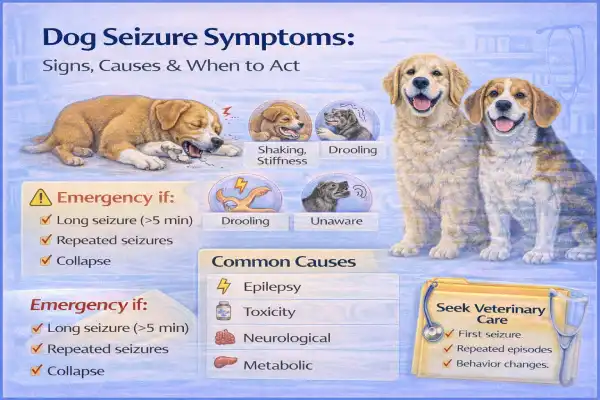
Never start, stop, or adjust your dog’s seizure medication without consulting your veterinarian. If your dog develops repeated seizures, collapse, severe breathing difficulties, persistent vomiting, becomes impossible to wake, or experiences status epilepticus, seek emergency veterinary care immediately.
Image Disclosure
Some images used in this article may be AI-generated or AI-assisted for educational purposes. Every PMMS article is independently researched, pharmacy-written, scientifically reviewed, and veterinary-reviewed. AI-generated illustrations are used solely to improve understanding of veterinary medications and should not be interpreted as photographs of actual clinical patients.