

Quick Answer
Should pain medication be reduced gradually in dogs? Sometimes, but not every pain medication requires tapering. Whether a dog’s pain medication should be reduced gradually depends on the specific drug, how long it has been used, why it was prescribed, the dose, and the dog’s individual health.
Some medications used in pain-management plans may need careful dose reduction after prolonged treatment, while many veterinary NSAIDs do not require a traditional taper simply to prevent withdrawal. Gabapentin deserves particular attention because abrupt discontinuation may be inappropriate in some dogs, especially when it is also being used for seizure control. Corticosteroids such as prednisone are another important—but pharmacologically different—example because prolonged systemic corticosteroid therapy generally should not be stopped abruptly.
Owners should therefore never assume that all pain medications can be stopped in the same way. The safest approach is to follow the discontinuation plan provided by the prescribing veterinarian.
Should Pain Medication Be Reduced Gradually in Dogs?
The answer is medication-specific.
When owners ask should pain medication be reduced gradually in dogs, they are often hoping for a universal rule:
Reduce every pain medication slowly.
or:
Once the dog feels better, simply stop it.
Neither rule works for every medication.
Veterinary pain management includes several very different drug classes. They differ in:
- mechanism of action
- withdrawal potential
- duration of treatment
- adverse-effect profile
- reason for use
- need for dose adjustment
A dog taking an NSAID for arthritis is therefore very different from a dog receiving gabapentin as part of a multimodal pain-management plan.
The underlying condition matters too.
A dog recovering from a temporary orthopedic injury may eventually need no pain medication at all. A senior dog with chronic osteoarthritis may require ongoing treatment because the disease itself has not disappeared.
This is why discontinuing pain medication should be treated as part of the overall treatment plan—not simply as the moment when the bottle becomes empty.
Should Pain Medication Be Reduced Gradually in Dogs?
Do All Pain Medications Need to Be Tapered in Dogs?

No.
This is perhaps the most important point in the entire discussion.
Not all pain medications require gradual dose reduction in dogs.
The need for tapering depends primarily on the drug and the clinical circumstances.
A simplified overview looks like this:
| Medication or treatment type | Is gradual reduction sometimes needed? | Important consideration |
|---|---|---|
| Veterinary NSAIDs | Usually not a classic withdrawal taper | The underlying pain may return after discontinuation |
| Gabapentin | Sometimes | Abrupt discontinuation can be inappropriate in certain patients, particularly seizure patients |
| Opioids | May be needed after prolonged exposure | Physical dependence can occur with sustained treatment |
| Corticosteroids | Often after prolonged systemic therapy | Not conventional analgesics, but frequently confused with pain medicines by owners |
| Short-term analgesic therapy | Depends on medication | Follow the prescribed treatment duration |
| Multimodal pain treatment | Individualized | One medication may be reduced while another continues |
This table is intentionally general.
It should not be used to create a home tapering schedule.
Two dogs receiving the same medication may still receive different discontinuation instructions because their diagnoses, treatment duration, doses, and other medications differ.
Why Some Pain Medications Should Not Be Stopped Suddenly
There are several reasons a veterinarian may recommend gradual reduction.
The first is physiological adaptation.
With certain medications, the body adapts to continued exposure. Abrupt discontinuation after sustained treatment may therefore produce unwanted effects.
The second reason is return of the underlying condition.
Even when a medication does not produce a classic withdrawal syndrome, suddenly removing effective pain control can allow discomfort to return.
The third reason is clinical assessment.
A veterinarian may deliberately reduce treatment gradually to determine whether the dog still needs the medication.
For example:
Full treatment → lower treatment burden → observe mobility and comfort → decide whether further reduction is appropriate.
That is different from tapering purely to prevent withdrawal.
Understanding this distinction is central to answering should pain medication be reduced gradually in dogs correctly.
Tapering and Stopping Pain Medication Are Not the Same Thing
Owners sometimes use these terms interchangeably, but they describe different concepts.
Stopping treatment simply means discontinuing a medication.
Tapering means deliberately reducing the dose or exposure over time according to a planned schedule.
A medication may be stopped without a pharmacological taper but still require veterinary reassessment before discontinuation.
Why?
Because stopping the medication may reveal that the original pain is still present.
This is particularly important in chronic conditions such as osteoarthritis.
Pain medication may be controlling the disease’s symptoms without curing the underlying joint degeneration.
When treatment stops, the dog may again:
- limp
- become stiff
- struggle to rise
- avoid stairs
- sleep more
- become reluctant to exercise
That does not necessarily represent withdrawal.
It may simply mean the pain has returned.
Do NSAID Pain Medications Need to Be Reduced Gradually in Dogs?

Veterinary NSAIDs are among the most commonly prescribed medications for canine inflammatory and osteoarthritis pain.
Examples include:
- carprofen
- deracoxib
- firocoxib
- meloxicam
For many dogs, NSAIDs do not require a traditional taper to prevent a withdrawal syndrome.
However, that does not mean owners should independently stop, restart, or alter an NSAID regimen.
The underlying condition may still require treatment.
For example, a dog with osteoarthritis may appear almost normal while receiving an effective NSAID.
The owner stops treatment because:
“He doesn’t look painful anymore.”
Several days later, stiffness returns.
This does not necessarily mean the dog has become dependent on the medication.
More often, the medication had been successfully controlling pain and inflammation associated with a condition that still exists.
Our related guide Can Dogs Take Pain Medication Every Day? explains why some chronic conditions require ongoing treatment rather than repeated cycles of stopping and restarting medication.
Why Stopping an NSAID Can Make a Dog Look Worse Again
This is another important distinction.
Suppose a dog starts carprofen for arthritis.
Before treatment:
- rising is difficult
- morning stiffness is obvious
- walks are short
- stairs are avoided
After treatment:
- mobility improves
- the dog walks farther
- stiffness decreases
The owner then stops the medication.
Several days later the dog becomes stiff again.
It is easy to interpret this as:
“My dog became dependent on carprofen.”
But the more likely explanation may be:
The arthritis never disappeared.
The medication was controlling symptoms.
This distinction matters because return of pain is not automatically withdrawal.
Our guide Can Dogs Become Dependent on Pain Medication? explores this issue in greater detail.
Should Long-Term NSAID Treatment Be Stopped Just Because the Dog Looks Better?
Not necessarily.
The improvement may be evidence that treatment is working.
For chronic osteoarthritis, the goal is usually sustained quality of life rather than repeatedly allowing pain to return just to confirm that the dog still has arthritis.
Veterinarians may periodically reassess:
- pain control
- mobility
- appetite
- body weight
- kidney function
- liver values
- gastrointestinal tolerance
- overall quality of life
The decision to continue, reduce, switch, or stop treatment should therefore reflect the entire clinical picture.
This connects closely with Can Dogs Take Pain Medication Long-Term? and Can Dogs Take Pain Medication Every Day?
Long-term therapy is not automatically inappropriate simply because it is long-term.
The balance is between maintaining adequate pain relief and minimizing treatment risk.
What About Gabapentin?
Gabapentin requires a different discussion.
It is frequently used in veterinary medicine as part of multimodal management for certain types of chronic or neuropathic pain. It is also an anticonvulsant.
That second role is particularly important when discussing discontinuation.
VCA advises against abruptly discontinuing gabapentin in pets with epilepsy because withdrawal seizures may occur.
Therefore, the answer to should pain medication be reduced gradually in dogs becomes much more cautious when gabapentin is involved.
Owners should not create their own tapering schedule based on:
- internet dosage tables
- another dog’s prescription
- human gabapentin schedules
- leftover medication
- assumptions about how quickly the drug should be reduced
The veterinarian needs to consider why gabapentin is being used in the first place.
Does Gabapentin Always Need to Be Tapered?

Not every clinical situation is identical, which is precisely why a universal home taper cannot be recommended.
Important factors include:
- treatment duration
- dose
- dosing frequency
- reason for treatment
- concurrent seizure disorder
- other medications
- kidney function
- individual response
A dog receiving gabapentin briefly for a specific painful episode does not necessarily have the same discontinuation considerations as a dog receiving it chronically.
And a dog receiving gabapentin partly for seizure management deserves additional caution.
This is also why our existing guides on Gabapentin Withdrawal in Dogs and Can Dogs Miss a Dose of Gabapentin? are highly relevant to owners considering discontinuation.
Can Stopping Gabapentin Suddenly Make a Dog Uncomfortable?
Potentially.
One complication is that owners may have difficulty distinguishing between:
- recurrence of pain
- behavioral change
- loss of sedation
- neurological symptoms
- genuine discontinuation-related effects
Imagine a dog taking gabapentin for chronic neuropathic pain.
The medication is stopped.
The dog becomes:
- restless
- uncomfortable
- less willing to lie down
- more sensitive to movement
The owner may assume this is “withdrawal.”
But the original pain may simply have returned.
This is why veterinarians need to consider both medication discontinuation and disease recurrence.
Can Pain Return Before Owners Realize the Medication Was Helping?
Absolutely.
This is especially common with chronic pain.
Owners see their dog every day, so gradual improvements can become the new normal.
After several weeks of successful treatment, they may forget how limited the dog was beforehand.
Once medication is reduced or stopped, signs can return:
- slower rising
- reluctance to jump
- shortened walks
- stiffness after sleeping
- reduced enthusiasm
- difficulty with stairs
- limping
This can reveal just how much benefit the medication was providing.
Our guide Why Does Pain Medication Stop Working? discusses the opposite situation—when pain begins returning even though treatment has not been discontinued.
Together, these questions help owners distinguish medication failure from changes in the underlying disease.
Should Pain Medication Be Reduced Gradually in Senior Dogs?
Age alone does not determine whether a medication requires tapering.
However, senior dogs often require more individualized discontinuation plans because they are more likely to have:
- chronic arthritis
- reduced muscle mass
- kidney disease
- liver abnormalities
- neurological disease
- multiple medications
- reduced physiological reserve
An older dog may also deteriorate more noticeably if effective pain control is removed too quickly.
Suppose a senior dog has arthritis plus significant hind-limb muscle loss.
Pain treatment allows the dog to remain active.
If medication is discontinued and pain returns, activity may decline again.
Less activity can then contribute to further muscle loss.
This creates a cycle:
pain → less movement → muscle loss → poorer mobility → more difficulty moving
That is one reason stopping chronic pain treatment should be based on the dog’s overall function rather than age alone.
Our guide Can Pain Medication Cause Muscle Weakness in Dogs? explains why muscle loss, sedation, arthritis, and true weakness can easily be confused during pain treatment.
Does the Length of Treatment Matter?
Yes.
Treatment duration can be extremely important.
A medication taken for two days does not necessarily have the same discontinuation considerations as the same medication taken for several months.
Longer treatment may increase the importance of evaluating:
- physiological adaptation
- underlying disease control
- organ function
- concurrent medications
- functional changes
However, treatment duration alone still does not determine whether tapering is necessary.
This is another reason should pain medication be reduced gradually in dogs cannot be reduced to a simple rule such as:
“Anything taken longer than two weeks must be tapered.”
Different medications behave differently.
Does the Dose Matter When Stopping Pain Medication?
Potentially, yes.
Dose can influence:
- therapeutic effect
- adverse effects
- physiological adaptation
- consequences of dose reduction
But owners should not interpret this as permission to invent intermediate doses.
For example:
“I’ll give half a tablet for three days, then a quarter tablet.”
That may look sensible mathematically but may be pharmacologically inappropriate.
Some tablets should not be divided.
Some dosing intervals should not be changed casually.
And some medications may require an entirely different strategy.
The veterinarian should determine whether the medication requires:
- dose reduction
- interval extension
- direct discontinuation
- substitution
- continued treatment
Can Owners Reduce Pain Medication Once Their Dog Starts Feeling Better?
Not automatically.
A dog feeling better may mean the treatment is successful.
It does not necessarily mean treatment is no longer needed.
This is particularly important after injuries.
Pain often improves before tissues have completely healed.
A dog may suddenly want to:
- run
- jump
- climb stairs
- play
- swim
while the underlying injury still requires protection.
That is why How Long Should Dogs Rest After Starting Pain Medication? and Can Dogs Exercise While Taking Pain Medication? are important companion topics.
Pain relief should not be used as the only marker of physical recovery.
What If the Pain Medication Is Causing Side Effects?

This changes the situation.
Owners should contact their veterinarian if treatment is associated with concerning signs such as:
- repeated vomiting
- diarrhea
- appetite loss
- marked weakness
- severe lethargy
- abnormal thirst
- unusual urination
- black or bloody stool
- yellowing of the gums or eyes
- collapse
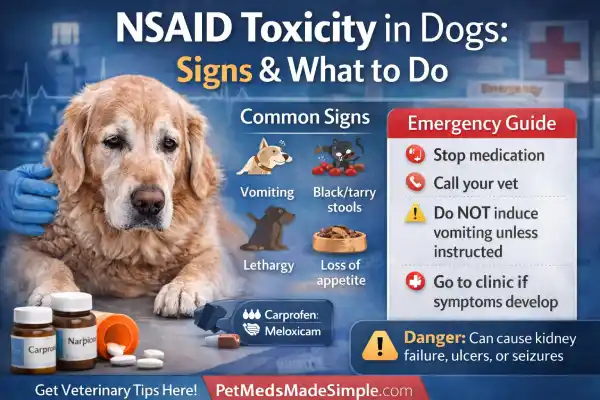
With veterinary NSAIDs, FDA guidance advises owners to stop the medication and contact their veterinarian if they suspect an adverse reaction.
This is very different from casually tapering medication because the dog appears better.
A suspected adverse reaction may require a specific safety response rather than a slow owner-designed reduction.
Our guides Can Pain Medication Cause Increased Thirst in Dogs?, Can Pain Medication Cause Frequent Urination in Dogs?, and Can Pain Medication Cause Muscle Weakness in Dogs? provide additional context for symptoms that may appear during treatment.
Should Pain Medication Be Reduced Gradually If Kidney Values Change?
Do not create a taper at home.
Changes in kidney values require veterinary interpretation because the significance depends on:
- which values changed
- magnitude of the change
- hydration status
- baseline kidney function
- medication being used
- concurrent illness
This is particularly relevant to NSAIDs.
If a veterinarian suspects an NSAID-related adverse effect, the appropriate response may not be to slowly taper the NSAID.
Our guide Do Pain Medications Affect Kidney Values in Dogs? explains why blood-test changes need to be interpreted in context.
Likewise, Can NSAIDs Cause Kidney Problems in Dogs? explores risk factors such as dehydration and pre-existing kidney disease.
What If Liver Enzymes Increase During Treatment?
The same principle applies.
An elevated liver enzyme does not automatically tell owners:
“Reduce the medication by half.”
Laboratory results need clinical interpretation.
Veterinarians consider:
- which enzyme increased
- how much it increased
- whether the dog has symptoms
- baseline results
- medication history
- other diseases
Our guides Do Pain Medications Affect Liver Enzymes in Dogs? and Can NSAIDs Cause Liver Damage in Dogs? cover this distinction in more detail.
Medication discontinuation for a suspected adverse reaction and gradual tapering after successful treatment are two entirely different clinical scenarios.
Why a Veterinary Discontinuation Plan Matters
A good discontinuation plan answers more than:
“When do we stop the pills?”
It should consider:
- Is the original condition resolved?
- Is pain still present?
- Does this medication require tapering?
- Has the dog been taking it long-term?
- Are other pain medications continuing?
- Are laboratory tests needed?
- How will recurrence of pain be recognized?
- What should the owner do if symptoms return?
This makes discontinuation part of responsible pain management rather than an afterthought.
The Key Principle for Owners
When asking should pain medication be reduced gradually in dogs, remember one rule:
Do not taper the diagnosis—taper or discontinue the specific medication according to what that medication and the dog’s condition require.
An NSAID, gabapentin, opioid, and corticosteroid are not interchangeable simply because an owner associates all of them with pain relief.
The medication class matters.
Treatment duration matters.
The reason for treatment matters.
And most importantly, the dog’s clinical response matters.
What Happens If Pain Medication Is Reduced Too Quickly?

Reducing certain medications too quickly can cause problems, but the type of problem depends on the drug.
Possible consequences include:
- return of pain
- increased stiffness
- restlessness
- sleep disruption
- reduced mobility
- neurological symptoms with some medications
- withdrawal-related effects after prolonged exposure to certain drugs
This is why should pain medication be reduced gradually in dogs cannot be answered with one universal schedule.
For NSAIDs, the main concern may be return of the underlying pain rather than a classic withdrawal syndrome.
For gabapentin or prolonged opioid therapy, the discontinuation strategy can be different.
The medication class matters.
The treatment duration matters.
And the reason the drug was prescribed matters.
Can Pain Return During a Taper?
Yes.
This is one of the most important things owners should expect.
Suppose a dog has chronic arthritis and has been comfortable for several months.
The veterinarian decides to reduce one part of the pain-management plan.
During the reduction, the owner notices:
- slower rising
- shorter walks
- reluctance to climb stairs
- more stiffness after sleep
- occasional limping
That may mean the dog still benefits from the medication.
It does not automatically mean the taper itself is dangerous.
It may simply reveal that the underlying condition remains painful.
Our guide Can Dogs Take Pain Medication Every Day? is useful here because some chronic diseases require consistent treatment rather than repeated attempts to stop medication completely.
How Can Owners Tell the Difference Between Withdrawal and Returning Pain?
This can be difficult.
Returning pain often looks like:
- stiffness
- limping
- reluctance to move
- reduced activity
- guarding a painful area
- difficulty standing
Possible discontinuation-related effects may look different depending on the medication and can include changes in:
- behavior
- sleep
- neurological stability
- gastrointestinal function
- general comfort
Timing is very important.
Owners should note:
- when the last full dose was given
- when the first reduced dose was given
- when symptoms began
- whether symptoms occur consistently after each reduction
- whether pain-specific signs return
A simple written timeline can be extremely useful to the veterinarian.
Should Pain Medication Be Reduced Gradually in Dogs Taking More Than One Pain Medication?
Sometimes one medication may be reduced while another is continued.
This is common in multimodal pain management.
A dog may be receiving:
- an NSAID
- gabapentin
- amantadine
- another adjunctive medication
The veterinarian may decide to reduce only one component.
This can help determine which medication is still necessary while preserving some pain control.
Our article Can Dogs Take Multiple Pain Medications Together? explains why combination therapy can be useful when carefully designed.
The important point is that owners should not stop several medications at once unless specifically instructed.
If multiple drugs are changed simultaneously, it becomes much harder to determine which change caused a return of pain or a new symptom.
Can Gabapentin and NSAIDs Be Reduced the Same Way?

No.
They have different pharmacology and different discontinuation considerations.
That is another reason should pain medication be reduced gradually in dogs needs a medication-specific answer.
An NSAID generally does not require a classic withdrawal taper.
Gabapentin may require more careful discontinuation depending on duration, indication, and whether the dog has a seizure disorder.
The two should not be treated as interchangeable simply because both may be part of a pain-management plan.
Our existing article Can Dogs Take Gabapentin and NSAIDs Together? Vet Safety Guide is helpful for understanding why these medications may be combined but still require different safety strategies.
Can Opioid Pain Medication Require Gradual Reduction?
Potentially, especially after prolonged exposure.
Opioids can produce physical dependence after sustained use.
That does not mean the dog is “addicted” in the behavioral sense.
Physical dependence means the body has adapted to the medication.
Abrupt discontinuation after prolonged opioid treatment may therefore be inappropriate in some patients.
Veterinarians may use gradual dose reduction depending on:
- the specific opioid
- dose
- duration of treatment
- pain severity
- concurrent medications
- clinical response
This is very different from short-term postoperative use.
A dog that receives an opioid briefly around surgery does not automatically require a prolonged taper.
What About Amantadine?
Amantadine is sometimes used as part of multimodal chronic pain management.
It is not usually the first medication owners think of when they ask should pain medication be reduced gradually in dogs, but it is important because chronic pain plans may involve several drug classes.
Its discontinuation should still be discussed with the prescribing veterinarian rather than stopped according to a generic internet taper.
PMMS already has Amantadine for Dogs: A Hidden Pain Management Tool and Can Amantadine Be Used for Arthritis in Dogs?, which can be useful internal links when this section is published.
Why Corticosteroids Are a Special Case
Prednisone and prednisolone deserve special caution.
They are not standard analgesics in the same way as NSAIDs, but owners often think of them as “pain medication” because they can reduce inflammation and discomfort.
After prolonged systemic corticosteroid treatment, abrupt discontinuation can be dangerous because the body’s own adrenal hormone production may be suppressed.
This is why corticosteroids often require a carefully structured taper after extended use.
However, the exact schedule depends on:
- dose
- treatment duration
- disease being treated
- frequency of administration
- individual response
Owners should never copy another dog’s steroid taper.
Can Pain Medication Be Reduced Gradually to Find the Lowest Effective Dose?

Yes, in some chronic cases.
Veterinarians may deliberately attempt to reduce treatment while monitoring whether the dog remains comfortable.
The goal may be to find the lowest treatment burden that still maintains:
- mobility
- sleep quality
- appetite
- willingness to exercise
- normal interaction
- acceptable quality of life
This does not mean every chronic patient should automatically be tapered.
For some dogs, the current daily regimen may already represent the best balance.
The decision is individualized.
Should Pain Medication Be Reduced Gradually After Surgery?
It depends on the medication and procedure.
Some postoperative medications are prescribed for a fixed number of days and are then simply stopped.
Others may require a different approach.
The critical point is that medication reduction should not be based solely on the dog appearing energetic.
Pain relief can occur before tissue healing is complete.
Our article How Long Should Dogs Rest After Starting Pain Medication? explains why improved comfort does not mean unrestricted activity is immediately safe.
What If My Dog Seems Pain-Free Before the Prescription Is Finished?

Do not automatically stop early.
A dog appearing comfortable may mean the medication is working exactly as intended.
This is particularly important after surgery or injury.
The absence of visible pain does not necessarily mean:
- inflammation is gone
- tissue healing is complete
- the condition has resolved
Follow the treatment duration prescribed by the veterinarian unless they advise otherwise.
Can Pain Medication Be Reduced Gradually If My Dog Is Sleeping Too Much?
Possibly, but excessive sleepiness should first be evaluated in context.
Sedation can occur with some medications, particularly central nervous system drugs.
The veterinarian may decide to:
- reduce the dose
- change timing
- switch medication
- alter combination therapy
But owners should not assume that every sleepy dog needs a taper.
Our article Can Pain Medication Cause Muscle Weakness in Dogs? explains why sedation, wobbliness, and true weakness can easily be confused.
What If My Dog Becomes More Active During a Taper?
That can be a positive sign, but it needs careful interpretation.
Some medications cause sedation.
Reducing them may make the dog:
- more alert
- more energetic
- more interested in walking
However, increased activity does not prove that the original pain has resolved.
Owners should still monitor:
- limping
- stiffness after activity
- difficulty standing later
- soreness the next morning
The safest assessment looks at comfort over the entire day, not just energy immediately after a dose change.
Should Pain Medication Be Reduced Gradually in Dogs With Kidney Disease?
This requires individualized veterinary guidance.
Kidney disease can change how some medications are handled by the body.
A veterinarian may need to consider:
- medication choice
- dose
- dosing interval
- hydration
- kidney values
- concurrent drugs
The presence of kidney disease does not automatically mean every medication needs a slow taper.
Sometimes the safer response to a suspected adverse effect may be discontinuation or switching therapy rather than gradual reduction.
Our articles Do Pain Medications Affect Kidney Values in Dogs? and Can NSAIDs Cause Kidney Problems in Dogs? are important companion resources.
Should Pain Medication Be Reduced Gradually in Dogs With Liver Disease?
The same principle applies.
Liver disease may affect medication metabolism, but the correct response depends on the drug.
Veterinarians may modify:
- dose
- interval
- medication selection
- monitoring frequency
Again, the presence of liver disease does not automatically create a universal taper requirement.
Our existing Do Pain Medications Affect Liver Enzymes in Dogs? and Can NSAIDs Cause Liver Damage in Dogs? fit naturally here.
Can Owners Use Every-Other-Day Dosing as a Taper?
Not unless the veterinarian specifically recommends it.
Owners sometimes invent a taper by changing:
once daily → every other day → stop
But this may be inappropriate.
For some drugs, extending the interval creates large fluctuations in drug exposure.
For others, reducing the dose may be more appropriate.
And for some medications, neither strategy is needed.
This is one reason home-designed taper schedules are risky even when they appear sensible.
What If My Dog Misses a Dose During a Taper?

Do not automatically compensate by doubling the next dose.
The correct response depends on:
- medication
- current taper stage
- time since the missed dose
- reason for treatment
Contact the veterinarian or follow the medication-specific missed-dose instructions you were given.
A missed dose during a carefully planned reduction does not mean owners should restart the entire taper from the beginning unless instructed to do so.
How Long Does a Pain Medication Taper Take?
There is no universal duration.
A taper may be:
- unnecessary
- brief
- gradual over several days
- considerably longer after prolonged therapy
The answer depends primarily on the specific drug and clinical circumstances.
That is why articles promising:
“The perfect 7-day dog pain-med taper”
should be treated with skepticism.
The veterinarian needs to individualize the plan.
Why Medication Duration Alone Does Not Create a Universal Taper
Two dogs may both have taken medication for eight weeks but still need different discontinuation plans.
For example:
Dog A: daily NSAID for osteoarthritis
Dog B: gabapentin for neuropathic pain
Dog C: prolonged corticosteroid treatment
The treatment duration may be identical.
The pharmacology is not.
Therefore, should pain medication be reduced gradually in dogs must always be answered in the context of the specific medication.
What If the Dog’s Pain Returns During Reduction?

Contact the veterinarian rather than simply returning to the original dose without guidance.
The veterinarian may decide to:
- return temporarily to the previous dose
- slow the reduction
- continue treatment
- add another therapy
- reassess the diagnosis
Return of pain provides useful clinical information.
It may show that the dog still needs treatment.
It may also show that the underlying condition has progressed.
Pain Control Should Not Be Removed Just to “Test” the Dog
Owners sometimes stop medication because they want to see whether their dog “really still needs it.”
For chronic pain, repeatedly removing effective treatment can create unnecessary discomfort.
A better approach is veterinarian-guided reassessment.
That may involve controlled dose changes while watching:
- mobility
- stiffness
- sleep
- appetite
- willingness to exercise
- behavior
- quality of life
The aim is not to prove the dog can survive without medication.
The aim is to identify the safest effective treatment plan.
How Can Owners Monitor a Dog During a Pain Medication Taper?
If your veterinarian recommends reducing treatment, home monitoring becomes extremely important.
The goal is not simply to see whether your dog can tolerate a lower dose.
You are trying to determine whether comfort, mobility, and quality of life remain acceptable as treatment changes.
During the taper or discontinuation period, monitor:
- willingness to stand and walk
- morning stiffness
- limping
- ability to climb stairs
- interest in normal activities
- sleep quality
- appetite
- behavior
- sensitivity when touched
- comfort after exercise
- changes in drinking or urination
A simple daily record can make subtle changes much easier to recognize.
For example:
| Day | Medication | Mobility | Limping | Appetite | Activity |
|---|---|---|---|---|---|
| Day 1 | Full dose | Good | None | Normal | Normal |
| Day 4 | Reduced dose | Slightly slower | Mild after walk | Normal | Slightly reduced |
| Day 7 | Reduced further | Stiff getting up | Moderate | Normal | Reduced |
A pattern like this gives the veterinarian much more useful information than simply saying:
“He seems worse.”
Which Signs Suggest the Dose Was Reduced Too Quickly?
When asking should pain medication be reduced gradually in dogs, owners should know what to watch for during any veterinarian-directed reduction.
Possible signs that the dog is no longer adequately controlled include:
- returning limping
- stiffness after sleeping
- difficulty standing
- refusing normal walks
- reluctance to jump
- avoiding stairs
- panting while resting
- difficulty settling
- increased sensitivity when touched
- waking frequently at night
- behavioral withdrawal
Some signs may represent returning pain rather than withdrawal.
That distinction matters.
A dog whose arthritis becomes painful again may need continued treatment even if the medication itself technically does not require tapering.
When Should the Veterinarian Be Contacted During a Taper?
Contact your veterinarian if your dog develops a meaningful deterioration after the dose is reduced.
Examples include:
- obvious return of pain
- inability to perform normal daily activities
- rapidly worsening limping
- new weakness
- severe restlessness
- marked behavioral changes
- vomiting
- diarrhea
- loss of appetite
- unusual drinking or urination
- neurological changes
Do not continue reducing medication simply because a taper schedule was originally planned.
A taper is a clinical process, not a rigid countdown that must continue regardless of how the dog responds.
Can Pain Medication Be Restarted After It Has Been Stopped?
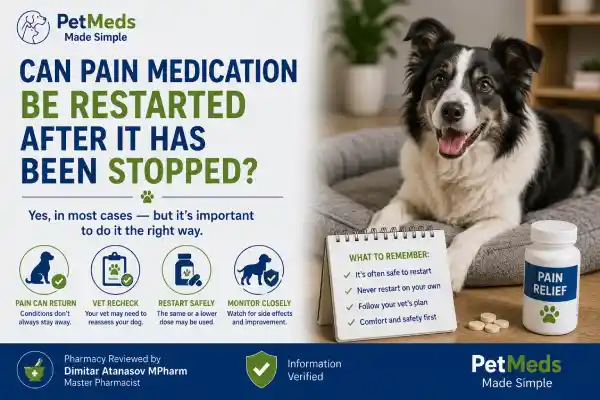
Sometimes, but restarting should still be discussed with the veterinarian.
Pain may recur after medication is discontinued because:
- arthritis remains active
- an injury has not fully healed
- activity increased too rapidly
- another painful condition developed
The veterinarian may decide to:
- restart the previous medication
- use a different dose
- switch medications
- add another form of pain control
- investigate why symptoms returned
Do not restart leftover medication automatically, especially if your dog’s health status or other prescriptions have changed.
What If Pain Returns Several Weeks After the Medication Is Stopped?
A delayed return of pain is less likely to represent an immediate discontinuation effect.
Instead, veterinarians may consider:
- progression of osteoarthritis
- reinjury
- increased activity
- muscle loss
- another orthopedic problem
- neurological disease
This is particularly important in chronic disease.
Pain medication may have successfully controlled symptoms for months without curing the underlying condition.
Stopping treatment can therefore reveal disease that was already present.
Our related guide Why Is My Dog Still in Pain After Medication? can help owners understand why persistent or recurring discomfort deserves reassessment rather than automatic dose changes.
Should Pain Medication Be Reduced Gradually in Dogs With Arthritis?
Sometimes the medication may need gradual adjustment, but arthritis itself usually requires ongoing management.
Osteoarthritis is chronic.
Joint changes do not disappear simply because symptoms improve.
For some dogs, medication can eventually be reduced as:
- body weight improves
- rehabilitation increases muscle strength
- activity becomes better controlled
- additional therapies are introduced
Other dogs continue needing daily medication to maintain acceptable quality of life.
Therefore, should pain medication be reduced gradually in dogs with arthritis depends on both the medication and whether adequate pain control can be maintained at a lower treatment level.
Our guides Can Dogs Take Pain Medication Every Day? and Can Dogs Take Pain Medication Long-Term? provide useful context for dogs requiring chronic treatment.
Does Improved Mobility Mean It Is Time to Reduce Pain Medication?
Not necessarily.
Improved mobility may simply mean the medication is working.
This is one of the most common mistakes owners make.
A dog that previously struggled to stand may begin:
- walking normally
- climbing stairs
- asking to play
- sleeping comfortably
after effective pain control begins.
It can be tempting to think:
“He doesn’t need the medication anymore.”
But the improved function may exist because of the medication.
Reducing treatment should therefore be based on the overall treatment goal—not improvement alone.
Can Rehabilitation Help Reduce the Need for Pain Medication?

In some dogs, yes.
Appropriate rehabilitation can improve:
- muscle strength
- joint stability
- flexibility
- endurance
- balance
As physical function improves, some dogs may eventually require less pharmacological support.
However, rehabilitation and medication should not be viewed as competitors.
Often they work together.
Pain control may make controlled exercise possible, while exercise helps preserve the strength necessary for long-term mobility.
Our guide How Long Should Dogs Rest After Starting Pain Medication? explains why recovery requires balancing rest with appropriate movement.
Why Weight Management Matters When Reducing Pain Medication
Body weight can significantly affect chronic orthopedic pain.
Excess weight increases mechanical stress on:
- hips
- knees
- elbows
- spine
An overweight dog may therefore struggle much more when pain medication is reduced.
Weight management can sometimes improve mobility enough to support a lower medication burden.
However, weight loss should occur gradually and safely.
Pain medication should not be reduced simply because a weight-loss program has started.
Should Pain Medication Be Reduced Gradually in Dogs Who Have Been Taking It for Years?
This requires particularly careful veterinary planning.
A dog receiving medication for years usually has a chronic condition.
Before altering therapy, veterinarians may consider:
- current pain control
- laboratory results
- kidney function
- liver health
- other medications
- mobility
- muscle mass
- quality of life
Long treatment duration does not automatically mean the dog must stop medication.
Nor does it automatically mean every medication requires a prolonged taper.
Again, the specific drug determines the pharmacological discontinuation requirements.
Why Senior Dogs Need Individualized Discontinuation Plans
Senior dogs often have less physiological reserve.
They may also have several conditions simultaneously:
- osteoarthritis
- kidney disease
- liver changes
- muscle loss
- neurological disease
- heart disease
Reducing effective pain control too aggressively may cause a sharp decline in activity.
That inactivity can then worsen muscle weakness.
This is why our article Can Pain Medication Cause Muscle Weakness in Dogs? is closely related to discontinuation decisions in older patients.
The goal should be maintaining the best sustainable function—not simply minimizing the number of medications.
What Owners Should Never Do When Reducing Pain Medication
Never:
- create a taper without veterinary guidance
- halve tablets unless they are intended to be divided
- change dosing intervals randomly
- stop several medications simultaneously
- substitute human pain medication
- double a dose after a missed dose
- restart an old prescription without checking
- interpret returning pain as proof of addiction
These mistakes can make treatment less effective and sometimes increase risk.
Should Pain Medication Be Reduced Gradually in Dogs? The Practical Rule
The simplest practical answer is:
Reduce gradually only when the specific medication and clinical situation require it.
Do not base the decision on the general category “pain medication.”
Instead ask:
- What medication is my dog taking?
- Why was it prescribed?
- How long has my dog taken it?
- Does this medication have discontinuation concerns?
- Is the underlying painful condition resolved?
- What signs should I monitor during reduction?
- What should I do if pain returns?
Those questions lead to a much safer plan than a generic taper schedule.
Bottom Line
Should pain medication be reduced gradually in dogs? Sometimes—but not every pain medication requires tapering.
Veterinary NSAIDs generally do not require a classic withdrawal taper, although stopping them may allow the original pain and inflammation to return. Gabapentin may require more careful discontinuation in certain dogs, especially when it is used long-term or for seizure management. Opioids may require gradual reduction after prolonged exposure, while systemic corticosteroids—although not conventional analgesics—often need tapering after extended treatment.
The key distinction is between withdrawal from a medication and return of the underlying pain.
Never create a tapering schedule at home. The safest discontinuation plan depends on the medication, treatment duration, diagnosis, other drugs, and how your dog responds as treatment changes.
Veterinarian Takeaway
When owners ask should pain medication be reduced gradually in dogs, veterinarians first identify the medication rather than treating every analgesic as the same.
A dog stopping carprofen after successful treatment has different considerations from a dog discontinuing chronic gabapentin, prolonged opioid therapy, or systemic corticosteroids.
The veterinarian must also determine whether the original painful condition still requires treatment.
For chronic diseases such as osteoarthritis, recurrence of pain after medication reduction may indicate that treatment was still providing meaningful benefit rather than that the dog became “addicted.”
A safe discontinuation plan balances:
- medication pharmacology
- pain control
- treatment duration
- underlying disease
- adverse-effect risk
- mobility
- quality of life
Frequently Asked Questions
Should pain medication be reduced gradually in dogs?
Should pain medication be reduced gradually in dogs depends on the specific medication. Some drugs may need tapering, while others can often be discontinued without a classic withdrawal taper under veterinary guidance.
Do NSAIDs need to be tapered in dogs?
Veterinary NSAIDs generally do not require a classic taper to prevent withdrawal. However, stopping them may allow arthritis or other inflammatory pain to return.
Does gabapentin need to be tapered in dogs?
It may require careful reduction depending on treatment duration, dose, indication, and whether the dog has a seizure disorder. Do not stop long-term gabapentin without veterinary guidance.
Can dogs stop carprofen suddenly?
Carprofen does not usually require a traditional withdrawal taper, but owners should still follow the prescribing veterinarian’s instructions because the original pain may return after treatment stops.
What happens if dog pain medication is stopped too quickly?
Possible consequences depend on the drug and may include recurrence of pain, changes in mobility, or medication-specific discontinuation effects.
Is returning pain the same as withdrawal?
No. Pain returning after treatment ends often means the underlying condition is still present. It does not automatically indicate medication dependence or withdrawal.
Should senior dogs taper pain medication more slowly?
Not simply because they are older. The medication, duration of treatment, underlying diseases, and overall health determine the safest discontinuation strategy.
Can I give pain medication every other day as a taper?
Only if your veterinarian specifically recommends it. Extending the interval is not an appropriate tapering strategy for every medication.
Should I reduce pain medication once my dog stops limping?
Not automatically. The improvement may mean the medication is working, while the underlying injury or arthritis may still require treatment.
What should I do if my dog’s pain returns during a taper?
Contact your veterinarian. The taper may need to be slowed, paused, reversed, or the treatment plan may need reassessment.
Sources
- American Animal Hospital Association (AAHA). 2022 AAHA Pain Management Guidelines for Dogs and Cats.
- U.S. Food and Drug Administration Center for Veterinary Medicine. Get the Facts About Pain Relievers for Pets.
- Merck Veterinary Manual. Pain Assessment and Management in Dogs and Cats.
- VCA Animal Hospitals. Gabapentin — veterinary drug information and discontinuation considerations.
- Plumb DC. Plumb’s Veterinary Drug Handbook. Latest edition.
- Papich MG. Saunders Handbook of Veterinary Drugs.
- Grimm KA, Lamont LA, Tranquilli WJ, Greene SA, Robertson SA. Veterinary Anesthesia and Analgesia.
- Veterinary Pharmacology and Therapeutics.
- Small Animal Clinical Pharmacology.
- Millis DL, Levine D. Canine Rehabilitation and Physical Therapy.
Medical Review Statement
This article was written by Dimitar Georgiev Atanasov, MPharm, pharmacy and scientifically reviewed by Gergana Krasimirova Atanasova, MPharm, and veterinary reviewed by Dr. Valcho Georgiev Valchev, DVM.
Pet Meds Made Simple provides educational veterinary medication information and does not replace individualized diagnosis, prescribing, tapering instructions, laboratory monitoring, or treatment recommendations from your veterinarian.
Image Disclosure
Image Disclosure: Some images used in this article may be AI-generated or digitally enhanced for educational and illustrative purposes. They are intended to support understanding of veterinary medication concepts and should not replace professional veterinary diagnosis or treatment.




Wonderful site you have here but I was curious if you knew of any discussion boards that
cover the same topics discussed in this article? I’d really love to be a part of online community where I can get responses
from other experienced individuals that share the same interest.
If you have any recommendations, please let me know.
Thanks!