
Quick Answer
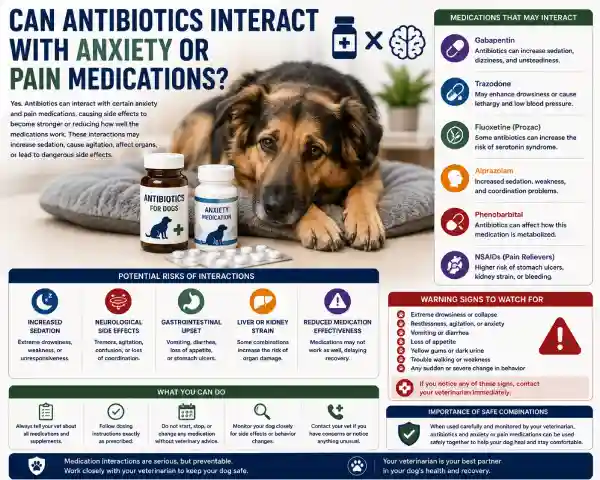
Can Antibiotics Interact With Anxiety or Pain Medications? Yes antibiotics can sometimes interact with anxiety medications, pain medications, seizure medications, steroids, and other drugs used in dogs. These interactions may increase the risk of nausea, sedation, tremors, restlessness, neurological side effects, stomach irritation, toxicity, or dangerous changes in medication levels. Some combinations are mild, while others can become serious or even life-threatening if not monitored properly.
Many dog owners never realize how important medication interactions can be.
They assume:
“If my veterinarian prescribed them together, they must always be safe.”
And most of the time, they are.
But certain combinations may increase the risk of:
- Neurological side effects
- Sedation
- Restlessness
- Weakness
- Tremors
- GI irritation
- Liver stress
- Toxicity
- Behavioral changes
This becomes especially important in dogs already taking:
- Anxiety medications
- Pain medications
- Seizure medications
- Steroids
- Multiple antibiotics
- Long-term medications
The challenge is that interaction symptoms often look subtle at first.
Owners may notice:
- Strange behavior
- Panting
- Pacing
- Weakness
- Crying
- Tremors
- Sleep changes
- Loss of appetite
- Excessive drooling
This guide explains:
- Which medications interact most commonly
- Which antibiotics create the highest risk
- What symptoms owners should watch for
- Which combinations may affect the nervous system
- How veterinarians manage medication interactions safely
- When symptoms become dangerous
Related articles:
- Can Antibiotics Cause Hyperactivity in Dogs?
- Can Antibiotics Cause Weakness in Dogs?
- Can Antibiotics Cause Shaking in Dogs?
- Why Is My Dog Restless at Night After Antibiotics?
- What Does Antibiotic Toxicity Look Like in Dogs?
For broader guidance:
- Antibiotics for Dogs: Uses, Types, Dosage, Side Effects & Safety Guide
- Pain Medications for Dogs
- Seizure Medications for Dogs
- Anxiety Medications for Dogs
Can Antibiotics Interact With Anxiety or Pain Medications?
Can Antibiotics Really Interact With Other Medications?
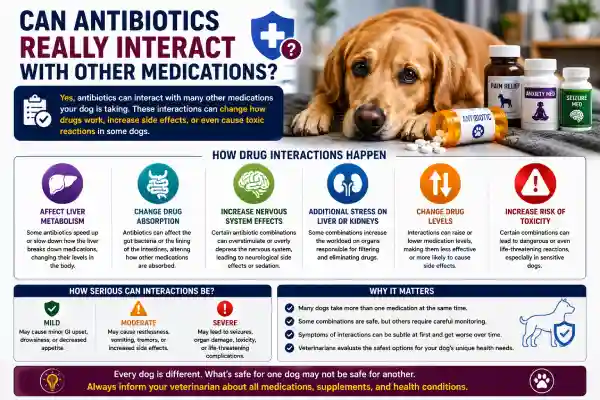
Absolutely.
Drug interactions happen because medications may:
- Affect liver metabolism
- Increase nervous system stimulation
- Increase sedation
- Change drug absorption
- Stress the kidneys or liver
- Increase toxicity risk
Some interactions are mild.
Others can become dangerous — especially in:
- Senior dogs
- Small breeds
- Dogs with liver disease
- Dogs with kidney disease
- Dogs taking multiple medications
Which Medications Commonly Interact With Antibiotics?
Medication Types Most Commonly Involved
| Medication Type | Possible Interaction Risk |
|---|---|
| Anxiety medications | Sedation or neurological effects |
| Pain medications | GI irritation or CNS depression |
| Seizure medications | Altered seizure control |
| Steroids | Increased GI complications |
| NSAIDs | Stomach ulcer risk |
| Multiple antibiotics | Toxicity risk |
Which Antibiotics Cause the Most Interaction Problems?
Certain antibiotics are more likely to affect the nervous system or liver metabolism.
Higher-Risk Antibiotics
| Antibiotic | Why It Can Cause Problems |
|---|---|
| Metronidazole | Neurological toxicity risk |
| Enrofloxacin | CNS stimulation |
| Fluoroquinolones | Nervous system interactions |
| Erythromycin | Liver metabolism effects |
| Clarithromycin | Drug level changes |
| Doxycycline | GI irritation |
Related:
- Metronidazole Side Effects in Dogs
- Enrofloxacin Side Effects in Dogs
- Doxycycline Side Effects in Dogs
Can Antibiotics Interact With Anxiety Medications?
Yes — and this is one of the most important interaction categories.
Dogs taking:
- Trazodone
- Fluoxetine
- Clomipramine
- Alprazolam
- Diazepam
- Gabapentin
may become more sensitive to:
- Sedation
- Confusion
- Weakness
- Restlessness
- Neurological side effects
Some combinations may increase:
- Anxiety-like behavior
- Hyperactivity
- Panting
- Disorientation
Signs of Possible Anxiety Medication Interactions
| Symptom | Common? |
|---|---|
| Excessive sleepiness | Common |
| Restlessness | Sometimes |
| Weakness | Common |
| Panting | Sometimes |
| Confusion | Serious |
| Tremors | Serious |
Related:
Can Antibiotics Interact With Pain Medications?
Absolutely.
This is especially important with:
- NSAIDs
- Tramadol
- Gabapentin
- Opioids
- Steroids
Some combinations may increase:
- Stomach irritation
- Sedation
- Liver stress
- Neurological reactions
Possible Pain Medication Interaction Risks
| Combination | Possible Risk |
|---|---|
| Antibiotics + NSAIDs | GI ulcer risk |
| Antibiotics + Tramadol | Neurological side effects |
| Antibiotics + Opioids | Sedation |
| Antibiotics + Gabapentin | Weakness or wobbliness |
| Antibiotics + Steroids | Digestive complications |
Related:
- Pain Medications for Dogs
- Tramadol for Dogs: Does It Really Work?
- Can Antibiotics Cause Weakness in Dogs?
Can Drug Interactions Cause Neurological Symptoms?
Yes — and this is one of the most serious concerns.
Interaction-related neurological symptoms may include:
- Tremors
- Hyperactivity
- Weakness
- Confusion
- Disorientation
- Shaking
- Seizures
- Inability to settle
This is more likely with:
- High doses
- Multiple medications
- Dogs with seizure disorders
- Dogs with liver disease
Related:
Can Drug Interactions Cause Restlessness or Anxiety?
Yes.
Some medication combinations may overstimulate the nervous system.
Dogs may then:
- Pace constantly
- Pant
- Cry
- Seem unable to relax
- Wake repeatedly at night
- Become unusually reactive
Related:
Can Antibiotics Affect Seizure Medications?
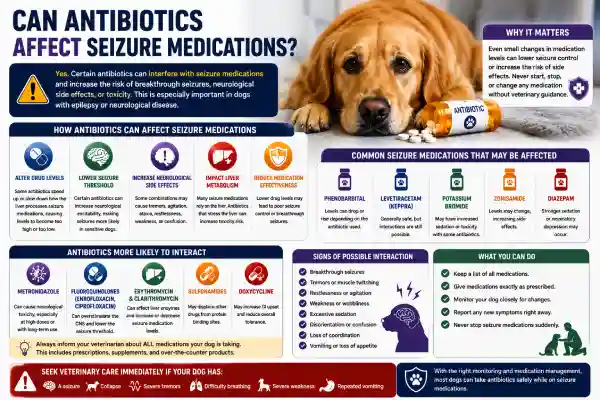
Absolutely.
Certain antibiotics may:
- Lower seizure threshold
- Alter medication levels
- Increase neurological stimulation
This becomes especially important in dogs taking:
- Phenobarbital
- Levetiracetam (Keppra)
- Potassium bromide
- Diazepam
Dogs with epilepsy should always be monitored carefully during antibiotic treatment.
Related:
Which Dogs Are Most at Risk?
Higher-Risk Dogs
| Dog Type | Why Risk Increases |
|---|---|
| Senior dogs | Slower metabolism |
| Small breeds | Increased medication sensitivity |
| Dogs with liver disease | Poor drug processing |
| Dogs with kidney disease | Reduced drug clearance |
| Dogs on multiple medications | Interaction overload |
| Dogs with neurological disease | Higher CNS sensitivity |
What Symptoms Should Owners Watch For?
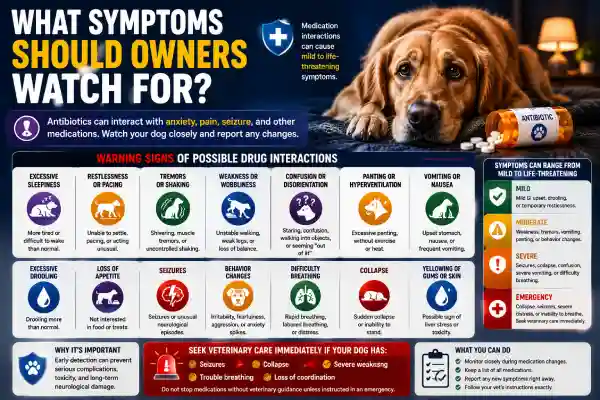
Warning Signs of Possible Drug Interactions
| Symptom | Serious? |
|---|---|
| Severe weakness | Yes |
| Tremors | Yes |
| Collapse | Emergency |
| Confusion | Serious |
| Vomiting | Sometimes |
| Severe panting | Sometimes |
| Seizures | Emergency |
| Loss of coordination | Serious |
How Veterinarians Diagnose Drug Interactions
Veterinarians evaluate:
- Medication combinations
- Dosages
- Timing of symptoms
- Neurological changes
- Liver and kidney health
- Existing illnesses
Possible testing may include:
- Bloodwork
- Liver values
- Neurological examination
- Medication review
- Toxicity assessment
How Are Medication Interactions Treated?
Treatment depends on the severity of symptoms.
Possible Treatments
| Problem | Possible Treatment |
|---|---|
| Mild GI upset | Supportive care |
| Sedation | Dose adjustment |
| Neurological symptoms | Medication changes |
| Toxicity | Hospitalization |
| Severe interactions | Emergency treatment |
| Seizures | Intensive monitoring |
How to Reduce the Risk of Drug Interactions
Important Safety Tips
| Tip | Why It Helps |
|---|---|
| Tell your vet about ALL medications | Prevent hidden interactions |
| Never double-dose medications | Reduce toxicity risk |
| Use medications exactly as prescribed | Improve safety |
| Monitor behavior closely | Catch symptoms early |
| Watch for neurological changes | Detect emergencies |
| Keep a medication schedule | Avoid dosing mistakes |
When Should You Call the Vet Immediately?
Seek veterinary care immediately if your dog develops:
- Tremors
- Collapse
- Severe weakness
- Seizures
- Trouble breathing
- Confusion
- Severe pacing
- Persistent vomiting
- Loss of coordination
- Extreme lethargy
These symptoms may indicate:
- Toxicity
- Dangerous drug interactions
- Neurological complications
- Severe medication reactions
FAQ – Can Antibiotics Interact With Anxiety or Pain Medications?
Can antibiotics interact with anxiety medications in dogs?
Yes some combinations may increase sedation, confusion, restlessness, or neurological side effects.
Can antibiotics interact with pain medications?
Absolutely. Certain combinations may increase GI irritation, sedation, or toxicity risk.
Which antibiotics are most likely to cause neurological interactions?
Metronidazole and fluoroquinolones are more commonly linked to neurological side effects.
Can medication interactions cause shaking in dogs?
Yes tremors or shaking may occur with certain neurological interactions or toxicity reactions.
Should I stop medications if I suspect an interaction?
Do not stop medications without veterinary guidance unless emergency symptoms occur.
Medical Disclaimer
This article is for educational purposes only and does not replace professional veterinary advice, diagnosis, or treatment. The content is written and pharmacist-reviewed to improve medication safety awareness and help dog owners better understand antibiotic interactions, neurological side effects, toxicity risks, digestive complications, and veterinary medication safety considerations. Always consult your veterinarian before starting, stopping, or changing any medication for your dog.Can Antibiotics Interact With Anxiety or Pain Medications?
Sources
- Merck Veterinary Manual
- VIN Veterinary Partner
- American Veterinary Medical Association (AVMA)
- FDA Center for Veterinary Medicine
- PubMed: Antibiotic and CNS Drug Interactions
- National Center for Biotechnology Information (NCBI)
- GoodRx Drug Interaction Database
Images are created with AI – Can Antibiotics Interact With Anxiety or Pain Medications?