Quick Answer
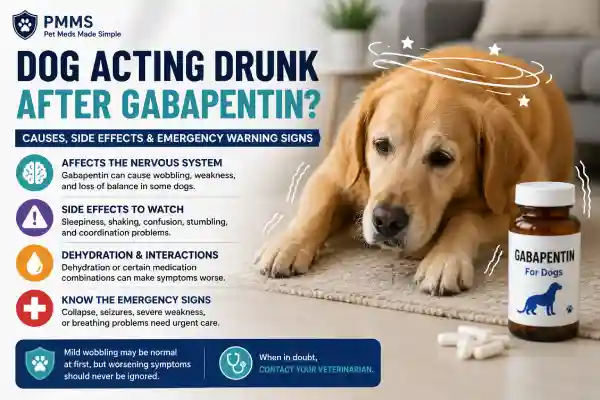
Why is my dog weak after gabapentin? Weakness is one of the more commonly reported side effects of gabapentin in dogs. Some dogs may appear tired, less coordinated, reluctant to walk, or weaker than usual after receiving the medication. In many cases, the weakness is temporary and related to sedation or dose adjustment. However, severe weakness, collapse, or worsening symptoms should always be evaluated by a veterinarian.
Why is my dog weak after gabapentin?
Gabapentin can cause temporary weakness in some dogs because it affects the nervous system and may cause sedation, reduced coordination, and decreased activity. Mild weakness often improves as dogs adjust to treatment, but severe weakness, inability to stand, or collapse requires prompt veterinary attention.
When Owners Commonly Ask This
Owners often search why is my dog weak after gabapentin when:
- Their dog seems unusually tired.
- Walking becomes difficult.
- The back legs appear weak.
- Their dog struggles to stand up.
- A new gabapentin dose was started.
- The dosage was recently increased.
Many owners worry that something serious is happening when their dog suddenly appears weaker than normal.
Why Is My Dog Weak After Gabapentin?
Can Gabapentin Cause Weakness in Dogs?
Yes.
Weakness is a recognized side effect of gabapentin and is often associated with:
- Sedation
- Reduced coordination
- Muscle weakness
- Wobbliness
- Decreased activity
Fortunately, many cases are mild and improve as the dog’s body adjusts to treatment.
Why Does Gabapentin Sometimes Cause Weakness?
Gabapentin affects the nervous system.
The medication is commonly prescribed for:
- Chronic pain
- Nerve pain
- Arthritis
- Anxiety
- Post-operative recovery
Because it influences nerve signaling, some dogs may experience temporary reductions in coordination and muscle control.
This can make a dog appear weaker than normal.
Is Weakness the Same as Sleepiness?
Not always.
This is one of the biggest misunderstandings among dog owners.
Sleepiness
A sleepy dog:
- Wants to rest
- Sleeps more
- Moves less frequently
- Appears relaxed
Weakness
A weak dog may:
- Struggle to stand
- Walk slowly
- Have difficulty climbing stairs
- Lose balance
- Seem physically unstable
Sometimes both occur together.
Related article:
Why Does My Dog Sleep So Much on Gabapentin?
Is Weakness the Same as Wobbliness?
Not exactly.
Wobbliness
Usually refers to poor coordination.
Dogs may:
- Stagger
- Sway
- Lose balance
Weakness
Often refers to reduced strength.
Dogs may:
- Have trouble standing
- Tire easily
- Refuse activity
Many owners use these terms interchangeably, but veterinarians often distinguish between them.
Related article:
Why Is My Dog Wobbly After Gabapentin?
Could the Dose Be Too High?
Possibly.
Weakness may become more noticeable when:
- A dose is increased.
- Treatment is started.
- Multiple sedating medications are combined.
This does not automatically mean the dose is inappropriate, but it is something veterinarians consider when evaluating side effects.
Could Other Medications Make Weakness Worse?
Absolutely.
Many dogs taking gabapentin are also prescribed:
- Trazodone
- Pain medications
- Seizure medications
- Anxiety medications
Medication combinations may increase sedation and weakness.
Related articles:
Are Senior Dogs More Likely to Experience Weakness?
Often, yes.
Senior dogs may be more sensitive to:
- Sedation
- Balance changes
- Reduced coordination
- Muscle weakness
This does not mean gabapentin is unsafe for older dogs, but it does mean monitoring is particularly important.
Related article:
Can Senior Dogs Take Gabapentin Safely?
Could Kidney Disease Increase Weakness?
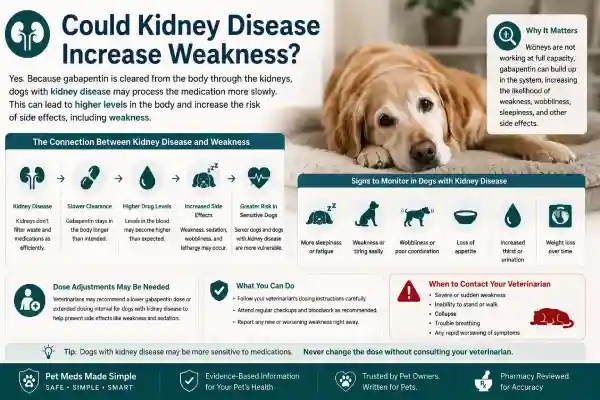
Potentially.
Because gabapentin is primarily eliminated through the kidneys, dogs with kidney disease may process the medication more slowly.
This can increase the likelihood of side effects, including:
- Weakness
- Excessive sleepiness
- Wobbliness
- Disorientation
Related article:
Gabapentin and Kidney Disease in Dogs: Is It Safe?
Could Pain Be the Real Cause?
Sometimes.
Owners often assume gabapentin caused the weakness when the underlying condition may actually be responsible.
Pain can cause dogs to:
- Walk less
- Move cautiously
- Appear weak
- Avoid stairs
- Refuse exercise
This is particularly common in dogs with arthritis or orthopedic disease.
Related articles:
- Why Is My Dog Still in Pain on Gabapentin?
- Can Gabapentin Cause Weak Back Legs?
- Best Pain Medication for Dogs with Arthritis
What Does Weakness Look Like?
Owners may notice:
- Difficulty standing
- Trouble jumping
- Reluctance to walk
- Slow movement
- Reduced activity
- Shaky legs
- Trouble climbing stairs
- Lying down more often
These signs can vary from mild to severe.
How Long Does Weakness Usually Last?
In many cases, weakness improves as the dog’s body adjusts to treatment.
This adjustment period may occur:
- After starting gabapentin
- Following a dosage increase
- When combining medications
However, persistent weakness should always be discussed with a veterinarian.
What Owners Should Monitor at Home
Monitor:
- Ability to stand
- Walking ability
- Appetite
- Water intake
- Energy level
- Responsiveness
- Timing of symptoms
Taking videos can be extremely helpful when discussing symptoms with your veterinarian.
How Veterinarians Evaluate Weakness After Gabapentin
When owners ask why is my dog weak after gabapentin, veterinarians try to determine whether the weakness is:
- A normal medication side effect
- Related to dosage
- Caused by another medication
- Associated with an underlying disease
- A sign of a more serious problem
A veterinary evaluation may include:
- Physical examination
- Neurological assessment
- Mobility evaluation
- Medication review
- Pain assessment
- Bloodwork if indicated
One of the most important questions is:
Did the weakness start after gabapentin was introduced or after the dosage was increased?
The timing often provides valuable clues.
Could Weakness Occur After a Dose Increase?
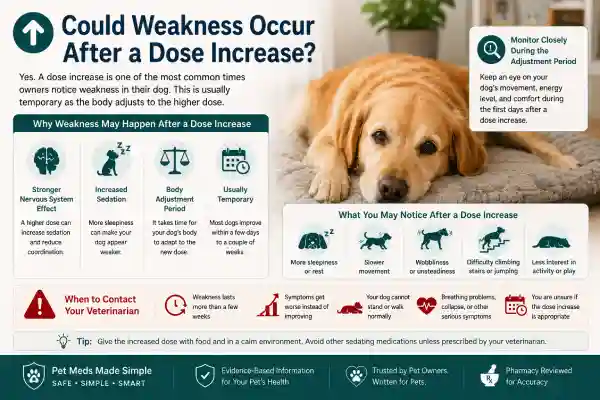
Yes.
This is one of the most common situations where owners notice weakness.
After a dosage increase, some dogs may temporarily experience:
- Increased sleepiness
- Reduced coordination
- Slower movement
- Mild weakness
Many dogs adjust over time, but persistent or worsening weakness should be discussed with a veterinarian.
Could an Overdose Cause Weakness?
Absolutely.
Weakness is one of the most common signs reported after gabapentin overdose.
Potential overdose signs include:
- Severe weakness
- Extreme sedation
- Wobbliness
- Disorientation
- Collapse
- Difficulty standing
Related article:
Signs of Medication Overdose in Dogs
Could Weakness Affect the Back Legs More?
Sometimes.
Owners frequently report:
“My dog’s back legs seem weak after gabapentin.”
This may occur because reduced coordination and sedation are often more noticeable in the hind limbs.
Dogs may appear to:
- Drag their feet
- Slip more easily
- Struggle when standing
- Have difficulty climbing stairs
This is particularly common in senior dogs and dogs with existing orthopedic conditions.
When Does Weakness Become an Emergency?
Seek immediate veterinary attention if your dog:
Cannot Stand
Inability to rise normally requires prompt evaluation.
Collapses
Any collapse should be treated seriously.
Appears Unresponsive
Excessive sedation may require medical assessment.
Develops Breathing Problems
Weakness combined with breathing abnormalities is concerning.
Shows Rapidly Worsening Symptoms
Progressive weakness should never be ignored.
Could Weakness Mean Gabapentin Is Working?
Surprisingly, not always.
Some owners notice their dog becomes calmer and less active because:
- Pain is better controlled
- Anxiety has improved
- The dog is finally resting comfortably
However, true weakness is different from improved comfort.
This distinction is something veterinarians evaluate carefully.
Can Weakness Be Temporary?
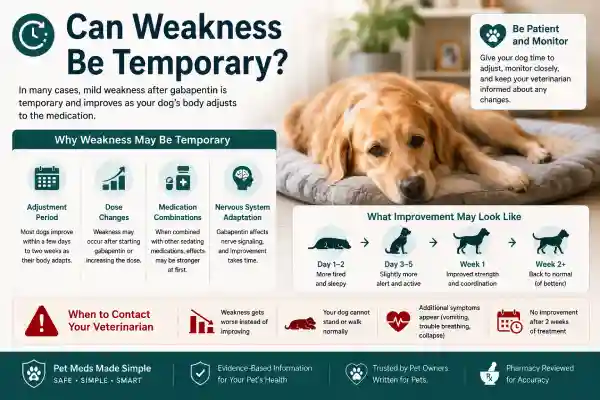
In many cases, yes.
Mild weakness may improve as the dog’s body adapts to treatment.
This is particularly common:
- During the first few days
- After dosage adjustments
- When multiple medications are being introduced
Nevertheless, ongoing weakness deserves veterinary follow-up.
Related Symptoms Owners Often Search For
Owners searching why is my dog weak after gabapentin often also search for:
Wobbliness
Related article: Why Is My Dog Wobbly After Gabapentin?
Sleeping More
Related article: Why Does My Dog Sleep So Much on Gabapentin?
Shaking
Related article: Can Gabapentin Cause Shaking in Dogs?
Vomiting
Related article: Why Is My Dog Vomiting After Gabapentin?
Breathing Changes
Related article: Can Gabapentin Cause Breathing Problems in Dogs?
Aggression
Related article: Can Gabapentin Cause Aggression in Dogs?
Restlessness
Related article: Why Is My Dog Restless at Night on Gabapentin?
Acting Strange
Related article: Can Anxiety Medication Cause Confusion in Dogs?
Missing a Dose
Related article: What Happens If My Dog Misses Gabapentin?
What Questions Should Owners Ask Their Veterinarian?
Helpful questions include:
- Is this weakness expected?
- Could the dosage be too high?
- Should other medications be adjusted?
- Could kidney disease be contributing?
- Is my dog’s age affecting how it responds?
- What signs should prompt an emergency visit?
These discussions help ensure safe and effective treatment.
Veterinarian Takeaway
Why is my dog weak after gabapentin? Weakness is a recognized side effect that may occur because gabapentin affects the nervous system and can cause sedation, reduced coordination, and decreased activity. In many dogs, the weakness is mild and temporary. However, severe weakness, collapse, inability to stand, or worsening symptoms require veterinary evaluation.
Bottom Line
If you’re wondering why is my dog weak after gabapentin, the answer is often related to the medication’s effects on the nervous system.
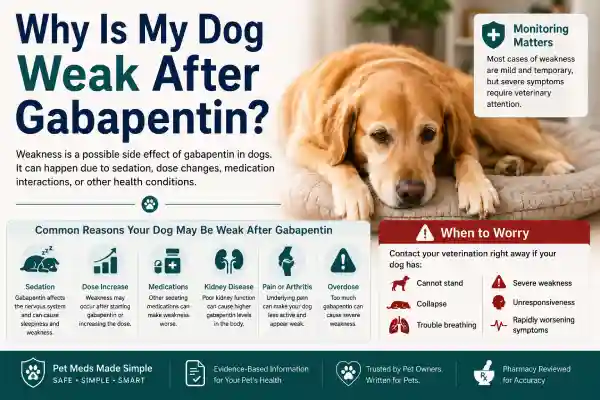
Possible causes include:
- Sedation
- Dose adjustments
- Medication interactions
- Kidney disease
- Underlying illness
- Overdose situations
- Pain-related mobility problems
Most cases are mild, but owners should monitor their dog closely and contact their veterinarian if weakness becomes severe or persistent.
Frequently Asked Questions – Why Is My Dog Weak After Gabapentin?
Can gabapentin cause weakness in dogs?
Yes. Weakness is a recognized side effect and may occur alongside sedation and reduced coordination.
Is weakness common after starting gabapentin?
It can occur, particularly during the first few days of treatment.
Can a dose increase make weakness worse?
Yes. Some dogs experience increased weakness after dosage adjustments.
Is weakness the same as sleepiness?
No. Sleepiness refers to drowsiness, while weakness involves reduced strength or mobility.
Is weakness the same as wobbliness?
Not exactly. Wobbliness usually refers to poor coordination, while weakness refers to reduced physical strength.
Can senior dogs experience more weakness?
Yes. Older dogs may be more sensitive to gabapentin’s effects.
Could kidney disease increase weakness?
Potentially. Dogs with kidney disease may process gabapentin more slowly.
Can an overdose cause severe weakness?
Yes. Severe weakness is one possible sign of overdose.
When should I call my veterinarian?
If weakness is severe, persistent, worsening, or accompanied by collapse or breathing problems.
Does weakness mean gabapentin should be stopped?
Not necessarily. Treatment decisions should always be made with veterinary guidance.
Reviewed By
Pharmacy Reviewed By
Dimitar Atanasov, MPharm
Master Pharmacist | Medication Safety Educator
Editorial Policy
At Pet Meds Made Simple, we are committed to providing accurate, evidence-based information about pet medications, veterinary treatments, medication safety, and common health concerns that affect dogs and cats.
Our content is researched using veterinary reference texts, peer-reviewed veterinary literature, clinical guidelines, and trusted veterinary organizations. Every article is written with the goal of helping pet owners better understand their pet’s medications while supporting—not replacing—the advice of their veterinarian.
Read our full Editorial Policy:
Sources
- Plumb’s Veterinary Drug Handbook
- American Animal Hospital Association (AAHA)
- American Veterinary Medical Association (AVMA)
- Merck Veterinary Manual
- Veterinary Pharmacology and Therapeutics
- Small Animal Clinical Pharmacology
- Journal of the American Veterinary Medical Association (JAVMA)
- Frontiers in Veterinary Science
- Veterinary Anaesthesia and Analgesia
- Veterinary Information Network (VIN)
Medical Review Statement
This article was pharmacy-reviewed by Dimitar Atanasov, MPharm, Master Pharmacist, using current veterinary pharmacology references, canine pain-management guidelines, and published veterinary literature available at the time of review.
Images created with AI – Why Is My Dog Weak After Gabapentin?