Quick Answer
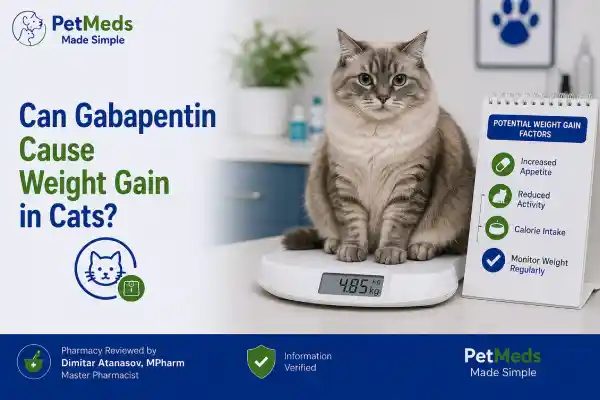
Can gabapentin cause weight gain in cats? Gabapentin is not considered a medication that directly causes weight gain in cats, but some cats may gradually become heavier during treatment. In most cases, the increase is related to reduced activity, improved appetite after pain relief, aging, or lifestyle changes rather than the medication itself. Sudden or excessive weight gain should always be discussed with your veterinarian to rule out underlying medical conditions.
Can Gabapentin Cause Weight Gain in Cats?
One of the most common questions owners ask after several weeks of treatment is:
“Can gabapentin cause weight gain in cats?”
The concern is understandable.
Your cat starts taking gabapentin.
A month later you notice that your cat:
- seems heavier
- sleeps more
- plays less
- spends longer resting
- looks rounder around the abdomen
The timing makes it very easy to assume that gabapentin caused the extra weight.
Fortunately, the answer is usually more reassuring.
Current veterinary evidence does not identify gabapentin as a medication that directly changes a cat’s metabolism or consistently causes obesity.
Instead, several indirect factors may explain why owners notice gradual weight gain after treatment begins.
Understanding these factors helps owners avoid stopping an effective medication unnecessarily while still recognizing situations that deserve veterinary evaluation.
Can Gabapentin Cause Weight Gain in Cats?
Can Gabapentin Cause Weight Gain in Cats by Making Them Less Active?
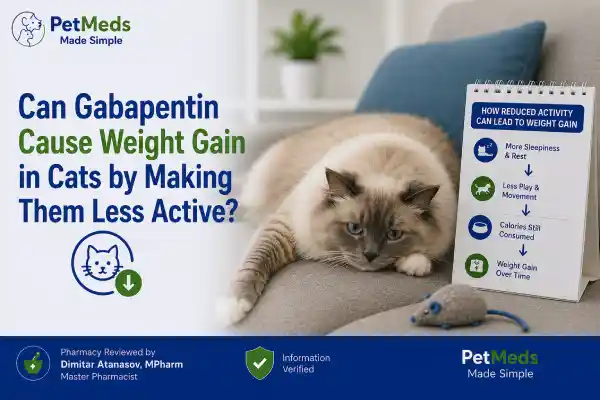
This is probably the most likely explanation.
Gabapentin works on the nervous system.
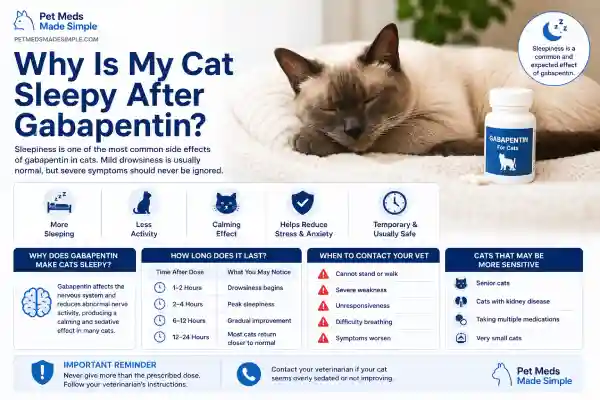
One of its best-known side effects is temporary sedation.
Some cats become:
- quieter
- calmer
- slower
- less playful
- less interested in climbing
- less interested in chasing toys
Naturally, a cat that burns fewer calories every day may slowly gain weight over time.
This does not mean gabapentin is directly making body fat increase.
Instead, it means daily energy expenditure has decreased.
Owners wondering can gabapentin cause weight gain in cats frequently notice that their cat also seems sleepier than usual.
If excessive drowsiness is your main concern, you should also read Why Is My Cat Sleepy After Gabapentin?, where we explain how long sedation normally lasts and when it becomes excessive.
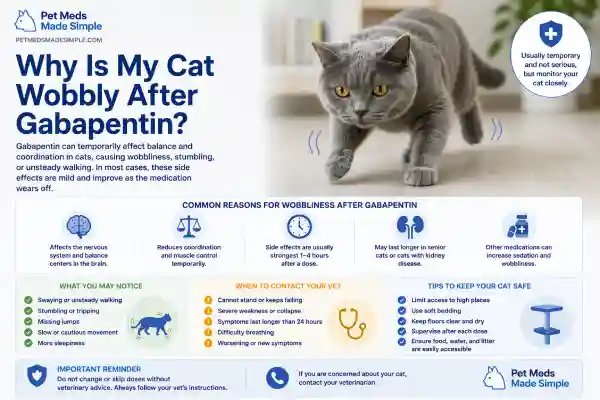
Likewise, if reduced movement is accompanied by balance problems, Why Is My Cat Wobbly After Gabapentin? explains why some cats temporarily appear unsteady after receiving the medication.
Can Gabapentin Cause Weight Gain in Cats by Improving Appetite?
Interestingly, the answer is usually indirectly rather than directly.
Gabapentin itself is not considered an appetite stimulant in healthy cats.
However, many cats receiving gabapentin have painful medical conditions such as:
- arthritis
- spinal disease
- chronic nerve pain
- orthopedic injuries
Pain often suppresses appetite.
A painful cat may:
- leave food unfinished
- eat slowly
- avoid walking to the food bowl
- lose interest in treats
Once pain improves, appetite often returns.
Owners sometimes mistake this for a medication side effect.
In reality, the cat is simply eating normally again.
This is actually a positive sign because it often indicates that pain management is working.
If your cat develops the opposite problem and refuses food after treatment begins, our article Why Is My Cat Not Eating After Gabapentin? explains when reduced appetite is expected and when immediate veterinary advice is recommended.
Why Owners Often Blame the Medication
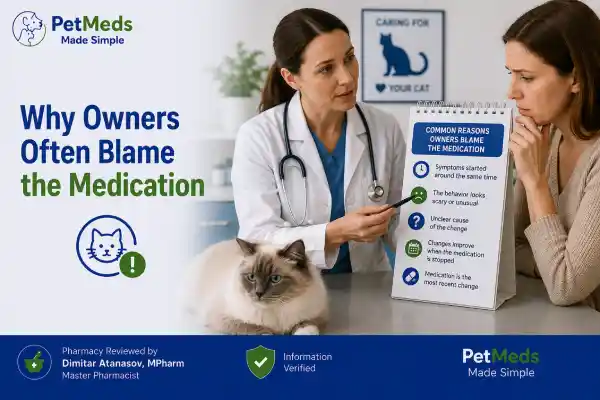
Humans naturally associate events that happen close together.
For example:
Week 1
Gabapentin begins.
↓
Week 4
Cat gains a small amount of weight.
↓
Conclusion:
“Gabapentin caused the weight gain.”
But veterinarians think differently.
Instead of asking only whether gabapentin was started, they ask questions such as:
- Has your cat become less active?
- Has the appetite improved?
- Has the diet changed?
- Are more treats being given?
- Has arthritis become better controlled?
- Has another medication been added?
- Has the cat been weighed recently?
Only after looking at the entire picture can they determine whether gabapentin is actually contributing to the problem.
Can Gabapentin Cause Weight Gain in Cats During Long-Term Treatment?
This is another question veterinarians hear frequently.
Owners often ask:
“Can gabapentin cause weight gain in cats after several months?”
The answer is:
Possibly but usually indirectly.
Cats receiving gabapentin for chronic conditions are often older pets.
Over time they may naturally experience:
- lower activity levels
- arthritis progression
- muscle loss
- increased sleeping
- fewer opportunities to exercise
These changes can gradually increase body weight if calorie intake remains the same.
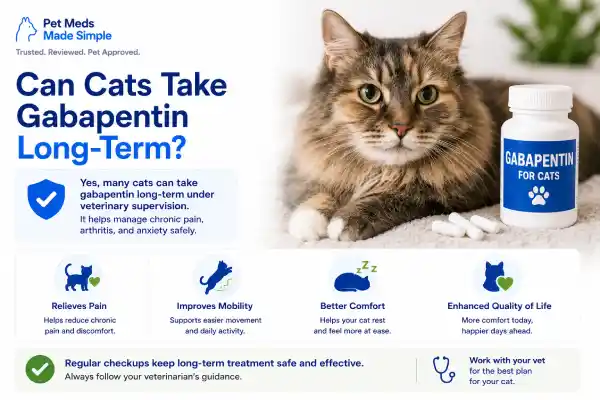
This is why veterinarians recommend regular weight monitoring during long-term therapy.
Owners using gabapentin continuously should also read Can Cats Take Gabapentin Long-Term?, which explains how veterinarians monitor cats receiving extended treatment.
Can Senior Cats Gain Weight More Easily While Taking Gabapentin?
Absolutely.
Older cats already have several risk factors for weight gain.
These include:
- arthritis
- reduced mobility
- slower daily activity
- decreased muscle mass
- chronic illness
When gabapentin is added, temporary sedation may make these age-related changes more noticeable.
This does not necessarily mean the medication is harmful.
Instead, it highlights why senior cats require individualized treatment plans and regular body condition assessments.
Can Gabapentin Cause Weight Gain in Cats if They Sleep More?
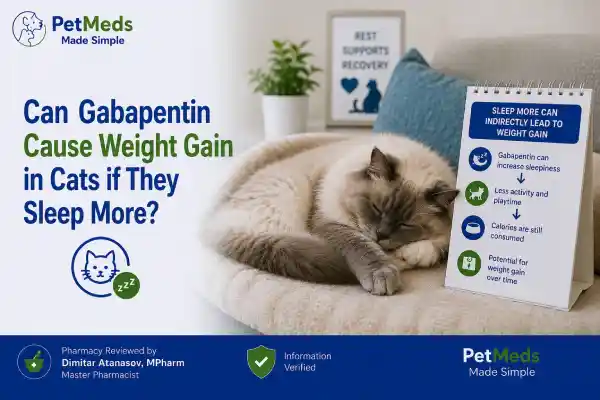
Many owners searching can gabapentin cause weight gain in cats also notice another symptom:
“My cat sleeps almost all day.”
Sleep itself does not automatically cause obesity.
However, a cat that spends most of the day resting may:
- burn fewer calories
- play less
- climb less
- explore less
- become less physically active
Over several months, this reduction in activity can contribute to gradual weight gain.
If your cat seems unusually sleepy rather than simply relaxed, compare your observations with our guide Why Is My Cat Sleeping All Day After Gabapentin?, which explains when prolonged sleep is expected and when it may indicate excessive sedation or another medical problem.
Why Better Pain Control Can Sometimes Increase Body Weight
This may sound surprising.
Cats living with chronic pain often reduce their activity because movement hurts.
Once gabapentin improves comfort, owners sometimes expect their cat to become dramatically more active.
Instead, many cats first begin by:
- resting comfortably
- eating better
- sleeping more deeply
- recovering from months of discomfort
During this adjustment period, body weight may increase before activity levels improve.
This is especially common in cats recovering from chronic orthopedic conditions.
For this reason, veterinarians evaluate much more than the number shown on the scale.
They assess:
- body condition score
- muscle condition
- mobility
- pain control
- appetite
- overall quality of life
A slightly heavier cat that moves comfortably may actually be healthier than a thinner cat living with uncontrolled pain.
Can Other Gabapentin Side Effects Make Weight Gain More Likely?
Sometimes.
Owners asking can gabapentin cause weight gain in cats often report several other changes occurring together.
These may include:
- sleeping more
- hiding
- reduced activity
- wobbliness
- acting differently
- weakness
- less interest in playing
These symptoms can naturally reduce daily movement.
If your cat is also showing unusual behavior, the following articles may help explain the complete picture:
- Why Is My Cat Acting Strange Afater Gabapentin?
- Why Is My Cat Hiding After Gabapentin?
- Can Gabapentin Cause Weak Back Legs in Cats?
- Can Gabapentin Cause Anxiety in Cats?
- Can Gabapentin Cause Hyperactivity in Cats?
Looking at all the symptoms together is much more helpful than focusing on body weight alone.
Can Gabapentin Cause Weight Gain in Cats by Slowing the Metabolism?
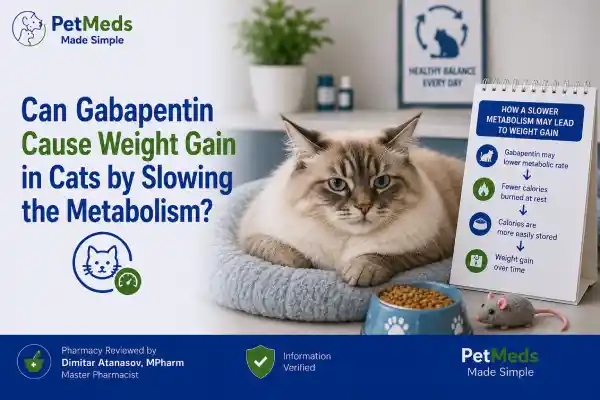
Owners frequently wonder whether gabapentin changes the way a cat’s body burns calories.
The good news is that current veterinary evidence does not suggest gabapentin directly slows a cat’s metabolism.
Unlike some medications that influence hormones or metabolic rate, gabapentin primarily works by altering nerve signaling within the central nervous system.
This means that if a cat gains weight during treatment, veterinarians usually investigate other explanations first, including:
- decreased physical activity
- increased calorie intake
- successful pain management
- age-related changes
- underlying endocrine or metabolic disease
For most cats, the medication itself is not the direct reason the scale begins to rise.
Can Gabapentin Cause Weight Gain in Cats Because They Exercise Less?
Yes.
This is one of the most realistic explanations.
Imagine two identical indoor cats.
Both consume exactly the same amount of food every day.
One spends several hours:
- climbing cat trees
- chasing toys
- running through the house
- jumping onto furniture
The second cat begins sleeping longer after starting gabapentin and spends less time moving around.
Even though both cats eat the same number of calories, the second cat may gradually gain weight simply because it burns fewer calories.
This is why veterinarians encourage owners to continue gentle daily enrichment whenever possible.
Examples include:
- food puzzles
- interactive feather toys
- short play sessions
- climbing opportunities appropriate for the cat’s mobility
- environmental enrichment
The goal is not vigorous exercise but maintaining healthy daily movement.
Why Indoor Cats Are Already at Higher Risk of Weight Gain
Most cats receiving gabapentin live primarily indoors.
Indoor cats generally:
- walk shorter distances
- hunt less
- burn fewer calories
- have easier access to food
- spend more time resting
Gabapentin may temporarily amplify these normal lifestyle patterns.
Owners therefore should not evaluate the medication in isolation.
Instead, they should ask:
- Has my cat’s routine changed?
- Is my cat playing less?
- Has food intake increased?
- Are treats being offered more often?
- Has another family member started feeding the cat?
Sometimes the medication receives the blame when lifestyle changes are actually responsible.
Can Gabapentin Cause Weight Gain in Cats if the Dose Is Too High?
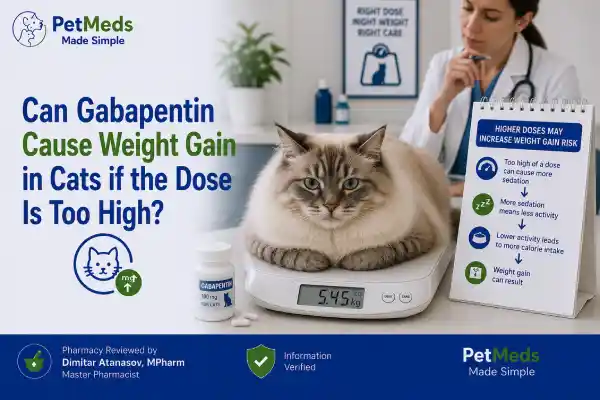
A dose that produces excessive sedation may indirectly contribute.
Cats receiving more sedation than intended may:
- move less
- sleep excessively
- avoid playing
- hesitate to jump
- remain in one location for much of the day
If these signs occur consistently after every dose, owners should contact the prescribing veterinarian.
The solution is not to reduce or stop the medication independently.
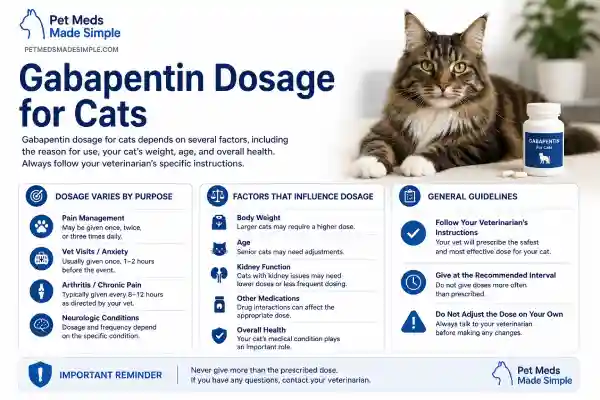
Instead, the veterinarian may decide to:
- adjust the dose
- change the dosing interval
- review kidney function
- evaluate other medications
- reassess the original treatment plan
Owners should never change the dose without professional guidance.
Can Kidney Disease Make Weight Changes More Complicated?
Yes.
Kidney disease is common in older cats.
Cats with impaired kidney function may process gabapentin differently because the medication is primarily eliminated through the kidneys.
Although kidney disease itself often causes weight loss, the interaction between chronic illness, altered activity, dietary changes, and medication can make body weight difficult to interpret.
Veterinarians therefore monitor much more than body weight alone.
They evaluate:
- hydration
- muscle condition
- appetite
- body condition score
- laboratory values
- overall quality of life
Regular examinations remain especially important for senior cats receiving long-term treatment.
Can Weight Gain Be a Sign That Gabapentin Is Actually Helping?
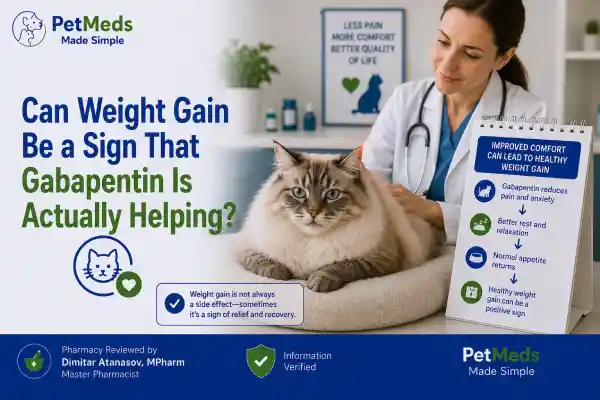
Surprisingly, yes.
Not every increase in body weight represents a problem.
Consider a cat with severe arthritis.
Before treatment, the cat may:
- struggle to reach the food bowl
- eat less because movement hurts
- experience chronic pain
- lose muscle mass
After successful pain management, the cat begins:
- eating regular meals
- sleeping comfortably
- grooming again
- interacting with the family
Over several weeks the cat regains lost weight.
In this situation, the increase may actually reflect improved health, not a harmful medication effect.
This is why veterinarians focus on healthy body condition, not simply whether the number on the scale has increased.
Can Gabapentin Cause Weight Gain in Cats Together With Other Medications?
Some cats receiving gabapentin are also prescribed medications for:
- chronic pain
- seizures
- anxiety
- inflammatory diseases
While gabapentin itself is not generally considered a direct cause of obesity, the overall treatment plan may influence:
- activity level
- appetite
- comfort
- sleeping patterns
For this reason, owners should always provide their veterinarian with a complete list of:
- prescription medications
- supplements
- herbal products
- CBD products
- over-the-counter treatments
A complete medication history helps determine whether another drug could be contributing to body-weight changes.
How Veterinarians Monitor Cats for Healthy Weight During Gabapentin Therapy
Rather than waiting until a cat becomes obviously overweight, veterinarians recommend regular monitoring.
This typically includes:
- recording body weight
- assigning a Body Condition Score (BCS)
- evaluating muscle mass
- discussing appetite
- reviewing activity levels
- reassessing pain control
Many clinics compare body weight at every visit.
Even small changes become easier to identify when measurements are collected consistently over time.
Owners can also monitor their cat at home by:
- weighing the cat monthly if practical
- keeping feeding amounts consistent
- avoiding excessive treats
- observing changes in body shape
- reporting unexpected weight changes promptly
Can Owners Prevent Weight Gain While Their Cat Takes Gabapentin?
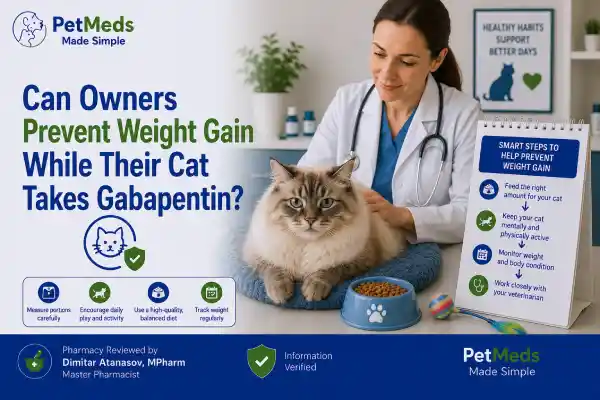
In many cases, yes.
Simple lifestyle adjustments can significantly reduce the risk of unnecessary weight gain.
Helpful strategies include:
- measuring daily food portions
- limiting calorie-rich treats
- encouraging gentle play
- providing climbing opportunities that match the cat’s mobility
- using puzzle feeders
- scheduling regular veterinary weight checks
If arthritis limits movement, the veterinarian may recommend low-impact environmental enrichment rather than vigorous exercise.
The goal is maintaining muscle and preventing obesity while still keeping the cat comfortable.
Can Weight Gain Ever Indicate Another Medical Problem?
Absolutely.
Owners should avoid assuming every body-weight change is medication-related.
Weight gain may sometimes be associated with:
- endocrine disorders
- fluid accumulation
- heart disease
- abdominal disease
- dietary changes
- reduced mobility from unrelated illness
Rapid or dramatic weight gain deserves veterinary evaluation, especially if accompanied by:
- breathing difficulty
- abdominal swelling
- weakness
- vomiting
- reduced appetite
- lethargy
Looking only at the medication can delay diagnosis of another condition that requires treatment.
Frequently Asked Questions -Can Gabapentin Cause Weight Gain in Cats?
Can gabapentin cause weight gain in cats immediately?
No. If gabapentin causes weight gain in cats, it is usually a gradual process that develops over weeks or months rather than after one or two doses. Sudden weight gain is more likely to indicate fluid retention, another medical condition, or an unrelated dietary change.
Can gabapentin cause weight gain in cats even if they eat the same amount?
Yes, it is possible.
A cat that burns fewer calories because it sleeps more, plays less, or moves less comfortably may gradually gain weight even if food intake remains unchanged.
Can gabapentin increase my cat’s appetite?
Gabapentin is not considered a true appetite stimulant in cats.
However, cats experiencing chronic pain often begin eating normally again once discomfort improves. Owners may interpret this healthy return of appetite as the medication increasing hunger.
Should I stop gabapentin if my cat gains weight?
No.
Owners should never discontinue gabapentin without veterinary guidance.
If you believe gabapentin is causing weight gain in your cat, schedule a veterinary appointment. The veterinarian can determine whether the weight gain is related to:
reduced activity
improved pain control
another illness
excessive calorie intake
or an unrelated medical condition.
Stopping treatment suddenly may create additional problems, particularly in cats receiving long-term therapy. Owners should also read What Happens If Cats Suddenly Stop Gabapentin?
How much weight gain is considered normal?
There is no single answer.
Some cats experience no measurable weight change during treatment, while others gain a small amount after recovering from painful conditions.
Your veterinarian evaluates:
Body Condition Score (BCS)
Muscle Condition Score (MCS)
body weight trends
overall health
rather than focusing only on the number shown on the scale.
Can senior cats gain weight more easily while taking gabapentin?
Yes.
Senior cats often have:
arthritis
reduced mobility
lower activity levels
muscle loss
chronic diseases
These factors increase the likelihood of gradual weight gain regardless of medication.
Gabapentin may contribute indirectly by making an older cat slightly less active during treatment.
Can gabapentin cause both weight gain and sleepiness?
Yes.
Many owners asking Can Gabapentin Cause Weight Gain in Cats? also notice increased sleeping.
Excessive rest may reduce daily calorie expenditure, making gradual weight gain more likely over time.
If prolonged drowsiness is your primary concern, read Why Is My Cat Sleepy After Gabapentin?
Can gabapentin cause weight loss instead of weight gain?
Yes.
Some cats actually lose weight because they experience:
reduced appetite
nausea
vomiting
progression of their underlying disease
Weight loss deserves the same level of veterinary attention as unexpected weight gain.
Can indoor cats gain weight faster while taking gabapentin?
Potentially.
Indoor cats naturally burn fewer calories than outdoor cats.
If gabapentin temporarily reduces activity even further, gradual weight gain becomes more likely unless calorie intake is adjusted appropriately.
When should I call my veterinarian?
gains weight rapidly
loses weight unexpectedly
refuses food
vomits repeatedly
develops severe lethargy
has difficulty breathing
cannot stand normally
appears progressively weaker
shows neurological signs that continue worsening
Weight gain alone is rarely an emergency, but it should always be discussed during routine follow-up appointments.
Bottom Line
Can gabapentin cause weight gain in cats? The answer is yes but usually only indirectly. Current veterinary evidence does not support gabapentin as a medication that directly slows metabolism or consistently causes obesity. Instead, reduced physical activity, improved appetite after pain relief, aging, indoor lifestyle, and long-term treatment are much more common explanations. Regular body-weight monitoring, appropriate calorie intake, and periodic veterinary examinations help ensure your cat maintains a healthy body condition throughout treatment.
Veterinarian Takeaway
Gabapentin remains one of the safest and most commonly prescribed medications for managing chronic pain, stress, and certain neurological conditions in cats. Although some owners worry that gabapentin causes weight gain in cats, the medication itself is rarely the primary cause. Veterinarians look at the entire patient—including pain control, mobility, appetite, body condition, muscle mass, and concurrent illnesses—before concluding that weight gain is medication-related. Never stop or adjust gabapentin without consulting your veterinarian, especially if your cat receives it as part of a long-term treatment plan.
Sources
- Plumb DC. Plumb’s Veterinary Drug Handbook.
- Papich MG. Saunders Handbook of Veterinary Drugs.
- Merck Veterinary Manual. Analgesics and Adjunctive Pain Medications in Small Animals.
- BSAVA Small Animal Formulary.
- VIN (Veterinary Information Network). Clinical discussions on feline gabapentin therapy.
- 2022 AAFP Feline Pain Management Guidelines.
- Journal of Feline Medicine and Surgery (JFMS). Publications on chronic pain management in cats.
- Frontiers in Veterinary Science. Reviews on gabapentin use in companion animals.
- WSAVA Global Pain Council Guidelines.
Medical Review Statement
Medical Review Statement
This article was written by Dimitar Georgiev Atanasov, MPharm, Master Pharmacist and Medication Safety Educator (Bulgarian Pharmaceutical Union, UIN: 0210000586).
The content has been pharmacy and scientific reviewed by Gergana Krasimirova Atanasova, MPharm (Bulgarian Pharmaceutical Union, UIN: 0210000587).
The veterinary content has been reviewed by Dr. Valcho Georgiev Valchev, DVM (Bulgarian Veterinary Union Registration No. 28000115).
This article is intended for educational purposes only and should never replace professional veterinary diagnosis or individualized treatment recommendations.
Image Disclosure
Image Disclosure: Some images used in this article may be AI-generated for educational illustration purposes. They are designed to explain veterinary concepts more clearly and should not replace professional veterinary examination or diagnosis.