Quick Answer
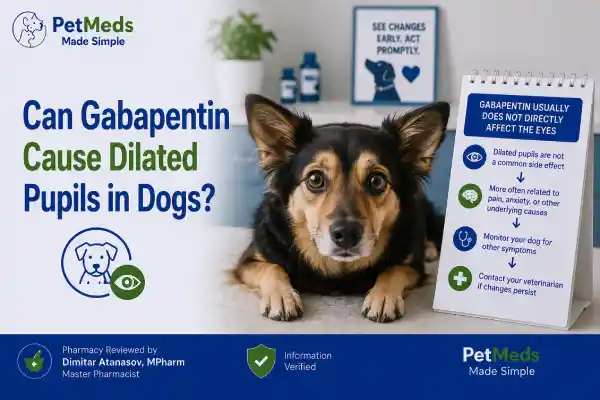
Can gabapentin cause dilated pupils in dogs? Yes, gabapentin can occasionally be associated with dilated pupils (mydriasis) in some dogs, although it is not considered one of the most common side effects. More often, enlarged pupils occur because gabapentin temporarily affects the nervous system or because another underlying condition, pain, stress, excitement, or a medication interaction is present. If dilated pupils are accompanied by collapse, seizures, blindness, difficulty walking, or extreme lethargy, your dog should be examined by a veterinarian immediately.
Can Gabapentin Cause Dilated Pupils in Dogs?
Many owners become alarmed after giving gabapentin and noticing that their dog’s eyes suddenly look different.
The pupils appear:
- much larger than usual
- slow to respond to light
- unusually dark
- uneven in size
- accompanied by a “glassy” appearance
Because these changes often occur shortly after a dose, owners naturally ask:
Can gabapentin cause dilated pupils in dogs?
The answer is:
Yes but usually not as an isolated side effect.
Most dogs taking gabapentin never develop noticeably enlarged pupils, but temporary pupil dilation may occur in some individuals because gabapentin affects communication within the central nervous system.
More importantly, dilated pupils should never be evaluated alone.
Veterinarians always assess them together with:
- balance
- mental status
- walking ability
- responsiveness
- vision
- heart rate
- breathing
- underlying medical conditions
Understanding the complete picture helps determine whether enlarged pupils represent a mild medication effect or a sign that another problem requires immediate attention.
Can Gabapentin Cause Dilated Pupils in Dogs?
Can Gabapentin Cause Dilated Pupils in Dogs by Affecting the Nervous System?
Yes.
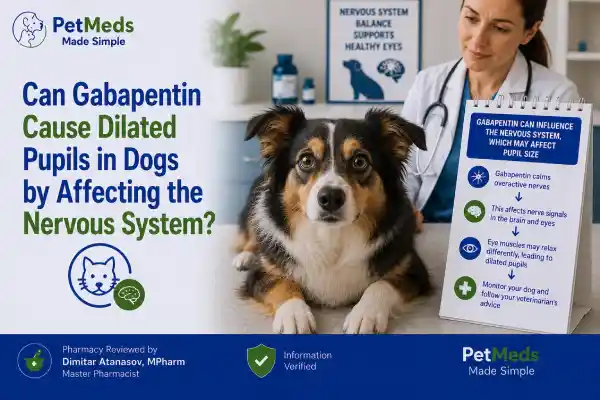
Gabapentin primarily acts on the nervous system rather than directly on the eyes.
It modifies communication between nerve cells involved in:
- pain transmission
- sensory processing
- neurological activity
- certain seizure pathways
Because the pupils are controlled by nerves, any medication that influences neurological signaling may occasionally alter pupil size.
For most dogs this effect is:
- mild
- temporary
- self-limiting
Owners searching Can Gabapentin Cause Dilated Pupils in Dogs often also notice other neurological changes occurring at the same time.
These may include:
- sleepiness
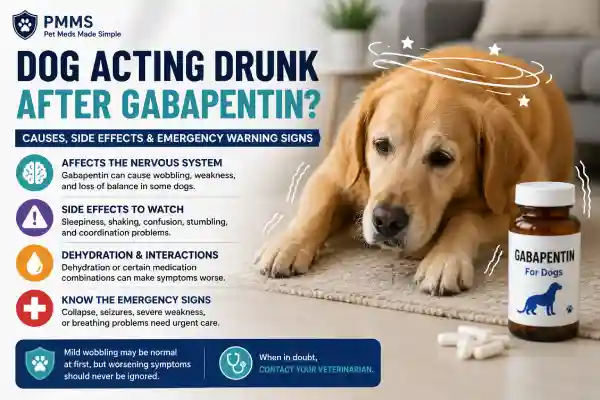
- wobbliness
- slower reactions
- reduced coordination
- unusual behavior
If your dog appears mentally different after receiving gabapentin, our guide Why Is My Dog Acting Strange After Gabapentin? explains which behavioral changes are expected and which require veterinary evaluation.
Can Gabapentin Cause Dilated Pupils in Dogs Together With Sleepiness?
Very commonly, yes.
Most dogs that develop enlarged pupils after gabapentin also appear:
- sleepy
- relaxed
- quieter than normal
- less interested in activity
- slower to respond
This combination often reflects the medication’s temporary effects on the central nervous system rather than an eye disease.
Sedation remains one of the most frequently reported side effects of gabapentin.
If excessive drowsiness is your biggest concern, you should also read Can Dogs Stay Awake on Gabapentin?, which discusses why some dogs become much sleepier than owners expect.
When enlarged pupils occur together with normal breathing and mild sleepiness, careful home observation is often appropriate.
However, progressive lethargy or inability to wake the dog normally requires immediate veterinary advice.
Can Gabapentin Cause Dilated Pupils in Dogs Along With Balance Problems?
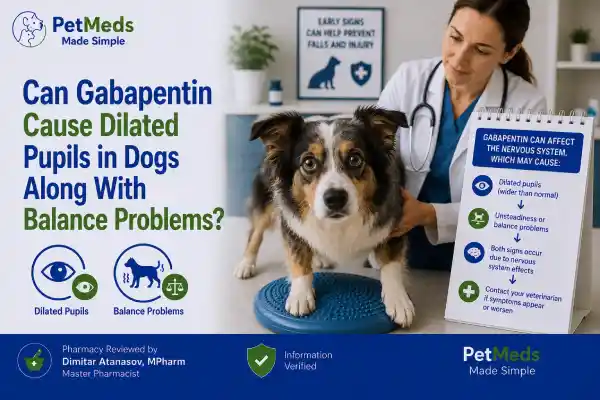
Yes.
Owners sometimes notice several symptoms developing together.
For example:
- large pupils
- stumbling
- swaying
- slipping
- difficulty climbing stairs
- reluctance to jump
These signs often occur because gabapentin temporarily affects neurological coordination rather than because the eyes themselves are diseased.
If poor balance is present, owners should also review:
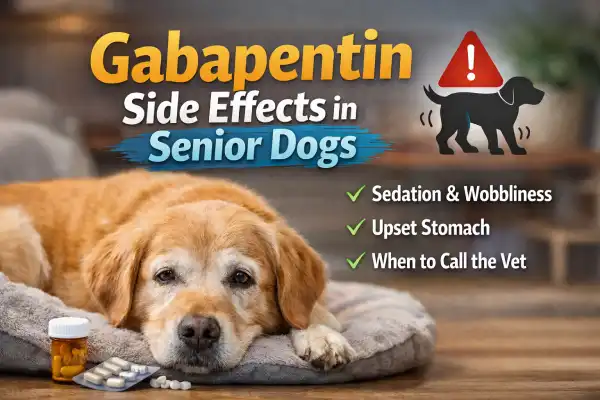
Senior dogs deserve particular attention because age-related neurological disease may make these symptoms appear more dramatic.
Why Do Dilated Pupils Sometimes Look More Dramatic in Dim Light?
Pupil size naturally changes throughout the day.
Healthy dogs normally develop larger pupils when:
- entering a dark room
- going outside at night
- becoming excited
- feeling frightened
Gabapentin may make this normal response appear more noticeable because the nervous system is already responding differently to stimulation.
Owners sometimes compare their dog to another pet in the same room and become worried because one dog’s pupils appear much larger.
Lighting should always be considered before assuming a medication side effect.
Veterinarians often examine pupils under different light conditions before deciding whether true abnormal dilation exists.
Can Gabapentin Cause Dilated Pupils in Dogs if the Dose Is Too High?
Possibly.
An excessive dose may produce stronger neurological effects than intended.
These may include:
- profound sedation
- weakness
- severe wobbliness
- disorientation
- poor coordination
- unusually large pupils
However, enlarged pupils alone do not automatically indicate an overdose.
Veterinarians evaluate many additional findings before reaching that conclusion.
Owners concerned that their dog may have received too much medication should immediately review Can Dogs Overdose on Gabapentin?, especially if another family member may have accidentally given an extra dose.
Never attempt to “balance out” an excessive dose by skipping several future doses unless specifically instructed by your veterinarian.
Can Pain or Stress Also Cause Dilated Pupils?
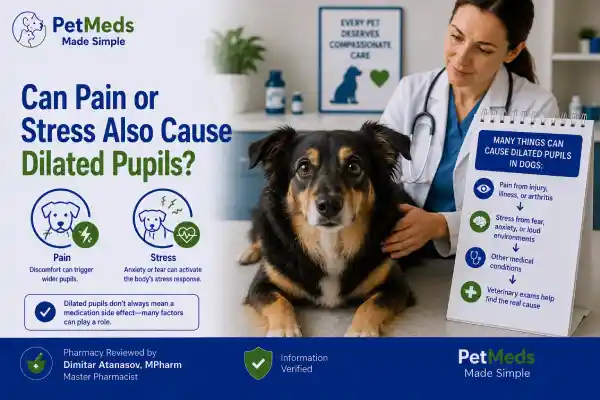
Absolutely.
This is one of the biggest reasons owners should avoid assuming gabapentin is always responsible.
Pain activates the sympathetic nervous system.
As a result, dogs experiencing discomfort may naturally develop:
- enlarged pupils
- faster heart rate
- increased breathing rate
- restlessness
- pacing
- trembling
Likewise, anxiety and fear may temporarily produce the same appearance.
If gabapentin is not providing adequate pain relief, the enlarged pupils may actually reflect the underlying painful condition rather than the medication itself.
Can Dilated Pupils Affect Vision?
Usually, temporary pupil dilation does not cause permanent eye damage.
However, some dogs may briefly appear:
- hesitant in bright sunlight
- sensitive to light
- slower to navigate unfamiliar areas
- less confident walking outdoors
Most improve as the medication wears off.
Owners should avoid exposing affected dogs to intense sunlight until normal pupil size returns.
If the dog appears unable to see, bumps into furniture, or suddenly develops vision loss, immediate veterinary examination is essential because these signs suggest something more serious than simple medication-related pupil enlargement.
Why Senior Dogs May Develop Dilated Pupils More Easily
Older dogs frequently receive gabapentin for:
- arthritis
- chronic pain
- spinal disease
- neurological disorders
They may also have:
- reduced kidney function
- vision changes
- age-related neurological disease
- multiple medications
These factors increase the likelihood that neurological side effects including temporary pupil changes will become more noticeable.
Owners of senior pets should also read:
- Can Dogs Take Gabapentin for Arthritis Forever?
- How Often Should Dogs Have Blood Tests While Taking Gabapentin?
- Does Gabapentin Build Up in a Dog’s System?
These articles explain why older dogs often require closer monitoring during long-term therapy.
Can Gabapentin Cause Dilated Pupils in Dogs Together With Eye Changes?
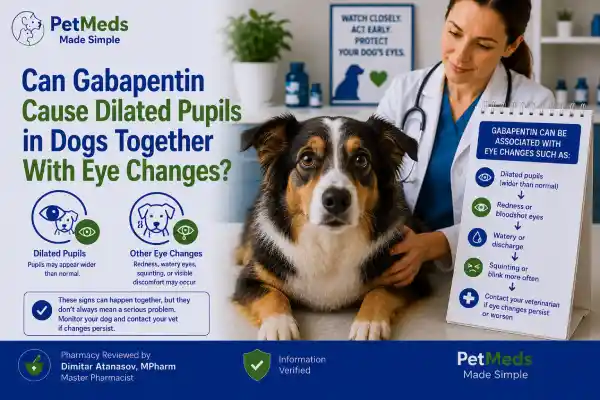
Sometimes.
Owners asking Can Gabapentin Cause Dilated Pupils in Dogs may notice additional eye abnormalities such as:
- glassy eyes
- reduced blinking
- slower pupil reactions
- unusual staring
- apparent visual confusion
Because these signs can have many causes, they should never automatically be blamed on gabapentin.
Our detailed guide Can Gabapentin Cause Eye Changes in Dogs? explains the broader range of eye-related changes that may occur during treatment and when they warrant emergency veterinary care.
When Mild Dilated Pupils Can Be Monitored at Home
In many dogs, temporary enlargement of the pupils is not an emergency.
Home monitoring is often appropriate when the dog:
- remains responsive
- walks normally or only mildly slower
- is breathing comfortably
- continues eating and drinking
- improves gradually as the medication wears off
- received only the prescribed dose
Provide a calm environment with:
- normal lighting
- fresh water
- comfortable bedding
- limited stair use
- quiet observation
Avoid vigorous exercise until coordination and alertness have completely returned.
Can Gabapentin Cause Dilated Pupils in Dogs During Long-Term Treatment?
Owners are often reassured when enlarged pupils disappear after the first few doses.
However, another common question is:
Can gabapentin cause dilated pupils in dogs after weeks or months of treatment?
For most dogs, this is unlikely.
Medication-related pupil dilation usually appears:
- shortly after a dose
- after a dose increase
- when another sedating medication has been added
- if the dog becomes unusually sensitive to gabapentin
If a dog that has tolerated gabapentin for several months suddenly develops persistently enlarged pupils, veterinarians often investigate causes other than the medication, including:
- eye disease
- glaucoma
- neurological disorders
- head trauma
- severe pain
- toxin exposure
- medication interactions
Long-term treatment alone rarely explains the sudden appearance of abnormal pupils.
Can Gabapentin Cause Dilated Pupils in Dogs Together With Neurological Side Effects?
Yes.
Although uncommon, dilated pupils may occur alongside other neurological signs.
Examples include:
- wobbliness
- tremors
- slower reflexes
- confusion
- unusual behavior
- excessive sleepiness
- temporary weakness
These symptoms usually indicate that the nervous system—not the eyes themselves—is responding to the medication.
Owners noticing several neurological changes together should also review:
- Can Gabapentin Cause Muscle Tremors in Dogs?
- Why Is My Dog Acting Strange After Gabapentin?
- Can Gabapentin Cause Balance Problems in Senior Dogs?
Looking at the complete neurological picture is much more informative than evaluating the pupils alone.
Can Gabapentin Cause Dilated Pupils in Dogs if Another Medication Is Being Used?
Absolutely.
Many dogs receiving gabapentin also take medications for:
- arthritis
- seizures
- anxiety
- chronic pain
- post-operative recovery
Some combinations may increase sedation or alter neurological responses more than gabapentin alone.
This does not automatically mean the medications are unsafe together.
However, veterinarians should always know about every product the dog receives, including:
- prescription medications
- supplements
- CBD products
- calming treats
- herbal remedies
A complete medication history helps determine whether another drug may be contributing to the enlarged pupils.
Can Anxiety Cause Dilated Pupils Even While Taking Gabapentin?
Yes.
Many owners assume enlarged pupils always indicate a medication side effect.
In reality, anxiety itself commonly causes:
- enlarged pupils
- increased heart rate
- panting
- pacing
- restlessness
- trembling
Dogs visiting the veterinary clinic often experience significant stress.
Ironically, gabapentin is frequently prescribed specifically to reduce this anxiety.
If the medication has not yet reached full effect or if the dog remains frightened—the pupils may still become noticeably enlarged because of emotional stress rather than the medication itself.
Can Pain Cause Dilated Pupils Instead of Gabapentin?
Definitely.
Pain activates the sympathetic nervous system.
As pain intensity increases, the body naturally releases stress hormones that may produce:
- enlarged pupils
- faster breathing
- elevated heart rate
- muscle tension
- restlessness
Owners sometimes believe gabapentin is causing the pupil changes when the medication is actually not controlling the underlying pain sufficiently.
This is one reason veterinarians ask questions about:
- mobility
- comfort
- appetite
- willingness to walk
- response to touch
rather than focusing only on the eyes.
Why Eye Changes Should Never Be Evaluated Alone
Veterinarians rarely diagnose eye problems based only on pupil size.
Instead, they examine:
- both pupils
- light response
- eyelid position
- eye movements
- vision
- neurological status
- blood pressure
- overall physical examination
For example:
Large pupils with:
✔ mild sleepiness
may simply reflect medication effects.
Large pupils with:
- blindness
- collapse
- seizures
- severe disorientation
represent an entirely different situation.
This is why owners should avoid relying on internet photographs or comparing their dog with another pet.
How Veterinarians Evaluate Dilated Pupils After Gabapentin
When a dog presents with enlarged pupils after receiving gabapentin, the veterinarian typically asks:
- When was the medication given?
- What dose was administered?
- Has the dose recently changed?
- Was another medication started recently?
- Is this the first dose?
- Has the dog accidentally received a double dose?
- Does the dog have previous eye disease?
- Has vision changed?
- Are both pupils affected equally?
- Is the dog acting normally otherwise?
These answers often identify the most likely explanation before advanced testing is even considered.
Can Owners Test Their Dog’s Pupils at Home?

Owners can observe their dog’s eyes, but they should not attempt a formal neurological examination.
Helpful observations include:
- Are both pupils the same size?
- Do the pupils become smaller in bright light?
- Is the dog bumping into furniture?
- Does the dog recognize familiar people?
- Is walking normal?
- Is breathing comfortable?
These observations provide useful information for the veterinarian.
However, repeatedly shining bright flashlights directly into the dog’s eyes is not recommended because it may cause unnecessary discomfort.
Can Dilated Pupils Become Permanent?
Permanent pupil enlargement caused by gabapentin is considered extremely uncommon.
In most medication-related cases, the pupils gradually return to their normal size as the effects of the medication decrease.
Persistent or worsening enlargement should always be investigated because it may indicate:
- glaucoma
- retinal disease
- neurological disease
- toxin exposure
- severe systemic illness
rather than a simple medication side effect.
Practical Tips for Owners
If you notice enlarged pupils after gabapentin:
✔ Stay calm.
✔ Observe your dog’s overall behavior.
✔ Check whether both pupils are equally enlarged.
✔ Keep your dog indoors until coordination returns.
✔ Avoid bright sunlight if light sensitivity appears present.
✔ Record when the medication was given.
✔ Watch for improvement over the next several hours.
✔ Contact your veterinarian if additional symptoms develop.
Avoid:
- changing the dose yourself
- giving another medication without advice
- assuming the medication is always responsible
- delaying veterinary care if severe neurological signs appear.
Frequently Asked Questions – Can Gabapentin Cause Dilated Pupils in Dogs?
Can gabapentin cause dilated pupils in dogs after the first dose?
Yes. If gabapentin causes dilated pupils in dogs, the change is most likely to appear after the first dose, following a dose increase, or when another sedating medication is given at the same time. Most dogs never develop this side effect, and when it does occur, it is often temporary.
Can gabapentin cause dilated pupils in dogs without affecting vision?
Yes.
Many dogs with mildly enlarged pupils continue to see normally.
However, if your dog:
bumps into furniture
seems unable to find toys
hesitates in familiar areas
appears suddenly blind
the problem may be more serious than simple medication-related pupil dilation and should be evaluated immediately.
Should I stop gabapentin if my dog’s pupils become dilated?
No.
Owners should never stop gabapentin suddenly without speaking to their veterinarian.
In many cases, enlarged pupils are temporary and improve as the medication wears off.
If you are concerned about stopping treatment, also read Can Dogs Stop Gabapentin Suddenly? and What Happens If Gabapentin Is Given Too Late?, since changing the dosing schedule without guidance may create additional problems.
Can gabapentin cause only one dilated pupil in dogs?
Generally, medication-related effects affect both pupils.
If only one pupil becomes enlarged, especially if accompanied by:
eye pain
squinting
blindness
facial asymmetry
head tilt
your dog should be examined immediately because another eye or neurological condition may be present.
Can gabapentin cause dilated pupils in senior dogs more often?
Possibly.
Senior dogs are often more sensitive to neurological side effects because they may have:
reduced kidney function
age-related neurological disease
multiple medications
chronic pain
vision disorders
Owners of older pets should also read Can Gabapentin Cause Balance Problems in Senior Dogs?, which explains why aging dogs sometimes respond differently to treatment.
Can gabapentin cause dilated pupils in dogs together with shaking?
Yes.
Some owners notice enlarged pupils together with:
mild trembling
wobbliness
weakness
reduced coordination
Although this combination may still reflect medication effects, severe shaking or seizure-like activity requires immediate veterinary evaluation.
Owners should also review Can Gabapentin Cause Muscle Tremors in Dogs? if shaking becomes the primary concern.
Can bright sunlight make dilated pupils more noticeable?
Yes.
Dogs with enlarged pupils may become more sensitive to bright light because the pupils allow more light to enter the eye.
Most dogs improve naturally as the medication’s effects decrease.
Can anxiety make my dog’s pupils larger even while taking gabapentin?
Absolutely.
Fear, excitement, pain, and stress all activate the sympathetic nervous system.
A nervous dog may therefore develop enlarged pupils even though gabapentin has been administered.
The medication is not always the primary cause.
Can gabapentin overdose cause dilated pupils in dogs?
It can.
Although enlarged pupils alone do not confirm an overdose, they may occur together with:
profound sedation
inability to stand
collapse
severe weakness
extreme lethargy
Owners concerned about accidental double dosing should immediately read Can Dogs Overdose on Gabapentin? and contact their veterinarian or an emergency clinic.
When should I call my veterinarian?
Seek veterinary advice immediately if enlarged pupils occur together with:
collapse
blindness
seizures
severe wobbliness
breathing difficulty
repeated vomiting
inability to wake your dog
sudden paralysis
persistent disorientation
Early evaluation is always safer than waiting for symptoms to worsen.
Bottom Line
Can gabapentin cause dilated pupils in dogs? Yes, it can, but this is not considered one of the medication’s most common side effects. In most cases, enlarged pupils are temporary and occur because gabapentin influences the nervous system rather than directly affecting the eyes. However, dilated pupils should never be evaluated in isolation. When they occur alongside blindness, collapse, seizures, severe wobbliness, breathing problems, or profound lethargy, immediate veterinary assessment is essential. Most dogs recover uneventfully, but careful monitoring and prompt communication with your veterinarian remain the safest approach.
Veterinarian Takeaway
Gabapentin is widely used in dogs because it provides valuable pain relief, helps control certain neurological conditions, and reduces stress during veterinary visits. While some owners notice enlarged pupils after treatment, this finding is usually mild and temporary rather than a sign of permanent eye damage. Veterinarians evaluate the entire patient—including neurological status, vision, pain level, medications, and overall health—before deciding whether gabapentin caused the dilated pupils or whether another medical condition is responsible. Never adjust or discontinue gabapentin without veterinary guidance.
Sources
- Plumb DC. Plumb’s Veterinary Drug Handbook.
- Papich MG. Saunders Handbook of Veterinary Drugs.
- Merck Veterinary Manual. Analgesics and Adjunctive Pain Medications in Small Animals.
- BSAVA Small Animal Formulary.
- Veterinary Information Network (VIN). Clinical discussions on gabapentin therapy in dogs.
- WSAVA Global Pain Council Guidelines.
- AAHA Pain Management Guidelines for Dogs and Cats.
- Journal of Veterinary Internal Medicine.
- Frontiers in Veterinary Science. Reviews on gabapentin pharmacology and adverse effects in companion animals.
Medical Review Statement
Medical Review Statement
This article was written by Dimitar Georgiev Atanasov, MPharm, Master Pharmacist and Medication Safety Educator (Bulgarian Pharmaceutical Union, UIN: 0210000586).
The content has been pharmacy and scientific reviewed by Gergana Krasimirova Atanasova, MPharm (Bulgarian Pharmaceutical Union, UIN: 0210000587).
The veterinary information has been reviewed by Dr. Valcho Georgiev Valchev, DVM (Bulgarian Veterinary Union Registration No. 28000115).
This article is intended for educational purposes only and should never replace individualized veterinary diagnosis or treatment recommendations.
Image Disclosure
Image Disclosure: Some images used in this article may be AI-generated for educational illustration purposes. They are designed to explain veterinary concepts more clearly and should not replace professional veterinary examination or diagnosis.