Quick Answer
Why does my dog refuse water after medication? Dogs may refuse water after medication because of nausea, throat irritation, dry mouth, stomach upset, sedation, reflux, anxiety, dehydration, or swallowing discomfort. Some medications — including antibiotics, gabapentin, NSAIDs, and bitter tablets — may reduce thirst or make drinking uncomfortable. Severe lethargy, vomiting, collapse, dry gums, sunken eyes, or inability to keep fluids down require immediate veterinary attention.
Many dog owners panic when their dog suddenly:
- stops drinking water after medication
- drinks far less than normal
- refuses the water bowl
- licks lips but avoids drinking
- seems weak or dehydrated
- acts nauseous after antibiotics
- becomes sleepy after medication
- refuses both food and water
And honestly?
This is one of the MOST important medication-related symptoms owners should monitor.
Because even mild dehydration may quickly worsen:
- weakness
- nausea
- medication side effects
- recovery from infection
This guide explains:
- why dogs may stop drinking after medication
- medications commonly involved
- dehydration warning signs
- nausea and throat irritation
- when refusal to drink becomes dangerous
- emergency symptoms owners should never ignore
Why Can Medication Make Dogs Refuse Water?
Several medication-related effects may reduce a dog’s desire to drink.
Common Causes
| Cause | How It May Affect Drinking |
|---|---|
| Nausea | Drinking feels uncomfortable |
| Throat irritation | Pain while swallowing |
| Dry mouth | Strange mouth sensation |
| Sedation | Reduced interest in water |
| Reflux | Drinking worsens discomfort |
| Bitter taste | Water aversion |
| Stomach pain | Drinking triggers nausea |
Some dogs may also associate water with feeling sick after medication.
This naturally connects with:
- Can Antibiotics Cause Stomach Pain in Dogs?
- Why Does My Dog Gag After Medication?
- Why Is My Dog Vomiting After Antibiotics?
Why Does My Dog Refuse Water After Medication?
What Does Water Refusal Look Like in Dogs?
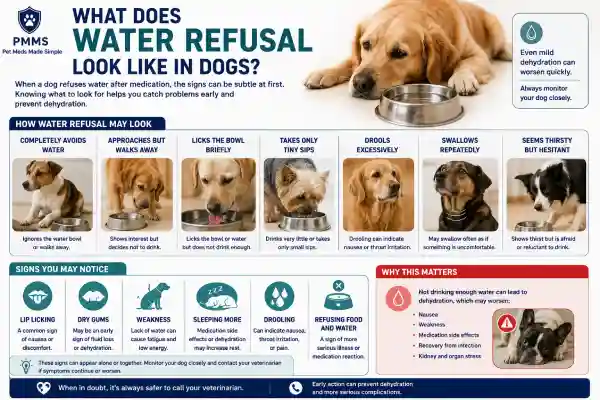
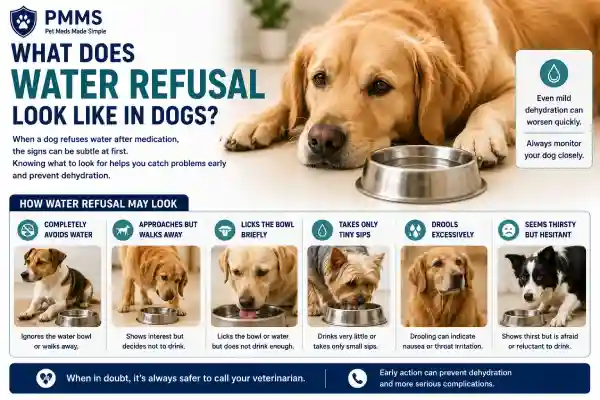
Some dogs completely avoid water.
Others may:
- approach the bowl but walk away
- lick the bowl briefly
- take only tiny sips
- drool excessively
- swallow repeatedly
- seem thirsty but hesitant to drink
Signs Owners May Notice
| Symptom | Possible Meaning |
|---|---|
| Lip licking | Nausea |
| Dry gums | Dehydration |
| Weakness | Poor hydration |
| Sleeping more | Medication effects |
| Drooling | Throat irritation |
| Refusing food and water | More serious concern |
This strongly connects with:
Can Antibiotics Make Dogs Stop Drinking Water?
Absolutely.
Antibiotics may sometimes cause:
- nausea
- reflux
- stomach irritation
- dry heaving
- appetite loss
- swallowing discomfort
Dogs taking antibiotics may avoid water because:
- drinking worsens nausea
- the stomach feels irritated
- swallowing feels uncomfortable
Antibiotics Often Associated With GI Side Effects
| Antibiotic | Possible Drinking Problems |
|---|---|
| Metronidazole | Nausea or bitter taste |
| Doxycycline | Throat irritation |
| Clindamycin | Stomach upset |
| Amoxicillin | Mild nausea |
| Cephalexin | Digestive discomfort |
This naturally links with:
Can Gabapentin Cause Reduced Drinking?
Sometimes — yes.
Gabapentin may contribute to:
- sedation
- lethargy
- dizziness
- nausea
- reduced motivation
Some dogs simply become:
- sleepy
- weak
- less interested in drinking
This strongly connects with:
Can Throat Irritation Make Drinking Painful?
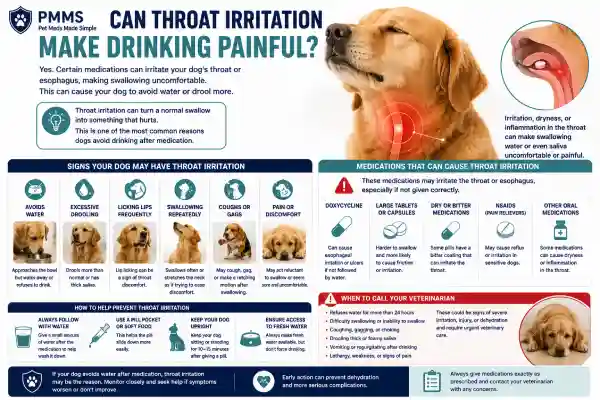
Yes and this is VERY important.
Certain pills may irritate the throat or esophagus.
Dogs may then:
- gag after drinking
- swallow repeatedly
- drool
- avoid water
- stretch the neck
- cough after swallowing
This is especially important with:
- doxycycline
- large capsules
- dry tablets
- bitter medications
This naturally connects with Why Does My Dog Gag After Medication?
Can Dehydration Make Medication Side Effects Worse?
Very easily.
Dehydration may worsen:
- nausea
- weakness
- dizziness
- stomach pain
- reflux
- neurological symptoms
This may create a dangerous cycle:
medication → nausea → less drinking → dehydration → worsening symptoms
Signs of Possible Dehydration
| Symptom | Possible Concern |
|---|---|
| Dry or sticky gums | Fluid loss |
| Sunken eyes | Moderate dehydration |
| Weakness | Poor hydration |
| Panting | Stress or imbalance |
| Dark urine | Concentrated urine |
| Lethargy | Worsening dehydration |
This strongly connects with:
Are Senior Dogs More Sensitive?
Absolutely.
Older dogs often:
- dehydrate faster
- recover more slowly
- have weaker thirst response
- experience stronger medication effects
Senior dogs are more vulnerable to:
- weakness
- kidney stress
- dizziness
- appetite loss
- severe dehydration
This naturally links with What Is the Safest Antibiotic for Senior Dogs?
What Symptoms Are Emergencies?
This is the MOST important section.
Seek immediate veterinary care if your dog develops:
- collapse
- inability to swallow
- repeated vomiting
- bloody diarrhea
- severe lethargy
- sunken eyes
- breathing difficulty
- blue gums
- refusal to drink for over 24 hours
- worsening weakness
Emergency Warning Signs
| Symptom | Emergency Level |
|---|---|
| Collapse | EMERGENCY |
| Blue gums | EMERGENCY |
| Severe lethargy | Serious |
| Refusing water >24h | Serious |
| Repeated vomiting | EMERGENCY |
| Bloody diarrhea | EMERGENCY |
| Difficulty breathing | EMERGENCY |
| Unable to swallow | EMERGENCY |
This naturally links with:
- What Happens If Dogs Take Too Much Antibiotic?
- What Does Antibiotic Toxicity Look Like in Dogs?
- Can Dogs Have Allergic Reactions to Antibiotics?
What Should Owners Do If Their Dog Refuses Water?
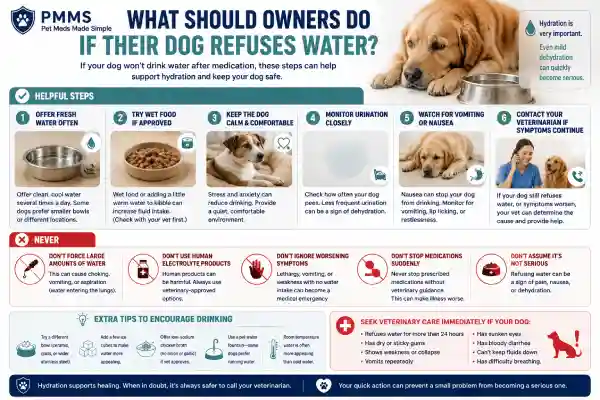
Helpful Steps
| Step | Why It Helps |
|---|---|
| Offer fresh water often | Encourage hydration |
| Try wet food if approved | Increase fluid intake |
| Keep the dog calm | Reduce stress |
| Monitor urination | Detect dehydration |
| Watch for vomiting | Evaluate worsening symptoms |
| Contact your veterinarian if symptoms continue | Improve safety |
NEVER:
- force large amounts of water
- use human electrolyte products without guidance
- ignore worsening lethargy
- stop medications suddenly without veterinary advice
- assume dehydration is harmless
How Veterinarians Evaluate Water Refusal After Medication
Veterinarians may evaluate:
- hydration status
- medication history
- swallowing ability
- nausea severity
- infection recovery
- neurological symptoms
- kidney function
- GI irritation
Possible tests may include:
- bloodwork
- hydration assessment
- oral examination
- abdominal examination
- X-rays if needed
- medication review
FAQ — Why Does My Dog Refuse Water After Medication?
Can antibiotics make dogs stop drinking water?
Yes. Antibiotics may cause nausea, stomach upset, reflux, or throat irritation that reduces drinking.
Can gabapentin reduce thirst in dogs?
Sometimes. Sedation and weakness may reduce interest in water.
Is refusing water after medication dangerous?
It can become dangerous if dehydration develops or symptoms worsen.
Can throat irritation make dogs avoid water?
Absolutely. Swallowing may become uncomfortable after some medications.
What are signs of dehydration in dogs?
Dry gums, weakness, sunken eyes, lethargy, dark urine, and panting may indicate dehydration.
Are senior dogs more vulnerable?
Yes. Older dogs often dehydrate more quickly and tolerate medication side effects less effectively.
What symptoms are emergencies?
Collapse, inability to swallow, breathing difficulty, bloody diarrhea, or refusing water for over 24 hours require immediate veterinary attention.
Should I stop the medication if my dog refuses water?
Never stop prescription medications without veterinary guidance unless instructed during an emergency evaluation.
Medical Disclaimer
This article is for educational purposes only and does not replace professional veterinary advice, diagnosis, or treatment. The content is written and pharmacist-reviewed to improve medication safety awareness and help dog owners better understand dehydration risks, nausea, throat irritation, reduced drinking, medication side effects, and emergency warning signs in dogs. Always contact your veterinarian if your dog develops severe lethargy, collapse, worsening dehydration, or persistent refusal to drink water.
Reviewed by
Written by Pet Meds Made Simple Editorial Team
Pharmacy Reviewed by Dimitar Atanasov MPharm
Master Pharmacist | Medication Safety Educator
Last Updated: May 2026
Editorial Policy
At PetMedsMadeSimple.com, all articles are written for educational purposes and reviewed through our pharmacist-led editorial process to improve medication safety awareness for dog owners. Our content is evidence-based, regularly updated, and designed to help readers better understand veterinary medications, side effects, interactions, warning signs, and recovery concerns.
Every article is reviewed for clarity, safety-focused language, and responsible medical communication before publication.
Read our full Editorial Policy here:
👉 Pet Meds Made Simple Editorial Policy