Quick Answer
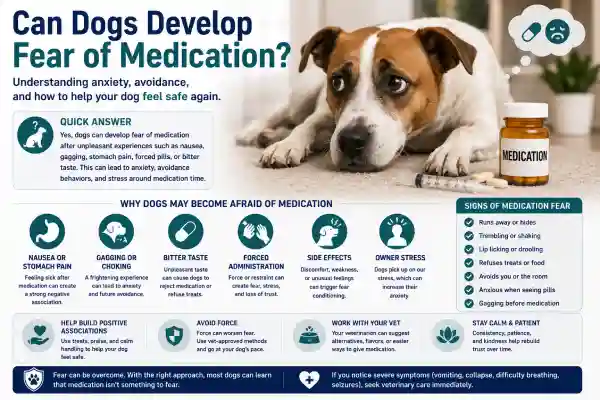
Can dogs develop fear of medication? Yes, dogs can develop fear of medication after unpleasant experiences such as nausea, gagging, stomach pain, bitter taste, forced pill administration, throat irritation, or stressful handling. Some dogs begin hiding, running away, drooling, trembling, refusing treats, or acting anxious when they see medication, pill bottles, or even their owner preparing medicine.
Many dog owners become worried when their dog suddenly:
- runs away at medication time
- hides after seeing pills
- refuses treats with medication
- drools before medicine
- trembles during medication routines
- becomes anxious around pill bottles
- refuses food after bad medication experiences
- acts fearful around the owner
And honestly?
This is MUCH more common than many owners realize.
Dogs can form strong negative associations very quickly.
A single unpleasant experience may sometimes create:
- fear
- stress
- avoidance behavior
- anxiety around medication routines
This guide explains:
- why dogs may become afraid of medication
- how fear conditioning works
- behavioral warning signs
- medication side effects linked to fear
- how owners can rebuild trust safely
- when anxiety may signal a more serious medical problem
Why Can Dogs Become Afraid of Medication?
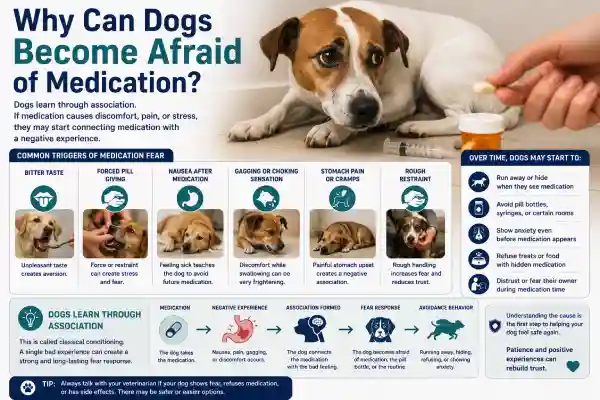
Dogs learn through association.
If medication causes:
- nausea
- gagging
- stomach pain
- choking sensations
- weakness
- sedation
- fear
the dog may begin connecting:
pills = bad experience
This is called:
conditioned fear response
Common Triggers of Medication Fear
| Trigger | Possible Result |
|---|---|
| Bitter taste | Avoidance |
| Forced pill giving | Anxiety |
| Nausea after medication | Fear association |
| Gagging or choking sensation | Panic |
| Stomach pain | Refusing food |
| Rough restraint | Stress or distrust |
This strongly connects with:
- Why Does My Dog Gag After Medication?
- Can Antibiotics Cause Stomach Pain in Dogs?
- Why Does My Dog Refuse Water After Medication?
Can Dogs Develop Fear of Medication?
What Does Fear of Medication Look Like in Dogs?
Some dogs show subtle anxiety.
Others develop very obvious fear behaviors.
Common Signs of Medication Fear
| Behavior | Possible Meaning |
|---|---|
| Running away | Avoidance |
| Hiding | Anxiety |
| Trembling | Fear response |
| Lip licking | Stress or nausea |
| Refusing treats | Negative association |
| Drooling | Anxiety or nausea |
| Avoiding owner | Fear conditioning |
| Growling or snapping | Defensive fear |
Some dogs may even react:
- before the medication appears
- when hearing pill bottles
- when entering certain rooms
- when seeing specific foods used with pills
This naturally links with:
- Can Antibiotics Affect Dog Behavior?
- Dog Acting Drunk After Gabapentin?
- Why Is My Dog Shaking After Gabapentin?
Can Antibiotics Cause Fear or Anxiety?
Sometimes — indirectly, yes.
Antibiotics themselves do not usually “cause fear.”
But if antibiotics trigger:
- nausea
- stomach pain
- weakness
- vomiting
- gagging
the dog may start associating:
medication routines with discomfort
This is especially common after:
- repeated medication sessions
- forceful pill administration
- strong bitter medications
- GI side effects
Antibiotics Commonly Associated With GI Side Effects
| Antibiotic | Possible Fear Trigger |
|---|---|
| Metronidazole | Bitter taste, nausea |
| Doxycycline | Throat irritation |
| Clindamycin | GI upset |
| Amoxicillin | Stomach discomfort |
| Cephalexin | Digestive irritation |
This naturally links with:
Can Gabapentin Affect Behavior?
Yes — sometimes.
Gabapentin may occasionally cause:
- sedation
- confusion
- dizziness
- wobbling
- anxiety in sensitive dogs
If dogs feel:
- unstable
- weak
- disoriented
they may become fearful of future medication experiences.
This strongly connects with:
Can Dogs Become Afraid After Forced Medication?
Absolutely.
Forceful medication may create:
- panic
- distrust
- stress conditioning
- defensive behavior
Dogs may remember:
- restraint
- throat discomfort
- bad taste
- nausea afterward
This is why repeated force can worsen medication refusal over time.
Can Fear Cause Physical Symptoms?
Very easily.
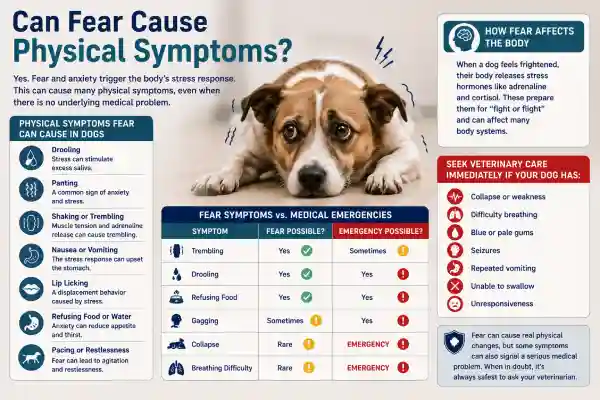
Fear and anxiety may trigger:
- drooling
- panting
- shaking
- nausea
- vomiting
- lip licking
- pacing
- refusal to eat or drink
Fear Symptoms vs Medical Emergencies
| Symptom | Fear Possible? | Emergency Possible? |
|---|---|---|
| Trembling | Yes | Sometimes |
| Drooling | Yes | Yes |
| Refusing food | Yes | Yes |
| Gagging | Sometimes | Yes |
| Collapse | Rare | EMERGENCY |
| Breathing difficulty | Rare | EMERGENCY |
This naturally links with:
- Why Does My Dog Refuse Water After Medication?
- What Happens If Dogs Take Too Much Antibiotic?
- What Does Antibiotic Toxicity Look Like in Dogs?
How Can Owners Help Dogs Feel Safer?
This is one of the MOST important sections.
Helpful Strategies
| Strategy | Why It Helps |
|---|---|
| Use positive reinforcement | Build trust |
| Reward calm behavior | Reduce fear |
| Avoid force when possible | Prevent worsening anxiety |
| Use pill pockets if approved | Reduce stress |
| Stay calm yourself | Dogs sense owner stress |
| Ask your veterinarian about alternatives | Improve compliance |
Sometimes veterinarians may recommend:
- flavored medications
- liquid forms
- compounded medications
- different administration methods
What Should Owners NEVER Do?
Avoid:
- yelling
- punishment
- forceful restraint when possible
- hiding pills in unsafe foods
- chasing the dog repeatedly
- creating panic around medication time
These may worsen:
- fear
- distrust
- medication refusal
- anxiety conditioning
Are Some Dogs More Sensitive?
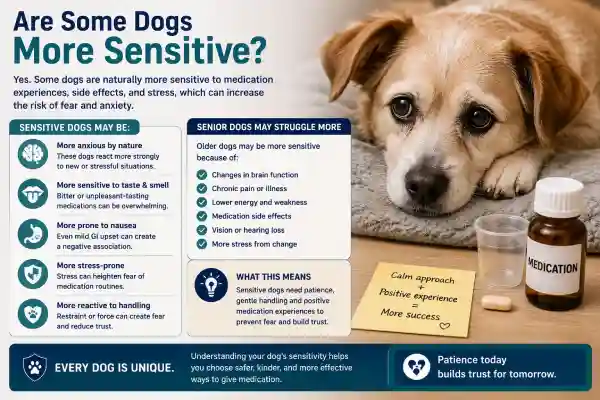
Absolutely.
Some dogs are naturally:
- more anxious
- more sensitive to taste
- more stress-prone
- more reactive to nausea
Senior dogs may also struggle more because of:
- confusion
- weakness
- chronic illness
- sensory changes
This strongly connects with What Is the Safest Antibiotic for Senior Dogs?
What Symptoms Are Emergencies?
This is VERY important.
Fear alone should NOT cause:
- collapse
- blue gums
- repeated vomiting
- breathing difficulty
- inability to swallow
- severe lethargy
- seizures
Emergency Warning Signs
| Symptom | Emergency Level |
|---|---|
| Collapse | EMERGENCY |
| Blue gums | EMERGENCY |
| Seizures | EMERGENCY |
| Difficulty breathing | EMERGENCY |
| Unable to swallow | EMERGENCY |
| Severe weakness | Serious |
| Repeated vomiting | Serious |
| Unresponsiveness | EMERGENCY |
This naturally links with:
How Veterinarians Evaluate Medication Fear
Veterinarians may evaluate:
- medication history
- behavioral triggers
- nausea severity
- medication side effects
- pain responses
- anxiety disorders
- swallowing problems
- underlying illness
Possible approaches may include:
- medication changes
- behavioral training
- anxiety management
- flavored formulations
- alternative administration strategies
FAQ — Can Dogs Develop Fear of Medication?
Can dogs become traumatized by medication?
Yes. Negative experiences like nausea, gagging, or forced medication may create fear associations.
Why does my dog run away from pills?
Dogs may associate pills with bad experiences such as stomach pain, gagging, or stress.
Can antibiotics cause medication fear?
Indirectly, yes. Side effects like nausea or discomfort may create negative associations.
Can fear cause drooling or shaking?
Indirectly, yes. Side effects like nausea or discomfort may create negative associations.
Should I force medication into my dog?
Repeated force may worsen fear and medication refusal. Discuss safer strategies with your veterinarian.
Can gabapentin affect behavior?
Sometimes. Some dogs may experience sedation, confusion, or anxiety-like reactions.
Can dogs recover from medication fear?
Yes. Many dogs improve with calm handling, positive reinforcement, and better medication experiences.
Medical Disclaimer
This article is for educational purposes only and does not replace professional veterinary advice, diagnosis, or treatment. The content is written and pharmacist-reviewed to improve medication safety awareness and help dog owners better understand medication fear, behavioral changes, anxiety responses, nausea-related avoidance, and emergency warning signs in dogs. Always contact your veterinarian if your dog develops severe weakness, breathing difficulty, collapse, seizures, or worsening symptoms after medication.Can Dogs Develop Fear of Medication?
Reviewed by
Written by Pet Meds Made Simple Editorial Team
Pharmacy Reviewed by Dimitar Atanasov MPharm
Master Pharmacist | Medication Safety Educator
Last Updated: May 2026
Editorial Policy
At PetMedsMadeSimple.com, all articles are written for educational purposes and reviewed through our pharmacist-led editorial process to improve medication safety awareness for dog owners. Our content is evidence-based, regularly updated, and designed to help readers better understand veterinary medications, side effects, interactions, warning signs, and recovery concerns.Can Dogs Develop Fear of Medication?
Every article is reviewed for clarity, safety-focused language, and responsible medical communication before publication.
Read our full Editorial Policy here:
👉 Pet Meds Made Simple Editorial Policy
Sources & Scientific References
- PubMed Central – Fear and Anxiety Research in Dogs
- PetMD – Dog Anxiety
- VCA Hospitals – Fears and Phobias in Dogs
- Merck Veterinary Manual
- American Veterinary Medical Association (AVMA)
- Plumb’s Veterinary Drug Handbook
Images created with AI – Can Dogs Develop Fear of Medication?