Quick Answer
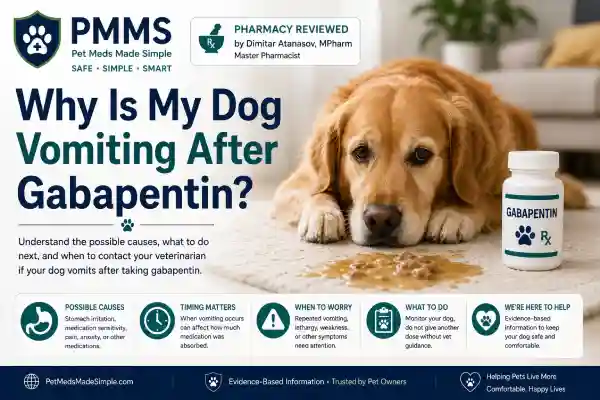
Why is my dog vomiting after gabapentin? Vomiting can occur in some dogs after taking gabapentin, although it is not considered one of the most common side effects. In many cases, vomiting may be related to stomach irritation, underlying illness, pain, anxiety, other medications, or the condition being treated rather than the gabapentin itself. If vomiting is severe, repeated, or accompanied by other concerning symptoms, veterinary evaluation is recommended.
Why is my dog vomiting after gabapentin?
Some dogs may vomit after taking gabapentin due to stomach upset, sensitivity to medication, underlying illness, pain, anxiety, or interactions with other medications. Occasional vomiting may not be serious, but repeated vomiting, lethargy, weakness, or difficulty breathing should be evaluated by a veterinarian.
When Owners Commonly Ask This
Owners often search why is my dog vomiting after gabapentin when:
- Their dog vomits shortly after a dose.
- Gabapentin was started recently.
- A dose was increased.
- Multiple medications are being used.
- The dog appears nauseous.
- The dog vomits unexpectedly despite taking the medication previously without problems.
One of the biggest concerns is whether the medication caused the vomiting or whether another problem is responsible.
Can Gabapentin Cause Vomiting in Dogs?
Yes, it can.
Although sedation and sleepiness are more commonly reported, some dogs may experience gastrointestinal side effects.
Possible reactions include:
- Nausea
- Vomiting
- Reduced appetite
- Mild stomach upset
However, when owners ask why is my dog vomiting after gabapentin, veterinarians often investigate other potential causes as well.
Why Is My Dog Vomiting After Gabapentin?
Why Does Gabapentin Sometimes Cause Vomiting?
Several factors may contribute.
Individual Sensitivity
Some dogs simply tolerate medications differently than others.
Stomach Irritation
Medication may occasionally contribute to gastrointestinal upset.
Dose Changes
Increasing a dose may temporarily increase side effects.
Empty Stomach Administration
Some dogs are more likely to experience nausea when medication is given without food.
Underlying Medical Conditions
The original illness may be contributing to vomiting.
Did My Dog Throw Up the Medication?
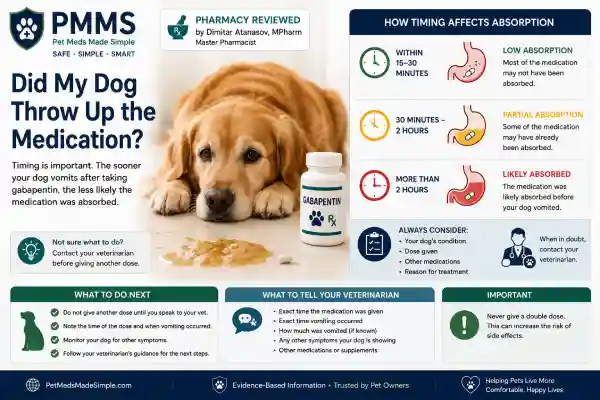
This is one of the most common owner questions.
The answer depends on timing.
Vomiting Within Minutes
If vomiting occurs almost immediately after administration, the medication may not have been absorbed completely.
Vomiting One to Two Hours Later
Some absorption may already have occurred.
Vomiting Several Hours Later
The medication was likely absorbed before vomiting occurred.
Because every situation is different, owners should contact their veterinarian if they are unsure.
Should I Give Another Dose?
This is where many owners make mistakes.
If your dog vomits after receiving gabapentin:
❌ Do not automatically give another full dose.
❌ Do not double the next dose.
❌ Do not guess.
The safest approach is to contact your veterinarian for individualized guidance.
The correct decision often depends on:
- Timing of vomiting
- Dose size
- Medical condition being treated
- Other medications involved
Could Another Medication Be Responsible?
Absolutely.
Many dogs taking gabapentin are also receiving:
- NSAIDs
- Antibiotics
- Trazodone
- Seizure medications
- Other pain medications
Sometimes another medication may be contributing to the gastrointestinal symptoms.
Related articles:
Could Pain Cause Vomiting?
Surprisingly, yes.
Pain itself can sometimes contribute to:
- Nausea
- Stress
- Reduced appetite
- Gastrointestinal upset
Owners may assume the medication caused vomiting when the underlying condition is actually responsible.
Related articles:
- Why Is My Dog Still in Pain on Gabapentin?
- Can Gabapentin Cause Weak Back Legs?
- Why Does Gabapentin Stop Working in Dogs?
Does Giving Gabapentin With Food Help?
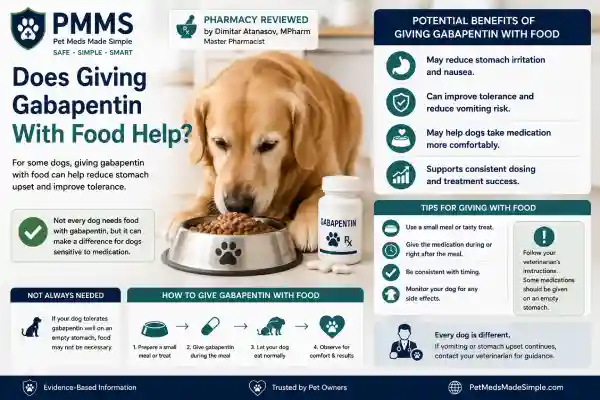
Sometimes.
For certain dogs, administering medication with food may reduce stomach irritation.
However, owners should always follow their veterinarian’s instructions regarding medication administration.
Not every dog responds the same way.
How Soon After Gabapentin Did Your Dog Vomit?
Timing matters.
Within 30 Minutes
Veterinarians may be more concerned about whether the medication was absorbed.
One to Three Hours Later
Partial absorption likely occurred.
Several Hours Later
The vomiting may be unrelated to medication absorption.
This information is often one of the first things veterinarians ask owners.
Could Anxiety Cause Vomiting?
Yes.
Dogs experiencing anxiety may develop:
- Nausea
- Drooling
- Vomiting
- Appetite changes
This is particularly relevant when gabapentin is being used for anxiety management.
Related articles:
- Can Gabapentin Cause Anxiety in Dogs?
- Why Is My Dog Hyper After Gabapentin?
- Why Is My Dog Restless at Night on Gabapentin?
What Other Symptoms Might Occur?
Owners searching why is my dog vomiting after gabapentin often notice additional symptoms.
Sleepiness
Related article: Why Does My Dog Sleep So Much on Gabapentin?
Weakness
Related article: Can Gabapentin Cause Weakness in Dogs?
Shaking
Related article: Can Gabapentin Cause Shaking in Dogs?
Aggression
Related article: Can Gabapentin Cause Aggression in Dogs?
Clingy Behavior
Related article: Why Is My Dog Clingy After Anxiety Medication?
Acting Strange
Related article: Can Anxiety Medication Cause Confusion in Dogs?
When Does Vomiting Become an Emergency?
Contact your veterinarian immediately if vomiting occurs alongside:
- Difficulty breathing
- Collapse
- Severe weakness
- Repeated vomiting
- Bloody vomit
- Seizures
- Significant lethargy
- Signs of dehydration
These situations require prompt medical attention.
How Veterinarians Evaluate Vomiting After Gabapentin
When owners ask why is my dog vomiting after gabapentin, veterinarians try to determine whether the vomiting is truly medication-related or whether another condition may be involved.
A veterinary evaluation may include:
- Reviewing medication history
- Assessing the timing of vomiting
- Evaluating pain levels
- Reviewing other medications
- Checking hydration status
- Looking for underlying illness
- Assessing appetite and activity
One of the most important questions is:
Did the vomiting begin after starting gabapentin, or was it already occurring beforehand?
The answer often helps narrow down the cause.
Can Vomiting Be Temporary?
Yes.
Some dogs experience mild stomach upset when:
- Starting a new medication
- Adjusting to a higher dose
- Taking multiple medications
In certain cases, the vomiting resolves without additional problems.
However, persistent vomiting should never be ignored.
What Owners Should Monitor at Home
If your dog vomits after gabapentin, monitor:
Frequency of Vomiting
Did it happen once or multiple times?
Appetite
Is your dog still willing to eat?
Water Intake
Can your dog keep water down?
Energy Level
Is your dog alert and responsive?
Medication Timing
How long after the dose did vomiting occur?
Other Symptoms
Watch for:
- Weakness
- Shaking
- Confusion
- Excessive sleepiness
- Difficulty walking
These details can be extremely helpful for your veterinarian.
Could an Overdose Cause Vomiting?
Potentially, yes.
Although gabapentin has a relatively wide safety margin, excessive amounts may increase the risk of side effects.
Possible signs may include:
- Vomiting
- Severe sleepiness
- Wobbliness
- Weakness
- Disorientation
If an overdose is suspected, veterinary care should be sought immediately.
Related article:
Signs of Medication Overdose in Dogs (Emergency Warning Signs Every Owner Should Know)
Could Kidney Disease Increase the Risk?
Yes.
Because gabapentin is primarily eliminated through the kidneys, dogs with kidney disease may process the medication more slowly.
This can potentially increase the likelihood of side effects.
Senior dogs may be particularly affected.
Related article:
Can Senior Dogs Take Gabapentin Safely?
Could Vomiting Mean Gabapentin Is Not the Right Medication?
Not necessarily.
A single episode of vomiting does not automatically mean treatment must be stopped.
Veterinarians often consider:
- Severity of symptoms
- Frequency of vomiting
- Benefits of treatment
- Alternative options
- Other medical conditions
Many dogs continue taking gabapentin successfully after mild gastrointestinal symptoms resolve.
What If My Dog Refuses Food After Vomiting?
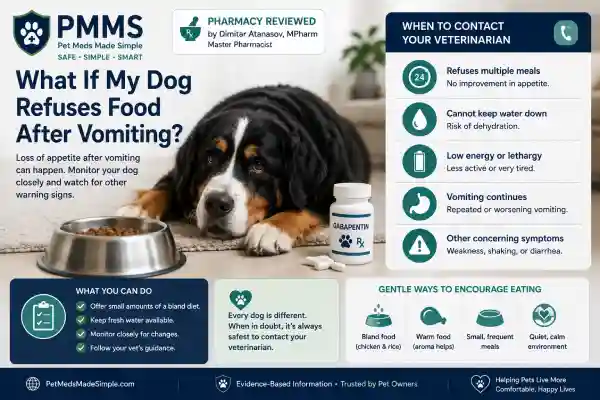
This is another common owner concern.
Occasional appetite reduction may occur after vomiting.
However, contact your veterinarian if:
- Your dog refuses multiple meals.
- Vomiting continues.
- Water intake decreases.
- Lethargy develops.
Loss of appetite combined with vomiting deserves attention.
Related Symptoms Owners Often Search For
Owners researching why is my dog vomiting after gabapentin frequently search for:
Weakness
Related article: Can Gabapentin Cause Weakness in Dogs?
Sleepiness
Related article: Why Does My Dog Sleep So Much on Gabapentin?
Confusion
Related article: Can Anxiety Medication Cause Confusion in Dogs?
Shaking
Related article: Can Gabapentin Cause Shaking in Dogs?
Acting Strange
Related article: Can Anxiety Medication Cause Personality Changes?
Clingy Behavior
Related article: Why Is My Dog Clingy After Anxiety Medication
When Should Owners Contact Their Veterinarian?
Contact your veterinarian if:
- Vomiting happens repeatedly.
- Bloody vomit is present.
- Your dog cannot keep water down.
- Significant weakness develops.
- Difficulty breathing occurs.
- Your dog appears dehydrated.
- Appetite is completely lost.
- Symptoms are worsening.
Early intervention is always safer than waiting.
Veterinarian Takeaway
Why is my dog vomiting after gabapentin? Vomiting can occur in some dogs taking gabapentin, but it is not among the most common side effects. Stomach irritation, medication sensitivity, anxiety, pain, underlying illness, or other medications may contribute. Occasional vomiting may not be serious, but repeated vomiting or additional symptoms should prompt veterinary evaluation.
Bottom Line
If you’re wondering why is my dog vomiting after gabapentin, the answer is not always straightforward.
Possible explanations include:
- Medication sensitivity
- Mild stomach upset
- Anxiety
- Pain
- Underlying illness
- Other medications
- Less commonly, overdose or organ dysfunction
The most important step is monitoring your dog’s overall condition and contacting your veterinarian if vomiting is persistent, severe, or accompanied by other concerning symptoms.
Frequently Asked Questions
Can gabapentin cause vomiting ain dogs?
Yes. Some dogs may experience nausea or vomiting while taking gabapentin.
Is vomiting a common side effect of gabapentin?
It can occur, but sleepiness and sedation are generally reported more often.
Should I give another dose if my dog vomits?
No. Do not automatically repeat the dose without veterinary guidance.
What if my dog vomited immediately after taking gabapentin?
Contact your veterinarian, as medication absorption may have been affected.
Can gabapentin cause nausea?
Yes. Some dogs may experience nausea or mild stomach upset.
Could another medication be causing the vomiting?
Absolutely. Many dogs take gabapentin alongside other medications that may contribute.
Can anxiety cause vomiting?
Yes. Anxiety can sometimes lead to nausea and vomiting.
Does giving gabapentin with food help?
For some dogs, it may reduce stomach irritation.
When should I worry about vomiting?
Repeated vomiting, dehydration, weakness, bloody vomit, or breathing problems require prompt veterinary attention.
Can a gabapentin overdose cause vomiting?
Potentially, yes. Veterinary care should be sought if an overdose is suspected.
Reviewed By
Pharmacy Reviewed By
Dimitar Atanasov, MPharm
Master Pharmacist | Medication Safety Educator
Editorial Policy
At Pet Meds Made Simple, we are committed to providing accurate, evidence-based information about pet medications, veterinary treatments, medication safety, and common health concerns that affect dogs and cats.
Our content is researched using veterinary reference texts, peer-reviewed veterinary literature, clinical guidelines, and trusted veterinary organizations. Every article is written with the goal of helping pet owners better understand their pet’s medications while supporting—not replacing—the advice of their veterinarian.
Read our full Editorial Policy:
Sources
- Plumb’s Veterinary Drug Handbook
- American Animal Hospital Association (AAHA)
- American Veterinary Medical Association (AVMA)
- Merck Veterinary Manual
- Veterinary Pharmacology and Therapeutics
- Small Animal Clinical Pharmacology
- Journal of the American Veterinary Medical Association (JAVMA)
- Frontiers in Veterinary Science
- Veterinary Anaesthesia and Analgesia
- Veterinary Information Network (VIN)
Medical Review Statement
This article was pharmacy-reviewed by Dimitar Atanasov, MPharm, Master Pharmacist, using current veterinary pharmacology references, canine pain-management guidelines, and published veterinary literature available at the time of review.
Images created with AI –