Quick Answer
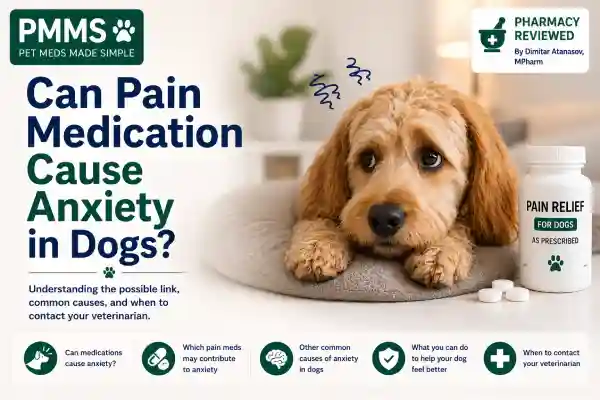
Can pain medication cause anxiety in dogs? Sometimes, yes. While most pain medications are designed to improve comfort and quality of life, some dogs may appear anxious, restless, nervous, or unsettled after starting a medication. In many cases, however, the medication itself is not the true cause. Ongoing pain, medication wearing off, individual sensitivity, recovery from surgery, or underlying medical conditions are often more likely explanations.
Can pain medication cause anxiety in dogs?
Yes, some dogs may appear anxious after starting pain medication. Certain medications can occasionally contribute to restlessness, agitation, or behavioral changes. However, anxiety may also result from uncontrolled pain, illness, recovery from surgery, medication interactions, or stress unrelated to the medication itself. Persistent anxiety should be discussed with a veterinarian.
When Owners Commonly Ask This
Owners usually notice a change that wasn’t there before.
The dog starts taking pain medication and suddenly becomes:
- Restless
- Clingy
- Nervous
- Pacing around the house
- Unable to settle
- More vocal than usual
This often leads to an understandable question:
“Can pain medication cause anxiety in dogs?”
The answer is sometimes yes but the situation is usually more complicated than it first appears.
Many owners assume the medication is responsible when the underlying condition, recovery process, or pain itself may actually be the reason.
Can Pain Medication Cause Anxiety in Dogs?
Can Pain Medication Cause Anxiety in Dogs Directly?
Yes, but it is not considered one of the most common side effects.
Different medications affect dogs differently.
Some dogs may experience:
- Restlessness
- Agitation
- Increased alertness
- Mild behavioral changes
while others become:
- Sleepy
- Relaxed
- Less active
Possible Responses to Pain Medication
| Response | Common? |
|---|---|
| Improved comfort | Very Common |
| Sleepiness | Common |
| Reduced activity | Common |
| Mild anxiety | Possible |
| Restlessness | Possible |
| Agitation | Less Common |
Individual sensitivity plays a major role.
Could Ongoing Pain Be Causing the Anxiety?
Very often.
This is one of the most overlooked explanations.
Many owners assume:
Medication → Anxiety
when the actual situation is:
Pain → Anxiety
Signs Pain May Still Be Present
- Panting
- Restlessness
- Crying
- Difficulty sleeping
- Reduced mobility
- Pacing
Owners experiencing this situation may also benefit from reading:
Why Is My Dog Crying Even After Pain Medication?
Why Is My Dog Still in Pain After Medication?
What to Do If Dog Medication Is Not Working
If pain is not adequately controlled, anxiety-like behaviors frequently develop.
Could My Dog Be Reacting to a New Medication?
Absolutely.
Dogs often notice changes long before owners do.
Starting a new medication may temporarily cause:
- Behavioral changes
- Changes in sleep patterns
- Increased attention-seeking
- Mild nervousness
This adjustment period is often temporary.
Dogs Most Likely to React
| Dog Type | Increased Sensitivity? |
|---|---|
| Senior dogs | Yes |
| Anxious dogs | Yes |
| Dogs on multiple medications | Yes |
| Dogs recovering from surgery | Yes |
Which Pain Medications Are Most Commonly Associated With Restlessness?
Several medications occasionally receive reports of restlessness or agitation.
Examples Include
- Tramadol
- Gabapentin
- Opioid medications
- Combination therapies
This does not mean these medications commonly cause anxiety.
Rather, some dogs may respond differently than expected.
Owners researching specific medications may also find these articles helpful:
Is Tramadol Safe for Dogs? Uses, Dosage & Risks
Is Tramadol Still Recommended for Dogs?
Gabapentin vs Tramadol for Dogs: Which Is Safer and More Effective?
Can Gabapentin Cause Weakness in Dogs?
Could Recovery From Surgery Be the Real Cause?
Very commonly.
After surgery, dogs experience:
- Unfamiliar sensations
- Restricted activity
- Temporary discomfort
- Environmental changes
This combination can create behaviors that look very similar to anxiety.
Common Post-Surgical Behaviors
- Whining
- Pacing
- Difficulty settling
- Seeking attention
- Restlessness
Not every behavioral change after surgery is medication-related.
Could Medication Wearing Off Cause Anxiety?
Yes.
Many owners notice a pattern.
The dog seems comfortable shortly after medication.
Then, several hours later:
- Restlessness appears
- Pacing begins
- Panting increases
- Anxiety-like behaviors develop
This can sometimes indicate breakthrough pain.
Possible Signs
| Sign | Possible? |
|---|---|
| Crying before next dose | Yes |
| Pacing | Yes |
| Panting | Yes |
| Difficulty sleeping | Yes |
| Increased discomfort | Yes |
Veterinarians often investigate pain control when this pattern develops.
Could Anxiety Be Mistaken for a Medication Side Effect?
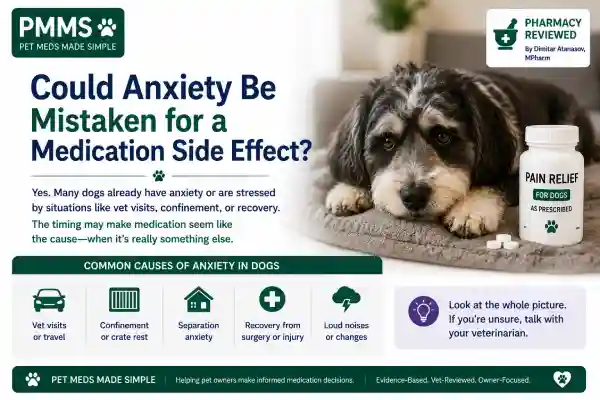
Absolutely.
Many dogs already have anxiety before medication is started.
Examples include:
- Veterinary visit anxiety
- Confinement anxiety
- Separation anxiety
- Recovery-related stress
The timing may make the medication appear responsible even when it is not.
This is why veterinarians look at the entire clinical picture rather than focusing solely on the drug.
Can Certain Dogs Be More Sensitive to Pain Medication?
Yes.
Some dogs are naturally more sensitive to medication effects.
Factors include:
- Age
- Breed
- Weight
- Underlying disease
- Other medications
- Individual metabolism
Higher-Risk Dogs
| Group | Higher Sensitivity? |
|---|---|
| Senior dogs | Yes |
| Dogs with kidney disease | Yes |
| Dogs with liver disease | Yes |
| Dogs receiving multiple medications | Yes |
This sensitivity can sometimes lead to unusual behavioral responses.
Could Medication Interactions Contribute?
Definitely.
Many dogs receive more than one medication.
Examples include:
- Pain medication
- Anxiety medication
- Antibiotics
- Seizure medication
Interactions can sometimes affect:
- Behavior
- Alertness
- Activity levels
- Sleep patterns
Veterinarians always review the complete medication list when investigating side effects.
Could Anxiety Mean the Medication Is Not Working?
Sometimes, yes.
One of the most common reasons owners search Can Pain Medication Cause Anxiety in Dogs? is because their dog seems uncomfortable despite treatment.
In some cases, anxiety-like behaviors may indicate that pain control is inadequate.
Signs the Medication May Not Be Working Well Enough
- Crying
- Panting
- Restlessness
- Difficulty sleeping
- Pacing
- Reluctance to move
- Reduced appetite
Pain and anxiety often overlap.
A painful dog may look anxious even when anxiety is not the primary problem.
Owners concerned about treatment effectiveness may also find these articles useful:
What to Do If Dog Medication Is Not Working
Warning Signs Your Dog Needs Stronger Pain Medication (Vet-Backed Guide)
When to Switch Dog Medication (Signs to Watch) (Vet-Backed Guide)
Could NSAIDs Cause Anxiety?
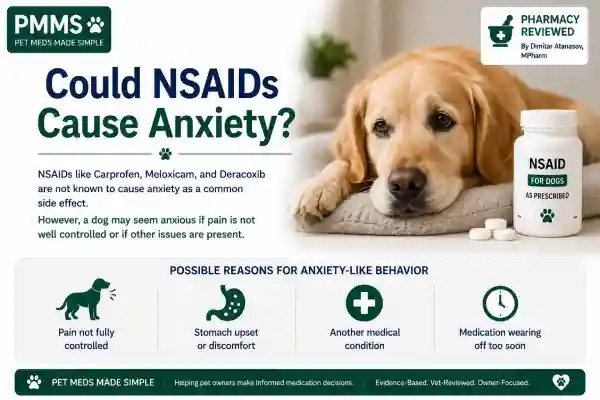
Usually not directly.
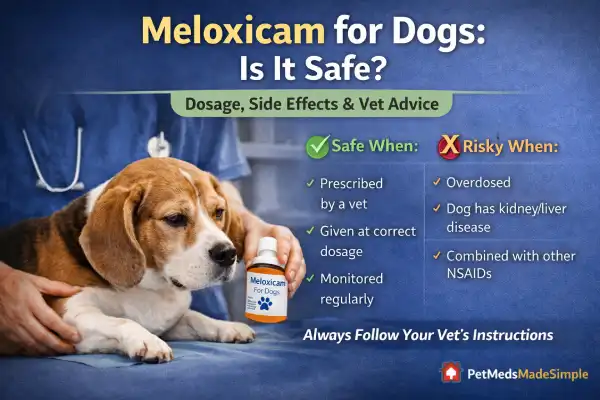
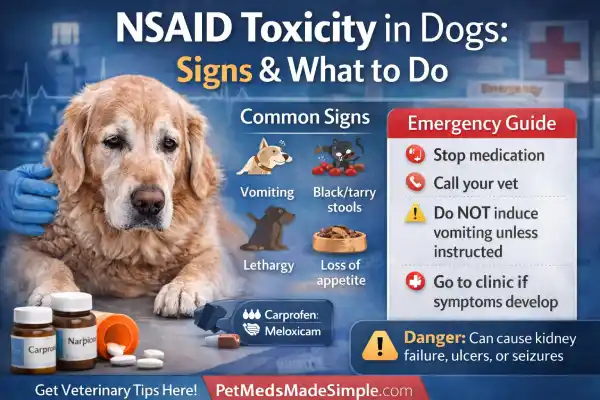
NSAIDs such as:
- Carprofen
- Meloxicam
- Deracoxib
- Galliprant
are generally not known for causing anxiety as a common side effect.
However, some dogs may appear restless because:
- Pain is not fully controlled
- Gastrointestinal upset develops
- They feel uncomfortable
- Another medical condition is present
Owners researching NSAID safety may also benefit from:
Safest NSAID for Dogs Long-Term
Carprofen vs Meloxicam for Dogs: Which NSAID Is Safer and More Effective? (Vet-Backed Guide)
Can Meloxicam Cause Kidney Damage in Dogs?
What Is the Safest Anti-Inflammatory for Dogs?
Could Tramadol Cause Anxiety or Agitation?
It can.
Although many dogs tolerate tramadol well, some may experience:
- Restlessness
- Agitation
- Behavioral changes
- Increased vocalization
Possible Tramadol-Related Changes
| Symptom | Possible? |
|---|---|
| Restlessness | Yes |
| Agitation | Yes |
| Vocalization | Yes |
| Panting | Possible |
| Difficulty settling | Possible |
Owners concerned about tramadol often continue reading:
Is Tramadol Safe for Dogs? Uses, Dosage & Risks
Is Tramadol Still Recommended for Dogs?
Tramadol vs Codeine for Dogs: Which Is Stronger?
Could Anxiety Be Caused by Pain Returning?
Very commonly.
This is one of the most important concepts for owners to understand.
Sometimes the medication is helping.
Then:
- The dose wears off
- Pain returns
- The dog becomes uncomfortable
The owner sees anxiety.
The dog is actually experiencing worsening pain.
Signs Pain May Be Returning
| Sign | Common? |
|---|---|
| Panting | Yes |
| Pacing | Yes |
| Crying | Yes |
| Difficulty lying down | Yes |
| Restlessness | Yes |
This is especially common in dogs with:
- Arthritis
- Chronic pain
- Orthopedic disease
Helpful related articles include:
Best Pain Medication for Dogs with Arthritis
What Can I Give My Dog for Pain?
Why Is My Dog in Pain? Signs, Causes & When to Go to the Vet (Vet-Backed Guide)
Could Senior Dogs Show Anxiety More Easily?
Absolutely.
Senior dogs often respond differently to:
- Pain
- Medication
- Environmental changes
Factors That Affect Senior Dogs
- Reduced mobility
- Cognitive changes
- Increased medication sensitivity
- Chronic disease
A senior dog may appear anxious when the real issue is discomfort, confusion, or declining mobility.
Could Anxiety Be Related to Kidney or Liver Problems?
Sometimes.
When medications are processed differently than expected, dogs may experience unusual side effects.
This is one reason veterinarians pay close attention to:
- Kidney function
- Liver function
- Medication interactions
Owners interested in medication safety may also find useful:
Can Meloxicam Cause Kidney Damage in Dogs?
How Long Does Carprofen Stay in a Dogs System?
How Veterinarians Evaluate Anxiety After Pain Medication
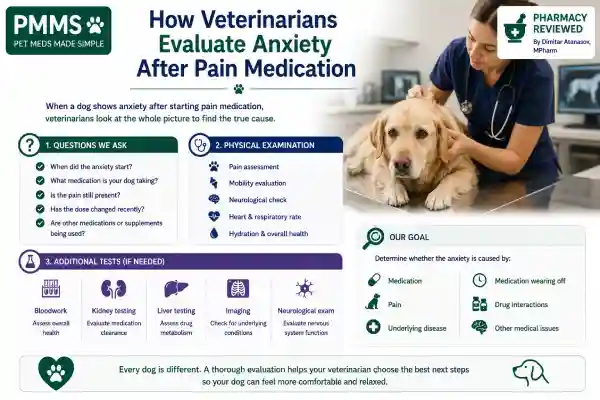
When a dog develops anxiety-like symptoms after starting treatment, veterinarians usually investigate several possibilities.
Common Questions
- When did the symptoms start?
- What medication was prescribed?
- Is pain still present?
- Has the dose changed recently?
- Are other medications being used?
Physical Examination
The veterinarian may evaluate:
- Pain levels
- Mobility
- Neurological function
- Heart rate
- Respiratory rate
- Hydration
Additional Testing
Depending on the situation:
| Test | Purpose |
|---|---|
| Bloodwork | Assess overall health |
| Kidney testing | Evaluate medication clearance |
| Liver testing | Assess metabolism |
| Imaging | Evaluate underlying disease |
| Neurological exam | Assess nervous system function |
The goal is determining whether anxiety is caused by:
- Medication
- Pain
- Disease progression
- Another medical issue
When Should Owners Contact Their Veterinarian?
Owners should contact their veterinarian if:
- Anxiety appears suddenly
- Symptoms worsen
- The dog cannot settle
- Appetite decreases
- Pain seems uncontrolled
- New symptoms develop
Prompt communication often prevents complications.
When Does Anxiety Become an Emergency?
Most cases of anxiety are not emergencies.
However, certain symptoms require immediate veterinary attention.
Severe Agitation
Dogs that cannot calm down may require urgent evaluation.
Collapse
Any collapse is an emergency.
Difficulty Breathing
Breathing problems should never be ignored.
Neurological Symptoms
Examples include:
- Severe weakness
- Falling over
- Tremors
- Seizures
Emergency Warning Signs
| Symptom | Emergency? |
|---|---|
| Mild restlessness | Usually No |
| Mild anxiety | Usually No |
| Persistent anxiety | Contact Vet |
| Severe agitation | Yes |
| Collapse | Yes |
| Seizures | Yes |
| Difficulty breathing | Yes |
| Severe weakness | Yes |
Related Symptoms Owners Often Search For
Owners searching Can Pain Medication Cause Anxiety in Dogs? frequently search for other medication-related symptoms.
Loss of Appetite
Many owners also notice reduced eating and search:
Can Pain Medication Cause Loss of Appetite in Dogs?
Crying
Persistent vocalization commonly leads owners to:
Why Is My Dog Crying Even After Pain Medication?
Ongoing Pain
Some dogs continue showing discomfort despite treatment.
Related reading:
Why Is My Dog Still in Pain After Medication?
Medication Safety
Owners often compare medications through:
Safest Pain Medication for Dogs
What Can I Give My Dog for Pain?
Natural Alternatives
Some owners explore:
Medication Comparisons
Additional useful comparisons include:
- Carprofen vs Gabapentin for Dogs
- Amantadine vs Gabapentin for Dogs
- NSAIDs vs Opioids for Dogs: What’s the Difference?
- Deracoxib vs Carprofen: Which Is Better for Dogs?
Bottom Line
Can pain medication cause anxiety in dogs? Sometimes, yes. Certain medications may contribute to restlessness, agitation, or behavioral changes in sensitive dogs. However, ongoing pain, medication wearing off, recovery from surgery, disease progression, or unrelated anxiety are often more common explanations.
Because pain and anxiety can look very similar, persistent behavioral changes should always be discussed with a veterinarian.
Veterinarian Takeaway
Pain medications are intended to improve comfort, but some dogs may appear anxious after starting treatment. In many cases, anxiety-like behaviors are actually signs of uncontrolled pain, breakthrough pain, recovery-related stress, or individual sensitivity rather than a direct medication side effect. A veterinary evaluation can help determine the true cause and whether treatment adjustments are needed.
Frequently Asked Questions – Can Pain Medication Cause Anxiety in Dogs?
Can pain medication cause anxiety in dogs?
Yes. Some dogs may develop restlessness or agitation after starting certain medications.
Which pain medications are most likely to cause restlessness?
Tramadol and some opioid-based medications are more commonly associated with agitation or behavioral changes.
Does anxiety mean the medication is not working?
Not always. Anxiety may result from pain, recovery stress, medication effects, or unrelated factors.
Can NSAIDs cause anxiety?
It is not considered a common side effect, although discomfort from other causes may make a dog appear anxious.
Can uncontrolled pain look like anxiety?
Absolutely. Pain frequently causes pacing, panting, whining, and restlessness.
Can senior dogs be more sensitive to pain medication?
Yes. Older dogs often process medications differently and may show stronger side effects.
Should I stop the medication if my dog seems anxious?
Never stop a prescribed medication without veterinary guidance.
When should I call my veterinarian?
If symptoms are persistent, worsening, or accompanied by other concerning signs.
When does anxiety become an emergency?
Seek immediate veterinary care for seizures, collapse, severe agitation, breathing difficulties, or profound weakness.
Can medication interactions contribute to anxiety?
Yes. Multiple medications can sometimes increase the risk of unusual behavioral changes.
Reviewed By
Pharmacy Reviewed By
Dimitar Atanasov, MPharm
Master Pharmacist | Medication Safety Educator
Editorial Policy
At Pet Meds Made Simple, we are committed to providing accurate, evidence-based information about pet medications, veterinary treatments, medication safety, and common health concerns affecting dogs and cats.
For more information, see our Editorial Policy:
Sources
- Plumb’s Veterinary Drug Handbook
- American Animal Hospital Association (AAHA)
- American Veterinary Medical Association (AVMA)
- Merck Veterinary Manual
- Veterinary Pharmacology and Therapeutics
- Small Animal Clinical Pharmacology
- Journal of the American Veterinary Medical Association (JAVMA)
- Frontiers in Veterinary Science
- Veterinary Anaesthesia and Analgesia
- Veterinary Information Network (VIN)
Medical Review Statement
This article was pharmacy-reviewed by Dimitar Atanasov, MPharm, Master Pharmacist, using current veterinary pharmacology references, canine pain-management guidelines, and published veterinary literature available at the time of review.
Images created with AI – Can Pain Medication Cause Anxiety in Dogs?