Quick Answer
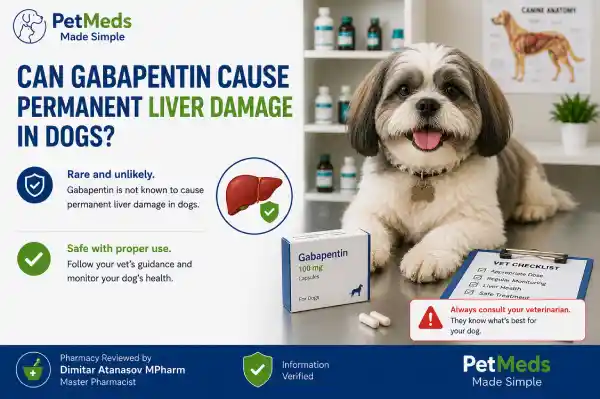
Can Gabapentin Damage the Liver in Dogs? Current veterinary evidence suggests that gabapentin is unlikely to directly damage the liver in most dogs when used at prescribed doses. Unlike some medications that are well known for causing liver toxicity, gabapentin has a favorable hepatic safety profile. However, dogs with pre-existing liver disease, multiple medications, or chronic illnesses may still require routine monitoring because elevated liver enzymes or liver disease can occur for many reasons unrelated to gabapentin.
When Owners Commonly Ask This
The question “Can Gabapentin Damage the Liver in Dogs?” usually arises after one of three situations.
The first is when a dog has been taking gabapentin for several weeks or months and routine blood work reveals elevated liver enzymes. Owners naturally wonder whether the medication is damaging their dog’s liver.
The second is before starting treatment. Many owners search online because their dog already has liver disease, chronic hepatitis, or elevated ALT values, and they want to know whether gabapentin is a safe choice.
The third situation occurs when a dog develops symptoms such as:
- decreased appetite
- vomiting
- lethargy
- weight loss
- yellow gums
- increased thirst
Because these symptoms may also occur with liver disease, owners often assume gabapentin is responsible.
Fortunately, in most cases the explanation is more complicated than simply blaming one medication.
Owners may also find these PMMS guides helpful:
- Gabapentin for Dogs: Vet Guidelines, Uses, Dosage & Safety
- Can Dogs Take Gabapentin Long-Term Safely?
- Can Gabapentin Affect Liver Enzymes in Dogs?
- Can Gabapentin Cause Weight Loss in Dogs?
- Can Gabapentin Cause Weight Gain in Dogs?
- Can Dogs Take Gabapentin With NSAIDs?
- Can Dogs Overdose on Gabapentin?
Can Gabapentin Cause Permanent Liver Damage in Dogs?
Can Gabapentin Damage the Liver in Dogs?
The short answer is:
Current veterinary evidence indicates that clinically significant liver damage caused solely by gabapentin is uncommon in dogs.
That statement is important because many owners confuse two completely different concepts:
- elevated liver enzymes
- actual liver damage
These are not the same diagnosis.
A dog may have mildly elevated ALT or ALP values without suffering permanent liver injury.
Likewise, a dog can have liver disease for reasons that have absolutely nothing to do with gabapentin.
This is why veterinarians investigate the complete clinical picture instead of relying on one blood test or one medication history.
What Does “Liver Damage” Actually Mean?
One of the biggest misconceptions behind the search “Can Gabapentin Damage the Liver in Dogs?” is the meaning of the word damage.
In veterinary medicine, liver damage generally refers to injury that affects the liver’s structure or its ability to perform normal functions.
The liver performs hundreds of essential tasks, including:
- processing nutrients
- producing proteins
- storing vitamins
- producing bile
- regulating blood sugar
- helping remove waste products from the body
When true liver damage develops, these important functions may eventually become impaired.
Simply finding a slightly elevated liver enzyme does not automatically mean these functions have been affected.
Does Gabapentin Directly Injure Liver Cells?
Current research suggests that gabapentin has a relatively low potential for direct hepatotoxicity in dogs.
This is one of the reasons veterinarians frequently prescribe it for:
- chronic osteoarthritis
- neuropathic pain
- spinal disease
- intervertebral disc disease (IVDD)
- cancer pain
- seizure management
Compared with several other medications used in veterinary medicine, gabapentin is generally considered to have a favorable safety profile regarding the liver.
That does not mean every dog responds identically.
Individual variation always exists.
However, current evidence does not identify gabapentin as a common cause of clinically important liver injury in dogs.
Why Do Owners Think Gabapentin Causes Liver Damage?
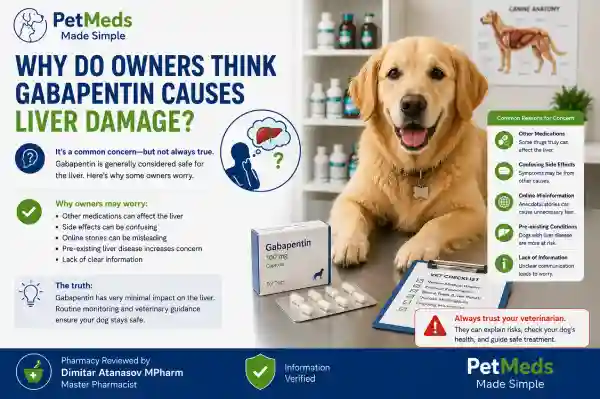
Timing.
Imagine this situation.
A twelve-year-old Golden Retriever begins gabapentin for severe arthritis.
Three months later routine blood work shows:
- ALT increased
- ALP increased
The owner immediately thinks:
“Gabapentin damaged my dog’s liver.”
But veterinarians know there are many other possibilities.
For example:
- age-related liver disease
- obesity
- chronic inflammation
- endocrine disease
- concurrent medications
- cancer
- gallbladder disease
- unrelated chronic hepatitis
Without additional investigation, it is impossible to know which factor is responsible.
This illustrates why correlation does not necessarily mean causation.
Can Older Dogs Be More Vulnerable?
Yes.
Age is one of the biggest factors veterinarians consider when evaluating the question “Can Gabapentin Damage the Liver in Dogs?”
Senior dogs are more likely to develop:
- chronic hepatitis
- liver nodules
- endocrine disorders
- obesity
- diabetes mellitus
- Cushing’s disease
- cancer
- chronic kidney disease
Any of these conditions may influence liver health independently of gabapentin.
For this reason, routine wellness blood work becomes increasingly important as dogs age.
Owners of senior pets may also wish to read:
- Can Senior Dogs Take Gabapentin Safely?
- Can Dogs Take Gabapentin Long-Term Safely?
- Can Gabapentin Affect Liver Enzymes in Dogs?
- Can Gabapentin Cause Weight Loss in Dogs?
- Why Does My Dog Sleep So Much on Gabapentin?
Is Liver Damage the Same as Elevated Liver Enzymes?
Absolutely not.
This is probably the single most important concept in this article.
Many owners hear:
“Your dog’s ALT is elevated.”
and immediately think:
“My dog’s liver is failing.”
Fortunately, these are very different situations.
Elevated liver enzymes are markers.
They tell veterinarians that liver cells may be stressed or irritated.
They do not automatically indicate permanent liver destruction.
In fact, many dogs with mild ALT or ALP elevations continue living perfectly normal lives while veterinarians simply monitor future blood work.
This is one reason the questions “Can Gabapentin Affect Liver Enzymes in Dogs?“ and “Can Gabapentin Damage the Liver in Dogs?” deserve separate articles—they address two different medical concerns and two different search intents.
Which Dogs Need Closer Liver Monitoring?
Although Can Gabapentin Damage the Liver in Dogs? usually has a reassuring answer, some dogs benefit from more frequent laboratory monitoring.
Examples include dogs with:
- previously diagnosed liver disease
- chronic hepatitis
- elevated liver enzymes before treatment
- long-term NSAID therapy
- seizure medications
- endocrine disorders
- obesity
- advanced age
These patients often undergo periodic blood testing regardless of whether gabapentin is prescribed.
The goal is to monitor overall health rather than to look for a specific gabapentin complication.
Why Veterinarians Evaluate More Than One Blood Test
Veterinarians almost never make important treatment decisions after seeing only one abnormal laboratory result.
Instead, they evaluate:
- previous blood work
- current medications
- physical examination findings
- appetite
- body weight
- hydration
- clinical symptoms
- laboratory trends over time
A dog with one mildly elevated ALT value is managed very differently from a dog with rapidly worsening liver values, jaundice, vomiting, and poor appetite.
Looking at the entire clinical picture helps prevent unnecessary medication changes while ensuring genuine liver disease is recognized as early as possible.
Can Dogs With Liver Disease Safely Take Gabapentin?
One of the most common follow-up questions after asking “Can Gabapentin Damage the Liver in Dogs?” is whether dogs that already have liver disease can safely receive the medication.
In many cases, yes.
Gabapentin is often considered an appropriate option for dogs with liver disease because it is not known to be a common cause of hepatotoxicity, and much of the drug is eliminated through the kidneys rather than relying on extensive hepatic metabolism.
However, treatment decisions should always be individualized.
Veterinarians consider several factors before prescribing gabapentin to dogs with liver disease, including:
- the severity of liver dysfunction
- kidney function
- current medications
- neurological status
- body weight
- appetite
- hydration
For some dogs, gabapentin may actually be a safer option than medications with a higher risk of liver toxicity.
Owners may also find these PMMS articles helpful:
- Can Gabapentin Affect Liver Enzymes in Dogs?
- Can Dogs Take Gabapentin Long-Term Safely?
- Can Dogs Take Gabapentin With NSAIDs?
- Gabapentin for Dogs: Vet Guidelines, Uses, Dosage & Safety
How Is Gabapentin Processed by the Liver and Kidneys?
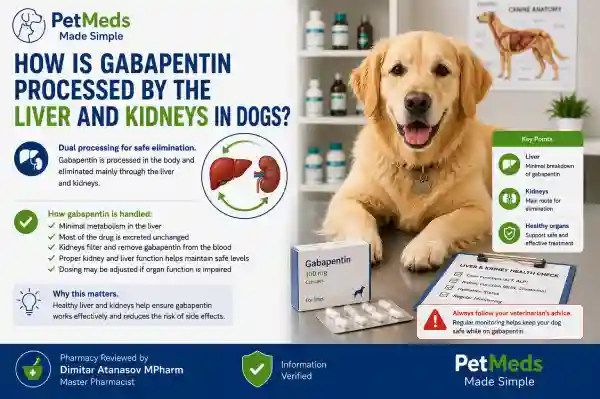
Understanding how gabapentin moves through the body helps answer the question “Can Gabapentin Damage the Liver in Dogs?”
Unlike many veterinary medications that undergo extensive hepatic metabolism, gabapentin has a relatively simple pharmacokinetic profile.
After administration:
- it is absorbed from the gastrointestinal tract
- enters the bloodstream
- reaches the nervous system
- reduces abnormal nerve activity
- helps control neuropathic pain and seizures
- is eliminated primarily through the kidneys
Because the liver is not responsible for extensively metabolizing gabapentin, the medication places relatively little metabolic burden on healthy liver tissue.
This is one reason veterinarians commonly prescribe it for chronic pain management.
Which Dogs May Need Dose Adjustments?
Although liver damage from gabapentin is uncommon, some patients still require individualized treatment.
Examples include:
- dogs with advanced kidney disease
- geriatric dogs
- dogs receiving multiple neurological medications
- severely debilitated patients
- dogs recovering from major surgery
In these situations, veterinarians may adjust:
- dosage
- dosing interval
- monitoring schedule
rather than discontinuing gabapentin altogether.
Which Medications Are More Likely to Damage the Liver Than Gabapentin?
This comparison helps owners place gabapentin into proper perspective.
Several commonly used veterinary medications have a greater potential to affect liver health than gabapentin.
| Medication | Liver Monitoring Commonly Recommended? |
|---|---|
| Phenobarbital | ✅ Yes |
| Carprofen | ✅ Sometimes |
| Deracoxib | ✅ Sometimes |
| Ketoconazole | ✅ Yes |
| Azathioprine | ✅ Yes |
| Gabapentin | Usually low concern |
This does not mean these medications are unsafe.
Rather, it highlights that veterinarians already know which drugs require closer liver monitoring.
Gabapentin is generally not placed in the highest-risk category for hepatotoxicity.
Owners may also wish to read:
- Can Seizure Medication Damage the Liver?
- Can Dogs Take Gabapentin and Tramadol Together?
- Can Dogs Take Gabapentin With NSAIDs?
Can Multiple Medications Increase the Risk?
Yes.
Many dogs receiving gabapentin are also prescribed medications for:
- arthritis
- seizures
- anxiety
- infections
- endocrine disease
When several medications are used together, veterinarians evaluate the entire treatment plan, not just gabapentin.
This includes reviewing:
- potential drug interactions
- cumulative liver burden
- kidney function
- laboratory trends
- hydration status
The goal is to maximize pain relief while minimizing unnecessary risk.
How Do Veterinarians Diagnose Liver Damage in Dogs Taking Gabapentin?
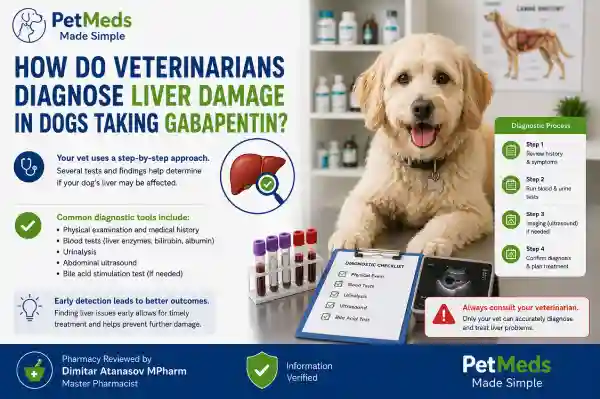
One of the biggest misconceptions surrounding “Can Gabapentin Damage the Liver in Dogs?” is that a single blood test provides the answer.
In reality, diagnosing liver disease requires much more information.
Veterinarians typically begin with:
Medical History
Questions commonly include:
- When did symptoms begin?
- When was gabapentin started?
- Has the dose recently changed?
- Is your dog receiving NSAIDs?
- Has vomiting occurred?
- Has appetite changed?
- Has weight changed?
- Have previous blood tests been abnormal?
This history often provides valuable diagnostic clues.
Physical Examination
A complete examination evaluates:
- body condition
- muscle condition
- hydration
- abdominal pain
- liver size (when detectable)
- gum color
- body temperature
- neurological status
Clinical findings help determine whether additional testing is necessary.
Laboratory Testing
If liver disease is suspected, veterinarians commonly recommend:
| Test | Why It Is Performed |
|---|---|
| ALT | Detect liver cell injury |
| ALP | Evaluate biliary response |
| AST | Assess liver and muscle injury |
| GGT | Evaluate bile duct function |
| Bilirubin | Assess bile flow and liver function |
| Albumin | Evaluate liver protein production |
| CBC | Detect infection or inflammation |
| Chemistry Panel | Assess overall organ function |
These results are interpreted together rather than individually.
Can Imaging Help Identify Liver Disease?
Yes.
If blood work suggests persistent abnormalities, additional imaging may be recommended.
Common options include:
- abdominal ultrasound
- abdominal radiographs
- advanced imaging in selected cases
Ultrasound is particularly valuable because it allows veterinarians to evaluate:
- liver size
- liver texture
- gallbladder
- bile ducts
- surrounding abdominal organs
Imaging often reveals conditions that blood work alone cannot identify.
Can Liver Damage Be Reversed?
The answer depends on the underlying cause.
Some conditions improve significantly after:
- treating infection
- adjusting medications
- correcting dehydration
- managing endocrine disease
- improving nutrition
Other chronic liver diseases may require lifelong management rather than complete resolution.
The important point is that early diagnosis usually provides the best opportunity for successful treatment.
Which Symptoms Suggest True Liver Disease?
Owners searching “Can Gabapentin Damage the Liver in Dogs?” should know which clinical signs deserve immediate veterinary attention.
Possible warning signs include:
- yellow gums or eyes (jaundice)
- repeated vomiting
- persistent loss of appetite
- progressive weight loss
- severe lethargy
- abdominal swelling
- behavioral changes
- seizures unrelated to previous neurological disease
- dark urine
- pale stools
These signs should never be ignored, regardless of whether gabapentin is being administered.
Owners may also wish to review:
- Can Gabapentin Affect Liver Enzymes in Dogs?
- Can Gabapentin Cause Weight Loss in Dogs?
- Can Gabapentin Cause Weight Gain in Dogs?
- Can Gabapentin Cause Muscle Tremors in Dogs?
- Can Gabapentin Cause Excessive Drooling in Dogs?
- Why Is My Dog Vomiting After Gabapentin?
- Can Dogs Overdose on Gabapentin?
- Can Dogs Suddenly Stop Gabapentin?
Can Liver Damage Be Prevented While Taking Gabapentin?
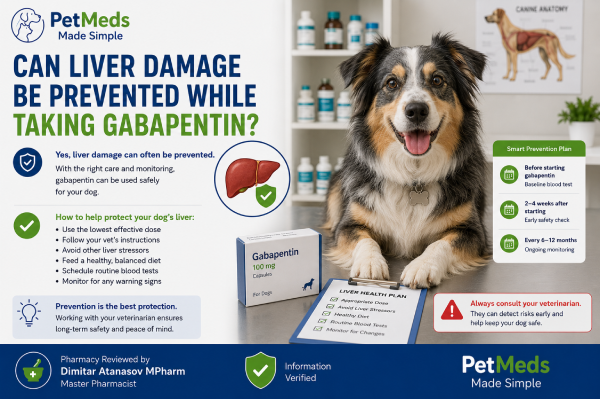
One of the most reassuring aspects of answering “Can Gabapentin Damage the Liver in Dogs?” is that, for the overwhelming majority of dogs, there is no evidence that gabapentin routinely causes progressive liver damage when prescribed appropriately.
That does not mean liver health should be ignored.
Instead, prevention focuses on:
- using the correct dose
- monitoring overall health
- recognizing early warning signs
- identifying unrelated liver disease before it progresses
Routine veterinary monitoring is often far more valuable than simply stopping an effective medication.
How Can Owners Protect Their Dog’s Liver During Long-Term Gabapentin Therapy?
Owners frequently ask whether they can actively reduce the risk of liver problems while their dog is taking gabapentin.
The answer is yes, although the focus should be on maintaining overall health rather than treating gabapentin as a “dangerous liver drug.”
Veterinarians generally recommend:
- administering every dose exactly as prescribed
- avoiding accidental double doses
- keeping all follow-up appointments
- maintaining a healthy body weight
- ensuring adequate hydration
- informing the veterinarian about every medication and supplement
- monitoring appetite and activity
- scheduling routine wellness blood work for senior dogs
These simple steps help identify medical problems early, whether they are related to the liver or not.
Owners may also find these PMMS guides helpful:
- Can Dogs Take Gabapentin Long-Term Safely?
- Can Gabapentin Affect Liver Enzymes in Dogs?
- Can Dogs Take Gabapentin With NSAIDs?
Should Dogs Taking Gabapentin Receive Routine Blood Tests?
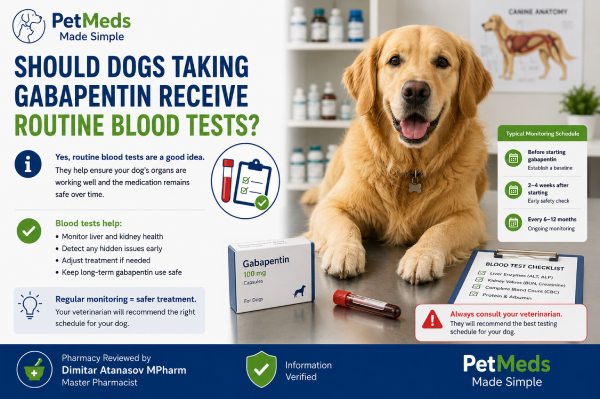
One of the most common questions owners ask after searching “Can Gabapentin Damage the Liver in Dogs?” is whether blood work should become part of long-term treatment.
For many dogs, especially healthy younger patients receiving gabapentin alone, frequent blood testing may not be necessary.
However, veterinarians often recommend periodic monitoring for:
- senior dogs
- dogs receiving long-term therapy
- dogs taking multiple medications
- dogs with liver disease
- dogs with kidney disease
- dogs with endocrine disorders
Routine laboratory testing helps identify changes before clinical signs become obvious.
Importantly, these blood tests evaluate overall health, not simply gabapentin safety.
Can Diet Support Liver Health?
A nutritious, balanced diet plays an important role in maintaining liver function throughout a dog’s life.
Most healthy dogs taking gabapentin do not require a special liver diet.
However, veterinarians commonly recommend:
- maintaining an ideal body condition
- avoiding obesity
- feeding a complete and balanced commercial diet
- ensuring adequate water intake
- avoiding unnecessary supplements unless recommended
Dogs diagnosed with chronic liver disease may require prescription hepatic diets, but these decisions should always be made by the treating veterinarian.
Should Liver Supplements Be Given?
Many owners wonder whether supplements such as:
- SAMe
- milk thistle (silybin)
- vitamin E
- omega-3 fatty acids
should be started automatically.
The answer is:
Not necessarily.
While some supplements are used in veterinary medicine for selected liver disorders, they are not routinely recommended simply because a dog is taking gabapentin.
Veterinarians first determine whether liver disease is actually present before recommending supportive therapy.
Can Dogs Recover From Mild Liver Injury?
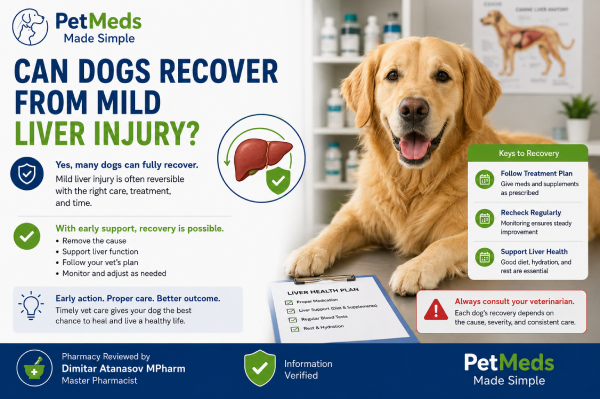
Fortunately, many dogs can.
The liver has an impressive ability to regenerate when the underlying cause is identified early.
Recovery depends on factors such as:
- the cause of injury
- severity of disease
- age
- nutritional status
- concurrent illnesses
- early veterinary intervention
Many mild abnormalities improve after appropriate treatment of the underlying condition.
What Is the Overall Prognosis?
One of the reasons veterinarians continue prescribing gabapentin so frequently is its overall safety profile.
For most healthy dogs:
the prognosis is excellent.
Excellent Prognosis
- healthy dogs receiving prescribed doses
- temporary mild liver enzyme elevations unrelated to liver failure
- dogs with well-controlled chronic pain
- dogs receiving appropriate monitoring
More Guarded Prognosis
- advanced chronic liver disease
- liver cancer
- severe hepatitis
- multiple concurrent illnesses
- advanced geriatric patients with several chronic diseases
In these cases, prognosis depends primarily on the underlying liver disorder—not on gabapentin itself.
Veterinarian Takeaway
Can Gabapentin Damage the Liver in Dogs?
Based on current veterinary evidence, clinically significant liver damage caused directly by gabapentin appears to be uncommon.
Most dogs tolerate the medication very well, even during long-term treatment.
When abnormal liver values are discovered, veterinarians evaluate:
- the dog’s complete medical history
- concurrent medications
- underlying diseases
- laboratory trends
- physical examination findings
before concluding that gabapentin is responsible.
In many cases, another medical condition explains the abnormalities.
Routine veterinary monitoring allows dogs to benefit from effective pain management while ensuring liver disease is detected as early as possible.
Bottom Line
Can Gabapentin Damage the Liver in Dogs? Current scientific evidence suggests that gabapentin is not considered a common cause of clinically significant liver damage in dogs.
Although liver disease may develop while a dog is receiving gabapentin, the medication itself is rarely the primary cause.
Older age, chronic illness, obesity, endocrine disorders, infections, cancer, and other medications are often much more important contributors to liver disease than gabapentin.
If your dog’s blood work changes during treatment, your veterinarian will evaluate the complete clinical picture rather than assuming the medication is responsible.
For most dogs, gabapentin remains one of the safest and most valuable medications available for chronic pain, neuropathic pain, and seizure management.
Frequently Asked Questions – Can Gabapentin Cause Permanent Liver Damage in Dogs?
Can gabapentin damage the liver in dogs?
Current veterinary evidence indicates that clinically significant liver damage caused directly by gabapentin is uncommon. Most dogs tolerate the medication well when it is prescribed appropriately.
Can dogs with liver disease take gabapentin?
Often, yes.
Many dogs with liver disease can safely receive gabapentin, although veterinarians may recommend individualized dosing and periodic monitoring depending on the severity of the disease.
Can gabapentin increase ALT or ALP?
Mild liver enzyme elevations may occasionally be detected during treatment, but they do not automatically indicate that gabapentin has damaged the liver.
Should liver enzymes be checked during long-term treatment?
Many veterinarians recommend periodic blood work for senior dogs or those receiving long-term therapy, particularly when additional medical conditions are present.
Is gabapentin safer for the liver than some other medications?
Generally, yes.
Compared with certain medications such as phenobarbital or some NSAIDs, gabapentin is considered to have a relatively favorable hepatic safety profile.
Can liver damage be reversed?
Some forms of liver injury improve significantly after the underlying cause is identified and treated. Early diagnosis generally provides the best prognosis.
What symptoms may suggest liver disease?
Possible warning signs include:
jaundice
vomiting
poor appetite
weight loss
abdominal swelling
lethargy
behavioral changes
These symptoms require prompt veterinary evaluation.
Should I stop gabapentin if liver enzymes become elevated?
No.
Never discontinue gabapentin without consulting your veterinarian. Elevated liver enzymes may have many causes unrelated to the medication.
Can combining medications increase liver risk?
Yes.
Current veterinary literature continues to support gabapentin as a medication with a favorable safety profile for most dogs when used under veterinary supervision.
Sources
- Plumb DC. Plumb’s Veterinary Drug Handbook. Latest Edition.
- Papich MG. Saunders Handbook of Veterinary Drugs: Small and Large Animal.
- Boothe DM. Small Animal Clinical Pharmacology and Therapeutics.
- Grimm KA, Lamont LA, Tranquilli WJ. Veterinary Anesthesia and Analgesia.
- Merck Veterinary Manual – Hepatic Disease in Dogs.
- Merck Veterinary Manual – Interpretation of Liver Enzyme Abnormalities.
- AAHA 2022 Pain Management Guidelines for Dogs and Cats.
- International Veterinary Epilepsy Task Force Consensus Statement.
- Veterinary Information Network (VIN).
- BSAVA Manual of Canine and Feline Clinical Pathology.
- Frontiers in Veterinary Science – Drug Safety and Hepatic Disease in Dogs.
- JAVMA – Clinical Pathology and Liver Disease in Dogs.
Medical Review Statement
This article was written by Dimitar Georgiev Atanasov, MPharm, scientifically reviewed by Gergana Krasimirova Atanasova, MPharm, and independently veterinary reviewed by Dr. Valcho Georgiev Valchev, DVM. It is intended for educational purposes only and should never replace professional veterinary diagnosis, laboratory interpretation, or individualized treatment recommendations.
Image Disclosure
Image Disclosure: Some images used in this article may be AI-generated to illustrate veterinary concepts, anatomy, and medication safety. They are intended solely for educational purposes and should not replace professional veterinary advice.