
Quick Answer
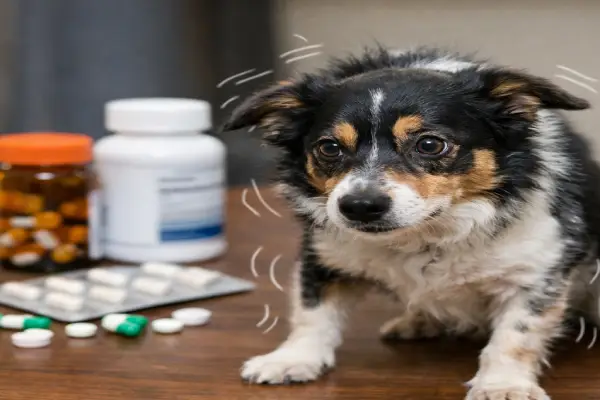
Can Dogs Exercise After Taking Gabapentin? Yes but the answer depends more on your dog’s underlying medical condition than on gabapentin itself. Many dogs can safely enjoy light activity while taking gabapentin, but strenuous exercise may not be appropriate after surgery, spinal injuries, severe arthritis, or neurological disease. Your veterinarian’s activity recommendations should always take priority over how energetic your dog appears.
Why This Question Is More Complicated Than It Seems
Many owners expect gabapentin to make their dog sleepy all day.
Instead, something surprising often happens.
A few hours after receiving the medication, the dog suddenly seems:
- brighter
- happier
- eager to go outside
- interested in playing
- ready for a long walk
Naturally, owners begin asking:
“Can Dogs Exercise After Taking Gabapentin?”
It seems like a simple question.
In reality, veterinarians usually answer it with another question:
“Why is your dog taking gabapentin?”
That single detail changes everything.
A dog recovering from orthopedic surgery has very different exercise recommendations than a dog receiving gabapentin for chronic arthritis or anxiety before veterinary visits.
Understanding this difference helps owners avoid one of the most common recovery mistakes.
Throughout this article, you may also find these PMMS guides helpful:
- Gabapentin for Dogs: Vet Guidelines, Uses, Dosage & Safety
- Can Dogs Take Gabapentin for Arthritis Forever?
- Can Dogs Take Gabapentin Long-Term Safely?
- Can Dogs Take Gabapentin Every 8 Hours?
- Can Puppies Take Gabapentin Safely?
- Can Dogs Take Tramadol and Gabapentin Together?
- Can Dogs Miss a Dose of Gabapentin?
Can Dogs Exercise After Taking Gabapentin?
Feeling Better Does Not Always Mean Full Recovery

One of the biggest misconceptions surrounding “Can Dogs Exercise After Taking Gabapentin?” is believing that improved comfort means complete healing.
Gabapentin helps reduce pain.
It does not repair:
- damaged joints
- torn ligaments
- fractured bones
- spinal injuries
- surgical incisions
As pain decreases, many dogs naturally become more active.
While this is encouraging, it can also increase the risk of doing too much too soon.
Veterinarians often remind owners:
Improved comfort should never be mistaken for complete recovery.
Why Gabapentin May Make Dogs Want to Move More
Pain naturally limits activity.
When pain decreases, dogs often regain confidence.
Owners may notice their dog:
- walking farther
- climbing stairs more willingly
- asking to play
- running toward the door
- showing renewed enthusiasm during walks
These changes are often positive.
However, the medication may allow dogs to feel better before injured tissues have fully healed.
This is why activity recommendations are based on the underlying medical condition rather than your dog’s apparent energy level.
Why Veterinarians Sometimes Recommend Rest Even When Dogs Feel Better
This is one of the most important concepts in recovery medicine.
Imagine a dog recovering from knee surgery.
Three days after the procedure, gabapentin significantly reduces discomfort.
The dog suddenly begins:
- jumping on furniture
- chasing toys
- running across the yard
From the owner’s perspective, this looks wonderful.
From the surgeon’s perspective, it may be concerning.
Although pain has improved, the surgical repair is still healing.
Excessive activity during this stage may increase the risk of complications or delay recovery.
This is why veterinarians often recommend controlled activity instead of unrestricted exercise.
How the Underlying Condition Changes Exercise Recommendations
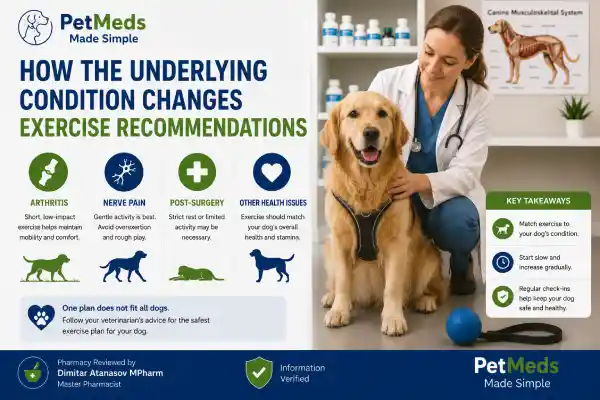
The answer to “Can Dogs Exercise After Taking Gabapentin?” depends largely on why the medication was prescribed.
For example:
A dog receiving gabapentin for:
- postoperative recovery
- spinal disease
- severe orthopedic injury
may require strict exercise restriction.
Meanwhile, a dog taking gabapentin for:
- chronic arthritis
- long-term neuropathic pain
may actually benefit from regular, low-impact exercise as part of its treatment plan.
The medication itself is only one part of the overall picture.
When Gentle Walking Is Actually Beneficial
Not every dog taking gabapentin should remain completely inactive.
For many chronic conditions, controlled movement is encouraged.
Veterinarians often recommend gentle leash walks because they may help:
- maintain muscle strength
- support joint flexibility
- improve circulation
- reduce stiffness
- encourage normal mobility
- promote healthy weight management
The emphasis is on controlled activity rather than vigorous exercise.
Walking calmly on a leash is very different from running freely at a dog park.
Why Arthritis Often Requires Regular Movement
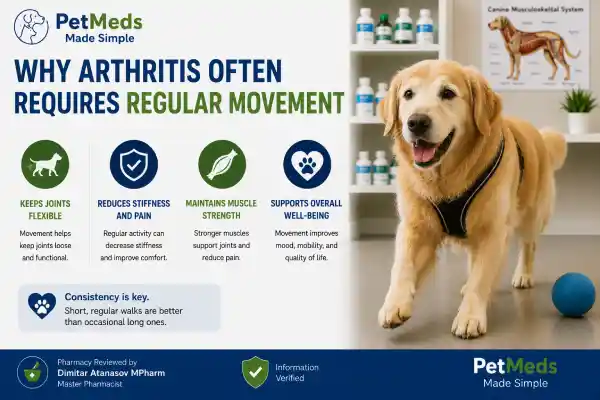
Dogs living with chronic arthritis frequently benefit from maintaining a consistent exercise routine.
Completely avoiding movement may actually contribute to:
- muscle loss
- joint stiffness
- reduced mobility
- weight gain
- worsening discomfort over time
Instead, veterinarians often recommend:
- shorter walks
- more frequent walks
- low-impact exercise
- gradual activity increases
- avoiding sudden bursts of intense exercise
Combined with appropriate pain management, this approach helps many arthritic dogs remain active for years.
Not Every Form of Exercise Carries the Same Risk
When owners hear the word exercise, they often think of a single activity.
Veterinarians think differently.
For example:
Lower-risk activities may include:
- slow leash walks
- gentle rehabilitation exercises
- supervised mobility exercises
Higher-impact activities may include:
- chasing balls
- rough play with other dogs
- jumping from furniture
- running on slippery surfaces
- intense hiking
- repetitive jumping
The safest activity depends on your dog’s diagnosis, recovery stage, and overall treatment plan.
Recovery Plans Should Always Come Before Enthusiasm
One of the most rewarding moments for owners is seeing their dog become playful again.
However, enthusiasm should never replace the recovery plan developed by your veterinarian.
Many dogs become more active simply because gabapentin has improved their comfort not because the underlying problem has completely resolved.
Following the recommended exercise restrictions during healing often has a greater impact on long-term recovery than increasing activity too soon.
When Rest Is More Important Than Exercise
Although regular movement benefits many dogs, there are situations where rest plays a much larger role in recovery than exercise.
For example, veterinarians commonly recommend restricting activity after:
- orthopedic surgery
- fracture repair
- cruciate ligament injuries
- spinal disc disease
- severe muscle or tendon injuries
- neurological trauma
During these periods, gabapentin helps improve comfort, but it should not be viewed as permission to resume normal activity immediately.
Healing tissues need time to regain strength, regardless of how comfortable the dog appears.
Can Dogs Run After Taking Gabapentin?
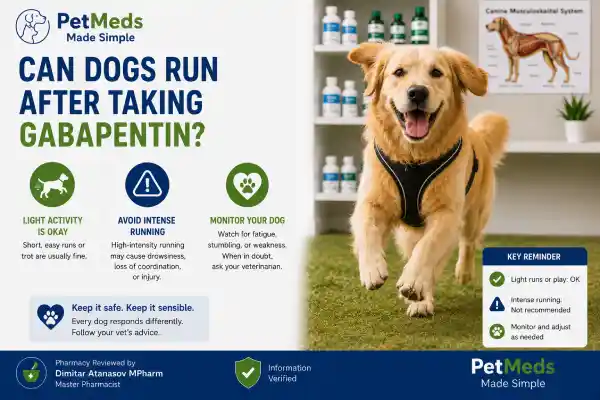
Running is very different from walking.
Many owners ask:
“If my dog seems comfortable after taking gabapentin, can we go for a run?”
The answer depends almost entirely on why the medication was prescribed.
For dogs recovering from surgery or orthopedic injuries, running is usually discouraged until the veterinarian confirms adequate healing.
Running places considerably greater stress on:
- joints
- muscles
- ligaments
- tendons
- healing surgical repairs
Even dogs that appear pain-free may still have tissues that remain vulnerable to reinjury.
Can Dogs Play With Other Dogs?
Social play is healthy for many dogs, but it can also be unpredictable.
A calm walk is very different from an energetic play session involving:
- chasing
- jumping
- wrestling
- sudden turns
- sprinting
For dogs recovering from injuries, these rapid movements may place excessive strain on healing tissues.
Veterinarians often recommend delaying off-leash play until recovery is progressing as expected.
How Different Medical Conditions Change Activity Recommendations
One reason veterinarians avoid giving a universal answer is that different diseases require different recovery plans.
Dogs Recovering From Surgery
The priority is protecting the surgical repair.
Controlled leash walks are often encouraged, while running, jumping, and rough play are usually restricted.
Dogs With Chronic Arthritis
Moderate, regular movement is often one of the most beneficial parts of treatment.
Long periods of complete inactivity may actually worsen stiffness and reduce muscle strength.
Dogs With Neuropathic Pain
Exercise recommendations vary depending on the underlying neurological condition.
Some dogs benefit from rehabilitation exercises, while others require stricter activity limitations.
Dogs Taking Gabapentin Before Veterinary Visits
When gabapentin is prescribed to reduce anxiety before appointments, activity recommendations usually depend on the dog’s level of sedation rather than an orthopedic injury.
If the dog appears sleepy or unsteady, vigorous exercise should be postponed until normal coordination returns.
Why Sedation Can Increase Injury Risk
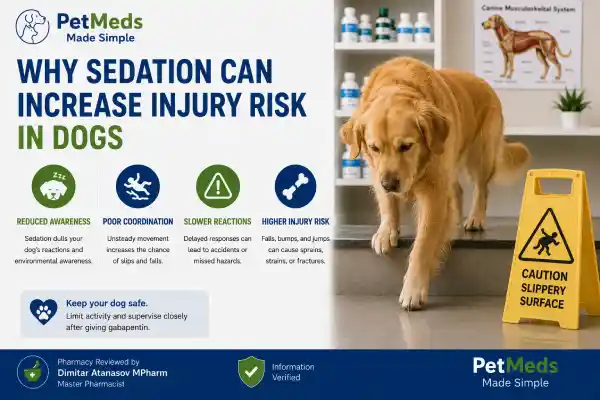
Although many dogs tolerate gabapentin extremely well, some become temporarily:
- sleepy
- less coordinated
- slower to react
- mildly wobbly
If these effects occur, vigorous activity may increase the likelihood of:
- slipping
- falling
- missing steps
- awkward landings
- muscle strains
For this reason, owners should observe how their dog responds before encouraging more demanding exercise.
If your dog becomes unusually sleepy after treatment, our guide Why Does Gabapentin Cause Sedation in Dogs? explains why this happens and when it should be discussed with your veterinarian.
Signs Your Dog May Be Doing Too Much
Improvement does not always occur in a straight line.
Sometimes owners notice their dog appears comfortable during activity but becomes sore afterward.
Watch for signs such as:
- increased limping after walks
- reluctance to stand later in the day
- excessive fatigue
- stiffness after resting
- whining during movement
- decreased willingness to exercise the following day
These changes may suggest that the current activity level should be reassessed.
Keeping a simple activity diary can help identify patterns that are useful during follow-up veterinary visits.
Safe Activities Versus Activities That May Need to Wait
The table below illustrates why veterinarians often recommend gradually increasing activity rather than returning immediately to normal exercise.
| Usually Lower-Impact Activities | Activities Often Delayed During Recovery |
|---|---|
| Short leash walks | Running beside a bicycle |
| Controlled rehabilitation exercises | Fetch with repeated sprinting |
| Slow neighborhood walks | Rough play with other dogs |
| Gentle range-of-motion exercises | Jumping onto furniture |
| Supervised walking on level ground | Hiking over uneven terrain |
| Light indoor enrichment games | High-speed agility or obstacle courses |
The exact recommendations always depend on your dog’s diagnosis and stage of recovery.
Why Rehabilitation Is Different From Exercise
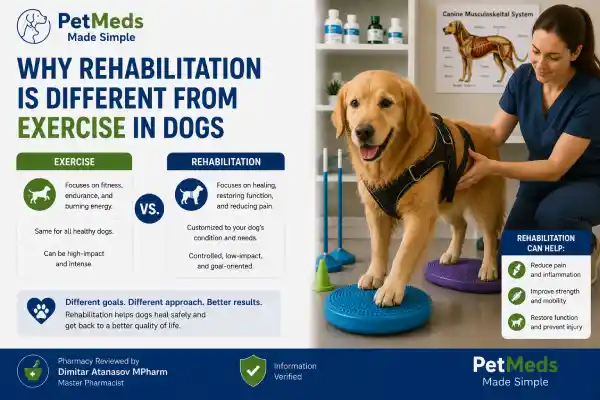
Owners sometimes use the words exercise and rehabilitation interchangeably.
Veterinarians do not.
Rehabilitation is carefully planned to improve recovery while minimizing unnecessary strain.
It may include:
- controlled leash walking
- balance exercises
- underwater treadmill therapy
- therapeutic stretching
- professionally supervised strengthening exercises
These activities are designed to support healing—not simply burn energy.
For many orthopedic and neurological patients, rehabilitation provides greater long-term benefits than unrestricted exercise.
Why Follow-Up Visits Matter Before Increasing Activity
One of the most common mistakes owners make is deciding when their dog is “ready” based solely on appearance.
Instead, veterinarians evaluate:
- healing progress
- mobility
- muscle strength
- pain control
- neurological function
- joint stability
These examinations help determine when it is appropriate to gradually increase activity.
Following professional guidance often reduces the risk of setbacks and supports a smoother recovery.
When Can Dogs Return to Normal Exercise?
One of the most common questions owners ask is not simply:
“Can Dogs Exercise After Taking Gabapentin?”
Instead, they want to know:
“When can my dog go back to normal?”
Unfortunately, there is no single timeline that applies to every patient.
A veterinarian may recommend returning to normal activity only after considering:
- the original diagnosis
- healing progress
- pain control
- muscle strength
- joint stability
- neurological recovery
- follow-up examination findings
Some dogs return to normal exercise within a few weeks, while others recovering from orthopedic surgery or spinal disease may require a much longer rehabilitation period.
Can Owners Increase Activity on Their Own?
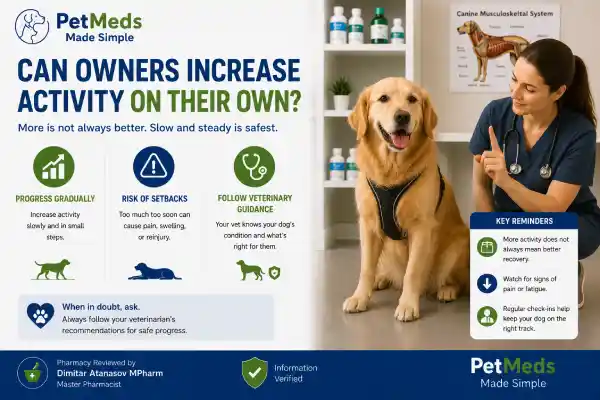
It is tempting to increase exercise once a dog begins acting like its usual self.
However, feeling better does not always mean the underlying condition has fully resolved.
For example, a dog recovering from cruciate ligament surgery may:
- stop limping
- become playful
- ask for longer walks
- run toward the door
Even though these changes are encouraging, the surgical repair may still be healing.
Increasing activity too quickly could delay recovery or even result in reinjury.
Whenever owners are uncertain, it is safer to ask their veterinarian before making significant changes to the exercise plan.
Why Recovery Usually Happens in Stages
Veterinary rehabilitation is rarely an “all-or-nothing” process.
Instead, activity is usually increased gradually.
A typical progression may include:
- Strict rest with brief leash walks
- Controlled short walks
- Longer leash walks
- Gentle strengthening exercises
- Low-impact play
- Return to normal daily activity
- Gradual return to vigorous exercise if appropriate
Moving through these stages helps reduce unnecessary stress on healing tissues while allowing veterinarians to monitor progress.
Why Every Improvement Should Be Evaluated Carefully
One of the biggest mistakes owners can make is assuming that increased energy always means complete recovery.
Gabapentin often improves comfort.
As discomfort decreases, dogs naturally become more active.
This is exactly what owners hope to see.
However, increased activity should be interpreted alongside:
- physical examination findings
- follow-up imaging when necessary
- orthopedic stability
- neurological function
- overall healing progress
The medication improves comfort, but the veterinarian determines when the body is ready for greater activity.
Can Exercise Improve the Benefits of Gabapentin?
For many chronic conditions, yes.
Gabapentin works best as part of a comprehensive treatment plan rather than as the only therapy.
Depending on the diagnosis, veterinarians may combine medication with:
- weight management
- rehabilitation therapy
- controlled exercise
- joint supplements when appropriate
- environmental modifications
- other pain medications
This multimodal approach often provides better long-term results than relying on medication alone.
Owners interested in long-term management may also find our articles Can Dogs Take Gabapentin for Arthritis Forever?, Can Dogs Stay Comfortable on Gabapentin for Years?, and Can Dogs Take Gabapentin Every 8 Hours? helpful for understanding how veterinarians build individualized treatment plans.
Practical Tips for Safe Exercise While Taking Gabapentin
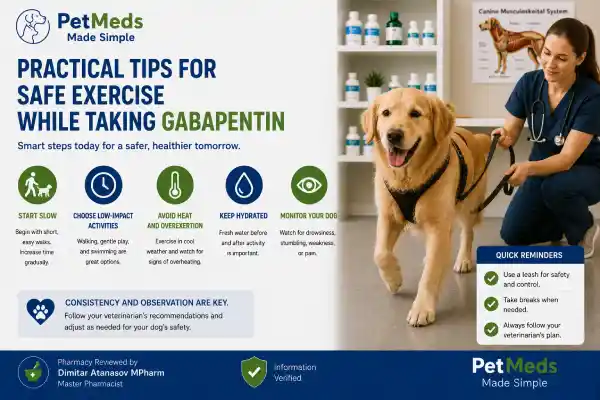
If your veterinarian has approved activity, several simple precautions can help reduce the risk of injury.
Consider:
- using a leash until your dog is cleared for unrestricted activity
- avoiding slippery floors whenever possible
- preventing repeated jumping on furniture
- increasing walk duration gradually
- watching carefully for signs of fatigue
- allowing adequate rest between exercise sessions
- keeping follow-up appointments as scheduled
These simple measures often support safer recovery while allowing dogs to remain comfortably active.
Veterinarian Takeaway
Can Dogs Exercise After Taking Gabapentin?
For many dogs, yes but the type and amount of exercise should always match the underlying medical condition rather than the medication itself.
Gabapentin frequently improves comfort, allowing dogs to become more active.
However, improved comfort does not necessarily mean complete healing has occurred.
Whether a dog should rest, take short leash walks, participate in rehabilitation, or return to unrestricted exercise depends on:
- the diagnosis
- stage of recovery
- pain control
- physical examination findings
- veterinary recommendations
Following the recovery plan is usually far more important than focusing on the medication alone.
Bottom Line
Can Dogs Exercise After Taking Gabapentin? Yes, many dogs can safely exercise while taking gabapentin, but the safest level of activity depends on why the medication was prescribed and how far the underlying condition has progressed.
For some dogs, gentle daily walks are an essential part of recovery.
For others, especially those recovering from surgery or spinal injuries, temporary activity restriction remains critical despite improved comfort.
The safest approach is to allow your veterinarian—not the medication alone—to determine when your dog is ready for increased exercise.
A gradual return to activity, combined with regular follow-up examinations and consistent medication use, gives most dogs the best opportunity for a successful recovery.
Frequently Asked Questions
Can dogs exercise after taking gabapentin?
Yes. Many dogs can safely perform appropriate exercise while taking gabapentin, but activity recommendations depend primarily on the underlying medical condition.
Can my dog go for a walk after taking gabapentin?
In many cases, yes. Controlled leash walks are commonly recommended for dogs recovering from many orthopedic and chronic pain conditions.
Is running safe after taking gabapentin?
Not always. Dogs recovering from surgery, fractures, or spinal disease often need to avoid running until cleared by their veterinarian.
Can gabapentin make my dog too sleepy to exercise?
Some dogs experience temporary sleepiness or mild coordination changes after taking gabapentin. If this occurs, strenuous activity should be postponed until normal alertness returns.
Why does my dog want to play after taking gabapentin?
Gabapentin often reduces pain, allowing dogs to feel more comfortable. Increased energy does not necessarily mean the underlying injury has healed completely.
Can exercise improve arthritis while my dog takes gabapentin?
Yes. Controlled, low-impact exercise is frequently an important part of long-term arthritis management alongside medication.
Should I stop my dog from jumping if they seem comfortable?
If your veterinarian has recommended activity restrictions, yes. Comfort does not always reflect complete tissue healing.
When should I ask my veterinarian before increasing exercise?
Consult your veterinarian after surgery, spinal disease, fractures, neurological disorders, or whenever you’re unsure whether your dog’s recovery has progressed enough for additional activity.
Sources
- Plumb DC. Plumb’s Veterinary Drug Handbook. Latest Edition.
- Papich MG. Saunders Handbook of Veterinary Drugs: Small and Large Animal.
- 2022 AAHA Pain Management Guidelines for Dogs and Cats.
- Merck Veterinary Manual – Pain Management in Dogs.
- Merck Veterinary Manual – Gabapentin.
- American College of Veterinary Surgeons (ACVS). Postoperative Care Guidelines.
- BSAVA Small Animal Formulary.
- Veterinary Information Network (VIN).
- WSAVA Global Pain Council Guidelines.
- Frontiers in Veterinary Science. Rehabilitation and Pain Management in Companion Animals.
Medical Review Statement
This article was written by Dimitar Georgiev Atanasov, MPharm, scientifically reviewed by Gergana Krasimirova Atanasova, MPharm, and independently veterinary reviewed by Dr. Valcho Georgiev Valchev, DVM. It is intended for educational purposes only and should not replace individualized veterinary diagnosis, rehabilitation planning, medication management, or professional treatment recommendations.
Image Disclosure
Image Disclosure: Some images used in this article may be AI-generated to illustrate veterinary concepts, rehabilitation techniques, medication safety, and canine recovery. They are intended for educational purposes only and should not replace professional veterinary advice.