
Quick Answer
Why Does My Dog Whine Before Medication Time? If your dog whines before medication time, the most common reason is that the medication’s effects are wearing off and the underlying pain, anxiety, or discomfort is returning. Some dogs learn to associate medication with relief and may anticipate their next dose. In other cases, whining can indicate inadequate pain control, medication tolerance, disease progression, or behavioral conditioning. Persistent whining should be discussed with your veterinarian, especially if it becomes more frequent or severe.
When Owners Commonly Ask This Question
Many owners notice a pattern.
Their dog seems comfortable for most of the day.
Then, shortly before the next scheduled dose, the dog starts:
- Whining
- Pacing
- Following family members
- Looking restless
- Panting
- Seeking attention
- Refusing to settle
The timing often seems too precise to be a coincidence.
Common owner questions include:
“Does my dog know medication time is coming?”
“Is the medication wearing off?”
“Is my dog in pain again?”
“Could my dog be dependent on the medication?”
“Should I give the medication earlier?”
Understanding why the behavior occurs is important because the answer can vary depending on the medication and the medical condition being treated.
Why Does My Dog Whine Before Medication Time?
Why Does My Dog Whine Before Medication Time?
The short answer is:
Because something changes as the medication level decreases.
That “something” may be:
- Pain returning
- Anxiety returning
- Inflammation returning
- Anticipation of relief
- Learned behavior
- Medication withdrawal effects
Not every dog whines for the same reason.
The Most Common Cause: The Medication Is Wearing Off
This is by far the most common explanation.
Most medications have a limited duration of action.
As drug levels gradually decline, symptoms that were previously controlled may begin to return.
Example
A dog with arthritis receives:
- Carprofen every 12 hours
The medication controls:
- Joint pain
- Inflammation
- Stiffness
Ten to twelve hours later:
- Joint discomfort increases
- Mobility worsens
- The dog becomes uncomfortable
The dog may begin whining before the next dose is due.
Signs the Medication May Be Wearing Off
| Sign | Common? |
|---|---|
| Whining | Yes |
| Restlessness | Yes |
| Limping | Yes |
| Difficulty standing | Yes |
| Panting | Yes |
| Seeking attention | Yes |
| Reduced activity | Yes |
In these situations, the whining is often a symptom of returning discomfort rather than a medication problem.
Is Whining Usually a Sign of Pain?

Very often, yes.
Pain is one of the most common reasons dogs vocalize before medication time.
Dogs frequently express pain through:
- Whining
- Crying
- Restlessness
- Panting
- Trembling
- Clingy behavior
Many owners notice similarities between this behavior and the symptoms discussed in:
- Why Is My Dog Crying Even After Pain Medication?
- Why Is My Dog Panting After Pain Medication?
- Why Is My Dog Still Limping After Medication?
- Why Is My Dog Weak After Pain Medication?
The common theme is discomfort.
How Pain Returns When Medication Wears Off
Pain rarely returns all at once.
Instead, owners may notice a gradual progression.
Pain Return Timeline
| Stage | What Owners Notice |
|---|---|
| Early | Mild restlessness |
| Mild | Whining begins |
| Moderate | Panting increases |
| Significant | Limping worsens |
| Severe | Difficulty settling or sleeping |
The earlier stages are often overlooked.
Whining may be the first clue that pain control is becoming inadequate.
Can Dogs Learn When Medication Time Is Coming?
Surprisingly, yes.
Dogs are exceptionally good at recognizing routines.
They often learn:
- Feeding schedules
- Walk schedules
- Bedtime schedules
- Medication schedules
Some dogs begin anticipating medication because they associate it with relief.
Learned Medication Anticipation
| Situation | Possible? |
|---|---|
| Dog recognizes pill bottle | Yes |
| Dog anticipates relief | Yes |
| Dog waits near owner | Yes |
| Dog becomes excited for medication | Yes |
| Dog understands clock time | No |
Dogs do not understand time like humans do.
However, they recognize patterns remarkably well.
Could My Dog Be Asking for Relief?

Sometimes.
This is particularly common in dogs with chronic pain.
Conditions frequently associated with this behavior include:
- Arthritis
- Hip dysplasia
- Elbow dysplasia
- Degenerative joint disease
- Intervertebral disc disease
- Cancer-related pain
The dog learns:
Medication = feeling better
When discomfort begins returning, they may seek help.
Which Medications Are Most Commonly Associated With This Problem?
Not every medication causes the same pattern.
Pain Medications
Most commonly associated:
- Carprofen
- Meloxicam
- Deracoxib
- Firocoxib
- Galliprant
- Tramadol
- Gabapentin
Anxiety Medications
Possible examples:
- Trazodone
- Alprazolam
- Diazepam
As effects fade, anxiety symptoms may reappear.
Comparison Table
| Medication Type | Whining Before Next Dose Possible? |
|---|---|
| NSAIDs | Yes |
| Gabapentin | Yes |
| Tramadol | Yes |
| Anxiety Medications | Yes |
| Antibiotics | Usually No |
Why Is Gabapentin Commonly Involved?
Gabapentin is one of the most frequently discussed medications on PMMS.
It is often used for:
- Chronic pain
- Nerve pain
- Arthritis
- Anxiety
As gabapentin levels decline, some dogs experience:
- Increased discomfort
- Increased anxiety
- Increased sensitivity to pain
This may cause:
- Whining
- Restlessness
- Clinginess
- Pacing
Related PMMS guides include:
- Why Does Gabapentin Stop Working in Dogs?
- Why Is My Dog Crying Despite Gabapentin?
- Why Is My Dog Panting After Gabapentin?
- What Happens If Dogs Suddenly Stop Gabapentin?
- Can Dogs Become Addicted to Gabapentin?
Can Medication Tolerance Cause Whining?
Yes.
Tolerance occurs when the body becomes less responsive to a medication over time.
What Happens?
Initially:
- Medication provides strong relief
Months later:
- Same dose provides less relief
Owners may notice symptoms returning earlier than before.
Signs That Tolerance May Be Developing
| Sign | Possible Indicator |
|---|---|
| Earlier whining | Yes |
| Earlier limping | Yes |
| Reduced relief duration | Yes |
| Increased pain symptoms | Yes |
| Need for higher doses | Sometimes |
Tolerance is not always the cause, but it should be considered in long-term therapy.
Could Disease Progression Be Responsible?
Absolutely.
This is often overlooked.
Sometimes the medication hasn’t changed.
Instead:
The disease has worsened.
Examples include:
- Advancing arthritis
- Progressing spinal disease
- Worsening cancer pain
- Progressive orthopedic disease
As disease severity increases, the same medication may no longer provide adequate control.
Can Dependence Cause Whining Before Medication Time?
Sometimes, yes.
However, this is one of the most misunderstood explanations.
Many owners immediately worry:
“My dog must be addicted to the medication.”
In reality, addiction and dependence are not the same thing.
Dependence vs Addiction
| Term | Meaning |
|---|---|
| Dependence | The body adapts to the medication |
| Addiction | Compulsive drug-seeking behavior |
| Tolerance | Reduced medication response over time |
Most dogs experiencing whining before medication are dealing with:
- Returning pain
- Returning anxiety
- Medication wearing off
rather than true addiction.
This topic is discussed further in:
Could Withdrawal Symptoms Be Responsible?
In some cases.
Certain medications can produce withdrawal-like symptoms if doses are missed or delayed.
Examples include:
- Gabapentin
- Tramadol
- Certain sedatives
- Some anti-anxiety medications
Possible Withdrawal-Related Signs
| Symptom | Possible? |
|---|---|
| Whining | Yes |
| Anxiety | Yes |
| Restlessness | Yes |
| Trembling | Yes |
| Panting | Yes |
| Agitation | Yes |
These symptoms may appear similar to returning pain.
That is why veterinary evaluation is often needed to determine the true cause.
Could Anxiety Cause Whining Before Medication Time?
Absolutely.
Not every dog taking medication is being treated for pain.
Many dogs receive medication for:
- Separation anxiety
- Noise phobias
- Generalized anxiety
- Veterinary visits
- Travel stress
As the medication wears off, anxiety symptoms may gradually return.
Anxiety-Related Warning Signs
| Sign | Common? |
|---|---|
| Whining | Yes |
| Pacing | Yes |
| Clinginess | Yes |
| Panting | Yes |
| Restlessness | Yes |
| Hiding | Sometimes |
Owners often notice these symptoms with medications such as:
- Trazodone
- Alprazolam
- Diazepam
Could My Dog Be Associating Medication With Feeling Better?
Yes.
This is a fascinating behavioral phenomenon.
Dogs quickly learn associations.
Example
The dog receives medication.
Within an hour:
- Pain decreases
- Comfort improves
- Anxiety decreases
After repeating this process for weeks or months, the dog begins associating medication with relief.
Some dogs may actively seek their medication routine because they anticipate feeling better afterward.
Is Whining a Sign the Medication Is No Longer Working?

Sometimes.
This is one of the most important questions owners should ask.
Possible Explanations
| Explanation | Common? |
|---|---|
| Medication wearing off normally | Very Common |
| Disease progression | Common |
| Tolerance developing | Possible |
| Incorrect dose | Possible |
| New medical problem | Possible |
The answer often depends on whether the whining pattern is changing.
Signs That Deserve Attention
| Change | Veterinary Review Recommended? |
|---|---|
| Whining starts earlier | Yes |
| Whining becomes more intense | Yes |
| New limping develops | Yes |
| Panting increases | Yes |
| Nighttime discomfort appears | Yes |
These changes may suggest the current treatment plan needs adjustment.
How Veterinarians Evaluate Whining Before Medication Time
Veterinarians usually begin by asking several key questions.
Questions Commonly Asked
- What medication is being used?
- How long has the dog been taking it?
- When does the whining occur?
- Does it occur before every dose?
- Are other symptoms present?
- Has the underlying condition changed?
The answers often provide valuable clues.
Common Veterinary Considerations
| Possible Cause | Veterinarian Evaluates |
|---|---|
| Pain recurrence | Yes |
| Anxiety recurrence | Yes |
| Disease progression | Yes |
| Medication tolerance | Yes |
| Withdrawal effects | Yes |
| New medical condition | Yes |
The goal is identifying why the dog is uncomfortable.
What Treatments May Help?
Treatment depends entirely on the underlying cause.
If Pain Is Returning
The veterinarian may consider:
- Adjusting dosage
- Changing medication timing
- Adding multimodal pain control
- Reassessing the underlying disease
If Anxiety Is Returning
Possible options include:
- Behavioral modification
- Environmental management
- Medication adjustments
- Alternative medications
If Disease Has Progressed
Further diagnostics may be needed.
Examples include:
- X-rays
- Orthopedic evaluation
- Neurologic examination
- Blood work
Should Owners Give Medication Early?
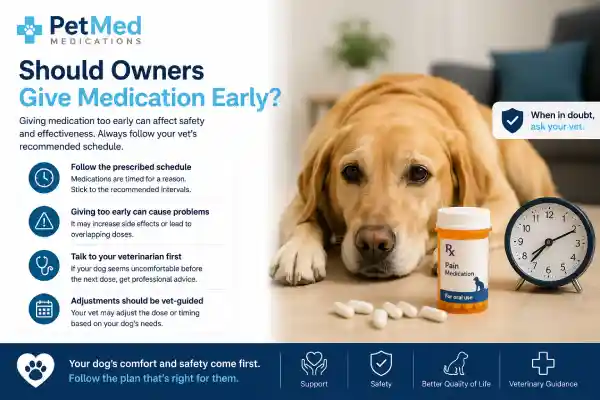
Usually not without veterinary guidance.
Many owners are tempted to move medication schedules forward when whining begins.
While understandable, this approach may:
- Increase side-effect risk
- Cause dosing errors
- Create medication overlap
Before Changing Any Schedule
Speak with your veterinarian about:
- Safe dosing intervals
- Alternative dosing strategies
- Medication adjustments
What Can Owners Do At Home?
While waiting for veterinary advice, owners can:
Monitor Symptoms
Track:
- Whining frequency
- Medication timing
- Activity level
- Appetite
- Mobility
Create a Symptom Journal
A simple journal can help identify patterns.
Example
| Time | Medication Given | Symptoms |
|---|---|---|
| 8 AM | Carprofen | Comfortable |
| 2 PM | None | Mild restlessness |
| 6 PM | None | Whining begins |
| 8 PM | Next dose | Symptoms improve |
Patterns like this often help veterinarians identify the cause more quickly.
Can Long-Term Medication Use Increase This Problem?
Sometimes.
Long-term treatment may increase the likelihood of:
- Tolerance
- Disease progression
- Changing medication needs
However, many dogs successfully receive medications for years without developing significant problems.
This topic is explored further in:
Related Symptoms Owners Often Search For
Owners searching for whining before medication time frequently also search for:
- Why Is My Dog Crying Even After Pain Medication?
- Why Does Pain Medication Stop Working?
- Why Is My Dog Panting After Pain Medication?
- Why Is My Dog Still Limping After Medication?
- Why Is My Dog Weak After Pain Medication?
- Can Pain Medication Cause Anxiety in Dogs?
- Can Dogs Become Dependent on Pain Medication?
- Why Does Gabapentin Stop Working in Dogs?
- Why Is My Dog Crying Despite Gabapentin?
- What Happens If Dogs Suddenly Stop Gabapentin?
These symptoms often overlap because pain control, medication effects, and disease progression are closely connected.
When Should Owners Contact Their Veterinarian?
Contact your veterinarian if:
- Whining becomes more frequent
- Symptoms worsen
- Medication seems less effective
- New symptoms appear
- Mobility declines
- Appetite decreases
- Panting increases significantly
Seek Immediate Veterinary Care If Your Dog Develops
| Symptom | Emergency? |
|---|---|
| Collapse | Yes |
| Difficulty breathing | Yes |
| Severe weakness | Yes |
| Inability to stand | Yes |
| Seizures | Yes |
| Loss of consciousness | Yes |
Fortunately, most dogs with pre-medication whining do not experience these severe signs.
Bottom Line
If your dog whines before medication time, the most common explanation is that the medication’s effects are wearing off and the underlying pain, anxiety, or discomfort is returning. Some dogs also learn to anticipate medication because they associate it with relief. While dependence, tolerance, and withdrawal may occasionally contribute, persistent or worsening whining should be discussed with your veterinarian to ensure your dog’s treatment plan remains effective.
Veterinarian Takeaway
Whining before medication time is often valuable information rather than simply a behavioral issue. It may indicate that pain control is becoming inadequate, anxiety symptoms are returning, or the underlying disease is progressing. Monitoring when the whining occurs and how it changes over time can help veterinarians determine whether medication adjustments or additional evaluation are needed.
Frequently Asked Questions – Why Does My Dog Whine Before Medication Time
Why does my dog whine before medication time?
The most common reason is that the medication is wearing off and discomfort is returning.
Does whining mean my dog is in pain?
Often yes, but anxiety and behavioral factors can also contribute.
Can dogs anticipate medication schedules?
Yes. Dogs are excellent at recognizing routines and patterns.
Could my dog be addicted to the medication?
True addiction is uncommon. Returning symptoms are usually a more likely explanation.
Can gabapentin cause this behavior?
Yes. Some dogs become more uncomfortable as gabapentin levels decline.
Can anxiety medication wear off and cause whining?
Yes. Anxiety symptoms may return as medication effects decrease.
Should I give medication early?
Not without veterinary guidance.
Can tolerance cause whining?
Yes. Reduced medication effectiveness over time can contribute.
Is whining always a sign of worsening disease?
No. Sometimes it simply reflects the normal medication cycle.
When should I call my veterinarian?
If the whining becomes more frequent, more severe, or is accompanied by new symptoms.
Reviewed By
Dimitar Atanasov, MPharm
Master Pharmacist | Medication Safety Educator
Editorial Policy
PetMedsMadeSimple provides evidence-based educational information about pet medications, medication safety, veterinary treatments, and common health concerns affecting dogs and cats.
Sources
- Plumb’s Veterinary Drug Handbook, 10th Edition.
- Merck Veterinary Manual – Pain Management in Dogs.
- American Animal Hospital Association (AAHA) Pain Management Guidelines for Dogs and Cats.
- American Veterinary Medical Association (AVMA) Client Education Resources.
- Veterinary Pharmacology and Therapeutics, 11th Edition.
- Small Animal Clinical Pharmacology and Therapeutics.
- Journal of the American Veterinary Medical Association (JAVMA).
- Veterinary Information Network (VIN).
- Frontiers in Veterinary Science – Chronic Pain Management in Companion Animals.
- Veterinary Anaesthesia and Analgesia – Long-Term Analgesic Therapy Research.
Medical Review Statement
This article was pharmacy-reviewed by Dimitar Atanasov, MPharm, Master Pharmacist, using current veterinary pharmacology references, canine pain-management guidelines, and published veterinary literature available at the time of review.
Images created with AI – Why Does My Dog Whine Before Medication Time