Quick Answer
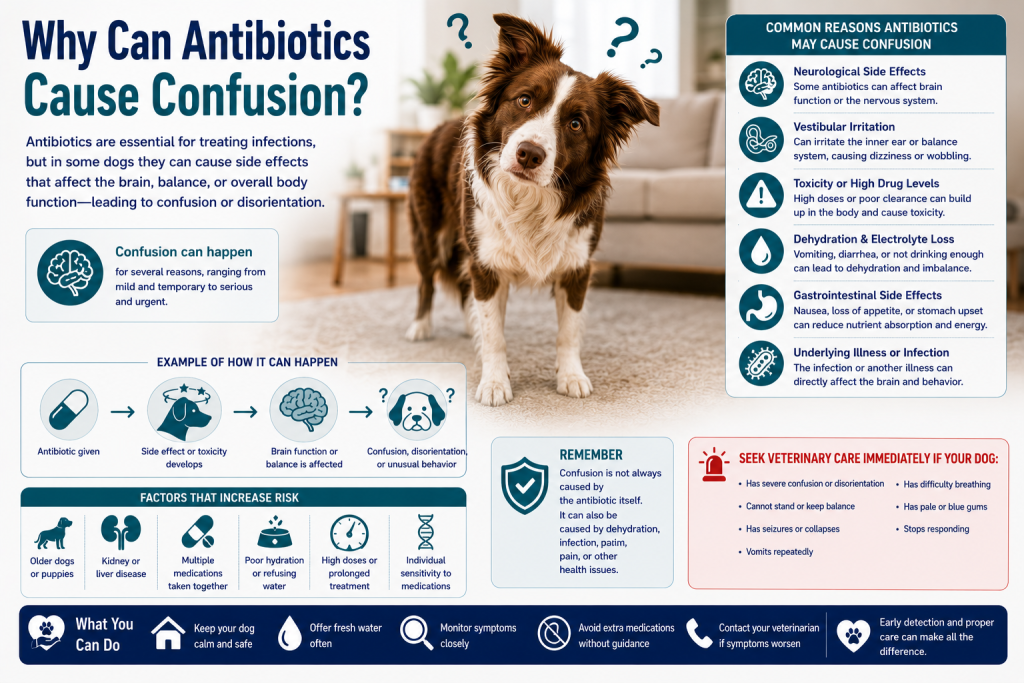
Can antibiotics cause confusion in dogs? Yes, some antibiotics may occasionally contribute to confusion, disorientation, wobbling, unusual behavior, dizziness, or neurological symptoms in dogs. This may happen because of medication side effects, dehydration, vestibular problems, toxicity, or reactions affecting the nervous system. Severe confusion, collapse, seizures, inability to walk, or breathing problems require immediate veterinary attention.
Many dog owners panic when their dog suddenly:
- acts confused after antibiotics
- seems disoriented
- walks strangely
- stares into space
- becomes wobbly
- acts “drunk”
- appears weak after medication
- behaves differently during infection treatment
And honestly?
This is one of the MOST concerning symptoms owners may notice during medication treatment.
The good news is that mild disorientation may sometimes be temporary.
However, confusion can also signal:
- neurological side effects
- dehydration
- vestibular problems
- medication toxicity
- infection complications
- severe adverse reactions
This guide explains:
- why antibiotics may cause confusion
- confusion vs weakness vs sedation
- neurological warning signs
- dehydration and toxicity risks
- which antibiotics may affect the nervous system
- emergency symptoms owners should never ignore
What Does Confusion Look Like in Dogs?
Dogs cannot verbally describe disorientation.
Instead, owners may notice unusual behaviors.
Common Signs of Confusion
| Symptom | What Owners May Notice |
|---|---|
| Wandering aimlessly | Disorientation |
| Staring at walls | Mental confusion |
| Walking strangely | Neurological issues |
| Acting “drunk” | Balance problems |
| Getting stuck in corners | Spatial confusion |
| Delayed reactions | Reduced awareness |
| Restlessness | Anxiety or neurological changes |
| Weakness | Medication or dehydration effects |
Some dogs may also:
- appear scared
- hide
- tremble
- avoid interaction
- sleep excessively
This strongly connects with:
- Dog Acting Drunk After Gabapentin?
- Can Antibiotics Cause Weakness in Dogs?
- Can Antibiotics Affect Dog Behavior?
Can Antibiotics Cause Confusion in Dogs?
Why Can Antibiotics Cause Confusion?
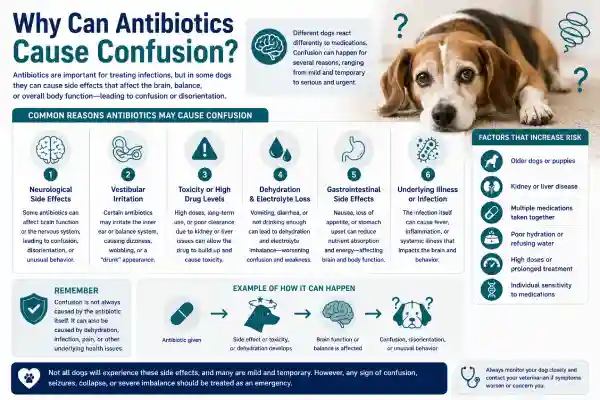
Several possible mechanisms may contribute.
Common Causes
| Cause | Possible Effect |
|---|---|
| Neurological side effects | Disorientation |
| Dehydration | Weakness and confusion |
| Vestibular irritation | Loss of balance |
| Toxicity | Severe neurological symptoms |
| GI side effects | Weakness and instability |
| Underlying illness | Altered behavior |
Sometimes the infection itself may also contribute to confusion.
This naturally links with:
Confusion vs Sedation vs Weakness
This is VERY important because owners often confuse these symptoms.
Symptom Comparison Table
| Symptom | Common Appearance |
|---|---|
| Confusion | Disorientation or strange behavior |
| Sedation | Sleepiness or low energy |
| Weakness | Difficulty moving normally |
| Ataxia | Wobbling or poor coordination |
| Vestibular signs | Head tilt or falling |
Many owners describe neurological side effects as:
“my dog is acting drunk”
This strongly connects with:
Which Antibiotics May Affect the Nervous System?
Some antibiotics are more commonly associated with neurological side effects.
Antibiotics Sometimes Linked to Neurological Symptoms
| Antibiotic | Possible Neurological Effects |
|---|---|
| Metronidazole | Ataxia, confusion, wobbling |
| Aminoglycosides | Vestibular problems |
| Fluoroquinolones | Rare neurological effects |
| High-dose antibiotics | Toxicity risks |
| Multiple medications combined | Increased side effect risk |
Metronidazole deserves special attention because neurological toxicity is a known concern at high doses or prolonged use.
This naturally links with:
Can Dehydration Make Confusion Worse?
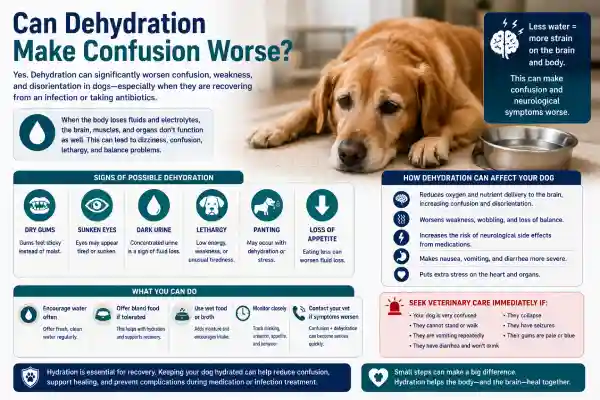
Very easily.
Dogs recovering from infection may already have:
- fever
- vomiting
- diarrhea
- appetite loss
- reduced drinking
Dehydration may worsen:
- weakness
- dizziness
- confusion
- balance problems
- lethargy
Signs of Possible Dehydration
| Symptom | Possible Concern |
|---|---|
| Dry gums | Fluid loss |
| Weakness | Poor hydration |
| Sunken eyes | Moderate dehydration |
| Panting | Stress or imbalance |
| Dark urine | Concentrated urine |
| Lethargy | Worsening dehydration |
This strongly connects with:
Can Gabapentin Make Confusion Worse?
Sometimes, yes.
Gabapentin may contribute to:
- sedation
- wobbling
- dizziness
- slower reactions
- disorientation in sensitive dogs
When combined with:
- illness
- dehydration
- antibiotics
- weakness
some dogs may appear:
severely confused or unstable
This strongly connects with:
Are Senior Dogs More Vulnerable?
Absolutely.
Older dogs often:
- metabolize medications more slowly
- dehydrate more easily
- have weaker balance systems
- experience stronger neurological effects
Senior dogs may develop:
- confusion
- instability
- disorientation
- severe weakness more easily
This naturally links with What Is the Safest Antibiotic for Senior Dogs?
What Symptoms Are Emergencies?
This is the MOST important section.
Seek immediate veterinary care if your dog develops:
- seizures
- collapse
- inability to stand
- severe disorientation
- uncontrolled eye movements
- head tilt
- blue gums
- breathing difficulty
- repeated vomiting
- unresponsiveness
Emergency Warning Signs
| Symptom | Emergency Level |
|---|---|
| Seizures | EMERGENCY |
| Collapse | EMERGENCY |
| Unable to stand | EMERGENCY |
| Blue gums | EMERGENCY |
| Severe confusion | Serious |
| Breathing difficulty | EMERGENCY |
| Repeated vomiting | Serious |
| Unresponsiveness | EMERGENCY |
This naturally links with:
What Should Owners Do If Their Dog Seems Confused?
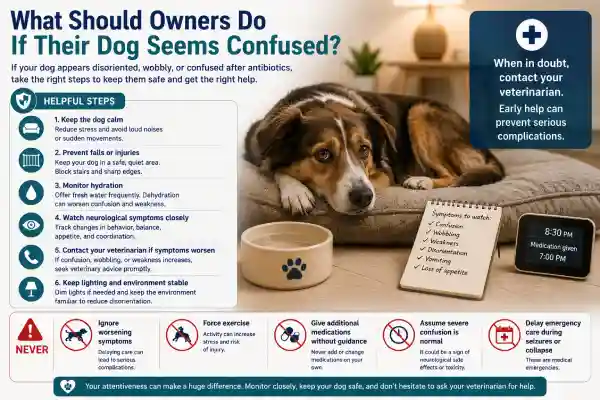
Helpful Steps
| Step | Why It Helps |
|---|---|
| Keep the dog calm | Reduce stress |
| Prevent falls or injuries | Improve safety |
| Monitor hydration | Reduce complications |
| Watch neurological symptoms closely | Detect emergencies |
| Contact your veterinarian if symptoms worsen | Improve safety |
| Keep lighting and environment stable | Reduce disorientation |
NEVER:
- ignore worsening symptoms
- force exercise
- give additional medications without guidance
- assume severe confusion is normal
- delay emergency care during seizures or collapse
How Veterinarians Evaluate Confusion After Antibiotics
Veterinarians may evaluate:
- neurological function
- hydration status
- medication history
- infection severity
- vestibular signs
- toxin exposure
- kidney or liver function
- medication interactions
Possible tests may include:
- neurological examination
- bloodwork
- imaging
- hydration assessment
- medication review
- toxicity evaluation
FAQ – Can Antibiotics Cause Confusion in Dogs?
Can antibiotics make dogs confused?
Yes. Some antibiotics may occasionally contribute to disorientation, wobbling, or unusual neurological behavior.
Which antibiotic is most associated with neurological side effects?
Metronidazole is one of the best-known antibiotics associated with neurological toxicity in dogs.
Can dehydration worsen confusion?
Absolutely. Dehydration may worsen weakness, dizziness, and disorientation.
Is confusion the same as sedation?
No. Sedation usually means sleepiness, while confusion involves disorientation or abnormal awareness.
Why is my dog acting drunk after antibiotics?
Some dogs may experience ataxia, weakness, vestibular problems, or neurological side effects.
Are senior dogs more vulnerable?
Yes. Older dogs often tolerate neurological side effects less effectively.
What symptoms are emergencies?
Seizures, collapse, inability to stand, severe disorientation, breathing difficulty, or blue gums require immediate veterinary attention.
Should I stop antibiotics if my dog seems confused?
Never stop prescription medications without veterinary guidance unless instructed during an emergency evaluation.
Medical Disclaimer
This article is for educational purposes only and does not replace professional veterinary advice, diagnosis, or treatment. The content is written and pharmacist-reviewed to improve medication safety awareness and help dog owners better understand confusion, neurological side effects, dehydration risks, vestibular symptoms, medication toxicity, and emergency warning signs associated with antibiotics in dogs. Always contact your veterinarian if your dog develops seizures, collapse, severe weakness, or worsening neurological symptoms.Can Antibiotics Cause Confusion in Dogs?
Reviewed by
Written by Pet Meds Made Simple Editorial Team
Pharmacy Reviewed by Dimitar Atanasov MPharm
Master Pharmacist | Medication Safety Educator
Last Updated: May 2026
Editorial Policy
At PetMedsMadeSimple.com, all articles are written for educational purposes and reviewed through our pharmacist-led editorial process to improve medication safety awareness for dog owners. Our content is evidence-based, regularly updated, and designed to help readers better understand veterinary medications, side effects, interactions, warning signs, and recovery concerns.Can Antibiotics Cause Confusion in Dogs?
Every article is reviewed for clarity, safety-focused language, and responsible medical communication before publication.
Read our full Editorial Policy here:
👉 Pet Meds Made Simple Editorial Policy
Sources & Scientific References
- PetMD – Side Effects of Pet Medications
- PetMD – Ataxia in Dogs
- PubMed Central – Antibiotic Neurotoxicity Research
- Merck Veterinary Manual
- American Veterinary Medical Association (AVMA)
- Plumb’s Veterinary Drug Handbook
Image crated with AI – Can Antibiotics Cause Confusion in Dogs?