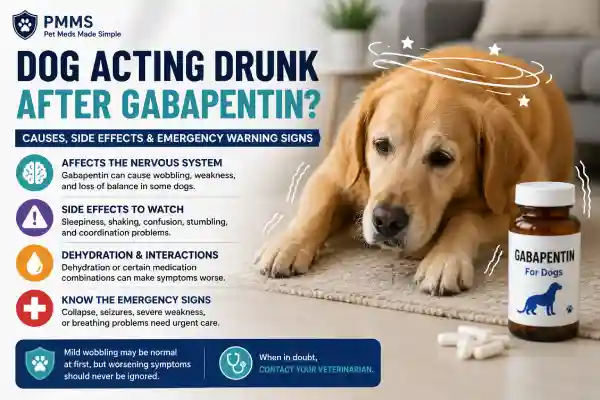
Quick Answer
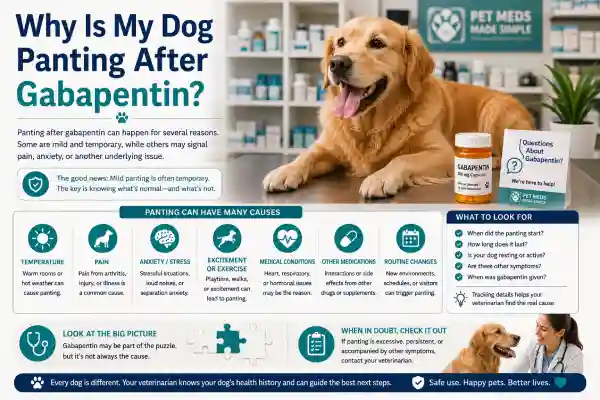
Why is my dog panting after gabapentin? Panting after gabapentin can occur for several reasons. Some dogs may experience mild medication-related changes in behavior, relaxation, or body temperature perception. In other cases, panting may be related to pain, anxiety, excitement, an underlying medical condition, or a reaction to another medication. Mild panting is often temporary, but excessive panting, breathing difficulty, or sudden behavioral changes should always be discussed with a veterinarian.
Many owners expect gabapentin to make their dog sleepy and calm.
That is why it can be surprising when a dog starts panting shortly after receiving a dose.
Owners often describe situations such as:
- My dog won’t stop panting after gabapentin.
- My dog seems restless and is breathing fast.
- My dog is panting even though the room is cool.
- My dog appears uncomfortable after taking the medication.
Understandably, these situations can be concerning.
The good news is that panting does not automatically mean something dangerous is happening.
However, it is important to understand what might be causing it.
When Owners Commonly Ask This
Most owners become concerned when:
- Panting starts shortly after a dose.
- Their dog has never panted this way before.
- Panting occurs at night.
- Their dog seems restless while panting.
- The dog is also pacing or whining.
- Breathing appears faster than normal.
Because panting can have many causes, the timing of the symptom often provides valuable clues.
Can Gabapentin Directly Cause Panting?
In some dogs, yes.
Although panting is not considered one of the most common side effects, some dogs may experience changes that contribute to increased panting.
For example:
- Mild restlessness
- Temporary anxiety-like behavior
- Changes in activity level
- Altered perception of comfort
Every dog responds differently to medication.
Some dogs become extremely relaxed.
Others may react in unexpected ways.
Related article: Can Gabapentin Cause Anxiety in Dogs?
Why Is My Dog Panting After Gabapentin?
Pain Is One of the Most Common Reasons Dogs Pant
Owners often assume the medication is causing the panting.
Sometimes the real cause is the condition being treated.
Pain frequently causes dogs to:
- Pant
- Pace
- Change positions repeatedly
- Struggle to settle down
If a dog is still uncomfortable despite treatment, panting may actually be a sign that pain is not fully controlled.
Related articles:
- Why Does Gabapentin Stop Working in Dogs?
- Why Is My Dog Crying Despite Gabapentin?
- Best Pain Medication for Dogs with Arthritis (Comparison Guide – Vet-Backed)
Anxiety Can Sometimes Play a Role
Panting is one of the most common signs of anxiety in dogs.
Some dogs receiving gabapentin may still experience:
- Nervousness
- Environmental stress
- Noise sensitivity
- Separation-related anxiety
In these situations, panting may have little to do with the medication itself.
Related articles:
- Why Is My Dog Sensitive to Noise Suddenly?
- What Causes Rebound Anxiety in Dogs?
- Can Dogs Become Emotionally Numb on Anxiety Medication?
Could Another Medication Be Involved?
Sometimes.
Dogs taking multiple medications may develop symptoms that are difficult to attribute to a single drug.
Veterinarians often review all medications when evaluating new symptoms.
Examples include:
- Anxiety medications
- Pain medications
- Sedatives
- Supplements
Related articles:
- Can Dogs Take Prozac and Trazodone Together?
- Can Dogs Take Melatonin With Anxiety Medication?
- Can Dogs Take CBD With Anxiety Medication? (Vet-Backed Guide)
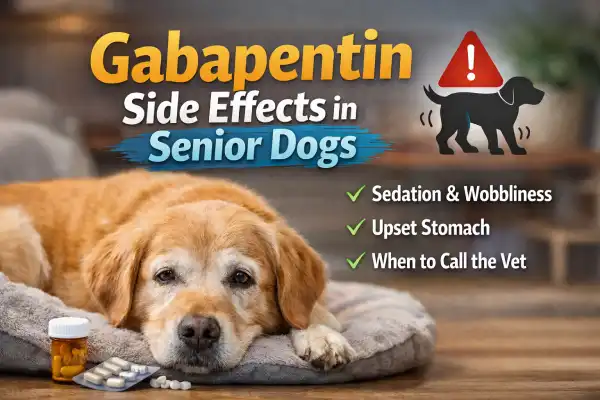
Is Panting More Common in Senior Dogs?
Senior dogs often have multiple factors that can contribute to panting.
These include:
- Arthritis pain
- Heart disease
- Mobility limitations
- Anxiety
- Chronic medical conditions
This is one reason veterinarians rarely assume that medication alone is responsible.
Related articles:
What Does Concerning Panting Look Like?
Not all panting requires urgent veterinary attention.
However, some situations deserve closer evaluation.
Warning signs include:
Extremely Rapid Breathing
Breathing that appears unusually fast even while resting.
Difficulty Settling Down
Dogs that cannot become comfortable despite resting.
Excessive Drooling
Panting combined with drooling may indicate significant discomfort.
Weakness or Collapse
This should never be ignored.
Blue or Pale Gums
This requires immediate veterinary attention.
Severe Restlessness
Constant pacing or inability to relax deserves evaluation.
Could Panting Be Unrelated to Gabapentin?
Absolutely.
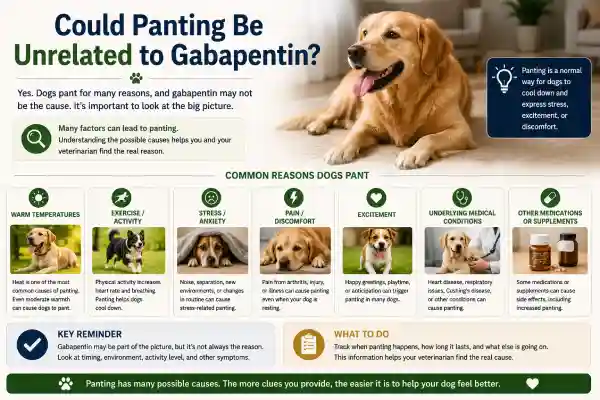
Dogs pant for many reasons.
Examples include:
- Warm temperatures
- Stress
- Excitement
- Exercise
- Pain
- Medical conditions
This is why veterinarians focus on the entire clinical picture rather than assuming gabapentin is automatically responsible.
What Owners Should Do If Panting Occurs
The first step is observation.
Pay attention to:
- When panting starts
- How long it lasts
- Activity level
- Other symptoms
- Medication timing
Consider keeping notes regarding:
- Dose time
- Panting episodes
- Appetite
- Mobility
- Behavior changes
This information can help identify patterns.
Related Symptoms Owners Often Notice
Dogs that pant after gabapentin may also experience:
Restlessness
Related article: What Causes Rebound Anxiety in Dogs?
Crying or Whining
Related article: Why Is My Dog Crying Despite Gabapentin?
Wobbliness
Related article: Why Is My Dog Wobbly After Gabapentin?
Weak Back Legs
Related article: Can Gabapentin Cause Weak Back Legs?
General Weakness
Related article: Can Gabapentin Cause Weakness in Dogs?
Increased Clinginess
Related article: Why Does My Dog Follow Me Everywhere After Medication?
When Panting Becomes Concerning
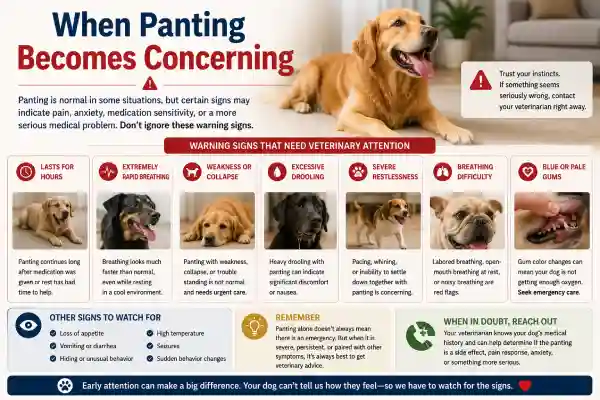
Mild panting that resolves quickly is often not an emergency.
However, some situations deserve prompt veterinary attention.
Panting Continues for Hours
If your dog continues panting long after the medication was given, your veterinarian should be informed.
Persistent panting may indicate:
- Pain
- Anxiety
- Medication sensitivity
- Another medical condition
Panting Is Accompanied by Weakness
Panting combined with:
- Difficulty standing
- Collapse
- Severe wobbliness
- Hind leg weakness
should never be ignored.
Related articles:
- Can Gabapentin Cause Weak Back Legs?
- Can Gabapentin Cause Weakness in Dogs?
- Why Is My Dog Wobbly After Gabapentin?
Breathing Appears Abnormal
Seek immediate veterinary care if your dog shows:
- Labored breathing
- Open-mouth breathing at rest
- Blue gums
- Pale gums
- Signs of respiratory distress
These symptoms may indicate a serious medical problem unrelated to gabapentin.
Your Dog Appears Distressed
Some dogs show additional warning signs such as:
- Pacing
- Crying
- Inability to settle
- Trembling
- Severe agitation
Related articles:
How Veterinarians Evaluate Panting After Gabapentin
When owners report panting, veterinarians rarely assume the medication is the sole cause.
Instead, they evaluate the entire situation.
Questions often include:
- When did the panting begin?
- Was gabapentin recently started?
- Was the dose increased?
- What other medications is the dog taking?
- Is the dog showing signs of pain?
- Are there other symptoms present?
The timing of the symptom is often one of the most important clues.
What Information Should Owners Track?
Before your veterinary visit, try to record:
Medication Timing
When was gabapentin given?
Duration
How long did the panting last?
Activity Level
Was your dog resting or active?
Other Symptoms
Did you notice:
- Weakness
- Wobbliness
- Restlessness
- Crying
- Clinginess
Video Recordings
Videos can be extremely helpful because symptoms sometimes improve before the appointment.
Is Panting Usually Temporary?
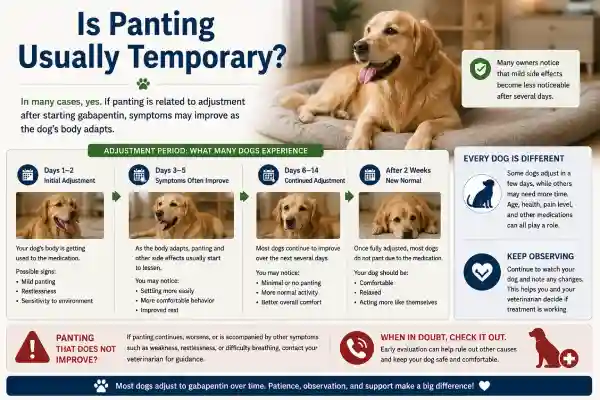
In many cases, yes.
If panting is related to adjustment after starting gabapentin, symptoms may improve as the dog’s body adapts.
Many owners notice that mild side effects become less noticeable after several days.
However, worsening symptoms should always be discussed with a veterinarian.
Could the Dose Be Too High?
Sometimes.
Higher doses may increase the likelihood of side effects in sensitive dogs.
Owners should never change the dose on their own.
Instead, discuss concerns with your veterinarian.
The goal is always to balance:
- Comfort
- Pain control
- Safety
- Quality of life
Related Symptoms Owners Often Notice
Panting is not always the only symptom owners report.
Additional changes may include:
Increased Sleeping
Dogs may appear more tired than usual.
Restlessness
Some dogs struggle to settle comfortably.
Related article: What Causes Rebound Anxiety in Dogs?
Clinginess
Dogs sometimes seek more attention when they feel uncomfortable.
Related article: Why Does My Dog Follow Me Everywhere After Medication?
Emotional Changes
Owners occasionally notice differences in their dog’s normal behavior.
Related article: Can Dogs Become Emotionally Numb on Anxiety Medication?
Noise Sensitivity
Some dogs become more reactive to environmental sounds.
Related article:Why Is My Dog Sensitive to Noise Suddenly?
Reduced Mobility
Pain or medication side effects can affect daily activities.
Related articles:
- Can Gabapentin Cause Weak Back Legs?
- Can Dogs Take Gabapentin Long-Term Safely?
- Safest Pain Medication for Dogs
When Owners Should Contact Their Veterinarian
Contact your veterinarian if:
- Panting becomes excessive
- Symptoms continue worsening
- Your dog appears distressed
- Weakness develops
- Mobility declines
- New symptoms appear
- Pain seems uncontrolled
- Breathing appears abnormal
Early evaluation is usually the safest approach.
Veterinarian Takeaway
Why is my dog panting after gabapentin? Panting can occur for several reasons, including pain, anxiety, medication-related effects, underlying medical conditions, or reactions to other medications. Mild temporary panting is often not dangerous, but persistent, excessive, or concerning symptoms should always be discussed with a veterinarian. The timing of the panting and the presence of other symptoms often provide important clues about the underlying cause.Why Is My Dog Panting After Gabapentin?
Bottom Line
Panting after gabapentin does not automatically mean something is wrong.
Many dogs experience temporary changes while adjusting to medication.
However, panting can also be a sign of:
- Pain
- Anxiety
- Medication sensitivity
- Another medical condition
Pay close attention to when the panting occurs, how severe it becomes, and whether other symptoms are present.
When in doubt, your veterinarian is the best source of guidance.Why Is My Dog Panting After Gabapentin?
Frequently Asked Questions – Why Is My Dog Panting After Gabapentin?
Is panting a common side effect of gabapentin in dogs?
Panting is not among the most commonly reported side effects, but some dogs may experience it.
Why does my dog pant shortly after taking gabapentin?
The timing may suggest a medication-related effect, but pain, anxiety, or other factors may also contribute.
Can gabapentin make dogs restless?
Some dogs may appear restless or unsettled while adjusting to treatment.
Should I be worried if my dog is panting after gabapentin?
Mild temporary panting is often not dangerous, but persistent or severe symptoms deserve veterinary attention.
Can pain cause panting even if my dog is taking gabapentin?
Yes. Pain remains one of the most common reasons dogs pant.
Can anxiety cause panting after medication?
Absolutely. Anxiety and stress are common causes of panting in dogs.
Is panting more common in senior dogs?
Senior dogs often have additional medical conditions that can contribute to panting.
Can other medications contribute to panting?
Yes. Medication interactions or combinations may affect behavior and breathing patterns.
Should I stop gabapentin if my dog starts panting?
No. Never stop medication without consulting your veterinarian.
When should I call my veterinarian?
If panting becomes excessive, persistent, or occurs alongside weakness, distress, or breathing difficulty.
Reviewed By
Pharmacy Reviewed By
Dimitar Atanasov, MPharm
Master Pharmacist | Medication Safety Educator
Why Is My Dog Panting After Gabapentin?
Editorial Policy
At Pet Meds Made Simple, our content is researched using current veterinary references, peer-reviewed veterinary literature, and established medication safety guidelines. Every article is reviewed for accuracy, medication safety, and owner education.Why Is My Dog Panting After Gabapentin?
Read our full Editorial Policy:
Sources for Why Is My Dog Panting After Gabapentin?
- Merck Veterinary Manual
- American Veterinary Medical Association (AVMA)
- American Animal Hospital Association (AAHA)
- FDA Center for Veterinary Medicine
- Veterinary Information Network (VIN)
- American College of Veterinary Internal Medicine (ACVIM)
- Plumb’s Veterinary Drug Handbook
- Veterinary Pharmacology and Therapeutics
- Current veterinary pain management guidelines
- Peer-reviewed research on gabapentin use in dogs
Images created with AI – Why Is My Dog Panting After Gabapentin?