
Quick Answer
Why is my dog shaking after pain medication? Dogs may shake after pain medication because of medication side effects, ongoing pain, anxiety, nausea, weakness, medication interactions, or—in rare cases—an overdose or neurological reaction. Mild trembling can sometimes occur after medications such as gabapentin, tramadol, or post-surgical pain medications, but severe shaking, collapse, seizures, or difficulty breathing require immediate veterinary attention.
Why Is My Dog Shaking After Pain Medication?
A dog may shake after pain medication because the medication affects the nervous system, causes nausea, leads to weakness, or fails to fully control pain. Common causes include medication side effects, anxiety, ongoing discomfort, medication interactions, and overdose. Mild shaking may resolve as the medication wears off, but severe trembling or neurological symptoms should be evaluated immediately by a veterinarian.
Veterinarian Takeaway
Shaking after pain medication is not always a sign of a serious problem. In many cases, the trembling is caused by pain, anxiety, or temporary medication effects. However, persistent shaking, worsening symptoms, weakness, collapse, seizures, or difficulty breathing should never be ignored.
When Owners Commonly Ask This Question
Veterinarians commonly hear this question after:
- Orthopedic surgery
- Dental procedures
- Starting gabapentin
- Starting tramadol
- Arthritis treatment
- Injury recovery
- Medication dose increases
- Switching medications
Many owners become concerned because shaking often appears suddenly and can look dramatic even when the underlying cause is relatively mild.
Why Is My Dog Shaking After Pain Medication?
7 Common Reasons Dogs Shake After Pain Medication
Common Causes Table
| Cause | Common? | Serious? |
|---|---|---|
| Medication side effects | Yes | Usually No |
| Ongoing pain | Yes | Sometimes |
| Anxiety or stress | Yes | Usually No |
| Nausea | Yes | Usually No |
| Weakness or sedation | Moderate | Usually No |
| Drug interactions | Less Common | Sometimes |
| Overdose or toxicity | Rare | Yes |
Reason #1: The Medication Is Causing Side Effects

Some pain medications directly affect the nervous system.
Examples include:
- Gabapentin
- Tramadol
- Buprenorphine
- Codeine-containing medications
- Combination pain protocols
Certain dogs are more sensitive than others and may develop:
- Trembling
- Muscle twitching
- Restlessness
- Wobbliness
- Excessive sedation
Related articles:
- Why Is My Dog Wobbly After Gabapentin?
- Why Is My Dog Hyper After Gabapentin?
- Why Is My Dog Panting After Gabapentin?
Reason #2: Your Dog Is Still In Pain
Many owners assume the medication is causing the shaking.
In reality, pain itself is one of the most common causes of trembling.
Signs Pain May Still Be Present
| Sign | Common? |
|---|---|
| Panting | Yes |
| Whining | Yes |
| Trembling | Yes |
| Restlessness | Yes |
| Limping | Yes |
| Difficulty lying down | Yes |
Dogs suffering from arthritis, injuries, spinal disease, or post-surgical discomfort may continue trembling even while receiving medication.
Related articles:
- Why Is My Dog Crying Even After Pain Medication?
- Why Is My Dog Still Limping After Medication?
- Why Does Pain Medication Stop Working?
Reason #3: Anxiety Is Triggering the Shaking
Pain and anxiety frequently occur together.
Dogs may feel anxious because of:
- Surgery
- Veterinary visits
- Hospitalization
- Physical discomfort
- Environmental changes
Anxiety Symptoms
| Symptom | Common? |
|---|---|
| Trembling | Yes |
| Pacing | Yes |
| Panting | Yes |
| Clinginess | Yes |
| Restlessness | Yes |
Related articles:
- Can Pain Medication Cause Anxiety in Dogs?
- Why Does My Dog Panic at Night?
- What Causes Rebound Anxiety in Dogs?
- Why Is My Dog Suddenly Afraid of Everything?
Reason #4: Nausea Can Cause Trembling
Many dogs tremble when they feel nauseated.
Pain medications occasionally cause stomach upset.
Nausea Signs
- Lip licking
- Drooling
- Repeated swallowing
- Reduced appetite
- Trembling
- Hunched posture
Dogs that appear shaky and refuse food may be experiencing gastrointestinal discomfort.
Reason #5: Weakness and Sedation May Cause Shaking
Some medications cause:
- Drowsiness
- Weakness
- Reduced coordination
- Balance problems
As a result, dogs may appear shaky when trying to stand or walk.
Higher-Risk Dogs
| Dog Type | Increased Risk? |
|---|---|
| Senior dogs | Yes |
| Small dogs | Yes |
| Dogs with arthritis | Yes |
| Dogs taking multiple medications | Yes |
Related articles:
- Why Is My Dog Weak After Pain Medication?
- Why Is My Dog Hiding After Pain Medication?
- Why Is My Dog Restless at Night Despite Pain Medication?
Reason #6: Multiple Pain Medications May Increase Side Effects
Dogs receiving multiple medications sometimes experience stronger side effects.
Examples include:
- Gabapentin + Carprofen
- Gabapentin + Tramadol
- Gabapentin + Amantadine
These combinations are often safe under veterinary supervision but may increase:
- Sedation
- Weakness
- Wobbliness
- Trembling
Related article:
Reason #7: A Serious Reaction Is Occurring
Although uncommon, severe reactions can occur.
Serious Warning Signs
| Sign | Emergency? |
|---|---|
| Mild trembling | No |
| Persistent shaking | Contact Vet |
| Collapse | Yes |
| Seizures | Yes |
| Difficulty breathing | Yes |
| Unresponsiveness | Yes |
Immediate veterinary care is needed if these symptoms occur.
Could Certain Pain Medications Cause More Shaking Than Others?
Yes.
Some medications are more commonly associated with neurological side effects.
Medication Comparison
| Medication | Shaking Possible? |
|---|---|
| Gabapentin | Occasionally |
| Tramadol | Yes |
| Carprofen | Less Common |
| Galliprant | Less Common |
| Amantadine | Occasionally |
Most dogs tolerate these medications well, but individual sensitivity varies.
Could Senior Dogs Shake More Often?

Absolutely.
Older dogs are more vulnerable because they often have:
- Arthritis
- Chronic pain
- Multiple medications
- Reduced kidney function
- Reduced liver function
Senior Dog Risk Factors
| Risk Factor | Important? |
|---|---|
| Age | Yes |
| Kidney disease | Yes |
| Liver disease | Yes |
| Multiple medications | Yes |
| Chronic pain | Yes |
Could Kidney or Liver Disease Contribute to Shaking?
Yes.
Dogs with kidney or liver disease may process medications more slowly, allowing drug levels to build up in the body.
This can increase the likelihood of side effects such as:
- Trembling
- Weakness
- Excessive sleepiness
- Wobbliness
- Confusion
Why Organ Function Matters
| Organ | Role |
|---|---|
| Liver | Breaks down medications |
| Kidneys | Remove medications from the body |
Dogs with chronic kidney disease or liver disease often require closer monitoring and sometimes lower medication doses.
Can Pain Medication Overdose Cause Shaking?
Absolutely.
An overdose is one of the most serious reasons a dog may start shaking after pain medication.
Common Causes of Overdose
- Accidental double dosing
- Multiple family members giving medication
- Dog accessing medication containers
- Human medication given accidentally
- Incorrect dosing instructions
Possible Overdose Symptoms
| Symptom | Serious? |
|---|---|
| Tremors | Yes |
| Severe weakness | Yes |
| Vomiting | Yes |
| Loss of coordination | Yes |
| Seizures | Emergency |
| Collapse | Emergency |
Related articles:
- What Happens If Dogs Overdose on Pain Medication?
- Can Dogs Take Ibuprofen Accidentally?
- Can Dogs Take Multiple Pain Medications Together?
Could Human Pain Medications Cause Shaking?
Yes.
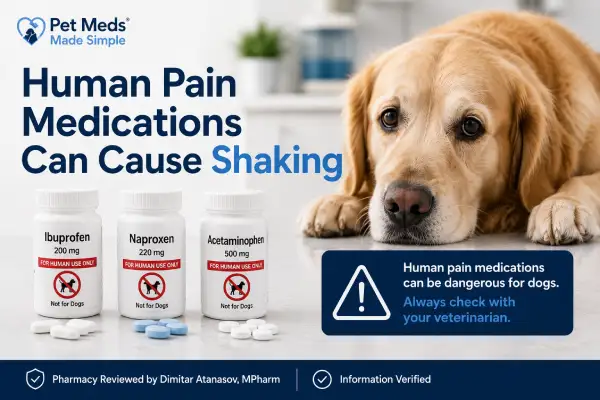
Many human pain medications are dangerous for dogs.
High-Risk Human Medications
| Medication | Safe for Dogs? |
|---|---|
| Ibuprofen | No |
| Naproxen | No |
| Diclofenac | No |
| Aspirin | Sometimes under veterinary supervision |
| Acetaminophen | Only in specific circumstances |
Dogs accidentally exposed to human medications may develop:
- Trembling
- Vomiting
- Weakness
- Stomach bleeding
- Kidney injury
Related articles:
- Can Dogs Take Aspirin Safely?
- Can Dogs Take Ibuprofen Accidentally?
- Can Pain Medication Cause Stomach Bleeding in Dogs?
When Should Owners Contact Their Veterinarian?
Owners should contact their veterinarian if shaking:
- Lasts more than a few hours
- Becomes more severe
- Occurs repeatedly after each dose
- Is accompanied by weakness
- Occurs with vomiting
- Is associated with unusual behavior
Veterinary Attention Recommended
| Symptom | Contact Vet? |
|---|---|
| Mild trembling | Monitor |
| Persistent trembling | Yes |
| Vomiting | Yes |
| Appetite loss | Yes |
| Weakness | Yes |
| Worsening symptoms | Yes |
Even mild symptoms deserve discussion if they continue occurring after every dose.
When Is Shaking an Emergency?
Most cases of mild shaking are not emergencies.
However, some situations require immediate veterinary care.
Emergency Warning Signs
| Sign | Emergency? |
|---|---|
| Mild trembling | No |
| Persistent shaking | Contact Vet |
| Severe tremors | Yes |
| Collapse | Yes |
| Difficulty breathing | Yes |
| Seizures | Yes |
| Blue gums | Yes |
| Unresponsiveness | Yes |
If your dog develops any of these signs after pain medication, seek emergency veterinary care immediately.
Related Symptoms Owners Often Notice
Dogs shaking after pain medication frequently experience other symptoms at the same time.
Common Related Symptoms
| Symptom | Common? |
|---|---|
| Panting | Yes |
| Weakness | Yes |
| Sleepiness | Yes |
| Wobbliness | Yes |
| Restlessness | Yes |
| Whining | Yes |
| Reduced appetite | Yes |
| Hiding | Yes |
| Vomiting | Sometimes |
| Limping | Sometimes |
Related articles:
- Why Is My Dog Panting After Pain Medication?
- Why Is My Dog Weak After Pain Medication?
- Why Is My Dog Hiding After Pain Medication?
- Why Is My Dog Restless at Night Despite Pain Medication?
- Why Is My Dog Crying Even After Pain Medication?
- Why Is My Dog Still Limping After Medication?
- Can Pain Medication Cause Aggression in Dogs?
- Can Pain Medication Cause Anxiety in Dogs?
- Can Pain Medication Cause Stomach Bleeding in Dogs?
- Can Dogs Take Pain Medication Long-Term?
- Why Does Pain Medication Stop Working?
- Can Dogs Take Multiple Pain Medications Together?
- Why Is My Dog Wobbly After Gabapentin?
- Why Is My Dog Panting After Gabapentin?
- Why Is My Dog Hyper After Gabapentin?
- Can Gabapentin Cause Anxiety in Dogs?
- Why Is My Dog Crying Despite Gabapentin?
- Can Dogs Take Gabapentin Long-Term Safely?
- Can Dogs Become Addicted to Gabapentin?
- What Happens If Dogs Suddenly Stop Gabapentin?
Bottom Line
Why is my dog shaking after pain medication? The most common causes include medication side effects, ongoing pain, anxiety, nausea, weakness, medication interactions, and occasionally overdose or toxicity. Mild trembling may resolve as the medication wears off, but persistent shaking, worsening symptoms, seizures, collapse, or breathing difficulties should never be ignored.
If your dog starts shaking after pain medication, monitor for additional symptoms and contact your veterinarian whenever you are unsure of the cause.
Veterinarian Takeaway
Shaking after pain medication can range from a mild temporary side effect to a sign of a serious medical emergency. The timing of the shaking, the specific medication involved, and the presence of other symptoms help determine the cause. Most cases are manageable, but severe tremors, collapse, seizures, or breathing difficulties require immediate veterinary attention.Why Is My Dog Shaking After Pain Medication
Frequently Asked Questions – Why Is My Dog Shaking After Pain Medication
Why is my dog shaking after pain medication?
Common causes include medication side effects, pain, anxiety, nausea, weakness, or medication interactions.
Can gabapentin cause shaking in dogs?
Occasionally. While sedation is more common, some dogs may develop tremors or unusual neurological effects.
Can tramadol make dogs shake?
Yes. Tramadol can sometimes cause trembling, agitation, or neurological side effects.
Is shaking a sign that the medication is working?
Not usually. Shaking is generally considered a side effect or a sign of pain, anxiety, or another issue.
Can pain itself cause trembling?
Yes. Pain is one of the most common causes of shaking in dogs.
Should I stop giving the medication?
No. Never stop prescribed medication without veterinary guidance.
Can arthritis cause shaking despite treatment?
Yes. Some dogs continue experiencing pain despite medication.
Is shaking after surgery normal?
Mild trembling can occur after anesthesia, pain medication, stress, or discomfort.
When should I call my veterinarian?
If shaking persists, worsens, or is accompanied by weakness, vomiting, or unusual behavior.
When is shaking an emergency?
If it occurs with seizures, collapse, difficulty breathing, blue gums, or unresponsiveness.
Reviewed By
Pharmacy Reviewed By
Dimitar Atanasov, MPharm
Master Pharmacist | Medication Safety Educator
Editorial Policy
At Pet Meds Made Simple, we are committed to providing accurate, evidence-based information about pet medications, veterinary treatments, medication safety, and common health concerns affecting dogs and cats.Why Is My Dog Shaking After Pain Medication
For more information, visit:
Sources
- Plumb’s Veterinary Drug Handbook
- Merck Veterinary Manual
- American Animal Hospital Association (AAHA)
- American Veterinary Medical Association (AVMA)
- Veterinary Information Network (VIN)
- Veterinary Pharmacology and Therapeutics
- Small Animal Clinical Pharmacology
- JAVMA
- Frontiers in Veterinary Science
- Veterinary Anaesthesia and Analgesia
Medical Review Statement
This article was pharmacy-reviewed by Dimitar Atanasov, MPharm, Master Pharmacist, using current veterinary pharmacology references, canine pain-management guidelines, and published veterinary literature available at the time of review.
images created with AI – Why Is My Dog Shaking After Pain Medication