Quick Answer
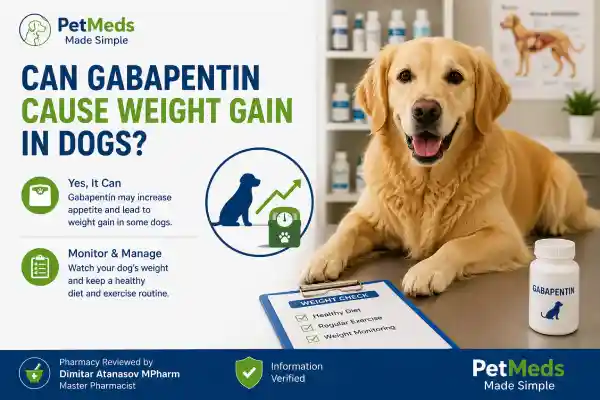
Can gabapentin cause weight gain in dogs? Gabapentin does not usually cause weight gain in dogs directly, but some dogs may gain weight while taking gabapentin because they become less active, feel more comfortable after pain relief, or experience changes in appetite and daily activity. In most cases, weight gain is related to lifestyle changes, the underlying medical condition, or long-term management rather than the medication itself. If your dog gains weight rapidly or continues gaining weight despite a stable diet, your veterinarian should investigate other possible causes.
Can Gabapentin Cause Weight Gain in Dogs?
When Owners Commonly Ask This
Most owners do not begin searching “Can Gabapentin Cause Weight Gain in Dogs?” immediately after starting treatment.
Instead, the question usually appears several weeks or even months later.
A typical scenario looks like this:
A dog begins taking gabapentin for arthritis, chronic nerve pain, intervertebral disc disease (IVDD), or recovery after surgery. During the first few weeks, everything seems to improve. The dog appears more comfortable, sleeps better, and no longer cries when standing up.
Then the owner notices something unexpected.
The dog starts putting on weight.
Perhaps the ribs become harder to feel, the waistline disappears, or the dog begins struggling during walks that were previously easy.
Naturally, owners begin asking:
- Can gabapentin cause weight gain in dogs?
- Has gabapentin slowed my dog’s metabolism?
- Is gabapentin increasing my dog’s appetite?
- Should I reduce the dose?
- Should I change my dog’s diet?
- Is the weight gain actually caused by another disease?
These are excellent questions because weight gain should never be dismissed as “just getting older.”
While gabapentin can contribute indirectly to weight gain in dogs, there are often several factors working together.
Owners noticing other long-term changes during treatment may also find these PMMS guides helpful:
- Can Dogs Take Gabapentin Long-Term Safely?
- Why Does Gabapentin Stop Working in Dogs?
- Why Does My Dog Sleep So Much on Gabapentin?
- Why Is My Dog Weak After Gabapentin?
- Why Is My Dog Panting After Gabapentin?
Can Gabapentin Cause Weight Gain in Dogs?
The short answer is:
Yes—but usually not directly.
This distinction is extremely important.
Many owners assume that because their dog started gaining weight after beginning gabapentin, the medication must be responsible.
However, correlation does not always equal causation.
Current veterinary evidence suggests that gabapentin is not considered a medication that commonly causes direct weight gain in dogs.
Instead, weight gain often develops because gabapentin changes how a dog feels, rather than how the body stores fat.
For example, if a painful arthritic dog suddenly feels much more comfortable after starting gabapentin, it may:
- eat meals more enthusiastically
- accept more treats
- rest more during recovery
- exercise less because activity restrictions remain in place
- regain body condition lost during chronic illness
These changes can gradually lead to weight gain, even though gabapentin itself is not directly increasing body fat.
What Does “Weight Gain” Actually Mean?
Owners often use the phrase weight gain to describe several very different situations.
Not every increase on the scale represents unhealthy fat accumulation.
Veterinarians generally distinguish between:
| Type of Weight Change | What It May Mean |
|---|---|
| Healthy weight gain | Recovery after illness or surgery |
| Increased body fat | Consuming more calories than are burned |
| Fluid retention | Possible medical condition requiring evaluation |
| Muscle gain | Increased activity during rehabilitation |
| Rapid unexplained weight gain | May indicate another disease |
Understanding which type of weight gain has occurred is one of the first steps in deciding whether gabapentin is actually involved.
Does Gabapentin Directly Slow Metabolism?
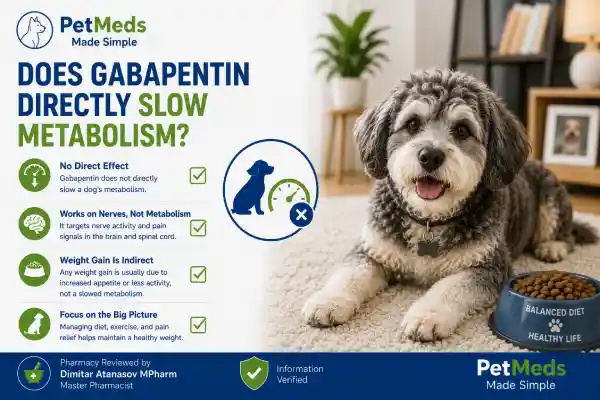
At present, there is no strong veterinary evidence showing that gabapentin directly slows metabolism in healthy dogs.
Unlike some medications that alter hormone production or metabolic rate, gabapentin primarily acts on the nervous system by reducing abnormal nerve signaling.
Its main therapeutic effects include:
- reducing neuropathic pain
- improving comfort
- decreasing nerve hypersensitivity
- helping control some seizure disorders
- reducing stress in selected situations
These actions do not automatically lead to increased fat storage.
However, indirect effects can still influence body weight over time.
Why Indirect Weight Gain Is More Common
Many owners asking “Can Gabapentin Cause Weight Gain in Dogs?” are actually observing changes caused by lifestyle rather than metabolism.
Consider this example.
Before treatment:
- the dog avoids walking because movement hurts
- appetite is reduced due to chronic pain
- activity levels are low
- body condition gradually declines
After successful pain management:
- eating becomes easier
- the dog finishes every meal
- treats become rewarding again
- owners feel relieved and offer additional snacks
- exercise restrictions may still remain in place
Over several months, calorie intake exceeds calorie expenditure.
The result?
Gradual weight gain.
This is one of the most common explanations veterinarians see in clinical practice.
Why Dogs May Gain Weight During Gabapentin Therapy
There is rarely a single explanation.
Instead, several factors often contribute simultaneously.
1. Reduced Activity
One of the most important reasons dogs gain weight while receiving gabapentin is reduced daily activity.
Gabapentin commonly causes temporary:
- sleepiness
- mild sedation
- relaxation
- decreased enthusiasm for vigorous exercise
Although these effects often improve after the first several days, some dogs remain less active than usual.
Even a modest reduction in daily exercise can gradually increase body weight if food intake remains unchanged.
Owners noticing increased sleep may also wish to read:
- Why Does My Dog Sleep So Much on Gabapentin?
- How Long Does Gabapentin Sedation Last in Dogs?
- Can Senior Dogs Take Gabapentin Safely?
2. Pain Relief Improves Appetite
This is one of the most overlooked explanations.
Pain suppresses appetite in many dogs.
A dog with severe arthritis, spinal disease, or chronic nerve pain may:
- eat less
- refuse treats
- lose muscle mass
- become underweight
Once gabapentin begins relieving pain, the dog often enjoys eating again.
Owners are delighted to see their pet finishing meals, but if calorie intake increases substantially while activity remains limited, gradual weight gain becomes almost inevitable.
In these cases, weight gain may actually be a sign that your dog’s quality of life has improved, provided the increase remains within a healthy range.
3. Increased Treat Consumption
Many owners unintentionally increase their dog’s calorie intake after starting medication.
For example:
- hiding capsules in peanut butter
- using cheese every day
- giving pill pockets multiple times daily
- rewarding the dog after every dose
- offering extra treats because the dog “looks happier”
Although each treat seems insignificant, the calories accumulate surprisingly quickly.
For small and medium-sized dogs, even a few extra treats every day may lead to noticeable weight gain over several months.
Does Gabapentin Increase Appetite in Dogs?

One of the most common follow-up questions after “Can Gabapentin Cause Weight Gain in Dogs?” is whether gabapentin actually makes dogs hungrier.
Current veterinary evidence suggests that gabapentin does not consistently increase appetite in dogs as a direct pharmacological effect.
However, many owners notice that their dog begins eating more after starting treatment.
This difference is important.
In most cases, the medication itself is not stimulating hunger. Instead, improved comfort allows the dog to return to more normal eating habits.
For example, a dog with chronic arthritis may have been eating less because:
- standing at the food bowl was painful
- walking to the kitchen caused discomfort
- chronic pain reduced appetite
- anxiety associated with pain affected eating behavior
Once pain improves, appetite often returns to normal.
Owners sometimes mistake this healthy recovery for a medication side effect.
Dogs experiencing changes in appetite may also benefit from reading:
- Why Is My Dog Crying Despite Gabapentin?
- Why Is My Dog Still Limping After Gabapentin?
- Can Dogs Take Gabapentin Long-Term Safely?
Can Long-Term Gabapentin Therapy Lead to Obesity?
This is where veterinarians become more cautious.
Can gabapentin cause weight gain in dogs during long-term treatment?
Indirectly, yes.
A dog that remains:
- less active
- receives extra treats daily
- continues eating larger portions
- exercises less because of arthritis
may gradually become overweight.
The medication is not necessarily causing obesity.
Instead, lifestyle changes associated with treatment increase the likelihood of excessive calorie intake.
Veterinarians therefore recommend monitoring body weight throughout long-term therapy rather than waiting until obesity develops.
Recovery Weight Gain vs. Unhealthy Weight Gain
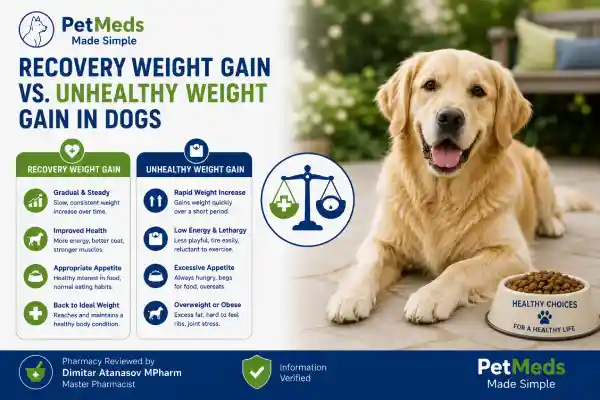
One of the biggest mistakes owners make is assuming that every increase in body weight is harmful.
Sometimes weight gain represents successful recovery.
Consider these two examples.
Healthy Recovery
A dog recovering from surgery:
- regains muscle
- resumes eating normally
- becomes stronger
- reaches an ideal Body Condition Score
This is desirable.
Unhealthy Weight Gain
Another dog:
- sleeps most of the day
- receives high-calorie treats with every dose
- exercises less
- gradually develops excess body fat
This situation deserves attention.
The difference is not simply the number on the scale.
It is where the additional weight comes from.
| Healthy Weight Gain | Unhealthy Weight Gain |
|---|---|
| Improved muscle condition | Increased body fat |
| Better recovery | Progressive obesity |
| Healthy appetite | Excess calorie intake |
| Improved mobility | Reduced mobility |
| Stable Body Condition Score | Rising Body Condition Score |
Does Sedation Contribute to Weight Gain?
Yes—it can.
Sedation is one of the most common side effects of gabapentin.
Dogs that spend more time resting naturally burn fewer calories.
For some patients, this decrease is temporary and disappears after several days.
Others, particularly senior dogs or dogs receiving higher doses, may remain less active throughout treatment.
Reduced daily energy expenditure means that even if food intake stays exactly the same, gradual weight gain may occur over time.
Owners noticing persistent sleepiness should also review:
- Why Does My Dog Sleep So Much on Gabapentin?
- How Long Does Gabapentin Sedation Last in Dogs?
- Why Is My Dog Weak After Gabapentin?
Are Senior Dogs More Likely to Gain Weight?
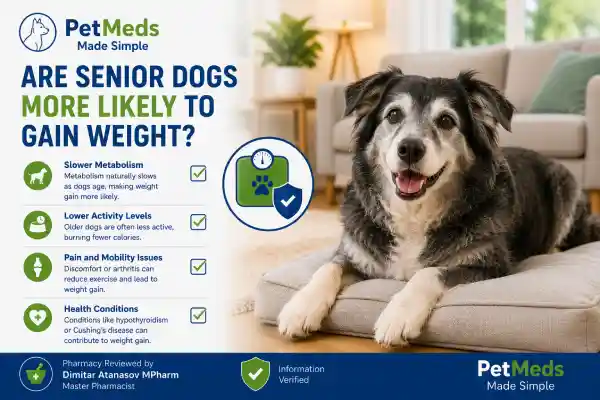
Yes.
Senior dogs are often at greater risk of weight gain during gabapentin therapy—not because the medication changes their metabolism, but because several contributing factors occur together.
Older dogs are more likely to have:
- osteoarthritis
- chronic pain
- reduced muscle mass
- slower activity levels
- chronic kidney disease
- multiple medications
Many also receive gabapentin for months or even years.
These combined factors make careful weight monitoring especially important.
Owners of older pets may also find these articles useful:
- Can Senior Dogs Take Gabapentin Safely?
- Can Dogs Take Gabapentin Long-Term Safely?
- Can Gabapentin Cause Weak Back Legs?
Which Dogs Are Most at Risk?
Although Can Gabapentin Cause Weight Gain in Dogs? can apply to any breed, some dogs are naturally more prone to obesity.
Examples include:
- Labrador Retrievers
- Golden Retrievers
- Beagles
- Pugs
- Cocker Spaniels
- Dachshunds
If these breeds become less active while receiving gabapentin, maintaining an appropriate calorie intake becomes even more important.
Breed predisposition does not mean weight gain is inevitable.
It simply means owners should monitor body condition more closely.
How Should Owners Monitor Their Dog’s Weight?
Veterinarians recommend monitoring more than the number on the scale.
The Body Condition Score (BCS) is often a better indicator of healthy body weight.
Healthy Body Condition Checklist
| Finding | Healthy Dog |
|---|---|
| Ribs | Easily felt with light pressure |
| Waist | Visible from above |
| Abdomen | Tucked up when viewed from the side |
| Spine | Not excessively prominent |
| Fat deposits | Minimal |
If your dog’s ribs become difficult to feel or the waist gradually disappears, weight gain may be progressing beyond a healthy range.
Can Weight Gain Affect Pain Management?
Absolutely.
This creates an unfortunate cycle.
Additional body weight increases stress on:
- hips
- knees
- elbows
- spine
More stress means:
- greater discomfort
- less exercise
- additional weight gain
For dogs taking gabapentin because of arthritis or spinal disease, preventing obesity becomes an important part of pain management itself.
Weight control often improves comfort just as much as medication adjustments.
Could Another Disease Be Responsible?
Yes.
One reason veterinarians do not automatically blame gabapentin is that several medical conditions cause weight gain independently.
Examples include:
| Disease | Possible Signs |
|---|---|
| Hypothyroidism | Weight gain, lethargy, poor coat quality |
| Cushing’s disease | Increased appetite, pot-bellied appearance, excessive drinking |
| Heart disease | Fluid retention rather than true fat gain |
| Chronic kidney disease | Weight changes vary depending on disease stage |
This is why unexplained weight gain should always be discussed with your veterinarian, particularly if it develops rapidly or is accompanied by other symptoms.
When Should You Contact Your Veterinarian?
Contact your veterinarian if your dog:
- gains weight rapidly
- develops obesity despite a controlled diet
- refuses exercise
- becomes significantly weaker
- develops excessive sleepiness
- shows increasing difficulty walking
- develops swelling rather than fat gain
- experiences a sudden change in appetite
Early intervention is far easier than treating established obesity.
Owners may also wish to review:
- Can Gabapentin Cause Constipation in Dogs?
- Can Gabapentin Cause Excessive Drooling in Dogs?
- Can Gabapentin Cause Neurological Side Effects?
- Can Dogs Overdose on Gabapentin?
- Can Dogs Take Gabapentin and NSAIDs Together?
How Veterinarians Determine Whether Gabapentin Is Contributing to Weight Gain
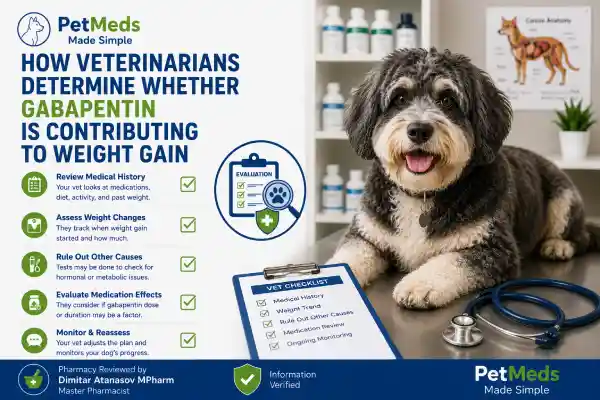
When owners ask, “Can Gabapentin Cause Weight Gain in Dogs?”, veterinarians rarely answer the question based solely on the number on the scale.
Instead, they ask a different question:
“Why has this dog gained weight?”
Weight gain is a clinical finding, not a diagnosis.
Several factors may be contributing simultaneously, including:
- reduced activity
- increased calorie intake
- improved appetite after pain relief
- underlying endocrine disease
- age-related changes
- decreased muscle mass
- medication-related lifestyle changes
The goal is to identify which factor is actually responsible before changing the treatment plan.
Step 1: Reviewing the Medical History
The first step is a detailed conversation with the owner.
Your veterinarian may ask questions such as:
- When did the weight gain begin?
- Did it start before or after gabapentin?
- How much weight has your dog gained?
- Has the appetite changed?
- Has activity decreased?
- Is your dog receiving more treats?
- Has another medication recently been started?
- Has your dog’s mobility improved or worsened?
These questions often reveal whether the weight gain is more likely related to recovery, reduced activity, or another medical condition.
Step 2: Body Condition Score (BCS)
Veterinarians rarely rely on body weight alone.
Instead, they evaluate the Body Condition Score (BCS).
Two dogs can weigh exactly the same while having very different body compositions.
Example
| Dog A | Dog B |
|---|---|
| Excellent muscle mass | Excess body fat |
| Visible waist | No waistline |
| Easily palpable ribs | Thick fat covering ribs |
| Ideal condition | Overweight |
For this reason, BCS is often a better indicator than the number displayed on the scale.
Step 3: Muscle Condition Score
Dogs receiving gabapentin for chronic pain sometimes lose muscle because they avoid exercise.
As pain improves, some owners notice weight gain and immediately assume the medication is responsible.
However, part of that increase may represent healthy muscle recovery rather than fat accumulation.
Veterinarians therefore evaluate:
- muscle over the spine
- shoulder muscles
- thigh muscles
- pelvic muscles
A dog gaining muscle during rehabilitation is very different from a dog accumulating excess body fat.
Step 4: Physical Examination
A complete physical examination helps determine whether another disease could explain the weight gain.
Your veterinarian evaluates:
| Examination | Why It Matters |
|---|---|
| Heart | Rules out cardiac disease |
| Lungs | Detects respiratory disease limiting exercise |
| Abdomen | Looks for fluid accumulation or enlargement |
| Thyroid region | Helps guide further testing if indicated |
| Joints | Assesses mobility limitations |
| Spine | Evaluates pain associated with IVDD or arthritis |
Many dogs believed to have “gabapentin weight gain” are actually experiencing reduced mobility because their underlying disease has progressed.
Owners may also benefit from reading:
- Why Is My Dog Still Limping After Gabapentin?
- Why Does Gabapentin Stop Working in Dogs?
- Why Is My Dog Crying Despite Gabapentin?
Step 5: Laboratory Testing
If weight gain appears excessive or develops rapidly, additional testing may be recommended.
Common tests include:
| Test | Purpose |
|---|---|
| Complete Blood Count (CBC) | Detects systemic disease |
| Serum Chemistry | Evaluates liver and kidney function |
| Thyroid Testing | Screens for hypothyroidism when appropriate |
| Urinalysis | Assesses kidney health |
| Blood Pressure | May identify concurrent disease |
| Endocrine Testing | When Cushing’s disease or other hormonal disorders are suspected |
These tests help ensure another medical condition is not mistaken for a medication side effect.
How Is Weight Gain Managed?
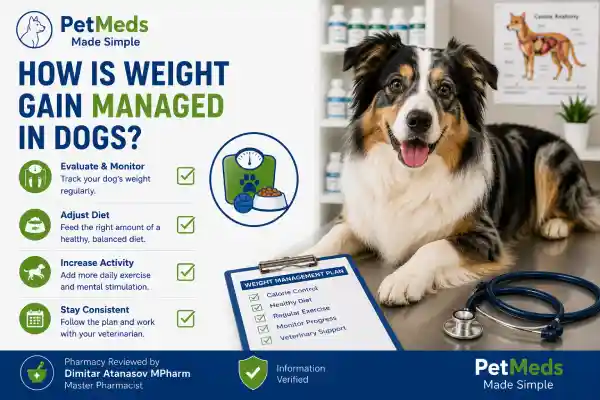
If Can Gabapentin Cause Weight Gain in Dogs? appears to be related to indirect effects of treatment rather than another disease, management focuses on lifestyle rather than immediately discontinuing the medication.
For many dogs, gabapentin continues providing excellent pain relief while weight is controlled through simple adjustments.
Review Daily Calorie Intake
One of the easiest places to start is nutrition.
Owners are often surprised by how many extra calories are added through:
- training treats
- pill pockets
- cheese
- peanut butter
- table scraps
- dental chews
A veterinarian may recommend calculating the dog’s total daily calorie intake, including treats.
Small reductions made consistently often prevent significant weight gain.
Increase Safe Physical Activity
Exercise remains one of the most effective tools for maintaining a healthy weight.
However, dogs taking gabapentin frequently have conditions that limit strenuous activity.
The goal is safe movement, not intense exercise.
Examples include:
- short leash walks
- controlled swimming (when appropriate)
- gentle rehabilitation exercises
- balance exercises
- slow hill walking
- indoor enrichment games
Increasing activity gradually helps avoid worsening pain while supporting healthy weight management.
Reassess the Pain Management Plan
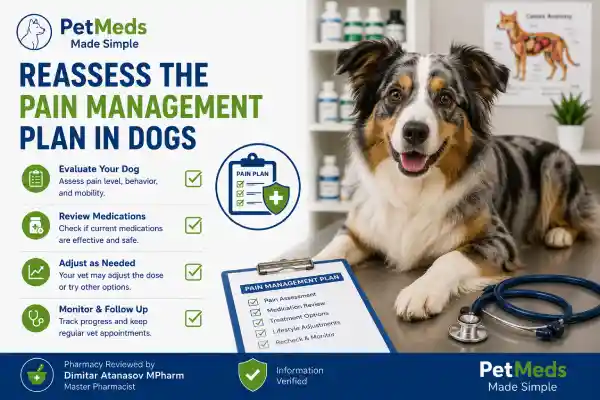
Sometimes the issue is not the medication itself.
A dog may remain inactive because chronic pain is still not adequately controlled.
In these situations, veterinarians may:
- adjust gabapentin dosing
- add another pain medication
- recommend rehabilitation
- suggest weight reduction before changing medications
Owners should also review:
- Can Dogs Take Gabapentin and NSAIDs Together?
- Can Dogs Take Gabapentin Long-Term Safely?
- Gabapentin Dosage for Dogs: Vet Guidelines, Weight Chart & Safety Tips
Should the Gabapentin Dose Be Reduced?
Not automatically.
Many owners assume reducing the dose will immediately solve the problem.
However, lowering the dose may allow chronic pain to return.
Pain often causes:
- reduced mobility
- muscle loss
- decreased quality of life
Any dose adjustment should be based on your veterinarian’s assessment of:
- pain control
- body condition
- activity level
- kidney function
- underlying disease
Never reduce or discontinue gabapentin without professional advice.
Can Weight Gain Be Prevented?
In many cases, yes.
Most dogs taking gabapentin do not become overweight when weight is monitored from the beginning.
Prevention Checklist
✔ Weigh your dog every 2–4 weeks during long-term therapy.
✔ Measure meals instead of estimating portions.
✔ Count treat calories.
✔ Use low-calorie treats whenever possible.
✔ Keep a Body Condition Score diary.
✔ Encourage daily activity appropriate for your dog’s medical condition.
✔ Schedule regular veterinary recheck examinations.
✔ Inform your veterinarian if appetite changes significantly.
✔ Avoid assuming every kilogram gained is caused by gabapentin.
Weight Monitoring Checklist for Owners
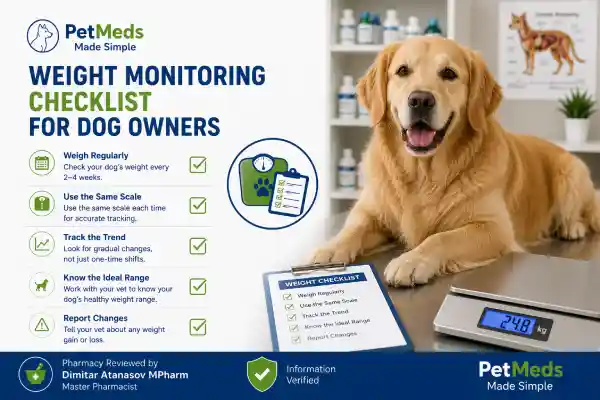
The following signs suggest your dog’s weight remains well controlled:
| Healthy Sign | Why It Matters |
|---|---|
| Waist remains visible | Indicates appropriate body fat |
| Ribs easily felt | Healthy Body Condition Score |
| Comfortable walking | Supports joint health |
| Stable monthly weight | Suggests balanced calorie intake |
| Good muscle tone | Indicates healthy activity level |
If several of these signs begin to disappear, it is time to reassess your dog’s nutrition and activity plan with your veterinarian.
Veterinarian Takeaway
Can gabapentin cause weight gain in dogs? Yes—but in most dogs, the effect is indirect rather than direct.
Current veterinary evidence does not support gabapentin as a medication that routinely slows metabolism or directly causes obesity. Instead, weight gain is more commonly associated with improved appetite after pain relief, reduced physical activity, long-term recovery, increased treat consumption, or the progression of age-related diseases.
For dogs receiving long-term gabapentin therapy, regular monitoring of Body Condition Score, monthly weight checks, and appropriate exercise are often far more important than changing the medication itself.
Bottom Line
Can gabapentin cause weight gain in dogs?
Yes, but usually not because the medication directly causes fat accumulation.
Most dogs that gain weight while taking gabapentin do so because they are eating more comfortably, moving less, receiving additional treats, or recovering from painful medical conditions that previously limited their appetite.
The good news is that weight gain is often preventable.
With appropriate calorie control, regular monitoring, safe exercise, and routine veterinary follow-up, most dogs can continue benefiting from gabapentin while maintaining a healthy body weight.
Frequently Asked Questions – Can Gabapentin Cause Weight Gain in Dogs
Can gabapentin cause weight gain in dogs if my dog’s diet has not changed?
Yes, can gabapentin cause weight gain in dogs is still a reasonable question even if your dog’s diet has remained the same.
Many dogs gain weight because their daily calorie expenditure decreases, not because they are eating more food.
For example, if gabapentin helps control chronic pain but your dog remains less active due to arthritis or recovery from surgery, fewer calories are burned each day. Over time, this difference can lead to gradual weight gain even without increasing meal size.
Can gabapentin increase my dog’s appetite?
Current veterinary evidence suggests that gabapentin does not consistently stimulate appetite in dogs.
However, many owners notice their dog eating better after treatment begins because:
chronic pain has improved
nausea from another illness has resolved
movement is less painful
overall quality of life has improved
In these situations, appetite is returning to normal rather than being artificially increased by gabapentin.
How quickly can weight gain occur after starting gabapentin?
There is no fixed timeline.
Some owners notice gradual changes after several weeks, while others do not observe any difference for several months.
Rapid weight gain over only a few days is unlikely to be caused by body fat and should prompt evaluation for other medical conditions such as fluid retention or endocrine disease.
Can senior dogs gain weight more easily while taking gabapentin?
Yes.
Senior dogs are generally more susceptible because they often have:
lower activity levels
arthritis
chronic pain
muscle loss
endocrine disorders
multiple medications
This is why regular weight monitoring is especially important in older dogs receiving long-term gabapentin therapy.
Owners may also wish to review:
Can Senior Dogs Take Gabapentin Safely?
Can Dogs Take Gabapentin Long-Term Safely?
Should I reduce my dog’s food if it starts gaining weight?
Possibly but never make major dietary changes without discussing them with your veterinarian, especially if your dog has a chronic medical condition.
Sometimes a small calorie reduction is appropriate.
Other dogs require:
increased activity
rehabilitation exercises
adjustment of treats rather than meals
investigation for another disease
Your veterinarian can help determine the safest approach
Can weight gain mean my dog’s pain is improving?
Surprisingly, yes.
Many dogs with chronic pain lose weight because discomfort reduces appetite and activity.
Once gabapentin provides effective pain relief, these dogs often:
regain muscle condition
finish meals
become more comfortable
regain previously lost body weight
Healthy recovery weight is very different from obesity.
Could another disease be causing the weight gain instead of gabapentin?
Absolutely.
Veterinarians commonly investigate conditions such as:
hypothyroidism
Cushing’s disease
heart disease
kidney disease
endocrine disorders
These illnesses may cause weight gain independently of gabapentin therapy.
This is one reason Can Gabapentin Cause Weight Gain in Dogs? should never be answered without considering your dog’s complete medical history.
Can exercise help prevent weight gain while taking gabapentin?
Yes.
Appropriate exercise is one of the most effective ways to maintain a healthy body weight.
Depending on your dog’s medical condition, your veterinarian may recommend:
short leash walks
swimming
rehabilitation therapy
controlled strengthening exercises
puzzle toys that encourage movement
The goal is regular, safe activity rather than strenuous exercise.
Should I stop gabapentin if my dog gains weight?
No!
Never discontinue gabapentin without veterinary advice.
Stopping the medication suddenly may:
worsen chronic pain
reduce mobility
decrease quality of life
increase the risk of withdrawal-related problems in some patients
If weight gain becomes a concern, your veterinarian can adjust the overall treatment plan while maintaining appropriate pain control.
Owners should also read
Should I stop gabapentin if my dog gains weight?
No.
Never discontinue gabapentin without veterinary advice.
Stopping the medication suddenly may:
- worsen chronic pain
- reduce mobility
- decrease quality of life
- increase the risk of withdrawal-related problems in some patients
If weight gain becomes a concern, your veterinarian can adjust the overall treatment plan while maintaining appropriate pain control.
Owners should also read:
- What Happens If Dogs Suddenly Stop Gabapentin?
- Why Does Gabapentin Stop Working in Dogs?
When should I contact my veterinarian about weight gain?
Arrange a veterinary appointment if your dog:
- gains weight rapidly
- develops obesity despite a controlled diet
- refuses exercise
- shows increased thirst or urination
- develops a pot-bellied appearance
- becomes increasingly lethargic
- loses muscle while gaining fat
- experiences major appetite changes
Early evaluation often identifies problems before they become more difficult to manage.
Reviewed By
Written by
Dimitar Georgiev Atanasov, MPharm
Master Pharmacist | Medication Safety Educator
Bulgarian Pharmaceutical Union (BPhU)
UIN: 0210000586
Pharmacy & Scientific Review by
Gergana Krasimirova Atanasova, MPharm
Assistant Lecturer, Faculty of Pharmacy
University “Prof. Dr. Asen Zlatarov” – Burgas
Master Pharmacist
Bulgarian Pharmaceutical Union (BPhU)
UIN: 0210000587
Veterinary Reviewed by
Dr. Valcho Georgiev Valchev, DVM
Licensed Veterinarian
Bulgarian Veterinary Union (BVS)
Registration No.: 28000115
Editorial Policy
At Pet Meds Made Simple, every article undergoes a structured editorial review process to ensure it reflects current veterinary and pharmaceutical knowledge.
Our content is:
- Written by a licensed Master Pharmacist.
- Scientifically reviewed by a second licensed Master Pharmacist.
- Independently veterinary reviewed by a licensed Doctor of Veterinary Medicine.
- Regularly updated as new evidence becomes available.
To learn more about how we create and review our educational content, please visit our Editorial Policy page.
Medical Review Statement
This article was written by a licensed Master Pharmacist, scientifically reviewed by a second licensed Master Pharmacist, and independently reviewed by a licensed veterinarian.
The information provided is intended for educational purposes only and should never replace professional veterinary examination, diagnosis, or treatment. Always consult your veterinarian before starting, stopping, or changing any medication prescribed for your dog.
Sources
- Plumb DC. Plumb’s Veterinary Drug Handbook. Latest Edition.
- Papich MG. Saunders Handbook of Veterinary Drugs: Small and Large Animal.
- Boothe DM. Small Animal Clinical Pharmacology and Therapeutics.
- Grimm KA, Lamont LA, Tranquilli WJ, Greene SA, Robertson SA. Veterinary Anesthesia and Analgesia.
- Merck Veterinary Manual. Obesity in Dogs.
- Merck Veterinary Manual. Pain Management in Dogs and Cats.
- AAHA 2022 Pain Management Guidelines for Dogs and Cats.
- WSAVA Nutritional Assessment Guidelines.
- Veterinary Information Network (VIN). Clinical discussions on long-term gabapentin therapy and weight management.
- Journal of the American Veterinary Medical Association (JAVMA). Articles on canine obesity and multimodal pain management.
- Frontiers in Veterinary Science. Reviews on chronic pain, mobility, and obesity in dogs.
- BSAVA Manual of Canine and Feline Clinical Nutrition.
Image Disclosure
Image Disclosure: Some images used in this article may be AI-generated to illustrate veterinary concepts and medication safety. They are intended for educational purposes only and should not replace professional veterinary diagnosis or treatment.