
Quick Answer
How Often Should Dogs Have Blood Tests While Taking Gabapentin? Most healthy dogs taking gabapentin alone do not require frequent blood tests solely because of the medication. However, senior dogs, dogs receiving long-term therapy, dogs taking multiple medications, or those with liver, kidney, or endocrine disease may benefit from periodic blood work. Your veterinarian will determine the most appropriate monitoring schedule based on your dog’s age, medical history, and overall health.
When Owners Commonly Ask This
The question “How Often Should Dogs Have Blood Tests While Taking Gabapentin?” usually appears after a dog has been taking gabapentin successfully for several weeks or months.
Many owners are surprised when their veterinarian recommends routine blood work even though their dog appears perfectly healthy.
Common questions include:
- Does gabapentin require routine blood monitoring?
- Should my dog have blood tests every year?
- Are liver and kidney tests necessary?
- Is blood work only recommended for senior dogs?
- How often should blood tests be repeated?
- What happens if we skip routine blood work?
These are excellent questions because preventive monitoring is one of the most important parts of long-term medication safety.
Fortunately, the answer is usually reassuring.
For most healthy dogs, gabapentin itself does not require the same intensive laboratory monitoring as some other veterinary medications.
However, blood testing often helps veterinarians detect unrelated diseases before obvious clinical signs develop.
Owners may also find these PMMS articles helpful:
- Gabapentin for Dogs: Vet Guidelines, Uses, Dosage & Safety
- Can Dogs Take Gabapentin Long-Term Safely?
- Can Gabapentin Affect Liver Enzymes in Dogs?
- Can Gabapentin Damage the Liver in Dogs?
- Can Dogs Take Gabapentin With NSAIDs?
- Can Dogs Overdose on Gabapentin?
- Can Gabapentin Cause Weight Loss in Dogs?
How Often Should Dogs Have Blood Tests While Taking Gabapentin?
Do Dogs Taking Gabapentin Always Need Blood Tests?
The short answer is:
No—not every dog receiving gabapentin requires routine blood testing simply because of the medication.
This is one of the biggest misconceptions surrounding long-term gabapentin therapy.
Unlike medications such as phenobarbital, which commonly require scheduled blood monitoring, gabapentin generally has a favorable safety profile.
Instead, veterinarians decide whether blood work is needed by evaluating the entire patient.
Important considerations include:
- age
- breed
- current medications
- underlying diseases
- duration of treatment
- previous laboratory results
- clinical signs
For a young, otherwise healthy dog receiving gabapentin for a short orthopedic recovery, repeated blood testing may not be necessary.
The situation is very different for an elderly dog with arthritis, kidney disease, and several medications.
Why Do Veterinarians Recommend Blood Tests During Long-Term Gabapentin Therapy?
Many owners assume blood tests are performed because veterinarians expect gabapentin to cause organ damage.
That is usually not the reason.
Instead, routine blood work helps monitor the dog’s overall health.
During long-term therapy, veterinarians may identify:
- chronic kidney disease
- early liver disease
- diabetes mellitus
- electrolyte abnormalities
- anemia
- infection
- dehydration
- endocrine disorders
Many of these conditions become detectable months before owners notice symptoms at home.
Routine monitoring therefore provides an opportunity for earlier diagnosis and treatment.
How Often Should Dogs Have Blood Tests While Taking Gabapentin?
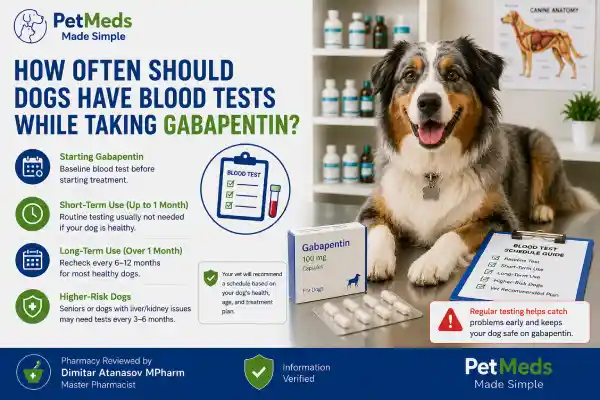
The answer depends on the individual patient.
There is no single schedule that applies to every dog.
Instead, veterinarians create a monitoring plan based on risk factors.
Healthy Adult Dogs
Dogs that are:
- otherwise healthy
- receiving gabapentin alone
- showing no clinical signs
often require only routine wellness examinations and blood work according to their veterinarian’s recommendations.
Senior Dogs
Older dogs deserve closer attention.
As dogs age, they become more likely to develop:
- kidney disease
- liver disease
- diabetes
- Cushing’s disease
- hypothyroidism
- cancer
Because of these age-related risks, veterinarians often recommend more frequent wellness blood testing even when gabapentin is working well.
Owners of older pets may also wish to review:
- Can Senior Dogs Take Gabapentin Safely?
- Can Dogs Take Gabapentin Long-Term Safely?
- Can Gabapentin Affect Liver Enzymes in Dogs?
- Can Gabapentin Damage the Liver in Dogs?
Which Dogs Need More Frequent Blood Monitoring?
Some dogs require closer follow-up than others.
Examples include dogs with:
- chronic kidney disease
- liver disease
- epilepsy
- diabetes mellitus
- Cushing’s disease
- obesity
- cancer
- multiple long-term medications
These patients are monitored more closely because their underlying diseases—not necessarily gabapentin—can change over time.
Regular blood work helps veterinarians adjust treatment before complications develop.
Which Blood Tests Do Veterinarians Commonly Recommend?

One of the reasons owners search “How Often Should Dogs Have Blood Tests While Taking Gabapentin?” is uncertainty about what is actually measured.
Routine blood work commonly includes:
| Test | Why It Is Important |
|---|---|
| Complete Blood Count (CBC) | Detects anemia, infection, inflammation |
| Serum Chemistry Panel | Evaluates liver and kidney function |
| ALT | Monitors liver cell health |
| ALP | Assesses biliary response |
| Creatinine | Evaluates kidney function |
| BUN | Assesses kidney performance and hydration |
| Electrolytes | Detects metabolic abnormalities |
| Blood Glucose | Screens for diabetes |
Together, these tests provide a comprehensive overview of your dog’s health.
Should Liver and Kidney Values Be Checked Together?
In most cases, yes.
Although owners often worry about liver damage after reading online discussions about medications, veterinarians usually evaluate both liver and kidney function during routine blood work.
This approach provides a more complete picture of overall health.
For example:
A mild ALT elevation may have little clinical significance if:
- kidney values are normal
- albumin is normal
- bilirubin is normal
- the dog feels well
- appetite remains normal
Conversely, abnormalities affecting several organ systems may require additional investigation.
Owners interested in medication safety may also find these PMMS articles useful:
- Can Gabapentin Damage the Liver in Dogs?
- Can Gabapentin Affect Liver Enzymes in Dogs?
- Can Dogs Take Gabapentin With NSAIDs?
- Can Seizure Medication Damage the Liver?
Why Blood Test Trends Matter More Than One Result
One of the most valuable lessons veterinarians teach owners is that trends are often more important than individual laboratory values.
For example:
If your dog’s ALT has remained stable for several years, a mild fluctuation may not be clinically significant.
On the other hand, steadily increasing liver or kidney values over several months deserve closer investigation.
This is why veterinarians compare:
- previous laboratory reports
- physical examinations
- medication history
- appetite
- body weight
- clinical signs
rather than focusing on one isolated number.
Monitoring trends allows subtle medical problems to be recognized much earlier.
When Should Blood Tests Be Repeated Sooner While Taking Gabapentin?
Although many dogs do well with routine wellness monitoring, there are situations where veterinarians recommend earlier blood testing.
Owners searching “How Often Should Dogs Have Blood Tests While Taking Gabapentin?” are often trying to determine whether their dog needs additional monitoring before the next scheduled examination.
Earlier blood work may be recommended if your dog develops:
- decreased appetite
- repeated vomiting
- diarrhea lasting several days
- unexplained weight loss
- excessive thirst
- increased urination
- unusual lethargy
- jaundice (yellow gums or eyes)
- persistent weakness
- neurological changes
These symptoms do not automatically mean gabapentin is causing a problem.
Instead, they signal that your veterinarian should reassess your dog’s overall health.
Owners may also wish to review:
- Can Gabapentin Cause Weight Loss in Dogs?
- Can Gabapentin Cause Weight Gain in Dogs?
- Can Gabapentin Damage the Liver in Dogs?
- Can Gabapentin Affect Liver Enzymes in Dogs?
Can Gabapentin Affect Liver or Kidney Blood Test Results?
One of the most common reasons owners search “How Often Should Dogs Have Blood Tests While Taking Gabapentin?” is concern that gabapentin might alter laboratory results.
Fortunately, current veterinary evidence suggests that gabapentin itself is not commonly associated with significant changes in routine blood chemistry values when used appropriately.
However, blood tests remain valuable because they may detect:
- previously undiagnosed kidney disease
- early liver disease
- dehydration
- electrolyte imbalances
- endocrine disorders
- age-related organ changes
In many cases, abnormal laboratory findings are related to the dog’s underlying health rather than gabapentin itself.
Which Dogs Need the Most Frequent Blood Monitoring While Taking Gabapentin?
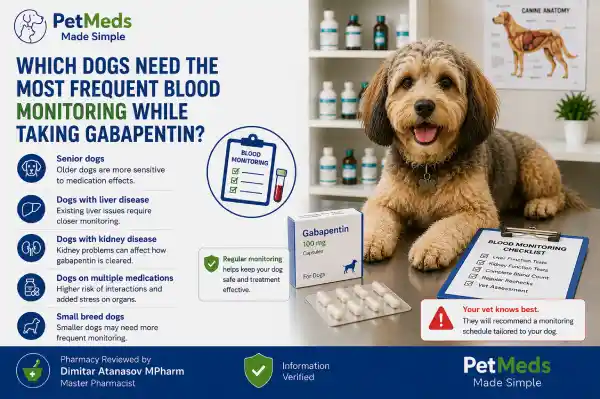
Not every dog requires the same follow-up schedule.
Veterinarians generally monitor certain groups more closely.
These include:
Senior Dogs
Older dogs are more likely to develop chronic medical conditions that may change gradually over time.
Routine laboratory monitoring often becomes part of their standard wellness care regardless of whether gabapentin is prescribed.
Dogs Receiving Multiple Medications
Many dogs taking gabapentin also receive:
- NSAIDs
- seizure medications
- antibiotics
- corticosteroids
- heart medications
Multiple medications increase the importance of periodic health evaluations because several drugs may influence different organ systems.
Owners may also find these PMMS guides helpful:
- Can Dogs Take Gabapentin With NSAIDs?
- Can Dogs Take Tramadol and Gabapentin Together?
- Can Seizure Medication Damage the Liver?
Dogs With Kidney Disease
Because gabapentin is eliminated primarily through the kidneys, dogs with chronic kidney disease often require individualized treatment plans.
Veterinarians may recommend:
- more frequent examinations
- repeat blood chemistry
- urinalysis
- blood pressure measurement
- dose adjustments when necessary
Monitoring kidney function helps ensure the medication remains both safe and effective.
Dogs With Liver Disease
Although How Often Should Dogs Have Blood Tests While Taking Gabapentin? often raises concerns about liver toxicity, veterinarians usually monitor these patients because of the underlying liver disease, not because gabapentin is considered highly hepatotoxic.
Regular blood work helps determine whether liver disease remains stable over time.
What Happens If Routine Blood Tests Are Skipped?
Many owners ask whether blood work is really necessary if their dog appears healthy.
The answer depends on the individual patient.
Skipping recommended blood tests may delay diagnosis of conditions such as:
- chronic kidney disease
- liver disease
- diabetes mellitus
- anemia
- electrolyte disturbances
- chronic inflammation
These conditions often develop gradually and may not produce obvious symptoms until they become more advanced.
Routine laboratory monitoring allows veterinarians to detect subtle abnormalities much earlier.
Can Blood Tests Detect Problems Before Symptoms Develop?
Yes.
One of the greatest advantages of routine monitoring is that laboratory abnormalities often appear before owners notice changes at home.
For example, blood work may reveal:
- mildly elevated kidney values
- early liver enzyme changes
- low protein levels
- developing anemia
- increased blood glucose
Identifying these abnormalities early often allows treatment to begin before significant illness develops.
What Additional Tests Might Be Recommended?
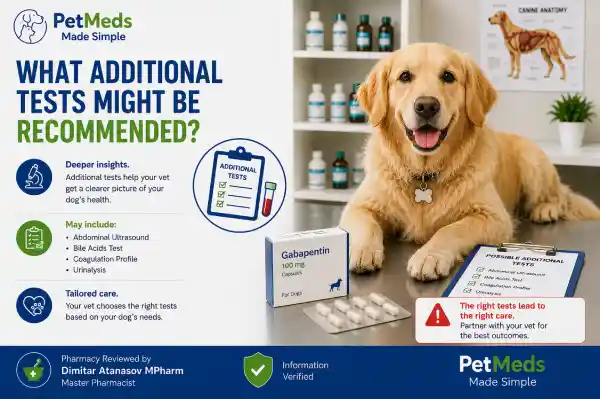
If routine blood work reveals abnormalities, your veterinarian may recommend additional diagnostic testing.
Depending on the situation, this may include:
| Additional Test | Purpose |
|---|---|
| Urinalysis | Assess kidney health and urine concentration |
| Urine Protein Testing | Evaluate kidney disease progression |
| Blood Pressure Measurement | Screen for hypertension |
| Abdominal Ultrasound | Evaluate liver, kidneys, and abdominal organs |
| Bile Acid Testing | Assess liver function |
| SDMA | Detect early kidney dysfunction |
Not every dog requires these tests.
Recommendations are based on the individual patient’s history and examination findings.
Can Monitoring Reduce Long-Term Health Risks?
Absolutely.
One reason veterinarians emphasize routine monitoring is that preventive medicine often improves long-term outcomes.
Regular examinations combined with appropriate laboratory testing may help detect:
- chronic disease earlier
- medication-related concerns
- nutritional problems
- endocrine disorders
- age-related organ changes
This proactive approach helps many dogs maintain a better quality of life as they age.
How Can Owners Prepare for Blood Testing?
Owners can help ensure accurate results by:
- bringing a current medication list
- informing the veterinarian of any supplements
- reporting recent vomiting or diarrhea
- mentioning appetite changes
- discussing weight changes
- asking whether fasting is recommended before testing
Providing complete information allows laboratory results to be interpreted more accurately.
Should Owners Be Concerned About Every Abnormal Result?
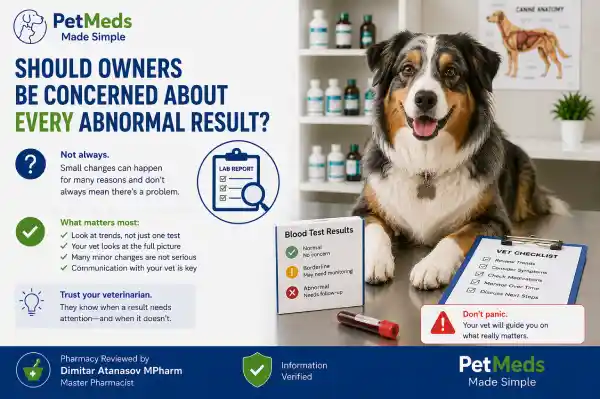
No.
One mildly abnormal laboratory value rarely tells the whole story.
Veterinarians interpret blood work together with:
- physical examination findings
- previous laboratory trends
- current medications
- clinical symptoms
- medical history
This comprehensive approach prevents unnecessary concern while ensuring significant disease is not overlooked.
Owners may also wish to read:
- Can Gabapentin Affect Liver Enzymes in Dogs?
- Can Gabapentin Damage the Liver in Dogs?
- Can Dogs Take Gabapentin Long-Term Safely?
- Can Gabapentin Cause Muscle Tremors in Dogs?
- Can Gabapentin Cause Excessive Drooling in Dogs?
- Can Dogs Overdose on Gabapentin?
- Why Does Gabapentin Stop Working in Dogs?
- Can Dogs Suddenly Stop Gabapentin?
Can Routine Blood Tests Help Dogs Stay Healthier While Taking Gabapentin?
One of the most valuable reasons veterinarians recommend routine monitoring is that blood tests often detect disease before obvious symptoms appear.
Owners searching “How Often Should Dogs Have Blood Tests While Taking Gabapentin?” sometimes worry that blood work is performed because gabapentin is considered dangerous.
Fortunately, that is rarely the case.
Instead, routine blood testing helps veterinarians monitor the entire patient, not just one medication.
Early laboratory abnormalities may identify:
- chronic kidney disease
- liver disease
- endocrine disorders
- anemia
- chronic inflammation
- electrolyte disturbances
- diabetes mellitus
Finding these problems early often leads to earlier treatment and improved long-term outcomes.
How Can Owners Keep Dogs Healthy During Long-Term Gabapentin Therapy?

Long-term success depends on much more than simply giving the medication every day.
Veterinarians recommend several practical habits that help dogs remain healthy while receiving gabapentin.
These include:
- giving every dose exactly as prescribed
- avoiding missed or double doses
- maintaining a healthy body weight
- encouraging appropriate daily exercise
- providing constant access to fresh water
- attending scheduled recheck examinations
- monitoring appetite and activity
- reporting new symptoms promptly
These recommendations support overall health regardless of the underlying medical condition.
Owners may also wish to review:
- Can Dogs Take Gabapentin Long-Term Safely?
- Gabapentin for Dogs: Vet Guidelines, Uses, Dosage & Safety
- Can Gabapentin Cause Weight Gain in Dogs?
- Can Gabapentin Cause Weight Loss in Dogs?
Should Healthy Young Dogs Have Blood Tests as Frequently as Senior Dogs?
Usually not.
One important principle behind How Often Should Dogs Have Blood Tests While Taking Gabapentin? is that monitoring should be individualized.
A healthy three-year-old Labrador receiving gabapentin after orthopedic surgery has very different monitoring needs than a thirteen-year-old Golden Retriever with arthritis, chronic kidney disease, and several medications.
Veterinarians adjust follow-up recommendations according to:
- age
- existing medical conditions
- duration of therapy
- physical examination findings
- previous laboratory results
- overall clinical stability
This personalized approach prevents unnecessary testing while ensuring higher-risk patients receive appropriate monitoring.
Can Wellness Blood Tests Improve Medication Safety?

Yes.
Although gabapentin itself generally has a favorable safety profile, routine wellness blood work provides an opportunity to evaluate the dog’s entire medical condition.
During a single visit, veterinarians may assess:
- liver health
- kidney function
- blood glucose
- hydration status
- protein levels
- electrolyte balance
- red blood cells
- white blood cells
This comprehensive assessment allows treatment plans to be adjusted before significant illness develops.
What Questions Should Owners Ask During Follow-Up Visits?
Follow-up appointments are an excellent opportunity to discuss long-term treatment.
Helpful questions include:
- Does my dog need blood tests today?
- Are liver and kidney values stable?
- Has anything changed since the previous visit?
- Should the gabapentin dose be adjusted?
- Are additional medications affecting the monitoring schedule?
- When should the next wellness examination be scheduled?
These conversations help owners understand why monitoring recommendations differ between patients.
Monitoring Schedule at a Glance
The following table summarizes common monitoring approaches.
| Dog Category | Typical Veterinary Monitoring* |
|---|---|
| Healthy adult dog on short-term gabapentin | Routine wellness examinations as recommended |
| Healthy dog receiving long-term gabapentin | Periodic wellness examinations with blood work based on veterinary assessment |
| Senior dog | More frequent wellness examinations and laboratory monitoring |
| Dog with chronic kidney disease | Individualized blood and urine monitoring |
| Dog with liver disease | Individualized liver monitoring schedule |
| Dog receiving multiple long-term medications | Periodic laboratory monitoring based on overall treatment plan |
*Monitoring schedules vary between individual patients and should always follow your veterinarian’s recommendations.
Veterinarian Takeaway
How Often Should Dogs Have Blood Tests While Taking Gabapentin?
For most healthy dogs receiving gabapentin alone, frequent blood testing is not required simply because of the medication.
Instead, veterinarians recommend laboratory monitoring according to the dog’s:
- age
- overall health
- concurrent diseases
- additional medications
- physical examination findings
- previous laboratory results
Senior dogs and dogs with chronic kidney disease, liver disease, endocrine disorders, or multiple medications often benefit from more frequent monitoring than healthy young dogs.
Routine blood work is an important part of preventive veterinary care and helps detect many diseases before they become clinically obvious.
Bottom Line
How Often Should Dogs Have Blood Tests While Taking Gabapentin? There is no universal schedule that applies to every dog.
Most healthy dogs taking gabapentin do not require intensive laboratory monitoring solely because of the medication.
However, periodic blood tests become increasingly valuable for senior dogs, dogs with chronic medical conditions, and those receiving long-term treatment or multiple medications.
Rather than monitoring gabapentin specifically, veterinarians use routine blood work to evaluate your dog’s overall health, identify developing diseases early, and ensure long-term treatment remains both safe and effective.
Frequently Asked Questions – How Often Should Dogs Have Blood Tests While Taking Gabapentin
How often should dogs have blood tests while taking gabapentin?
There is no single schedule. Monitoring depends on your dog’s age, medical history, other medications, and overall health. Healthy dogs may only require routine wellness blood work, while higher-risk dogs often need more frequent testing.
Does gabapentin require regular blood monitoring like phenobarbital?
Generally, no.
Gabapentin does not usually require routine therapeutic blood level monitoring in the same way that phenobarbital does.
Should senior dogs have blood tests more often?
Yes.
Older dogs are more likely to develop kidney disease, liver disease, diabetes, and other chronic illnesses that benefit from regular laboratory monitoring.
Which blood tests are commonly performed?
Routine monitoring may include:
Complete Blood Count (CBC)
Serum Chemistry Panel
Kidney values (BUN, creatinine, SDMA when indicated)
Liver enzymes (ALT, ALP, AST, GGT when appropriate)
Electrolytes
Blood glucose
Can blood tests detect problems before symptoms appear?
Absolutely.
Many chronic diseases produce laboratory abnormalities long before owners notice changes at home.
Does gabapentin commonly cause abnormal blood test results?
Current veterinary evidence suggests that clinically significant abnormalities caused directly by gabapentin are uncommon when prescribed appropriately.
Should dogs with kidney disease be monitored more closely?
Yes.
Because gabapentin is eliminated primarily through the kidneys, veterinarians often recommend individualized monitoring plans for dogs with chronic kidney disease.
Can dogs with liver disease safely take gabapentin?
Many can.
Your veterinarian may recommend periodic blood work to monitor the underlying liver disease while continuing treatment.
Should I skip blood tests if my dog seems healthy?
No.
Many important diseases develop gradually and may not produce obvious symptoms until they become more advanced.
Can routine blood tests improve my dog’s long-term health?
Yes.
Routine monitoring helps veterinarians identify developing medical problems earlier, allowing treatment to begin before significant illness develops
Sources
- Plumb DC. Plumb’s Veterinary Drug Handbook. Latest Edition.
- Papich MG. Saunders Handbook of Veterinary Drugs: Small and Large Animal.
- Boothe DM. Small Animal Clinical Pharmacology and Therapeutics.
- Grimm KA, Lamont LA, Tranquilli WJ. Veterinary Anesthesia and Analgesia.
- 2022 AAHA Pain Management Guidelines for Dogs and Cats.
- Merck Veterinary Manual – Routine Wellness Screening in Dogs.
- Merck Veterinary Manual – Kidney Disease in Dogs.
- Merck Veterinary Manual – Liver Disease in Dogs.
- Veterinary Information Network (VIN).
- BSAVA Manual of Canine and Feline Clinical Pathology.
- WSAVA Global Guidelines for Companion Animal Practice.
Medical Review Statement
This article was written by Dimitar Georgiev Atanasov, MPharm, scientifically reviewed by Gergana Krasimirova Atanasova, MPharm, and independently veterinary reviewed by Dr. Valcho Georgiev Valchev, DVM. It is intended for educational purposes only and should not replace professional veterinary diagnosis, individualized monitoring recommendations, or treatment decisions.
Image Disclosure
Image Disclosure: Some images used in this article may be AI-generated for educational purposes. They are designed to illustrate veterinary concepts and medication safety and should not be interpreted as clinical photographs.