
Quick Answer
Can Antibiotics Cause Hyperactivity in Dogs? Yes some antibiotics can occasionally cause hyperactivity, restlessness, pacing, agitation, anxiety-like behavior, or unusual energy in dogs. This is more commonly seen with medications that affect the nervous system, cause stomach discomfort, disrupt sleep, or interact with other drugs. While mild restlessness may not always be dangerous, sudden hyperactivity combined with tremors, confusion, panting, pacing, or neurological symptoms can sometimes signal toxicity or an adverse drug reaction that requires veterinary attention.
Most dog owners expect antibiotics to make dogs:
- Sleepy
- Tired
- Calm during recovery
So it can feel shocking when a dog suddenly becomes:
- Hyper
- Restless
- Unable to settle
- Pacing constantly
- Acting “wired”
- Barking more than usual
- Unable to sleep
And surprisingly…
Some antibiotics really can contribute to this behavior.
In many cases the hyperactivity is temporary.
But in others, it may signal:
- Neurological stimulation
- Medication intolerance
- Anxiety
- Drug interactions
- Toxicity
- Sleep disruption
- Pain or discomfort from the infection itself
This guide explains:
- Why hyperactivity happens
- Which antibiotics are most likely to trigger it
- When it’s considered dangerous
- How vets evaluate neurological side effects
- How to calm affected dogs safely
- Which symptoms require emergency care
Related articles:
- Why Is My Dog Acting Strange After Antibiotics?
- Can Antibiotics Cause Shaking in Dogs?
- Can Antibiotics Cause Depression in Dogs?
- Can Antibiotics Cause Weakness in Dogs?
- What Does Antibiotic Toxicity Look Like in Dogs?
- Can Antibiotics Cause Neurological Symptoms?
For broader guidance:
- Antibiotics for Dogs: Uses, Types, Dosage, Side Effects & Safety Guide
- Safest Antibiotics for Dogs: Vet Comparison Guide
Can Antibiotics Cause Hyperactivity in Dogs?
Can Antibiotics Really Cause Hyperactivity?
Yes — although it’s less common than nausea or diarrhea.
Some dogs become:
- Restless
- Overstimulated
- Unable to relax
- More vocal
- Hyper-alert
- Reactive to sounds or movement
This can happen because:
- Certain antibiotics affect the nervous system
- GI discomfort creates anxiety
- Pain improves suddenly, increasing activity
- Sleep becomes disrupted
- Medication interactions occur
Not every “hyper” dog is experiencing toxicity.
But unusual behavioral changes should always be monitored carefully.
What Does Hyperactivity Look Like in Dogs?
Hyperactivity after antibiotics may appear as:
Common Signs
| Behavior | Common? |
|---|---|
| Constant pacing | Very common |
| Restlessness | Common |
| Inability to settle | Common |
| Barking more than normal | Sometimes |
| Panting | Common |
| Zoomies or frantic movement | Sometimes |
| Sleep disruption | Common |
| Hyper-alert behavior | Sometimes |
Some owners describe it as:
“My dog suddenly acts wired.”
Which Antibiotics Are Most Likely to Cause Hyperactivity?

Certain antibiotics are more commonly associated with neurological or behavioral side effects.
Antibiotics More Commonly Linked to Hyperactivity
| Antibiotic | Possible Reason |
|---|---|
| Metronidazole | Neurological stimulation |
| Enrofloxacin | CNS effects in sensitive dogs |
| Fluoroquinolones | Nervous system stimulation |
| High-dose antibiotics | Increased toxicity risk |
| Multiple medications combined | Interaction effects |
Related:
Can Antibiotics Affect the Nervous System?
Yes.
Some antibiotics can cross into the nervous system and affect:
- Brain signaling
- Coordination
- Sleep
- Anxiety responses
- Sensory stimulation
This is more likely in:
- Senior dogs
- Dogs with liver disease
- Dogs with kidney disease
- Small breeds
- Dogs taking multiple medications
Can Stomach Upset Cause Hyperactivity?
Surprisingly, yes.
Dogs experiencing:
- Nausea
- Acid reflux
- Abdominal discomfort
- GI cramping
may become:
- Restless
- Unable to settle
- Pacing
- Panting
- Anxious
Sometimes owners mistake nausea-related discomfort for “hyperactivity.”
Related:
Can Hyperactivity Be a Sign of Toxicity?
Sometimes yes.
This is especially important if hyperactivity occurs alongside:
- Tremors
- Shaking
- Disorientation
- Weakness
- Stumbling
- Eye twitching
- Seizures
Toxicity Warning Signs
| Symptom | Emergency? |
|---|---|
| Tremors | Yes |
| Seizures | Emergency |
| Collapse | Emergency |
| Severe pacing | Sometimes |
| Disorientation | Yes |
| Neurological weakness | Yes |
Related:
Can Drug Interactions Cause Hyperactivity?
Absolutely.
This is especially important in dogs already taking:
- Anxiety medications
- Pain medications
- Seizure medications
- Steroids
- Behavioral medications
Some combinations may overstimulate the nervous system.
Related:
Can Puppies Become Hyper After Antibiotics?
Puppies may appear especially restless because:
- Their nervous system is more sensitive
- GI upset affects them more strongly
- They become stressed more easily
- Sleep disruption affects behavior rapidly
Small dogs may also show exaggerated reactions.
Why Does My Dog Pace All Night After Antibiotics?
Nighttime pacing often happens because of:
- Nausea
- Acid reflux
- Anxiety
- Neurological stimulation
- Sleep disruption
- Discomfort from the infection
This is especially concerning if:
- The dog cannot settle at all
- Tremors occur
- Panting becomes severe
- Confusion develops
Can Antibiotics Trigger Anxiety-Like Behavior?
Yes.
Some dogs become:
- Clingy
- Nervous
- Easily startled
- Unable to relax
- More reactive to sounds
This may happen because:
- The medication affects the nervous system
- The dog feels physically unwell
- GI discomfort creates stress
- The infection itself affects behavior
Related:
Which Dogs Are Most at Risk?
Higher-Risk Dogs
| Dog Type | Why Risk Increases |
|---|---|
| Senior dogs | Reduced drug tolerance |
| Small breeds | Higher sensitivity |
| Dogs with liver disease | Slower drug metabolism |
| Dogs with kidney disease | Reduced clearance |
| Dogs on multiple medications | Higher interaction risk |
| Dogs with seizure disorders | Increased neurological sensitivity |
How Veterinarians Diagnose Antibiotic-Related Hyperactivity
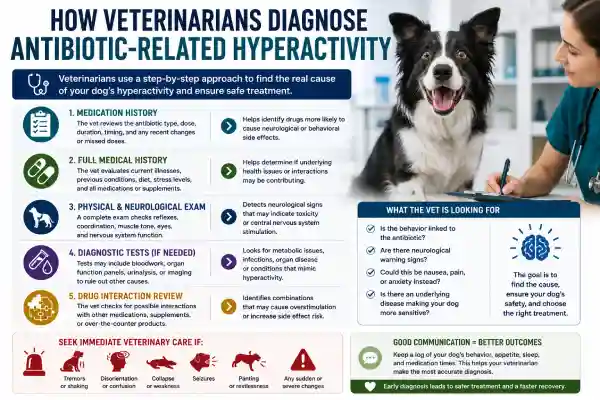
Veterinarians evaluate:
- Medication timing
- Neurological symptoms
- Drug interactions
- Existing health problems
- Toxicity risk
- GI symptoms
- Infection severity
Possible testing may include:
- Bloodwork
- Neurological examination
- Medication review
- Toxicity assessment
How Is Hyperactivity After Antibiotics Treated?
Treatment depends on the underlying cause.
Possible Treatments
| Cause | Possible Treatment |
|---|---|
| Mild side effects | Monitoring |
| Nausea | Anti-nausea medication |
| Acid reflux | GI protectants |
| Drug interaction | Medication adjustment |
| Toxicity | Hospitalization |
| Severe neurological signs | Emergency care |
How to Reduce the Risk of Hyperactivity
Prevention Tips
| Tip | Why It Helps |
|---|---|
| Follow dosing instructions carefully | Reduce overdose risk |
| Avoid double dosing | Prevent toxicity |
| Monitor behavior changes early | Detect reactions sooner |
| Keep a medication schedule | Avoid errors |
| Watch for pacing or tremors | Catch neurological signs |
| Inform your vet about ALL medications | Prevent interactions |
When Should You Call the Vet?
Contact your veterinarian immediately if hyperactivity occurs with:
- Tremors
- Seizures
- Weakness
- Collapse
- Severe panting
- Confusion
- Loss of coordination
- Persistent pacing
- Refusal to eat
- Continuous restlessness
These symptoms may indicate:
- Toxicity
- Neurological reactions
- Serious drug interactions
- Worsening illness
FAQ – Can Antibiotics Cause Hyperactivity in Dogs?
Can antibiotics make dogs hyper?
Yes some antibiotics may cause restlessness, pacing, or hyperactivity in sensitive dogs.
Which antibiotics cause hyperactivity most often?
Metronidazole and certain fluoroquinolones are more commonly associated with neurological side effects.
Is hyperactivity after antibiotics dangerous?
Mild restlessness may not be dangerous, but tremors, seizures, confusion, or severe pacing require immediate veterinary care.
Why is my dog pacing after antibiotics?
Pacing may be caused by nausea, acid reflux, anxiety, neurological stimulation, or discomfort.
Should I stop antibiotics if my dog becomes hyper?
Do not stop antibiotics without veterinary guidance unless emergency symptoms occur.
Medical Disclaimer
This article is for educational purposes only and does not replace professional veterinary advice, diagnosis, or treatment. The content is written and pharmacist-reviewed to help dog owners better understand antibiotic safety, neurological side effects, medication interactions, toxicity risks, and behavioral changes associated with veterinary medications. Always consult your veterinarian before starting, stopping, or changing any medication for your dog.Can Antibiotics Cause Hyperactivity in Dogs?
Sources
- Merck Veterinary Manual
- VIN Veterinary Partner
- American Veterinary Medical Association (AVMA)
- FDA Center for Veterinary Medicine
- WSAVA Global Veterinary Guidelines