
Quick Answer
Why is my dog weak after infection treatment? Mild weakness or lethargy can sometimes happen while dogs recover from infections or antibiotics because the body is healing, appetite may be reduced, hydration can drop, and gut bacteria may temporarily change. However, severe weakness, collapse, shaking, pale gums, breathing problems, inability to stand, vomiting, or worsening lethargy may signal dehydration, medication side effects, antibiotic toxicity, relapse of infection, or another serious medical problem that requires veterinary attention.
Many owners become worried when their dog:
- sleeps all day after antibiotics
- becomes weak after treatment
- walks slowly
- refuses to play
- loses appetite
- seems tired after infection recovery
- becomes shaky or unstable
- suddenly acts “not like themselves”
And honestly?
This is one of the MOST common concerns after dogs finish infection treatment.
Sometimes weakness is part of normal recovery.
But in other situations, weakness may signal:
- dehydration
- medication side effects
- worsening infection
- antibiotic toxicity
- relapse after stopping antibiotics
- neurological complications
- organ stress
- poor nutrition during illness
This guide explains:
- why dogs become weak after infection treatment
- what recovery weakness looks like
- when weakness becomes dangerous
- how long recovery usually lasts
- emergency warning signs owners should never ignore
Why Dogs Feel Weak After Infection Treatment
Recovering from infection takes enormous energy.
Even after antibiotics start working, the body may still be:
- repairing damaged tissue
- fighting inflammation
- restoring hydration
- rebuilding appetite
- balancing gut bacteria
- recovering from fever or stress
Many dogs simply feel exhausted after being sick.
This is especially common after:
- gastrointestinal infections
- respiratory infections
- severe skin infections
- dental infections
- long antibiotic courses
- hospitalization
This naturally connects with Why Does My Dog Sleep All Day After Antibiotics?
Why Is My Dog Weak After Infection Treatment?
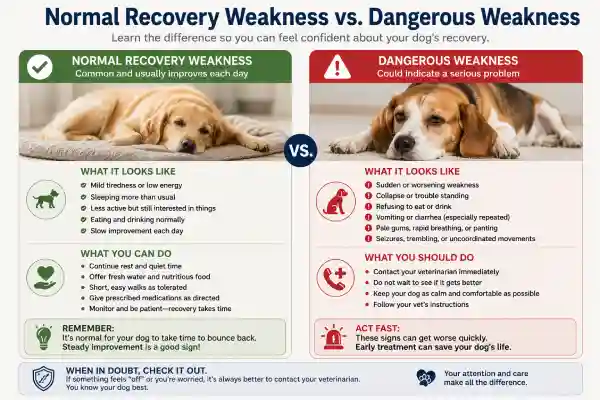
Normal Recovery Weakness vs Dangerous Weakness
This section is VERY important.
Some tiredness during recovery can be normal.
But certain symptoms should NEVER be ignored.
Normal Recovery Signs
| Usually Mild Recovery Signs | Often Monitored at Home |
|---|---|
| Sleeping slightly more | Common |
| Mild tiredness | Common |
| Lower activity level | Common |
| Mild appetite reduction | Sometimes expected |
| Gradual improvement over days | Reassuring |
Dangerous Weakness Signs
| Dangerous Symptoms | Veterinary Attention Needed |
|---|---|
| Collapse | Emergency |
| Pale gums | Serious |
| Difficulty breathing | Emergency |
| Severe shaking | Emergency |
| Inability to stand | Emergency |
| Severe vomiting | Serious |
| Worsening weakness daily | Serious |
| Confusion or seizures | Emergency |
This connects closely with Can Antibiotics Cause Neurological Problems in Dogs?, Can Antibiotics Cause Weakness in Dogs?, and What Does Antibiotic Toxicity Look Like in Dogs?
Common Causes of Weakness After Infection Treatment
Several different factors may contribute to weakness after illness.
Possible Causes
| Cause | Why It Happens |
|---|---|
| Infection recovery fatigue | The body is still healing |
| Dehydration | Reduced fluid intake |
| Poor appetite | Low calorie intake |
| Antibiotic side effects | GI upset or fatigue |
| Gut microbiome disruption | Energy and digestion changes |
| Relapse of infection | Infection returns |
| Fever or inflammation | Energy depletion |
| Organ stress | Liver/kidney involvement |
| Medication interactions | Nervous system or weakness effects |
Many owners don’t realize that weakness may come from MULTIPLE factors at the same time.
Can Antibiotics Make Dogs Weak?
Yes — absolutely.
Some antibiotics may contribute to:
- lethargy
- fatigue
- weakness
- reduced appetite
- nausea
- dizziness
- neurological side effects
Certain medications — especially metronidazole or high-dose antibiotic combinations — may occasionally affect the nervous system.
This is why articles like Can Antibiotics Cause Neurological Problems in Dogs?, Why Does My Dog Shake After Metronidazole?, and Can Antibiotics Cause Shaking in Dogs? are important parts of this topic cluster.
Can Dehydration Cause Weakness After Infection?
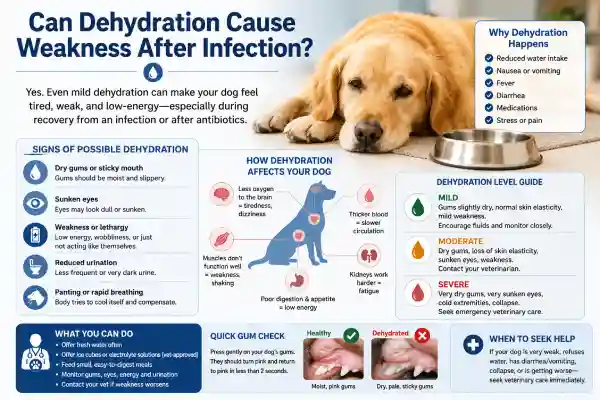
Very easily.
Dogs recovering from infection may drink less because of:
- nausea
- fever
- stress
- stomach upset
- medication side effects
Even mild dehydration can contribute to:
- weakness
- lethargy
- dizziness
- dry gums
- low energy
- slower recovery
Signs of Possible Dehydration
| Symptom | Possible Meaning |
|---|---|
| Dry gums | Dehydration |
| Sunken eyes | Fluid loss |
| Weakness | Poor hydration |
| Reduced urination | Dehydration |
| Panting | Possible fluid imbalance |
This naturally links with Why Is My Dog Drinking More Water After Antibiotics?
Can Gut Bacteria Affect Energy Levels?
Yes — and this is becoming a HUGE veterinary topic.
Antibiotics may temporarily disrupt healthy gut bacteria.
This may affect:
- digestion
- nutrient absorption
- appetite
- energy levels
- mood
- gut-brain communication
Some dogs become:
- weak
- tired
- anxious
- restless
- low-energy
after antibiotics partly because of microbiome disruption.
This strongly connects with:
Could the Infection Be Coming Back?
Unfortunately — yes.
Some dogs initially improve, then become weak again because:
- the infection was not fully eliminated
- antibiotics were stopped too early
- resistant bacteria survived
- the original diagnosis was incomplete
Possible Relapse Warning Signs
| Symptom | Possible Concern |
|---|---|
| Fever returns | Infection relapse |
| Weakness worsens | Ongoing illness |
| Appetite disappears | Serious concern |
| Pain returns | Incomplete treatment |
| Breathing changes | Respiratory involvement |
This is why Can You Stop Antibiotics Early in Dogs?, Can Dogs Become Resistant to Antibiotics?, and Miss a Dose of Antibiotics in Dogs? are extremely important educational articles.
Can Weakness Mean Neurological Problems?
Sometimes — yes.
Severe weakness may occasionally overlap with neurological symptoms.
Possible signs include:
- wobbling
- tremors
- confusion
- inability to stand
- dragging legs
- collapse
- seizures
This becomes MORE concerning if the dog is taking:
- metronidazole
- fluoroquinolones
- multiple medications together
This connects naturally with:
What Symptoms Are Emergencies?
This section is CRITICAL.
Seek emergency veterinary care immediately if your dog develops:
- collapse
- severe weakness
- inability to stand
- pale gums
- blue gums
- breathing difficulty
- seizures
- severe tremors
- repeated vomiting
- severe confusion
Emergency Warning Signs
| Symptom | Emergency Level |
|---|---|
| Collapse | EMERGENCY |
| Breathing difficulty | EMERGENCY |
| Seizures | EMERGENCY |
| Blue gums | EMERGENCY |
| Severe tremors | EMERGENCY |
| Severe weakness | Serious |
| Inability to stand | EMERGENCY |
| Repeated vomiting | Serious |
This closely connects with Can Dogs Have Allergic Reactions to Antibiotics?, Why Is My Dog Breathing Fast After Antibiotics?, and What Happens If Dogs Take Too Much Antibiotic?
Recovery Timeline: How Long Can Weakness Last?
Recovery depends on:
- infection severity
- hydration
- nutrition
- age
- medication type
- underlying illness
General Recovery Timeline
| Timeline | What May Be Normal |
|---|---|
| 24–48 hours | Mild tiredness |
| 3–5 days | Gradual energy improvement |
| 1–2 weeks | Recovery from severe illness |
| Longer than 2 weeks | Veterinary reevaluation needed |
Dogs should generally improve gradually — not worsen daily.
What Should Owners Do If Their Dog Seems Weak?
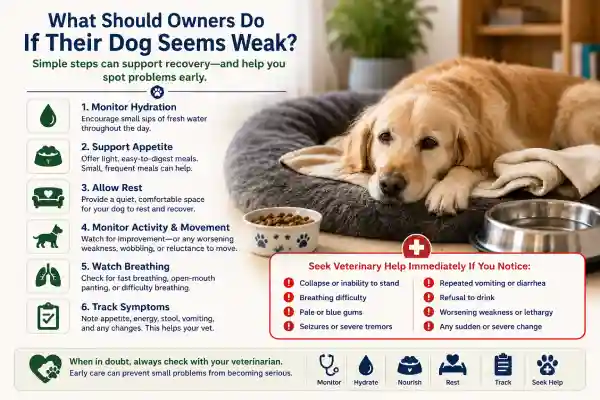
Helpful Steps
| Step | Why It Helps |
|---|---|
| Monitor appetite | Detect worsening illness |
| Encourage hydration | Prevent dehydration |
| Allow rest | Support recovery |
| Watch walking ability | Detect neurological issues |
| Monitor breathing | Detect emergencies |
| Report worsening weakness | Prevent serious complications |
NEVER:
- increase medication doses yourself
- stop antibiotics suddenly
- give human stimulants
- ignore collapse or breathing problems
- combine medications without guidance
How Veterinarians Evaluate Weakness After Infection
Veterinarians may evaluate:
- hydration status
- gum color
- temperature
- medication history
- neurological signs
- organ function
- infection progression
- appetite and weight loss
Possible tests may include:
- bloodwork
- urinalysis
- imaging
- neurological examination
- oxygen evaluation
- medication review
FAQ — Why Is My Dog Weak After Infection Treatment?
Is weakness normal after infection treatment in dogs?
Mild tiredness or lethargy may sometimes occur during recovery, especially after severe infections or long antibiotic courses.
Can antibiotics make dogs weak?
Yes. Some antibiotics may contribute to fatigue, lethargy, nausea, weakness, or neurological side effects.
How long does recovery weakness last?
Mild weakness may improve within days, while severe infections may require 1–2 weeks for recovery.
Can dehydration cause weakness after antibiotics?
Absolutely. Dehydration may significantly worsen lethargy and weakness in recovering dogs.
Can gut bacteria affect energy levels?
Yes. Antibiotics may temporarily disrupt healthy gut bacteria, which may influence appetite, digestion, and energy.
What symptoms are emergencies?
Collapse, breathing difficulty, seizures, pale gums, inability to stand, or severe worsening weakness require immediate veterinary care.
Could the infection be coming back?
Yes. Weakness that worsens after antibiotics may occasionally signal relapse or resistant infection.
Should I stop antibiotics if my dog becomes weak?
Never stop prescription medication without veterinary guidance unless instructed during an emergency evaluation.
Medical Disclaimer
This article is for educational purposes only and does not replace professional veterinary advice, diagnosis, or treatment. The content is written and pharmacist-reviewed to improve medication safety awareness and help dog owners better understand weakness after infection treatment, dehydration risks, antibiotic side effects, relapse warning signs, neurological symptoms, and recovery concerns in dogs. Always contact your veterinarian if your dog develops worsening weakness, collapse, breathing problems, seizures, or severe lethargy.Why Is My Dog Weak After Infection Treatment?
Sources & Scientific References
- PetsVetCheck – Relapse After Antibiotic Discontinuation in Dogs
- WebMD – Why Is My Dog Weak or Lethargic?
- Veteris – Lethargy in Dogs: Causes and Treatments
- Merck Veterinary Manual
- American Veterinary Medical Association (AVMA)
- Plumb’s Veterinary Drug Handbook
Images are created with AI – Why Is My Dog Weak After Infection Treatment?