Quick Answer
Why Is My Dog Drooling After Medication? If your dog is drooling after medication, the cause is often something relatively minor, such as the unpleasant taste of the medicine, temporary nausea, or mild irritation in the mouth. However, excessive drooling can also signal a medication side effect, an allergic reaction, accidental overdose, gastrointestinal upset, or an underlying medical problem that became noticeable after treatment started. While mild drooling that quickly resolves is often harmless, persistent drooling, vomiting, facial swelling, difficulty breathing, collapse, or severe lethargy require immediate veterinary attention.
Why Is My Dog Drooling After Medication?
Why Do Dogs Drool After Medication?
Drooling is one of the most common symptoms owners notice after giving medication.
Many dogs begin drooling within minutes after receiving:
- Tablets
- Capsules
- Liquid medications
- Antibiotics
- Pain medications
- Anxiety medications
In many cases, the medication itself is not dangerous. Instead, the dog simply dislikes the taste.
Dogs have highly sensitive taste receptors and may react dramatically to bitter medications.
Some dogs will:
- Drool excessively
- Foam at the mouth
- Lick repeatedly
- Paw at their face
- Shake their head
This reaction can look alarming but often resolves within minutes.
Is Drooling Always a Side Effect?
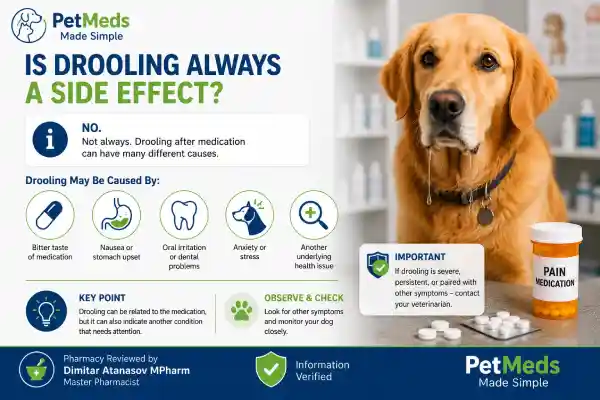
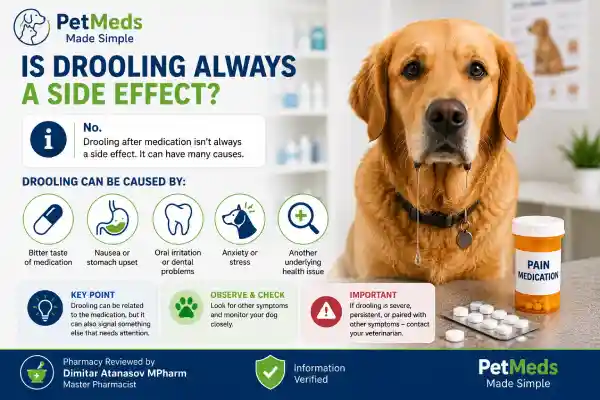
No.
This is one of the biggest misconceptions among dog owners.
Sometimes the medication is responsible.
Sometimes the medication simply reveals another issue that was already developing.
For example:
- Dental disease
- Nausea
- Stomach irritation
- Motion sickness
- Oral injury
- Foreign objects in the mouth
A dog that starts medication and begins drooling shortly afterward may create the impression that the drug caused the problem when the timing is actually coincidental.
7 Common Reasons Dogs Drool After Medication
1. The Medication Tastes Bitter
This is the most common cause.
Many medications have an extremely unpleasant taste.
Examples include:
- Tramadol
- Metronidazole
- Certain antibiotics
- Some compounded medications
Dogs may respond by producing large amounts of saliva.
Typical Signs
| Sign | Common? |
|---|---|
| Drooling | Yes |
| Foaming | Yes |
| Lip licking | Yes |
| Pawing at mouth | Yes |
| Vomiting | Usually No |
In these cases, symptoms often disappear within 10–30 minutes.
2. Medication-Induced Nausea
Some medications can upset the stomach.
Nausea frequently causes drooling before vomiting occurs.
Signs may include:
- Lip smacking
- Swallowing repeatedly
- Restlessness
- Eating grass
- Drooling
This is commonly seen with certain antibiotics and pain medications.
If your dog recently started an antibiotic, you may also find our guide on Why Is My Dog Panting After Antibiotics? helpful.
3. Gastrointestinal Irritation
Some medications may irritate the stomach lining.
This irritation can trigger:
- Drooling
- Reduced appetite
- Vomiting
- Nausea
Pain medications, particularly NSAIDs, are well-known for causing gastrointestinal side effects in some dogs.
Owners reading this article may also benefit from:
- Can Dogs Take Pain Medication Long-Term?
- Can Dogs Take Pain Medication Long-Term?
- Why Is My Dog Weak After Pain Medication?
4. Anxiety or Stress
Not every dog enjoys taking medication.
Some dogs become stressed the moment they see the pill bottle.
Stress-related drooling is especially common in:
- Rescue dogs
- Highly anxious dogs
- Dogs with previous medication experiences
You may notice:
- Trembling
- Panting
- Pacing
- Excessive salivation
This can mimic a medication reaction even when the drug is not responsible.
Which Medications Are Most Likely to Cause Drooling?
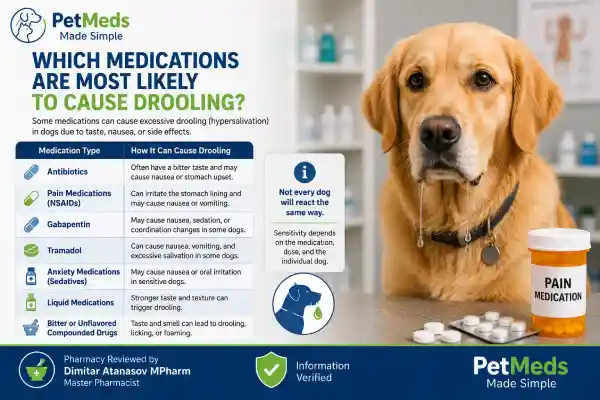
The following medications are commonly associated with hypersalivation.
| Medication Type | Can Cause Drooling? |
|---|---|
| Antibiotics | Yes |
| Gabapentin | Occasionally |
| NSAIDs | Sometimes |
| Tramadol | Yes |
| Anxiety Medications | Occasionally |
| Liquid Medications | Commonly |
| Bitter Compounded Drugs | Frequently |
Dogs taking gabapentin may also experience symptoms discussed in:
- Why Is My Dog Shaking After Gabapentin?
- Why Is My Dog Panting After Gabapentin?
- Can Gabapentin Cause Neurological Side Effects?
- What Happens If Dogs Suddenly Stop Gabapentin?
5. Oral Irritation
Sometimes a pill becomes lodged briefly in the mouth.
This can cause:
- Immediate drooling
- Pawing at the face
- Difficulty swallowing
- Repeated licking
This is more common in:
- Senior dogs
- Small breeds
- Dogs with dental disease
A quick drink of water after medication may help prevent this problem.
6. Allergic Reaction
Although uncommon, allergic reactions can cause drooling.
Warning signs include:
- Facial swelling
- Hives
- Itching
- Vomiting
- Breathing difficulty
This situation requires urgent veterinary attention.
Fortunately, true medication allergies are much less common than owners fear.
7. Medication Overdose
Excessive drooling may sometimes indicate toxicity.
This is particularly concerning if accompanied by:
- Tremors
- Weakness
- Collapse
- Seizures
- Extreme lethargy
Overdoses represent a medical emergency.
Normal vs Concerning Drooling
| Situation | Usually Normal | Veterinary Attention Needed |
|---|---|---|
| Mild drooling after pill | ✓ | |
| Bitter medication taste | ✓ | |
| Drooling lasting a few minutes | ✓ | |
| Excessive drooling for hours | ✓ | |
| Vomiting and drooling | ✓ | |
| Facial swelling | ✓ | |
| Difficulty breathing | ✓ | |
| Collapse | ✓ |
When Owners Commonly Ask This
Owners commonly search for this problem when:
- A new medication was started
- A dose was recently increased
- A dog received antibiotics
- Pain medication was prescribed after surgery
- Gabapentin was added to a treatment plan
- Foaming occurs immediately after swallowing a pill
In many of these cases, the issue turns out to be either medication taste or mild nausea rather than a dangerous reaction.
What Veterinarians Look For
When a dog develops drooling after medication, veterinarians try to determine whether the drooling is caused by:
- The medication itself
- A side effect such as nausea
- An allergic reaction
- An overdose
- An unrelated medical condition
Your veterinarian may ask:
- When did the drooling start?
- Did it begin after the first dose or after several doses?
- Has the medication dose recently changed?
- Is your dog eating normally?
- Is vomiting occurring?
- Is the drooling constant or intermittent?
- Has your dog received this medication before?
The answers often help identify whether the issue is medication-related or caused by another condition.
Could Certain Dogs Be More Sensitive?
Yes.
Some dogs appear far more sensitive to medication side effects than others.
Risk factors include:
- Senior dogs
- Dogs with liver disease
- Dogs with kidney disease
- Dogs taking multiple medications
- Small-breed dogs
- Dogs with gastrointestinal disorders
Older dogs in particular may metabolize medications more slowly, increasing the chance of nausea and excessive salivation.
Could Multiple Medications Increase the Risk?
Absolutely.
One of the most common situations veterinarians see is a dog taking:
- A pain medication
- An antibiotic
- Gabapentin
- A sedative
at the same time.
While each medication may be safe individually, combining several drugs can increase the likelihood of side effects such as:
- Nausea
- Stomach upset
- Drooling
- Weakness
- Sedation
Owners should always inform their veterinarian about every medication and supplement their dog receives.
Can Drooling Be a Sign the Medication Is Working?
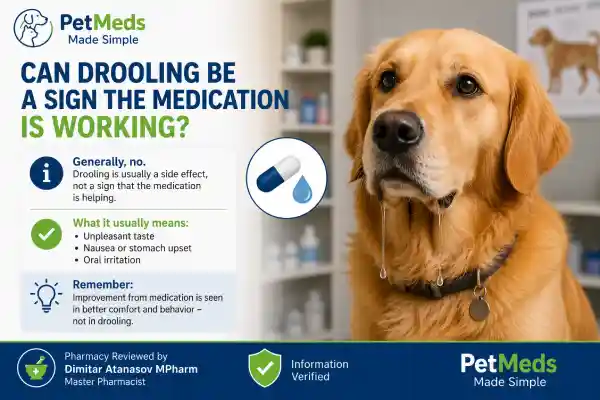
Usually not.
Drooling is generally considered a side effect rather than evidence that the medication is helping.
However, some medications used to treat painful conditions can initially cause mild nausea while the body adjusts.
The important distinction is whether the drooling remains mild and temporary or becomes persistent and severe.
What Should Owners Do?
If your dog starts drooling after medication:
Step 1: Stay Calm
Most cases are not emergencies.
Observe your dog carefully before assuming something serious is happening.
Step 2: Check for Other Symptoms
Look for:
- Vomiting
- Diarrhea
- Tremors
- Facial swelling
- Difficulty breathing
- Collapse
These signs are more concerning than drooling alone.
Step 3: Review the Medication
Consider:
- Was this the first dose?
- Was the medication hidden in food?
- Could your dog have chewed the tablet?
- Was the dose given correctly?
Step 4: Encourage Water Intake
A small drink of water may help remove residual medication taste from the mouth.
Step 5: Contact Your Veterinarian If Symptoms Continue
Persistent drooling should always be discussed with a veterinarian.
Do not stop prescription medications without professional guidance.
When Should Owners Contact Their Veterinarian?
Contact your veterinarian if:
- Drooling lasts longer than several hours
- Your dog refuses food
- Vomiting develops
- Diarrhea develops
- Weakness occurs
- New neurological symptoms appear
- The drooling worsens after each dose
Seek emergency care immediately if you notice:
- Facial swelling
- Difficulty breathing
- Collapse
- Seizures
- Suspected overdose
These symptoms may indicate a serious reaction.
Related Symptoms Owners Often Notice
Dogs that drool after medication may also experience:
- Lip licking
- Foaming at the mouth
- Gagging
- Panting
- Trembling
- Reduced appetite
- Vomiting
- Sleepiness
You may also find these PMMS guides helpful:
- Can Pain Medication Cause Loss of Appetite in Dogs?
- Why Is My Dog Acting Strange After Antibiotics?
- Why Is My Dog Crying Even After Pain Medication?
- Can Pain Medication Cause Personality Changes in Dogs?
- Can Pain Medication Cause Anxiety in Dogs?
- Why Is My Dog Breathing Fast on Gabapentin?
- Can Dogs Take Human Gabapentin Capsules?
- What Happens If Dogs Overdose on Pain Medication?
Bottom Line
If your dog is drooling after medication, the most common causes are a bitter medication taste, mild nausea, or temporary oral irritation. In many cases, the drooling resolves quickly and does not indicate a serious problem. However, excessive drooling accompanied by vomiting, facial swelling, breathing difficulties, weakness, tremors, or collapse should be treated as a medical concern and evaluated by a veterinarian immediately.
Veterinarian Takeaway
Drooling after medication is often more alarming to owners than it is dangerous to dogs. The majority of cases result from medication taste or mild gastrointestinal upset rather than a severe drug reaction. Nevertheless, sudden excessive drooling should never be ignored—especially when accompanied by other symptoms. Careful monitoring and prompt veterinary guidance can help determine whether the reaction is harmless or requires treatment.
Frequently Asked Questions – Why Is My Dog Drooling After Medication
Can antibiotics make dogs drool?
Yes. Some antibiotics have a bitter taste and may also cause nausea, both of which can lead to drooling.
Can gabapentin cause drooling in dogs?
Occasionally. While not among the most common side effects, some dogs may drool due to nausea or medication sensitivity.
Why is my dog foaming after taking medication?
Foaming is often caused by an unpleasant taste triggering excessive saliva production.
Is drooling after medication normal?
Mild temporary drooling can be normal. Persistent or severe drooling should be evaluated.
Can nausea cause drooling in dogs?
Yes. Nausea is one of the most common causes of excessive salivation.
Should I stop giving the medication?
Do not stop prescription medication unless instructed by your veterinarian.
Can pain medications cause drooling?
Yes. Certain pain medications may cause nausea, stomach irritation, or excessive salivation.
How long should drooling last?
Taste-related drooling often resolves within minutes. Longer-lasting drooling warrants veterinary advice.
Is drooling a sign of overdose?
Sometimes. Drooling combined with tremors, weakness, collapse, or seizures may indicate toxicity.
When should I seek emergency care?
Immediately seek veterinary attention if drooling occurs alongside facial swelling, breathing problems, collapse, seizures, or suspected overdose.
Reviewed By
Pharmacy Reviewed By
Dimitar Atanasov, MPharm
Master Pharmacist | Medication Safety Educator
Editorial Policy
At Pet Meds Made Simple, we are committed to providing accurate, evidence-based information about pet medications, veterinary treatments, medication safety, and common health concerns affecting dogs and cats.
For more information, see our Editorial Policy:
Sources
- Plumb’s Veterinary Drug Handbook.
- Merck Veterinary Manual.
- American Animal Hospital Association (AAHA) Clinical Guidelines.
- American Veterinary Medical Association (AVMA).
- Veterinary Pharmacology and Therapeutics.
- Small Animal Clinical Pharmacology.
- Veterinary Information Network (VIN).
- Journal of the American Veterinary Medical Association (JAVMA).
- Frontiers in Veterinary Science.
Medical Review Statement
This article was pharmacy-reviewed by Dimitar Atanasov, MPharm, Master Pharmacist, using current veterinary pharmacology references, canine medication safety guidelines, and published veterinary literature available at the time of review.
Images created with AI – Why Is My Dog Drooling After Medication