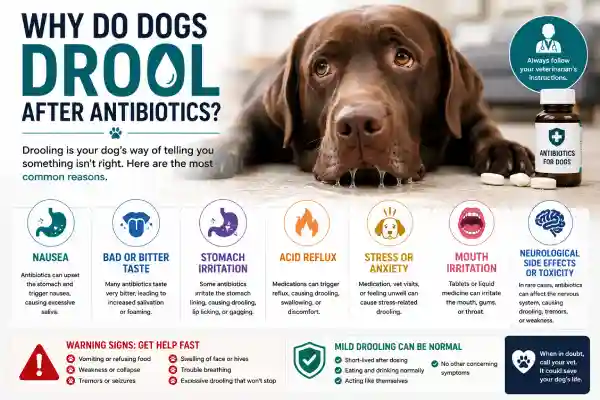
Why Does My Dog Drool After Antibiotics? Dogs may drool after antibiotics because of nausea, bad taste, stomach irritation, acid reflux, stress, or medication side effects. Some antibiotics especially metronidazole, doxycycline, clindamycin, and certain liquid medications are more likely to trigger excessive salivation. Mild drooling can sometimes be normal, but severe drooling combined with vomiting, weakness, swelling, tremors, or breathing problems may signal toxicity or an allergic reaction and should be evaluated by a veterinarian immediately.
Many dog owners become worried when they notice:
- Strings of saliva
- Lip smacking
- Foamy drool
- Wet bedding
- Constant swallowing
- Drooling immediately after medication
And honestly?
Drooling after antibiotics is actually a very common issue in dogs.
Sometimes it’s harmless.
Other times it can signal:
- Severe nausea
- Acid reflux
- Medication intolerance
- Mouth irritation
- Allergic reactions
- Neurological toxicity
This guide explains:
- Why antibiotics cause drooling
- Which antibiotics trigger it most often
- When drooling is considered normal
- When it becomes dangerous
- How veterinarians diagnose the cause
- What treatments may help
- How to reduce drooling after medication
Related articles:
- Why Is My Dog Vomiting After Antibiotics?
- Can Antibiotics Cause Acid Reflux in Dogs?
- Why Does My Dog Refuse Food After Antibiotics?
- Can Antibiotics Cause Weakness in Dogs?
- What Does Antibiotic Toxicity Look Like in Dogs?
- Can Dogs Have Allergic Reactions to Antibiotics?
For broader guidance:
- Antibiotics for Dogs: Uses, Types, Dosage, Side Effects & Safety Guide
- Best Antibiotics for Dogs
- Safest Antibiotics for Dogs: Vet Comparison Guide
Why Does My Dog Drool After Antibiotics?
Why Do Dogs Drool After Antibiotics?
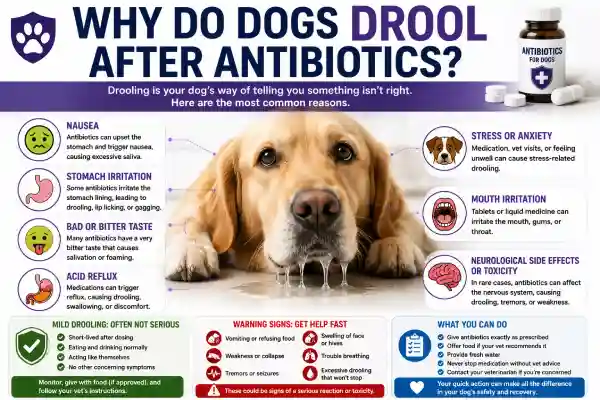
Drooling is usually caused by:
- Nausea
- Bad taste
- Stomach irritation
- Mouth irritation
- Anxiety
- Acid reflux
- Neurological side effects
Dogs cannot say:
“This medication makes me feel sick.”
Instead, they often show:
- Lip licking
- Excess swallowing
- Salivation
- Hiding
- Restlessness
- Foamy drool
Which Antibiotics Most Commonly Cause Drooling?
Some antibiotics are much more likely to trigger excessive salivation.
Antibiotics Commonly Linked to Drooling
| Antibiotic | Why It Causes Drooling |
|---|---|
| Metronidazole | Extremely bitter taste |
| Doxycycline | Nausea and reflux |
| Clindamycin | GI irritation |
| Clavamox | Stomach upset |
| Enrofloxacin | Bitter oral taste |
| Azithromycin | GI discomfort in sensitive dogs |
Related:
- Metronidazole Side Effects in Dogs
- Doxycycline Side Effects in Dogs
- Clindamycin Side Effects in Dogs
- Clavamox Side Effects in Dogs
- Enrofloxacin Side Effects in Dogs
- Azithromycin for Dogs
Can Bad Taste Cause Excessive Drooling?
Absolutely.
This is one of the biggest causes.
Some antibiotics taste extremely bitter.
If the tablet dissolves:
- In the mouth
- On the tongue
- In saliva
dogs may immediately:
- Foam at the mouth
- Drool heavily
- Paw at the face
- Panic briefly
Metronidazole is especially notorious for this.
What Does Nausea-Related Drooling Look Like?
Nausea often causes a very specific behavior pattern.
Common Signs
| Symptom | Common? |
|---|---|
| Lip licking | Very common |
| Excess swallowing | Common |
| Foamy saliva | Common |
| Refusing food | Common |
| Hunched posture | Sometimes |
| Vomiting | Sometimes |
| Restlessness | Common |
Related:
Can Antibiotics Cause Acid Reflux and Drooling?
Yes.
Acid reflux is a major hidden cause of drooling after antibiotics.
This happens because:
- Some medications irritate the esophagus
- Stomach acid increases
- GI motility changes
Dogs may then:
- Swallow repeatedly
- Burp
- Gag
- Drool
- Refuse food
- Seem uncomfortable lying down
Can Drooling Be a Sign of an Allergic Reaction?
Sometimes yes — especially if drooling appears suddenly and severely.
Warning Signs of Allergy
| Symptom | Emergency? |
|---|---|
| Facial swelling | Yes |
| Hives | Yes |
| Severe drooling | Sometimes |
| Trouble breathing | Emergency |
| Vomiting | Sometimes |
| Collapse | Emergency |
Related:
Can Antibiotic Toxicity Cause Drooling?
Yes — especially neurological toxicity.
This is particularly important with:
- Metronidazole toxicity
- Severe overdoses
- Drug interactions
- Liver disease
- Kidney disease
Toxicity Warning Signs
| Sign | Serious? |
|---|---|
| Tremors | Yes |
| Weakness | Yes |
| Disorientation | Yes |
| Excessive drooling | Sometimes |
| Shaking | Yes |
| Seizures | Emergency |
Related:
- Can Antibiotics Cause Shaking in Dogs?
- What Does Antibiotic Toxicity Look Like in Dogs?
- Can Antibiotics Cause Neurological Symptoms?
Is Mild Drooling Normal After Antibiotics?
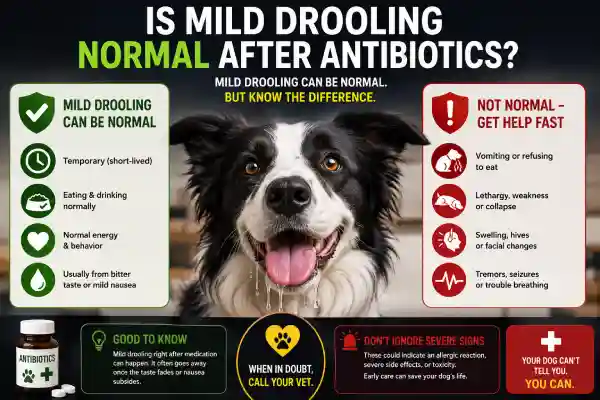
Sometimes yes.
Mild temporary drooling may occur:
- Right after dosing
- With bitter medications
- During mild nausea
- During temporary stomach upset
If your dog:
- Eats normally
- Drinks normally
- Behaves normally
- Stops drooling quickly
it’s often not dangerous.
When Is Drooling Dangerous?
Call your veterinarian if drooling occurs with:
- Repeated vomiting
- Severe lethargy
- Tremors
- Weakness
- Trouble breathing
- Collapse
- Facial swelling
- Refusal to eat
- Neurological symptoms
These symptoms may indicate:
- Toxicity
- Severe GI irritation
- Allergy
- Neurological reactions
- Worsening infection
Why Do Some Dogs Foam at the Mouth After Antibiotics?
Foaming often happens when:
- A bitter tablet dissolves
- Saliva production increases suddenly
- Dogs panic from the taste
This is especially common with:
- Metronidazole
- Certain liquid antibiotics
- Crushed tablets
Foaming alone is not always an emergency.
But persistent foaming plus weakness or tremors is concerning.
Can Giving Antibiotics With Food Reduce Drooling?
Very often, yes.
Food may help by:
- Reducing stomach irritation
- Decreasing acid reflux
- Preventing nausea
- Hiding bitter taste
Related:
- Can Dogs Take Antibiotics on an Empty Stomach?
Which Dogs Are More Sensitive to Drooling Side Effects?
Some dogs react more strongly.
Higher-Risk Dogs
| Dog Type | Why Risk Increases |
|---|---|
| Small breeds | More medication sensitivity |
| Dogs with GI disease | Easier stomach irritation |
| Senior dogs | Reduced tolerance |
| Dogs with anxiety | Stress worsens nausea |
| Dogs with reflux history | Increased salivation risk |
| Dogs taking multiple medications | Interaction risk |
Related:
How Veterinarians Diagnose the Cause
Veterinarians evaluate:
- Timing of drooling
- Type of antibiotic
- Neurological symptoms
- GI signs
- Mouth irritation
- Allergy signs
- Toxicity risk
Sometimes additional tests may include:
- Bloodwork
- Neurological exam
- Medication review
- Toxicity evaluation
How Is Antibiotic-Related Drooling Treated?
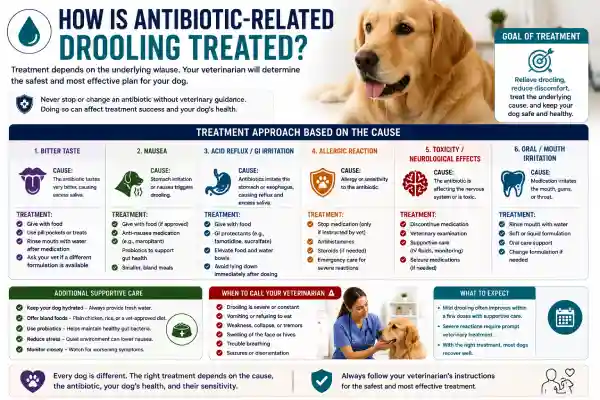
Treatment depends on the cause.
Possible Treatments
| Cause | Possible Treatment |
|---|---|
| Bitter taste | Give with food |
| Nausea | Anti-nausea medication |
| Acid reflux | GI protectants |
| Allergy | Emergency treatment |
| Toxicity | Hospitalization |
| Severe GI irritation | Medication change |
How to Reduce the Risk of Drooling
Prevention Tips
| Tip | Why It Helps |
|---|---|
| Give medication exactly as prescribed | Reduce irritation |
| Use food if vet-approved | Lower nausea risk |
| Avoid crushing bitter tablets | Prevent mouth exposure |
| Offer water after medication | Reduce residue |
| Monitor for neurological signs | Catch toxicity early |
| Watch appetite carefully | Detect GI problems |
FAQ – Why Does My Dog Drool After Antibiotics?
Is drooling after antibiotics normal in dogs?
Mild drooling can happen, especially with bitter medications or nausea.
Why does metronidazole make dogs drool?
Metronidazole has an extremely bitter taste that often triggers salivation and foaming.
Should I stop antibiotics if my dog drools?
Not without veterinary guidance. Mild drooling may not require stopping treatment.
Can drooling mean an allergic reaction?
Yes — especially if drooling occurs with swelling, hives, vomiting, or breathing problems.
When should I worry about drooling after antibiotics?
Seek veterinary care if drooling occurs with weakness, tremors, collapse, seizures, facial swelling, or breathing difficulty.
Medical Disclaimer
This article is for educational purposes only and does not replace professional veterinary advice, diagnosis, or treatment. The content is written and pharmacist-reviewed to improve medication safety awareness and help dog owners better understand antibiotic side effects, neurological reactions, digestive complications, and veterinary treatment considerations. Always consult your veterinarian before starting, stopping, or changing any medication for your dog.Why Does My Dog Drool After Antibiotics?
Sources
- Merck Veterinary Manual
- VIN Veterinary Partner
- American Veterinary Medical Association (AVMA)
- FDA Center for Veterinary Medicine
- WSAVA Global Veterinary Guidelines