Quick Answer
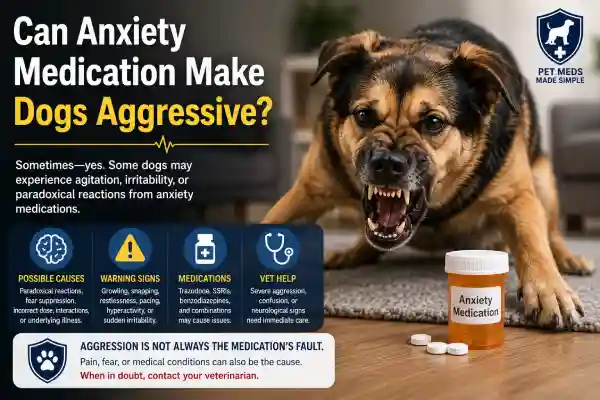
Can anxiety medication make dogs aggressive? Yes, some anxiety medications may occasionally contribute to aggression, irritability, agitation, restlessness, or paradoxical behavioral reactions in dogs. This may happen because of overstimulation, fear suppression, serotonin-related effects, incorrect dosing, medication interactions, or underlying behavioral conditions. Sudden severe aggression, confusion, collapse, overheating, or neurological symptoms require immediate veterinary attention.
Many dog owners become alarmed when their dog suddenly:
- growls after anxiety medication
- becomes irritable after trazodone
- snaps unexpectedly
- acts restless after calming medicine
- shows unusual aggression
- becomes reactive after fluoxetine
- seems confused or overstimulated
- behaves differently after medication
And honestly?
This is one of the MOST emotionally stressful medication side effects owners can experience.
Because people expect anxiety medications to:
calm dogs down — not make behavior worse
But in some situations:
- medications may not work as expected
- side effects may occur
- anxiety may still be present underneath
- paradoxical reactions may develop
This guide explains:
- why some dogs may become aggressive after anxiety medication
- aggression vs fear behavior
- paradoxical reactions
- serotonin syndrome warning signs
- medication interactions
- behavioral disinhibition
- emergency symptoms owners should never ignore
Can Anxiety Medication Make Dogs Aggressive?
Can Anxiety Medication Actually Cause Aggression?
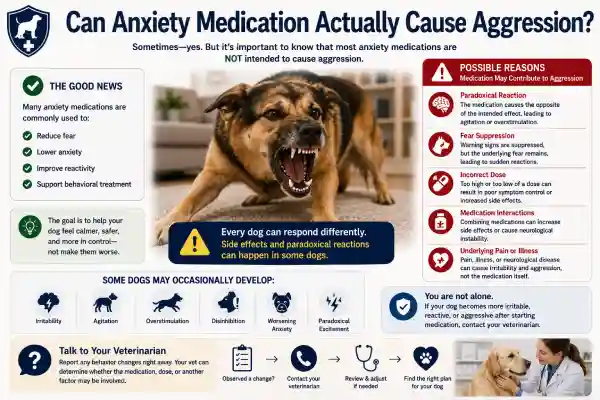
Sometimes – yes.
But this is VERY important:
most anxiety medications are NOT intended to cause aggression
In fact, many are commonly used to:
- reduce fear
- lower anxiety
- improve reactivity
- support behavioral treatment
However, some dogs may occasionally develop:
- irritability
- agitation
- overstimulation
- disinhibition
- worsening anxiety
- paradoxical excitement
Common Reasons
| Cause | Possible Effect |
|---|---|
| Paradoxical reaction | Increased agitation |
| Fear suppression | Unpredictable reactions |
| Incorrect dose | Poor symptom control |
| Medication interactions | Behavioral instability |
| Neurological side effects | Confusion or aggression |
| Underlying pain or illness | Irritability |
This strongly connects with:
- Can Dog Medications Cause Behavior Changes?
- Why Is My Dog Still Anxious After Medication?
- Can Trazodone Make Dogs More Anxious?
What Does Medication-Related Aggression Look Like?
Owners may notice:
- growling
- snapping
- guarding behavior
- sudden irritability
- pacing
- hyperactivity
- intense staring
- unpredictable reactions
Common Warning Signs
| Symptom | Possible Meaning |
|---|---|
| Growling | Fear or agitation |
| Snapping | Defensive reaction |
| Pacing | Restlessness |
| Dilated pupils | Stress or overstimulation |
| Hyperactivity | Possible paradoxical reaction |
| Trembling | Anxiety or neurological effects |
| Confusion | Serious side effect concern |
Many dogs are NOT truly “mean.”
Instead:
they may feel overwhelmed, overstimulated, frightened, or neurologically uncomfortable.
This naturally links with:
- Why Is My Dog Shaking Even After Anxiety Medication?
- Can Dogs Develop Fear of Medication?
- Signs of Medication Overdose in Dogs
What Is a Paradoxical Reaction?
This is one of the MOST important concepts owners should understand.
A paradoxical reaction happens when:
a calming medication causes the opposite effect
Instead of becoming calmer, a dog may become:
- more anxious
- restless
- hyperactive
- reactive
- irritable
- aggressive
This may occasionally happen with:
- trazodone
- benzodiazepines
- SSRIs
- multiple medications combined
Possible Signs of a Paradoxical Reaction
| Symptom | Severity |
|---|---|
| Restlessness | Mild to moderate |
| Hyperactivity | Moderate |
| Increased barking | Moderate |
| Irritability | Moderate |
| Aggression | Serious |
| Severe agitation | Serious |
This strongly connects with:
- Trazodone Side Effects in Dogs: Sedation, Risks & Safety
- Alprazolam Side Effects in Dogs: What to Watch For
- Fluoxetine Side Effects in Dogs: What to Watch For
Can Fear Suppression Cause Aggressive Behavior?
Yes — and this is VERY important behavioral medicine information.
Some anxious dogs normally display:
- warning signs
- avoidance behavior
- fear body language
But certain medications may:
reduce those warning behaviors without fully removing the fear itself
This is sometimes called:
behavioral disinhibition
The dog may:
- react faster
- skip warning signals
- appear more unpredictable
This does NOT necessarily mean the dog became “aggressive by personality.”
Instead:
- the fear may still exist underneath
- behavioral control may be altered
This naturally links with:
- Separation Anxiety in Dogs: Complete Treatment Guide
- Best Anxiety Medication for Dogs: Comparison Guide
- Can Dog Medications Be Given Together?
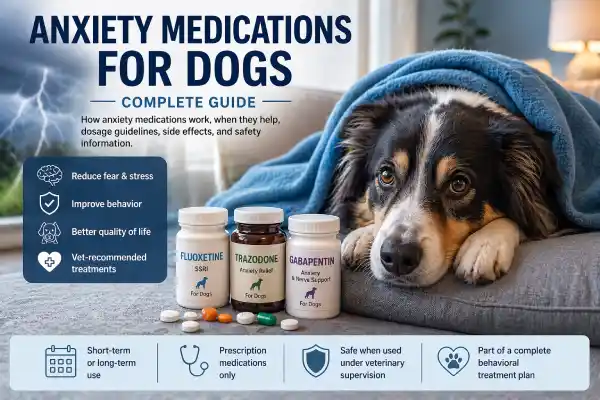
Which Anxiety Medications May Occasionally Affect Behavior?
Most dogs tolerate anxiety medications well.
However, side effects may occasionally occur.
Medications Sometimes Associated With Behavioral Changes
| Medication | Possible Behavioral Effects |
|---|---|
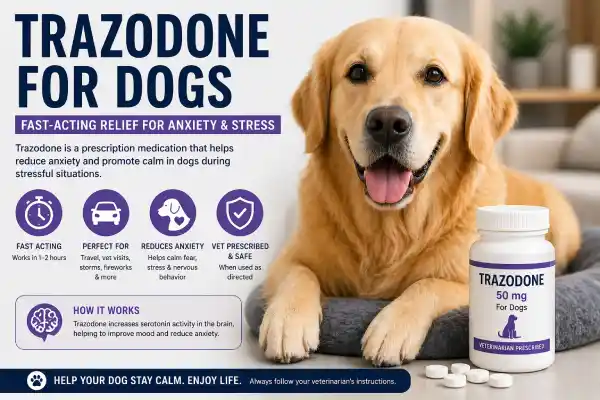
| Trazodone | Agitation or irritability |
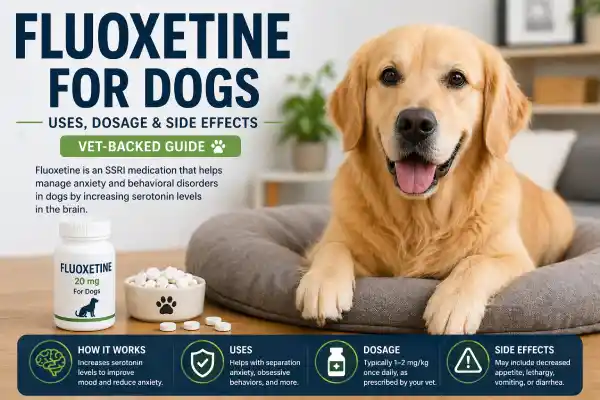
| Fluoxetine | Restlessness or overstimulation |
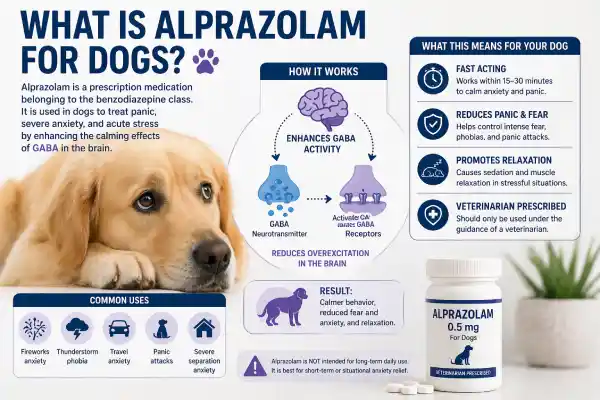
| Alprazolam | Paradoxical excitement |
| Diazepam | Behavioral disinhibition |
| Multiple medications combined | Increased neurological risk |
This strongly connects with:
- Trazodone for Dogs: Uses, Dosage & Safety
- Fluoxetine for Dogs: Uses, Dosage & Safety
- Alprazolam for Dogs: Is It Safe?
- Diazepam for Dogs with Anxiety: When to Use It & Safe Dosage Guide
Can Medication Interactions Make Aggression Worse?
Absolutely.
Combining:
- anxiety medications
- pain medications
- antibiotics
- sedatives
may sometimes increase risks of:
- confusion
- overstimulation
- serotonin-related complications
- neurological instability
This naturally links with:
- Can Antibiotics Interact With Anxiety or Pain Medications?
- Can Dogs Take Antibiotics With Gabapentin?
- Can Dog Medications Be Given Together?
What Is Serotonin Syndrome?
This is one of the MOST important emergency conditions owners should know.
Serotonin syndrome may occur when serotonin activity becomes dangerously excessive.
This may happen because of:
- overdose
- medication interactions
- multiple serotonin-affecting medications
Possible Symptoms
| Symptom | Severity |
|---|---|
| Severe agitation | Serious |
| Tremors | Serious |
| Overheating | EMERGENCY |
| Muscle rigidity | EMERGENCY |
| Collapse | EMERGENCY |
| Seizures | EMERGENCY |
| Confusion | Serious |
| Rapid heart rate | Serious |
This strongly connects with:
- Why Is My Dog Shaking Even After Anxiety Medication?
- Signs of Medication Overdose in Dogs
- Can Dog Medications Cause Behavior Changes?
Can Pain or Illness Trigger Aggression Too?
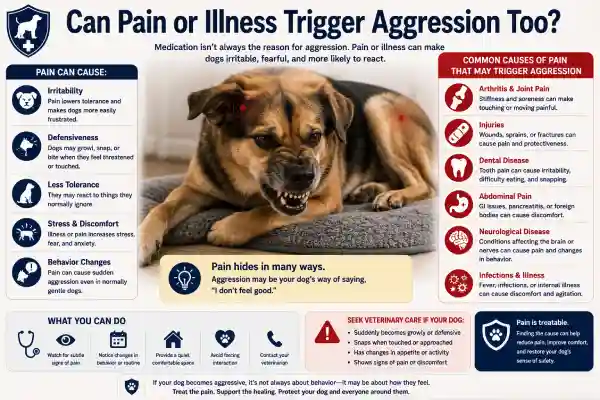
Very easily.
Dogs in pain may become:
- defensive
- irritable
- reactive
- less tolerant of handling
Pain-related aggression may happen with:
- arthritis
- injuries
- neurological disease
- infections
- abdominal pain
This strongly connects with:
- Why Is My Dog Still in Pain After Medication?
- Warning Signs Your Dog Needs Stronger Pain Medication
- Can Pain Medication Cause Loss of Appetite in Dogs?
Are Senior Dogs More Vulnerable?
Yes.
Older dogs may:
- metabolize medications more slowly
- develop confusion more easily
- experience stronger neurological side effects
- become disoriented more easily
Senior dogs may be more vulnerable to:
- paradoxical reactions
- agitation
- behavioral instability
- serotonin-related complications
This naturally links with:
What Symptoms Are Emergencies?
This is the MOST important section.
Seek immediate veterinary care if your dog develops:
- sudden severe aggression
- biting without warning
- collapse
- overheating
- seizures
- muscle rigidity
- severe confusion
- inability to walk
- blue gums
- breathing difficulty
Emergency Warning Signs
| Symptom | Emergency Level |
|---|---|
| Collapse | EMERGENCY |
| Seizures | EMERGENCY |
| Overheating | EMERGENCY |
| Muscle rigidity | EMERGENCY |
| Unable to walk | EMERGENCY |
| Blue gums | EMERGENCY |
| Severe agitation | Serious |
| Sudden unpredictable aggression | Serious |
This naturally links with:
- Signs of Medication Overdose in Dogs
- Can Dogs Have Allergic Reactions to Antibiotics?
- What Happens If Dogs Take Too Much Antibiotic?
What Should Owners Do If Their Dog Becomes Aggressive After Medication?
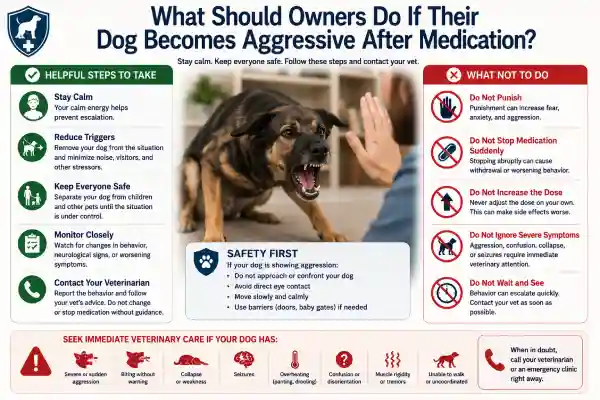
Helpful Steps
| Step | Why It Helps |
|---|---|
| Stay calm | Reduce escalation |
| Avoid punishment | Prevent fear worsening |
| Reduce triggers | Lower stress |
| Keep children and pets safe | Prevent injury |
| Monitor symptoms closely | Detect emergencies |
| Contact your veterinarian | Improve safety |
NEVER:
- punish aggressive behavior aggressively
- abruptly stop prescription medication without guidance
- increase doses independently
- ignore severe neurological symptoms
- assume sudden aggression is “normal”
How Veterinarians Evaluate Aggression After Anxiety Medication
Veterinarians may evaluate:
- medication history
- timing of symptoms
- underlying anxiety triggers
- neurological function
- serotonin syndrome risk
- medication interactions
- pain levels
- behavioral history
Possible evaluation may include:
- neurological examination
- medication review
- toxicity assessment
- bloodwork
- behavioral assessment
- environmental trigger evaluation
FAQ — Can Anxiety Medication Make Dogs Aggressive?
Can trazodone make dogs aggressive?
Sometimes. Some dogs may develop paradoxical agitation, irritability, or overstimulation.
Why is my dog growling after anxiety medication?
The dog may still feel anxious underneath, may be overstimulated, or may be experiencing a paradoxical reaction.
What is behavioral disinhibition?
This happens when fear warning signals become reduced while anxiety still exists internally.
Can SSRIs cause aggression in dogs?
Occasionally, some dogs may develop agitation, irritability, or behavioral changes.
Is aggression always caused by the medication itself?
No. Pain, fear, neurological disease, environmental stress, or underlying anxiety may also contribute.
What symptoms are emergencies?
Collapse, seizures, overheating, muscle rigidity, inability to walk, or sudden severe aggression require immediate veterinary attention.
Should owners stop medication immediately?
Never stop prescription medications suddenly without veterinary guidance unless instructed during an emergency evaluation.
Medical Disclaimer
This article is for educational purposes only and does not replace professional veterinary advice, diagnosis, or treatment. The content is written and pharmacist-reviewed to improve medication safety awareness and help dog owners better understand anxiety medication side effects, aggression risks, paradoxical reactions, serotonin syndrome, behavioral disinhibition, neurological symptoms, and emergency warning signs in dogs. Always contact your veterinarian if your dog develops severe agitation, collapse, seizures, overheating, or sudden behavioral changes.Can Anxiety Medication Make Dogs Aggressive?
Reviewed by
Written by Pet Meds Made Simple Editorial Team
Pharmacy Reviewed by Dimitar Atanasov MPharm
Master Pharmacist | Medication Safety Educator
Last Updated: May 2026
Editorial Policy
At PetMedsMadeSimple.com, all articles are written for educational purposes and reviewed through our pharmacist-led editorial process to improve medication safety awareness for dog owners. Our content is evidence-based, regularly updated, and designed to help readers better understand veterinary medications, side effects, interactions, warning signs, and recovery concerns.Can Anxiety Medication Make Dogs Aggressive?
Every article is reviewed for clarity, safety-focused language, and responsible medical communication before publication.
Read our full Editorial Policy here:
👉 Pet Meds Made Simple Editorial Policy
Sources & Scientific References
- PubMed Central – Behavioral Medication Research
- PubMed Central – Veterinary Behavioral Medicine Research
- PetMD – Anxiety Medications for Dogs
- ToeGrips – Trazodone for Dogs
- Merck Veterinary Manual
- American Veterinary Medical Association (AVMA)
- Plumb’s Veterinary Drug Handbook
Images are created with AI – Can Anxiety Medication Make Dogs Aggressive?