Quick Answer
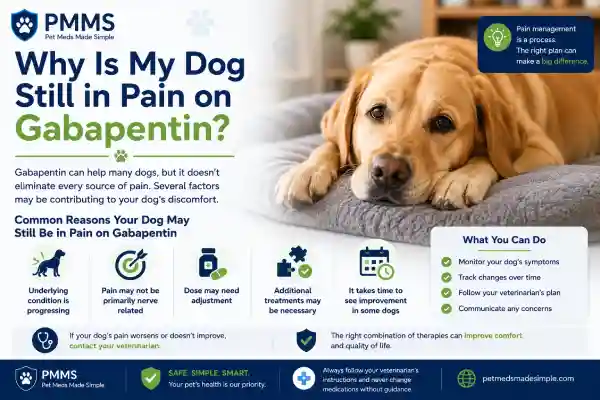
Why is my dog still in pain on gabapentin? Gabapentin can help manage nerve pain, chronic pain, and discomfort associated with several conditions, but it does not eliminate every source of pain. Some dogs may still experience pain because the underlying condition is progressing, the pain is not primarily nerve-related, the dosage may need adjustment, or additional treatments may be necessary. If your dog remains uncomfortable while taking gabapentin, a veterinary evaluation is important.
Why is my dog still in pain on gabapentin?
A dog may still be in pain on gabapentin because the medication is not treating the primary source of pain, the underlying condition has progressed, the dose may need adjustment, or additional therapies may be required. Gabapentin often works best as part of a broader pain management plan rather than as a standalone treatment.
When Owners Commonly Ask This
Owners often become frustrated when:
- Their dog still limps.
- Their dog continues crying.
- Their dog struggles to stand.
- Their dog seems uncomfortable at night.
- Their dog’s arthritis symptoms continue.
- Mobility has not improved.
Many owners expect gabapentin to completely eliminate pain.
In reality, pain management is often more complicated.
What Does Gabapentin Actually Treat?
One reason owners search why is my dog still in pain on gabapentin is because they assume gabapentin treats all pain equally.
It does not.
Gabapentin is most commonly used for:
- Nerve pain
- Chronic pain support
- Arthritis management plans
- Post-surgical discomfort
- Neurological conditions
However, some types of pain respond better than others.
Related articles:
- Can Dogs Take Gabapentin Long-Term Safely?
- Can Dogs Take Gabapentin With Trazodone?
- Can Dogs Become Addicted to Gabapentin?
Why Is My Dog Still in Pain on Gabapentin?
Pain Is Not Always Coming From the Same Source
This is one of the most important concepts owners should understand.
Pain can originate from:
Nerves
Gabapentin often works well here.
Joints
Arthritis pain may require multiple therapies.
Muscles
Muscle discomfort may respond differently.
Bones
Some orthopedic conditions require additional treatment.
Internal Conditions
Pain can sometimes originate from organs rather than the musculoskeletal system.
When owners ask why is my dog still in pain on gabapentin, the answer is often that the medication is only addressing one piece of a larger problem.
The Underlying Condition May Be Progressing
Even if gabapentin was helping initially, the disease itself may continue progressing.
Examples include:
- Arthritis
- Degenerative joint disease
- Neurological disorders
- Cancer-related pain
- Chronic orthopedic conditions
As the condition worsens, additional pain management strategies may become necessary.
Related articles:
- Why Does Gabapentin Stop Working in Dogs?
- Best Pain Medication for Dogs with Arthritis
- Safest Pain Medication for Dogs (Vet Comparison Guide)
The Pain May Not Be Primarily Nerve Pain
Gabapentin is often most effective for nerve-related pain.
Some dogs experience pain that is primarily:
- Inflammatory
- Orthopedic
- Structural
In these situations, gabapentin alone may not provide sufficient relief.
This is one reason veterinarians frequently combine multiple treatments.
Could the Dose Need Adjustment?
Possibly.
Every dog responds differently.
Veterinarians consider:
- Body weight
- Age
- Medical conditions
- Other medications
- Pain severity
Owners should never increase the dosage on their own.
However, persistent discomfort may indicate that the treatment plan needs re-evaluation.
How Long Has Your Dog Been Taking Gabapentin?
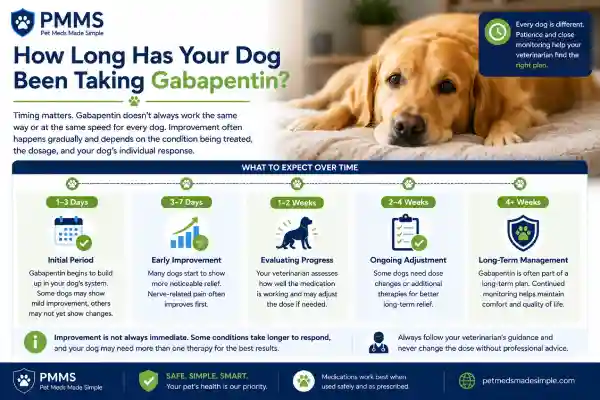
Timing matters.
Owners sometimes expect immediate results.
Depending on the situation, veterinarians may need time to determine:
- Whether the medication is helping
- Whether side effects are occurring
- Whether additional treatments are needed
Improvement is not always instantaneous.
Is Arthritis the Real Problem?
Many owners asking why is my dog still in pain on gabapentin have senior dogs with arthritis.
Arthritis is rarely a simple condition.
Pain may fluctuate depending on:
- Activity level
- Weather changes
- Weight
- Joint damage
- Disease progression
For many dogs, gabapentin is only one part of a larger arthritis management strategy.
Related articles:
- Can Gabapentin Cause Weak Back Legs?
- Can Gabapentin Cause Weakness in Dogs?
- What Is the Safest Anxiety Medication for Dogs?
Could Another Medical Condition Be Contributing?
Absolutely.
Pain may sometimes be related to:
- Dental disease
- Spinal disease
- Hip dysplasia
- Cancer
- Internal illness
- Neurological disorders
When symptoms persist despite treatment, veterinarians often investigate additional causes.
What Does Ongoing Pain Look Like?
Owners sometimes focus only on obvious signs such as limping.
However, pain may also appear as:
Panting
Related article: Why Is My Dog Panting After Gabapentin?
Crying
Related article: Why Is My Dog Crying Despite Gabapentin?
Restlessness
Related article: What Causes Rebound Anxiety in Dogs?
Reduced Activity
Related article: Can Gabapentin Cause Depression in Dogs?
Following Owners More Frequently
Related article: Why Does My Dog Follow Me Everywhere After Medication?
Trouble Sleeping
Many painful conditions worsen overnight.
Mobility Problems
Related article: Why Is My Dog Wobbly After Gabapentin?
Why Veterinarians Often Use Multiple Pain Treatments
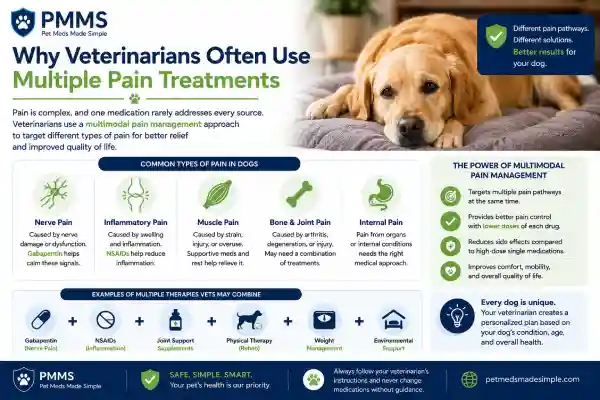
One of the biggest misconceptions about pain management is that a single medication should solve everything.
In reality, veterinarians often combine:
- Gabapentin
- NSAIDs
- Joint support therapies
- Weight management
- Physical rehabilitation
- Environmental modifications
This approach is known as multimodal pain management.
For many dogs, it produces better results than relying on one medication alone.
How Veterinarians Evaluate Persistent Pain
When owners ask why is my dog still in pain on gabapentin, veterinarians look at the entire clinical picture rather than focusing solely on the medication.
Common questions include:
- Has the pain improved at all?
- Is the pain getting worse?
- Has mobility changed recently?
- Are there new symptoms?
- Is the underlying disease progressing?
- Are other medications being used?
Veterinarians often perform a thorough examination to determine whether the current treatment plan is still appropriate.
Could Gabapentin Be Helping More Than Owners Realize?
Surprisingly, yes.
Many owners assume that if their dog still shows signs of discomfort, the medication is not working.
However, the reality is often more complicated.
For example:
Without treatment, a dog may be:
- Unable to walk comfortably
- Crying throughout the day
- Constantly restless
- Refusing activity
With gabapentin, the same dog may still have some discomfort but be functioning much better overall.
This is one reason veterinarians evaluate improvement rather than expecting complete elimination of pain.
Related articles:
- Why Does Gabapentin Stop Working in Dogs?
- Can Dogs Take Gabapentin Long-Term Safely?
- Can Dogs Take Gabapentin With Trazodone?
Could Tolerance Be Developing?
Sometimes owners worry that the medication has stopped working.
While this can happen in certain situations, disease progression is often a more likely explanation.
If symptoms seem to be returning, veterinarians may reassess:
- The diagnosis
- Pain severity
- Medication schedule
- Additional treatment options
Related article: Why Does Gabapentin Stop Working in Dogs?
What Owners Should Monitor at Home
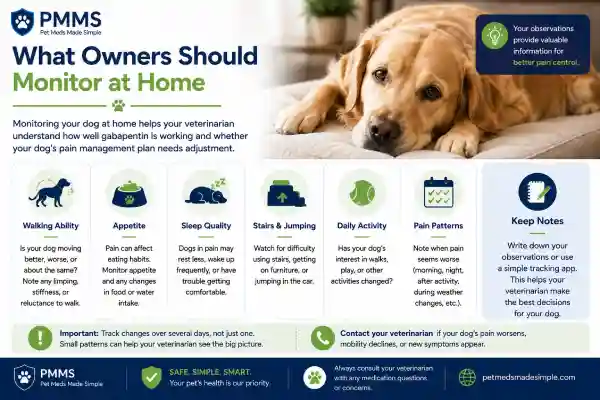
Tracking symptoms can provide valuable information.
Consider monitoring:
Walking Ability
Is your dog moving better, worse, or the same?
Appetite
Pain sometimes affects eating habits.
Sleep Quality
Dogs in pain often struggle to rest comfortably.
Stairs and Jumping
Difficulty with movement can indicate worsening discomfort.
Daily Activity
Has your dog’s willingness to play or walk changed?
Keeping notes can help identify patterns that may not be obvious day-to-day.
When Owners Should Contact Their Veterinarian
Contact your veterinarian if:
- Pain appears to be worsening.
- Your dog suddenly stops walking normally.
- Crying becomes frequent.
- Appetite declines significantly.
- New neurological symptoms appear.
- Mobility declines rapidly.
- Quality of life seems reduced.
Persistent pain deserves professional evaluation.
Related Symptoms Owners Often Notice
Owners searching why is my dog still in pain on gabapentin frequently report other symptoms as well.
Crying or Vocalization
Related article: Why Is My Dog Crying Despite Gabapentin?
Panting
Related article: Why Is My Dog Panting After Gabapentin?
Weak Back Legs
Related article:Can Gabapentin Cause Weak Back Legs?
Weakness
Related article: Can Gabapentin Cause Weakness in Dogs?
Wobbliness
Related article: Why Is My Dog Wobbly After Gabapentin?
Anxiety-Like Behavior
Related article: Can Gabapentin Cause Anxiety in Dogs?
Hyperactivity
Related article: Why Is My Dog Hyper After Gabapentin?
Depression-Like Behavior
Related article: Can Gabapentin Cause Depression in Dogs?
Veterinarian Takeaway
Why is my dog still in pain on gabapentin? The most common reasons include progression of the underlying condition, pain that is not primarily nerve-related, inadequate pain control from a single medication, or the need for additional therapies. Gabapentin can be very helpful for many dogs, but it often works best as part of a comprehensive pain management plan rather than as a standalone solution.
Bottom Line
If you’re wondering why is my dog still in pain on gabapentin, you’re not alone.
Gabapentin is widely used for chronic pain and nerve pain, but it is not a cure for every painful condition.
Many dogs require:
- Additional medications
- Physical rehabilitation
- Weight management
- Joint support
- Ongoing veterinary monitoring
The good news is that persistent pain does not automatically mean gabapentin has failed. In many cases, the treatment plan simply needs adjustment to better match your dog’s current needs.
Frequently Asked Questions
Why is my dog still in pain on gabapentin?
The most common reasons include disease progression, non-nerve pain, or the need for additional treatments.
Can gabapentin completely eliminate pain?
Not always. Many dogs experience improvement rather than complete pain relief.
Does gabapentin work for arthritis pain?
It may help some dogs with arthritis, but it is often used alongside other therapies.
How long does gabapentin take to work in dogs?
The timing varies depending on the condition being treated and the individual dog.
Can the dosage be too low?
Possibly. However, dosage adjustments should only be made by a veterinarian.
Why is my dog still limping on gabapentin?
The underlying orthopedic condition may still be causing discomfort.
Can pain get worse even if gabapentin is helping?
Yes. Some diseases continue progressing despite treatment.
What if my dog cries while taking gabapentin?
Persistent vocalization may indicate ongoing pain or another medical issue.
Should gabapentin be combined with other pain treatments?
Many veterinarians use multimodal pain management approaches that combine several therapies.
When should I call my veterinarian?
Contact your veterinarian if symptoms worsen, mobility declines, appetite decreases, or quality of life is affected.
Reviewed By
Pharmacy Reviewed By
Dimitar Atanasov, MPharm
Master Pharmacist | Medication Safety Educator
Editorial Policy
At Pet Meds Made Simple, our content is researched using current veterinary references, peer-reviewed veterinary literature, and established medication safety guidelines. Every article is reviewed for medication safety, accuracy, and owner education.
Read our full Editorial Policy:
Sources
- Merck Veterinary Manual
- American Veterinary Medical Association (AVMA)
- American Animal Hospital Association (AAHA)
- FDA Center for Veterinary Medicine
- Veterinary Information Network (VIN)
- American College of Veterinary Internal Medicine (ACVIM)
- Plumb’s Veterinary Drug Handbook
- Veterinary Pharmacology and Therapeutics
- Small Animal Clinical Pharmacology
- Peer-reviewed research on canine pain management and gabapentin use