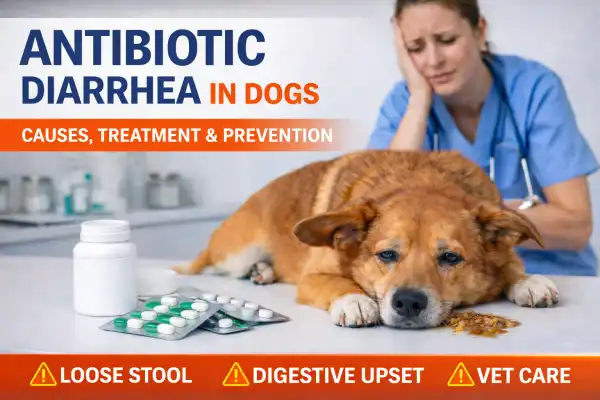
Quick Answer
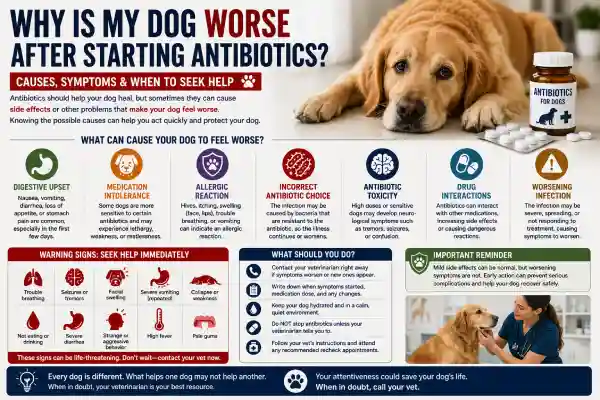
Why Is My Dog Worse After Starting Antibiotics? Some dogs may seem worse after starting antibiotics because of medication side effects, digestive upset, allergic reactions, incorrect antibiotic choice, worsening infection, drug interactions, or antibiotic toxicity. Symptoms like vomiting, diarrhea, lethargy, panting, shaking, appetite loss, or strange behavior should never be ignored—especially if they become severe or suddenly worsen.
Starting antibiotics is supposed to help your dog recover.
So naturally, many owners panic when their dog suddenly seems:
- More tired
- Less active
- Not eating
- Vomiting
- Shaking
- Panting
- Hiding
- Acting confused
- More uncomfortable than before treatment started
Sometimes this happens because the body is adjusting to the medication.
Other times, it may signal:
- A serious side effect
- Wrong antibiotic selection
- Toxicity
- An allergic reaction
- A worsening infection
- Dangerous medication interactions
The important thing is learning the difference between mild temporary reactions and true emergency warning signs.
This guide explains:
- Why dogs sometimes worsen after antibiotics
- Which symptoms are normal
- Which signs are dangerous
- Common antibiotic side effects
- When antibiotics fail
- What veterinarians look for
- When emergency care is needed
Related articles:
- What Does Antibiotic Toxicity Look Like in Dogs?
- Why Is My Dog Vomiting After Antibiotics?
- Why Does My Dog Refuse Food After Antibiotics?
- Can Dogs Have Allergic Reactions to Antibiotics?
- Can Antibiotics Cause Shaking in Dogs?
- Why Is My Dog Acting Strange After Antibiotics?
For broader guidance:
- Antibiotics for Dogs: Uses, Types, Dosage, Side Effects & Safety Guide
- Best Antibiotics for Dogs
- Safest Antibiotics for Dogs: Vet Comparison Guide
Why Is My Dog Worse After Starting Antibiotics?
Is It Normal for Dogs to Feel Worse After Starting Antibiotics?
Mild temporary side effects can happen during the first 24–72 hours.
Some dogs experience:
- Mild nausea
- Reduced appetite
- Softer stool
- Temporary fatigue
- Mild stomach upset
This does not always mean the antibiotic is dangerous.
However, dogs should generally begin improving—not worsening—within a few days.
If symptoms rapidly intensify, veterinary evaluation is important.
What Causes Dogs to Feel Worse After Antibiotics?
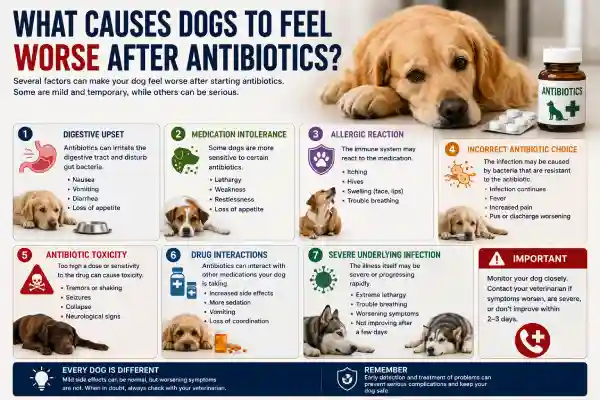
Common Reasons
| Cause | Example |
|---|---|
| Digestive upset | Vomiting or diarrhea |
| Medication intolerance | Nausea or weakness |
| Allergic reaction | Swelling or itching |
| Incorrect antibiotic choice | Infection continues worsening |
| Antibiotic toxicity | Tremors or neurological symptoms |
| Drug interactions | Increased side effects |
| Severe underlying infection | Illness progressing despite treatment |
Can Antibiotics Cause Temporary Side Effects?
Yes.
Antibiotics commonly disrupt:
- Gut bacteria
- Appetite
- Digestive balance
- Energy levels
Mild Side Effects
| Symptom | Usually Mild? |
|---|---|
| Mild nausea | Yes |
| Soft stool | Yes |
| Temporary appetite loss | Sometimes |
| Mild lethargy | Sometimes |
| Mild panting | Sometimes |
Related:
- Antibiotic Diarrhea in Dogs
- Probiotics for Dogs: Do They Help with Antibiotic Side Effects?
- Why Does My Dog Refuse Food After Antibiotics?
When Is “Getting Worse” a Red Flag?
Certain symptoms suggest something more serious may be happening.
Warning Signs
| Symptom | Possible Concern |
|---|---|
| Severe vomiting | Toxicity or severe GI reaction |
| Tremors | Neurological toxicity |
| Collapse | Shock or severe reaction |
| Trouble breathing | Allergic emergency |
| Seizures | Neurological emergency |
| Severe lethargy | Systemic illness |
| Refusing all food/water | Dangerous dehydration |
| Facial swelling | Allergic reaction |
These symptoms require veterinary attention immediately.
Can the Infection Be Getting Worse Instead?
Absolutely.
Sometimes the antibiotic itself is not the problem.
The real issue may be:
- The infection is severe
- The bacteria are resistant
- The wrong antibiotic was selected
- The disease is progressing rapidly
Signs the Infection May Be Worsening
| Sign | Possible Meaning |
|---|---|
| Fever | Infection not controlled |
| Increased pain | Disease progression |
| Pus/discharge worsening | Antibiotic failure |
| Breathing problems | Spreading infection |
| New swelling | Infection advancing |
| Extreme fatigue | Systemic illness |
Related:
- When Does a Dog Need Antibiotics?
- How Long Should Dogs Stay on Antibiotics?
- Best Antibiotics for Dogs
Can Antibiotics Cause Neurological Symptoms?
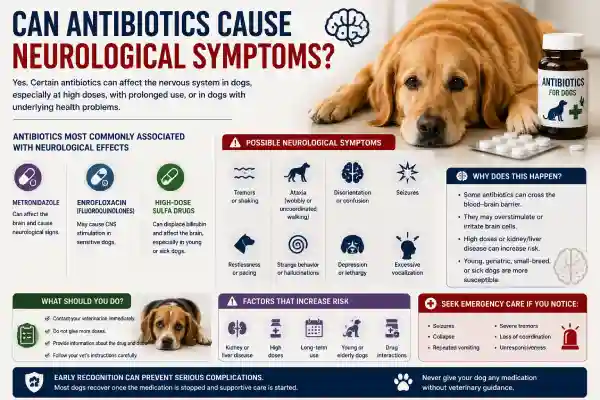
Yes—certain antibiotics can affect the nervous system.
This is especially true for:
- Metronidazole
- Enrofloxacin
- High-dose sulfa drugs
Neurological Symptoms
| Symptom | Appearance |
|---|---|
| Tremors | Muscle shaking |
| Ataxia | Walking drunk |
| Confusion | Disorientation |
| Seizures | Loss of control |
| Restlessness | Unable to settle |
| Strange behavior | Acting unlike normal |
Related:
- Can Metronidazole Cause Neurological Symptoms in Dogs?
- Can Antibiotics Cause Shaking in Dogs?
- Can Antibiotics Cause Depression in Dogs?
- Why Does My Dog Hide After Taking Antibiotics?
Can Antibiotics Cause Stomach Pain?
Yes.
Some antibiotics irritate the stomach lining and digestive tract.
Dogs may show:
- Hunched posture
- Lip licking
- Drooling
- Vomiting
- Refusing food
- Restlessness
- Whining
Giving certain antibiotics with food may reduce irritation.
Related:
Can Antibiotics Interact With Other Medications?
Definitely.
Some antibiotics interact dangerously with:
- Anxiety medications
- NSAIDs
- Seizure medications
- Steroids
- Sedatives
This may worsen:
- Weakness
- Sedation
- Tremors
- Appetite loss
- Neurological symptoms
Related:
- Can Dog Medications Be Given Together?
- Can Antibiotics Interact With Anxiety or Pain Medications?
- Signs of Medication Overdose in Dogs
Which Dogs Are Higher Risk for Severe Reactions?
Some dogs are more vulnerable than others.
Higher-Risk Dogs
| Higher Risk Group | Why Risk Increases |
|---|---|
| Senior dogs | Reduced organ function |
| Puppies | Sensitive metabolism |
| Dogs with kidney disease | Poor drug clearance |
| Dogs with liver disease | Reduced metabolism |
| Small breeds | Easier overdosing |
| Dogs on multiple medications | Drug interactions |
What Should You Do If Your Dog Seems Worse?
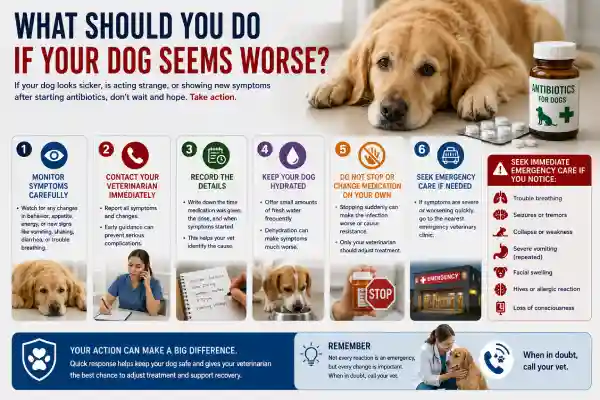
Important Steps
| Step | Why It Helps |
|---|---|
| Monitor symptoms carefully | Detect worsening signs |
| Contact your veterinarian | Adjust treatment early |
| Record timing of symptoms | Helps diagnosis |
| Keep your dog hydrated | Prevent complications |
| Do not stop medication abruptly unless instructed | Prevent resistance |
Never increase or reduce antibiotic doses without veterinary guidance.
How Veterinarians Investigate Worsening Symptoms
Veterinarians may evaluate:
- Infection severity
- Medication history
- Drug interactions
- Neurological signs
- Hydration status
- Organ function
- Bloodwork
- Imaging if needed
Sometimes antibiotics need to be:
- Switched
- Reduced
- Stopped
- Combined with supportive medications
Can Dogs Recover Quickly After Antibiotic Problems?
Most dogs recover very well once the cause is identified.
Recovery may involve:
- Switching medications
- Adding probiotics
- Anti-nausea therapy
- IV fluids
- Treating toxicity
- Adjusting doses
The earlier the problem is recognized, the better the outcome.
FAQ
Is it normal for my dog to feel sick after antibiotics?
Mild digestive upset can happen, but severe worsening symptoms are not normal and should be evaluated.
Why is my dog more tired after starting antibiotics?
Mild lethargy can occur from illness or medication side effects, but severe weakness may indicate toxicity or worsening infection.
Can antibiotics make dogs shaky?
Yes. Certain antibiotics may cause tremors, neurological symptoms, or shaking.
Should I stop antibiotics if my dog gets worse?
Do not stop antibiotics suddenly unless your veterinarian advises it.
How long should side effects last?
Mild side effects may improve within 1–3 days, but worsening symptoms require veterinary attention.
Medical Disclaimer
This article is for educational purposes only and does not replace professional veterinary advice, diagnosis, or treatment. Contact your veterinarian immediately if your dog develops seizures, collapse, severe vomiting, breathing problems, facial swelling, or sudden neurological symptoms after starting antibiotics.