Quick Answer
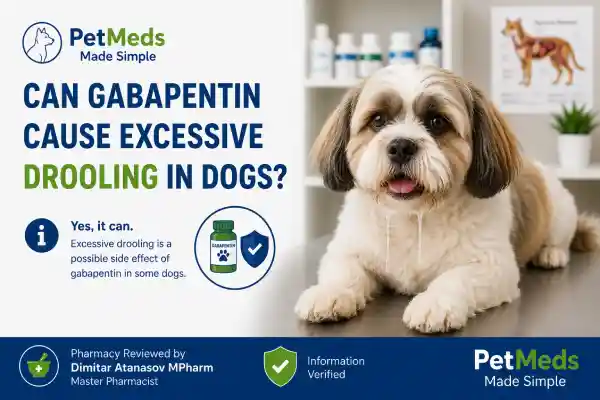
Can gabapentin cause excessive drooling in dogs? Yes, gabapentin can cause excessive drooling in dogs, although it is not considered one of the medication’s most common side effects. Some dogs develop excessive drooling because gabapentin causes nausea, leaves a bitter taste in the mouth, or contributes to temporary neurological changes. However, excessive drooling after gabapentin may also indicate pain, anxiety, dental disease, poisoning, or another medical condition unrelated to the medication. If excessive drooling is accompanied by collapse, repeated vomiting, seizures, difficulty breathing, or inability to stand, your dog should be examined by a veterinarian immediately.
Can Gabapentin Cause Excessive Drooling in Dogs?
When Owners Commonly Ask This
Owners rarely search for “Can Gabapentin Cause Excessive Drooling in Dogs?” before giving the medication.
Instead, the question usually appears after something unexpected happens.
A typical situation looks like this:
A dog receives gabapentin for arthritis, nerve pain, recovery after surgery, or anxiety before a veterinary visit. Within the next few hours, the owner notices saliva dripping from the mouth, frequent lip licking, repeated swallowing, or even foamy saliva collecting around the lips.
Naturally, panic follows.
Owners begin asking questions such as:
- Can gabapentin cause excessive drooling in dogs?
- Is excessive drooling a normal side effect?
- Did my dog receive too much gabapentin?
- Is this poisoning?
- Should I give the next dose?
- Does my dog need emergency care?
Fortunately, most cases are not life-threatening, but excessive drooling should never be ignored because it sometimes signals a more serious problem than the medication itself.
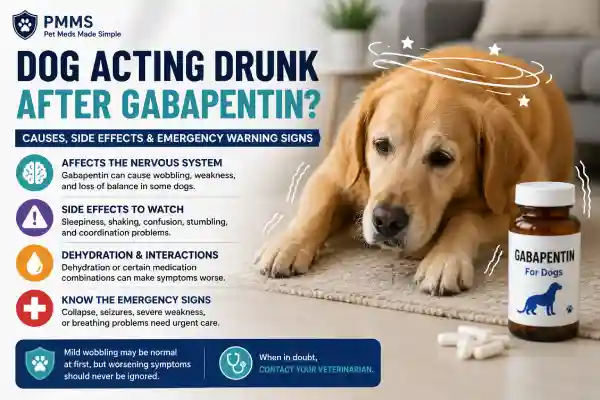
If your dog has developed other symptoms after taking gabapentin, these PMMS guides may also help:
- Why Is My Dog Vomiting After Gabapentin?
- Why Is My Dog Panting After Gabapentin?
- Why Is My Dog Weak After Gabapentin?
- Can Gabapentin Cause Muscle Tremors in Dogs?
- Can Gabapentin Cause Neurological Side Effects?
Can Gabapentin Cause Excessive Drooling in Dogs?
The short answer is yes.
Gabapentin can cause excessive drooling in dogs, but veterinarians generally consider it an uncommon side effect compared with sleepiness, wobbliness, or temporary weakness.
In many cases, the medication itself is not directly stimulating saliva production.
Instead, excessive drooling develops because gabapentin may contribute to one or more secondary effects, including:
- nausea
- a bitter taste in the mouth
- temporary sedation
- anxiety
- stress
- difficulty swallowing normally
- underlying illness
This distinction is important.
When owners search “Can gabapentin cause excessive drooling in dogs?”, they often assume the medication is solely responsible.
In reality, excessive drooling after gabapentin frequently results from multiple factors acting together.
What Is Considered Excessive Drooling?
Every dog produces saliva.
Saliva plays an essential role in:
- lubricating food
- protecting oral tissues
- beginning digestion
- maintaining oral health
However, excessive drooling—also called hypersalivation or ptyalism occurs when saliva production becomes noticeably greater than normal or when a dog cannot swallow saliva efficiently.
Veterinarians generally consider drooling excessive when owners notice:
| Sign | Description |
|---|---|
| Constant saliva dripping | Saliva continuously falls from the mouth |
| Wet chin or chest | Fur becomes soaked with saliva |
| Strings of saliva | Thick saliva hangs from the lips |
| Continuous lip licking | Frequent attempts to swallow saliva |
| Foamy saliva | White foam around the mouth |
| Repeated swallowing | Suggests nausea or oral discomfort |
Occasional drooling after drinking water or eating is completely normal.
Persistent hypersalivation is different and deserves attention.
Why Does Gabapentin Sometimes Lead to Excessive Drooling?
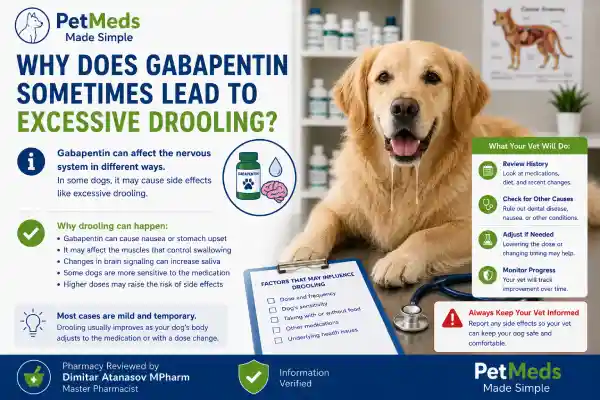
One reason gabapentin can cause excessive drooling in dogs is that the medication affects the central nervous system.
Although gabapentin does not directly stimulate the salivary glands, it may indirectly contribute to drooling by altering how dogs perceive nausea, taste, balance, or discomfort.
Several mechanisms may be involved.
1. Nausea
One of the most common explanations is mild nausea.
Some dogs experience stomach upset shortly after taking gabapentin.
Even if vomiting never occurs, nausea alone may cause:
- excessive drooling
- repeated swallowing
- lip smacking
- licking the floor
- eating grass
- refusing food
Many owners mistakenly believe drooling only occurs before vomiting.
In reality, some dogs experience nausea without ever vomiting.
Owners noticing additional digestive signs should also read:
2. Bitter Taste
Gabapentin capsules and liquid formulations may have an unpleasant taste if they dissolve in the mouth before being swallowed.
This is especially common if:
- the capsule breaks open
- liquid medication spills into the mouth
- the dog chews the capsule
Dogs often respond to unpleasant tastes by producing large amounts of saliva.
This protective reflex helps dilute irritating substances before they are swallowed.
In these situations, excessive drooling usually improves within a relatively short period.
3. Temporary Difficulty Swallowing Saliva
Gabapentin commonly causes relaxation and mild sedation.
Very sleepy dogs sometimes swallow less frequently than usual.
As saliva accumulates inside the mouth, owners may notice:
- drooling
- wet lips
- saliva dripping onto bedding
- repeated swallowing after waking
This is usually temporary and improves as the sedative effects decrease.
Dogs that also appear unusually sleepy may benefit from reading:
- Why Does My Dog Sleep So Much on Gabapentin?
- How Long Does Gabapentin Sedation Last in Dogs?
- Can Senior Dogs Take Gabapentin Safely?
4. Anxiety or Stress
Ironically, some dogs drool because of stress, even though gabapentin is commonly prescribed to reduce anxiety.
For example, dogs receiving gabapentin before a veterinary appointment may still become frightened by:
- travelling in the car
- unfamiliar smells
- other animals
- loud noises
- handling during the examination
Stress activates the nervous system differently in each dog.
Some pant heavily.
Others tremble.
Some begin producing excessive saliva.
This is why veterinarians evaluate the entire situation rather than blaming the medication automatically.
Owners may also find these articles useful:
- Why Is My Dog Panting After Gabapentin?
- Can Gabapentin Cause Anxiety in Dogs?
- Why Is My Dog Crying Despite Gabapentin?
Is Excessive Drooling Always Caused by Gabapentin?
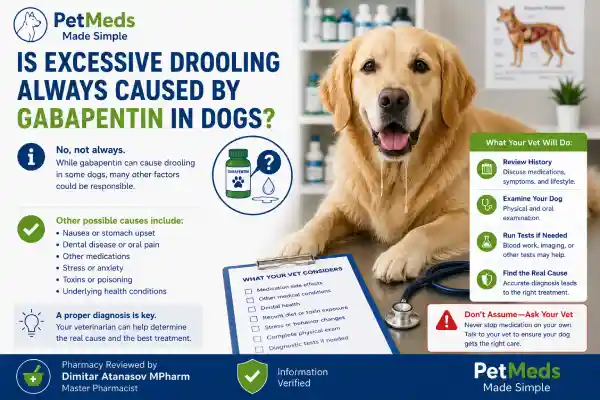
No.
This is probably the most important message in this article.
Just because excessive drooling begins after giving gabapentin does not automatically mean gabapentin caused it.
Dogs frequently receive gabapentin for painful medical conditions.
Pain itself may trigger hypersalivation.
Dental disease, oral injuries, nausea, toxins, kidney disease, neurological disorders, and gastrointestinal disease may all develop independently of the medication.
Veterinarians therefore consider gabapentin one possible explanation not the only explanation.
Common Non-Medication Causes of Excessive Drooling
Before concluding that gabapentin is responsible, veterinarians consider several other possibilities.
Dental Disease
Pain inside the mouth is one of the most common causes of hypersalivation.
Dogs suffering from:
- fractured teeth
- periodontal disease
- oral infections
- mouth ulcers
- foreign objects lodged between the teeth
often drool continuously because swallowing becomes painful.
Foreign Bodies
Dogs sometimes chew:
- sticks
- bones
- toys
- grass awns
- fabric
- string
Objects trapped inside the mouth or throat frequently produce:
- sudden drooling
- pawing at the mouth
- repeated swallowing
- gagging
- reluctance to eat
These cases require prompt veterinary evaluation.
Could Poisoning Be Mistaken for a Gabapentin Side Effect?
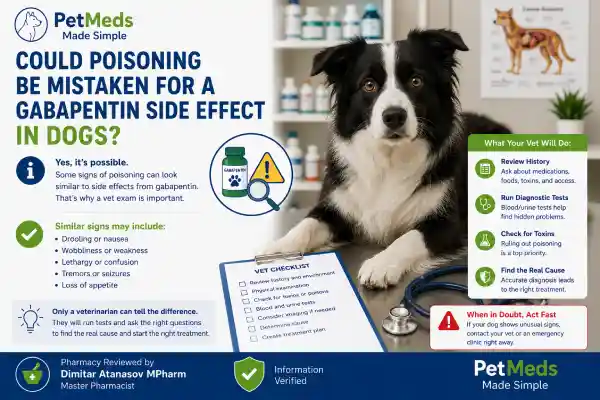
Absolutely.
One of the biggest mistakes owners make is assuming that excessive drooling after gabapentin is always caused by the medication.
In reality, Can Gabapentin Cause Excessive Drooling in Dogs? is only one possible explanation.
Many toxic substances cause sudden hypersalivation, and if exposure happened around the same time gabapentin was given, owners may incorrectly blame the medication.
Veterinarians always ask whether your dog could have recently been exposed to:
- household cleaners
- insecticides
- poisonous plants
- human medications
- chocolate
- xylitol
- grapes or raisins
- fertilizers
- rodenticides
Poisoning often produces additional symptoms that are uncommon with routine gabapentin therapy.
| Symptom | More Suggestive of Poisoning? |
|---|---|
| Excessive drooling | ✔ Yes |
| Repeated vomiting | ✔ Yes |
| Severe tremors | ✔ Yes |
| Collapse | ✔ Yes |
| Seizures | ✔ Yes |
| Difficulty breathing | ✔ Yes |
| Pale gums | ✔ Yes |
If your dog develops excessive drooling together with any of these signs, seek emergency veterinary care immediately.
Could Oral Pain Be the Real Cause?
Yes.
One of the first areas veterinarians examine is the mouth itself.
Dogs experiencing oral pain commonly develop excessive drooling because swallowing becomes uncomfortable.
Common oral conditions include:
- fractured teeth
- periodontal disease
- gingivitis
- oral ulcers
- abscesses
- oral tumors
- foreign bodies lodged under the tongue
Owners often focus on the recent gabapentin dose while the true problem is hidden inside the mouth.
Signs suggesting oral pain include:
- pawing at the face
- reluctance to chew
- dropping food
- bad breath
- bleeding from the mouth
- chewing on one side
In these cases, treating the dental disease usually resolves the excessive drooling.
Can Kidney Disease Increase the Risk?
Yes.
Because gabapentin is eliminated primarily through the kidneys, dogs with chronic kidney disease may eliminate the medication more slowly.
Higher circulating drug levels may increase neurological side effects.
Although kidney disease itself does not directly cause gabapentin to stimulate saliva production, affected dogs may develop:
- nausea
- poor appetite
- repeated swallowing
- hypersalivation
- vomiting
This combination makes it appear that gabapentin caused the drooling when kidney disease may actually be contributing.
Older dogs deserve particular attention because chronic kidney disease becomes much more common with age.
Owners should also review:
- Can Senior Dogs Take Gabapentin Safely?
- Why Does My Dog Sleep So Much on Gabapentin?
- Why Is My Dog Weak After Gabapentin?
Could Another Medication Be Responsible?
Very often.
Many dogs prescribed gabapentin are also receiving:
- NSAIDs
- tramadol
- trazodone
- anti-seizure medications
- antibiotics
- joint supplements
Most of these combinations are prescribed safely.
However, some medications may contribute to:
- nausea
- stomach irritation
- increased salivation
- vomiting
- reduced appetite
Rather than looking at gabapentin alone, veterinarians review every medication your dog is receiving.
This is why owners should never stop one medication without first discussing the entire treatment plan.
Related PMMS articles include:
- Can Dogs Take Gabapentin With Trazodone?
- Can Dogs Take Gabapentin and NSAIDs Together?
- Can Dogs Take Human Gabapentin Capsules?
Could My Dog Have Received Too Much Gabapentin?
Although gabapentin has a relatively wide safety margin, accidental overdoses do occur.
Common situations include:
- two family members both giving a dose
- using the wrong capsule strength
- confusing human and veterinary prescriptions
- dosing errors in very small dogs
Large overdoses may produce several neurological signs in addition to excessive drooling.
Possible Overdose Signs
| Clinical Sign | Why It Happens |
|---|---|
| Extreme sleepiness | Central nervous system depression |
| Excessive drooling | Nausea or neurological effects |
| Severe wobbliness | Reduced coordination |
| Inability to stand | Marked sedation |
| Muscle tremors | Neurological involvement |
| Vomiting | Gastrointestinal irritation |
| Collapse | Severe toxicity |
| Difficulty breathing | Emergency situation |
If you suspect your dog has received too much medication, contact your veterinarian or an emergency clinic immediately.
You should also read:
- Can Dogs Overdose on Gabapentin?
- Can Gabapentin Cause Muscle Tremors in Dogs?
- Can Gabapentin Cause Breathing Problems in Dogs?
Can Excessive Drooling Occur Without Vomiting?
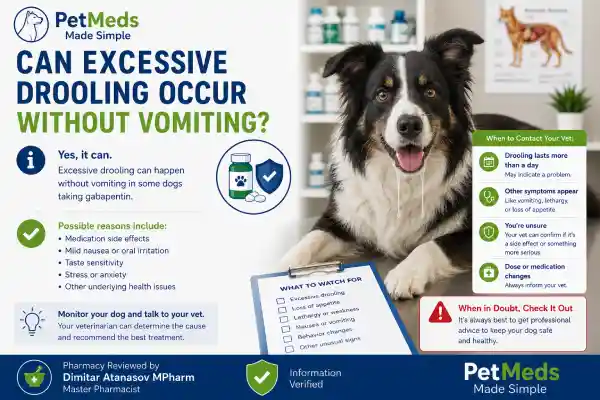
Yes.
This surprises many owners.
Nausea exists on a spectrum.
Some dogs:
- drool only
- lick their lips repeatedly
- swallow constantly
- eat grass
- refuse treats
without ever vomiting.
Others eventually progress to vomiting several hours later.
This is why excessive drooling should be considered an early warning sign of nausea, not simply a harmless inconvenience.
Dogs showing additional digestive symptoms should also review:
When Should You Contact Your Veterinarian?
You should contact your veterinarian if:
- excessive drooling continues for more than a few hours
- it happens after every gabapentin dose
- your dog refuses food
- vomiting develops
- your dog appears increasingly sleepy
- walking becomes difficult
- neurological signs appear
- drooling becomes significantly worse
Early communication often allows simple treatment adjustments before more serious complications develop.
When Is Excessive Drooling an Emergency?
Fortunately, Can Gabapentin Cause Excessive Drooling in Dogs? usually has a reassuring answer.
However, excessive drooling should be treated as a medical emergency when it occurs together with:
| Emergency Sign | Why Immediate Care Is Needed |
|---|---|
| Collapse | Possible severe neurological disease |
| Repeated seizures | Emergency neurological condition |
| Blue or pale gums | Poor oxygenation or circulation |
| Difficulty breathing | Life-threatening emergency |
| Persistent vomiting | Risk of dehydration or toxicity |
| Inability to stand | Severe neurological impairment |
| Loss of consciousness | Requires immediate evaluation |
| Suspected poisoning | Emergency treatment needed |
| Suspected overdose | Immediate veterinary assessment |
These signs are not typical side effects of routine gabapentin therapy.
Can Excessive Drooling Be Prevented?
In many cases, yes.
Owners can reduce the risk of excessive drooling by following several practical recommendations.
Prevention Checklist
✔ Give gabapentin exactly as prescribed.
✔ Never double the next dose.
✔ Hide capsules completely inside food when appropriate to reduce exposure to the bitter taste.
✔ Prevent your dog from chewing capsules.
✔ Inform your veterinarian about every medication and supplement your dog receives.
✔ Monitor your dog closely during the first few doses.
✔ Store medications safely to prevent accidental overdoses.
✔ Record episodes of excessive drooling if they recur.
Videos can help your veterinarian determine whether the drooling appears to be associated with nausea, neurological changes, pain, or another underlying condition.
How Veterinarians Diagnose Excessive Drooling After Gabapentin
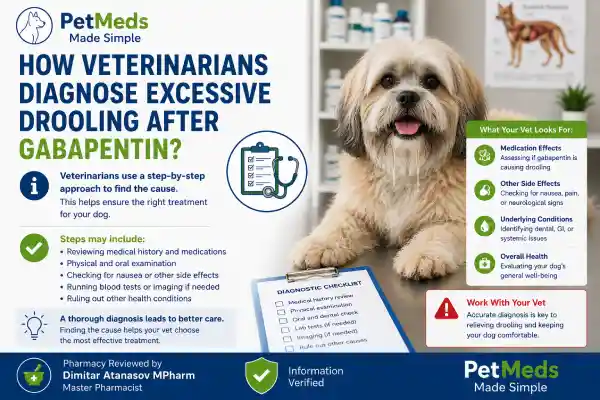
When owners ask, “Can gabapentin cause excessive drooling in dogs?”, veterinarians rarely assume the medication is the only explanation.
Instead, they ask a more important question:
“Why is this dog drooling?”
Excessive drooling is a clinical sign, not a diagnosis.
The goal is to determine whether the hypersalivation is caused by:
- gabapentin itself
- nausea
- oral disease
- pain
- poisoning
- neurological disease
- gastrointestinal disease
- another underlying medical condition
Only after identifying the cause can the appropriate treatment be chosen.
Step 1: Medical History
The first and often most valuable diagnostic tool is a detailed history.
Your veterinarian will usually ask questions such as:
- When did the excessive drooling begin?
- How soon after gabapentin was it noticed?
- Was this the first dose?
- Has your dog taken gabapentin before?
- Is your dog eating normally?
- Has vomiting occurred?
- Has your dog been exposed to toxins?
- Is your dog taking any additional medications?
- Does the drooling happen after every dose?
The answers frequently narrow the list of possible causes before any tests are performed.
Step 2: Physical Examination
A complete physical examination is essential because Can Gabapentin Cause Excessive Drooling in Dogs? is only one possible diagnosis.
Your veterinarian will carefully evaluate:
| Examination | Why It Matters |
|---|---|
| Mouth and teeth | Detects dental disease, ulcers, fractures, foreign bodies |
| Tongue | Looks for injuries or objects trapped underneath |
| Gums | Evaluates hydration and circulation |
| Abdomen | Detects pain or gastrointestinal disease |
| Heart and lungs | Rules out concurrent illness |
| Body temperature | Detects fever or heat-related illness |
| Hydration status | Excessive drooling may contribute to fluid loss |
Many dogs thought to have a medication reaction are actually suffering from severe dental pain or another unrelated illness.
Step 3: Neurological Examination
Because gabapentin affects the nervous system, a neurological assessment is often performed when excessive drooling occurs together with other neurological signs.
Your veterinarian may assess:
- consciousness
- coordination
- balance
- muscle strength
- cranial nerves
- spinal reflexes
- ability to walk normally
Neurological abnormalities may suggest that the excessive drooling is associated with:
- drug toxicity
- seizure activity
- brain disease
- spinal disease
- metabolic disorders
Dogs showing additional neurological symptoms may also benefit from these PMMS guides:
- Can Gabapentin Cause Neurological Side Effects?
- Can Gabapentin Cause Muscle Tremors in Dogs?
- Why Is My Dog Wobbly After Gabapentin?
- Why Is My Dog Falling Over After Gabapentin?
- Why Is My Dog Weak After Gabapentin?
Step 4: Laboratory Testing
Blood work is not required for every dog.
However, laboratory testing is often recommended if:
- the dog is elderly
- symptoms are severe
- kidney disease is suspected
- vomiting accompanies the drooling
- the dog appears generally ill
Common laboratory tests include:
| Laboratory Test | Purpose |
|---|---|
| Complete Blood Count (CBC) | Detects infection and inflammation |
| Serum Chemistry | Evaluates liver and kidney function |
| Kidney Values | Important because gabapentin is eliminated through the kidneys |
| Electrolytes | Detect abnormalities contributing to illness |
| Blood Glucose | Rules out hypoglycemia |
| Urinalysis | Evaluates kidney health and hydration |
These tests help determine whether the excessive drooling is related to the medication or another disease process.
How Is Excessive Drooling After Gabapentin Treated?
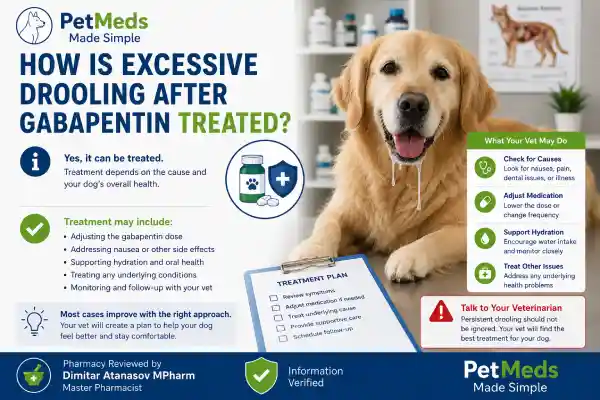
Treatment always depends on the underlying cause.
There is no single medication that treats every dog experiencing excessive drooling.
Mild Medication Effects
If your veterinarian concludes that gabapentin is causing mild nausea or temporary hypersalivation, treatment may simply involve observation.
Many dogs improve as:
- nausea resolves
- the bitter taste disappears
- the medication wears off
- the body adapts after several doses
Owners should continue monitoring:
- appetite
- drinking
- activity level
- walking ability
- frequency of drooling
Adjusting the Medication
Sometimes the treatment plan itself requires modification.
Depending on the individual patient, your veterinarian may recommend:
- lowering the dose
- adjusting the dosing interval
- changing the formulation
- administering the medication with food (when appropriate)
- changing to another medication if necessary
Owners should never adjust gabapentin without veterinary guidance.
Stopping treatment suddenly may worsen pain and, in some patients, increase the risk of withdrawal-related complications.
Related PMMS guides include:
- What Happens If Dogs Suddenly Stop Gabapentin?
- Can Dogs Take Gabapentin Long-Term Safely?
- Why Does Gabapentin Stop Working in Dogs?
Treating Nausea
If nausea appears to be responsible for the excessive drooling, treatment focuses on controlling the gastrointestinal symptoms.
Depending on the underlying cause, your veterinarian may recommend:
- anti-nausea medication
- dietary adjustments
- temporary fasting (when appropriate)
- fluid therapy if dehydration develops
Once nausea improves, excessive drooling usually decreases as well.
Treating Dental Disease
If the physical examination identifies oral pain, treatment may involve:
- professional dental cleaning
- tooth extraction
- antibiotics when indicated
- pain management
- treatment of oral ulcers
Many dogs stop drooling almost immediately once painful dental disease is corrected.
Hospitalization
Hospital care is uncommon but may become necessary when excessive drooling occurs together with serious clinical signs.
Examples include:
- repeated vomiting
- collapse
- inability to stand
- seizures
- suspected poisoning
- suspected overdose
- severe dehydration
Hospitalization allows:
- intravenous fluids
- continuous monitoring
- additional diagnostic testing
- supportive care
- emergency treatment if required
Can Excessive Drooling Be Prevented?
Although prevention is not always possible, owners can significantly reduce the likelihood of medication-related problems.
Prevention Checklist
✔ Give gabapentin exactly as prescribed.
✔ Never give extra doses.
✔ Avoid opening capsules unless specifically instructed.
✔ Hide capsules inside food when appropriate to minimize exposure to the bitter taste.
✔ Keep all medications out of your dog’s reach.
✔ Inform your veterinarian about every medication and supplement your dog receives.
✔ Schedule regular recheck appointments for dogs receiving long-term therapy.
✔ Monitor senior dogs more closely during the first week of treatment.
✔ Record episodes of excessive drooling if they occur.
Videos frequently help veterinarians distinguish between nausea, oral discomfort, neurological disease, and medication-related hypersalivation.
Veterinarian Takeaway
Can gabapentin cause excessive drooling in dogs? Yes—but excessive drooling is not considered one of the medication’s most common side effects.
In many dogs, hypersalivation is actually caused by mild nausea, the unpleasant taste of the medication, stress, pain, dental disease, or another underlying medical condition rather than gabapentin itself.
Most cases are mild and temporary.
However, excessive drooling accompanied by collapse, repeated vomiting, seizures, breathing difficulty, or inability to stand should always be treated as a veterinary emergency.
The safest approach is to contact your veterinarian whenever excessive drooling is persistent, recurrent, or associated with other concerning symptoms.
Bottom Line
Can gabapentin cause excessive drooling in dogs?
Yes, but the answer is more complex than a simple yes or no.
Gabapentin may contribute to excessive drooling indirectly through nausea, temporary neurological effects, or the medication’s bitter taste. However, excessive drooling may also signal dental disease, toxin exposure, kidney disease, gastrointestinal illness, or another condition unrelated to gabapentin.
Most mild episodes improve without long-term complications.
Persistent, severe, or worsening excessive drooling should never be ignored, particularly when it occurs together with vomiting, collapse, seizures, or breathing difficulties.
Early veterinary evaluation remains the safest way to determine the true cause and ensure your dog receives the most appropriate treatment.
Frequently Asked Questions – Can Gabapentin Cause Excessive Drooling in Dogs
Can gabapentin cause excessive drooling in dogs even if my dog seems otherwise normal?
Yes.
Can gabapentin cause excessive drooling in dogs? Yes, it can, even if your dog appears bright, alert, and otherwise comfortable. Mild nausea, the bitter taste of the medication, or temporary neurological effects may cause increased saliva production without any other obvious symptoms.
However, if the excessive drooling continues for several hours or becomes progressively worse, your veterinarian should evaluate your dog.
Is excessive drooling one of the most common gabapentin side effects?
No.
Although can gabapentin cause excessive drooling in dogs is a common question from worried owners, excessive drooling is not considered one of the medication’s most frequent adverse effects.
More commonly reported side effects include:
sleepiness
sedation
wobbliness
reduced coordination
temporary weakness
Excessive drooling is generally considered an uncommon reaction and often has another underlying cause.
Why is my dog drooling but not vomiting after taking gabapentin?
Dogs can experience nausea without vomiting.
Nausea alone may cause:
lip licking
repeated swallowing
excessive drooling
eating grass
refusing treats
quiet behavior
Some dogs never progress to vomiting.
Others may begin vomiting several hours later.
If vomiting develops, you should also review Why Is My Dog Vomiting After Gabapentin?
Can excessive drooling mean my dog received too much gabapentin?
Possibly.
Although mild drooling does not automatically indicate an overdose, excessive drooling accompanied by:
severe sleepiness
inability to stand
collapse
muscle tremors
seizures
difficulty breathing
should always be considered an emergency.
Owners should also review:
Can Dogs Overdose on Gabapentin?
Can Gabapentin Cause Muscle Tremors in Dogs?
Can Gabapentin Cause Breathing Problems in Dogs?
Can stress cause excessive drooling after gabapentin?
Yes.
Many dogs receive gabapentin before:
veterinary appointments
grooming visits
fireworks
travel
Even with gabapentin, stress may still trigger:
excessive drooling
panting
trembling
pacing
restlessness
This is why veterinarians evaluate the entire clinical picture, not just the medication.
Related articles include:
Can Gabapentin Cause Anxiety in Dogs?
Why Is My Dog Panting After Gabapentin?
Should I give the next gabapentin dose if my dog drooled after the previous one?
Do not stop or skip medication without speaking to your veterinarian.
The correct decision depends on:
how severe the drooling was
whether other symptoms occurred
your dog’s medical history
why gabapentin was prescribed
Many dogs can continue taking gabapentin safely after their veterinarian evaluates the situation.
Can kidney disease increase the chance of excessive drooling?
Yes.
Dogs with chronic kidney disease may eliminate gabapentin more slowly.
Kidney disease may also cause:
nausea
poor appetite
vomiting
excessive drooling
For these dogs, veterinarians often individualize the dosage and monitor treatment more closely.
Can I hide gabapentin in food to reduce excessive drooling?
Often, yes
When your veterinarian approves giving gabapentin with food, hiding the capsule inside a treat or small meal may reduce exposure to its bitter taste.
This can decrease drooling in dogs that react primarily because the medication dissolves in the mouth.
Never crush or open capsules unless your veterinarian specifically instructs you to do so.
How long does excessive drooling usually last?
If gabapentin causes excessive drooling in dogs because of temporary nausea or the medication’s taste, the drooling often improves within several hours as the medication is absorbed and the unpleasant taste disappears.
Persistent or worsening hypersalivation should always be investigated.
When should I seek emergency veterinary care?
mediate veterinary care if excessive drooling occurs together with:
repeated vomiting
collapse
seizures
inability to stand
severe weakness
blue or pale gums
difficulty breathing
suspected poisoning
suspected gabapentin overdose
These signs require immediate veterinary evaluation and should never be monitored at home
Reviewed By
Written by
Dimitar Georgiev Atanasov, MPharm
Master Pharmacist | Medication Safety Educator
Bulgarian Pharmaceutical Union (BPhU)
UIN: 0210000586
Pharmacy & Scientific Review by
Gergana Krasimirova Atanasova, MPharm
Assistant Lecturer, Faculty of Pharmacy
University “Prof. Dr. Asen Zlatarov” – Burgas
Master Pharmacist
Bulgarian Pharmaceutical Union (BPhU)
UIN: 0210000587
Veterinary Reviewed by
Dr. Valcho Georgiev Valchev, DVM
Licensed Veterinarian
Bulgarian Veterinary Union (BVS)
Registration No.: 28000115
Editorial Policy
At Pet Meds Made Simple, every article undergoes a comprehensive editorial review process to ensure it is accurate, practical, and based on current veterinary and pharmaceutical evidence.
Each article is:
- Written by a licensed Master Pharmacist.
- Scientifically reviewed by a second licensed Master Pharmacist.
- Independently reviewed by a licensed veterinarian.
- Updated as new clinical evidence becomes available.
To learn more, please visit our Editorial Policy page.
Medical Review Statement
This article was written by a licensed Master Pharmacist, scientifically reviewed by a second licensed Master Pharmacist, and independently veterinary reviewed by a licensed Doctor of Veterinary Medicine.
The information provided is intended for educational purposes only and should never replace professional veterinary diagnosis, examination, or treatment. Always consult your veterinarian before starting, stopping, or changing any medication prescribed for your dog.
Sources
- Plumb DC. Plumb’s Veterinary Drug Handbook. Latest Edition.
- Papich MG. Saunders Handbook of Veterinary Drugs: Small and Large Animal.
- Merck Veterinary Manual. Salivary Gland Disorders in Dogs.
- Merck Veterinary Manual. Pain Management in Dogs and Cats.
- Grimm KA, Lamont LA, Tranquilli WJ, Greene SA, Robertson SA. Veterinary Anesthesia and Analgesia.
- Boothe DM. Small Animal Clinical Pharmacology and Therapeutics.
- AAHA 2022 Pain Management Guidelines for Dogs and Cats.
- WSAVA Global Pain Council Guidelines.
- Veterinary Information Network (VIN). Clinical discussions on gabapentin use and hypersalivation in dogs.
- Journal of the American Veterinary Medical Association (JAVMA). Publications discussing canine analgesia and adverse drug effects.
- Frontiers in Veterinary Science. Reviews on neuropathic pain management and multimodal analgesia in dogs.
- BSAVA Manual of Canine and Feline Clinical Pathology.
Image Disclosure
Image Disclosure: Some images used in this article may be AI-generated to illustrate veterinary concepts and medication safety information. They are intended for educational purposes only and should not replace professional veterinary examination or diagnosis.