

Quick Answer
Can antibiotics cause neurological problems in dogs? Yes certain antibiotics may occasionally cause neurological side effects in dogs, especially medications like metronidazole or fluoroquinolones. Symptoms may include tremors, wobbling, confusion, unusual anxiety, weakness, pacing, seizures, strange behavior, or severe lethargy. Mild symptoms sometimes improve after medication adjustments, but severe neurological signs require immediate veterinary attention.
Many dog owners become frightened when their dog suddenly:
- starts shaking
- acts confused
- walks strangely
- becomes unusually anxious
- hides
- paces at night
- loses balance
- develops tremors
- becomes extremely lethargic
after starting antibiotics.
And honestly?
This is one of the MOST concerning medication-related situations owners may encounter.
The difficult part is figuring out:
“Is this a mild side effect… or a dangerous neurological emergency?”
Some dogs may experience temporary mild nervous system side effects from:
- nausea
- fatigue
- stress
- gut microbiome disruption
- medication sensitivity
But in other cases, neurological symptoms may signal:
- metronidazole toxicity
- overdose
- severe medication reactions
- worsening infection
- seizures
- dangerous nervous system involvement
This guide explains:
- which antibiotics may affect the nervous system
- what neurological symptoms look like
- which signs are emergencies
- why these reactions happen
- which dogs are higher risk
- when owners should contact the emergency veterinarian immediately
What Are Neurological Side Effects in Dogs?
Neurological side effects affect the:
- brain
- spinal cord
- nerves
- balance system
- muscle coordination
- mental status
Some dogs may develop symptoms involving:
| Nervous System Area | Possible Symptoms |
|---|---|
| Brain function | Confusion, disorientation |
| Motor control | Tremors, wobbling |
| Behaviorс | Anxiety, hyperactivity |
| Coordination | Falling, stumbling |
| Nerve signaling | Seizures, twitching |
Many owners first notice their dog:
- “acting strange”
- looking mentally distant
- walking abnormally
- seeming anxious or restless
- sleeping excessively
- appearing weak or unstable
Related articles naturally connected to this topic include Why Is My Dog Acting Strange After Antibiotics?, Can Antibiotics Affect Dog Behavior?, Can Antibiotics Cause Anxiety in Dogs?, and Can Antibiotics Cause Hyperactivity in Dogs?
Can Antibiotics Cause Neurological Problems in Dogs?
Which Antibiotics Are Most Associated With Neurological Problems?
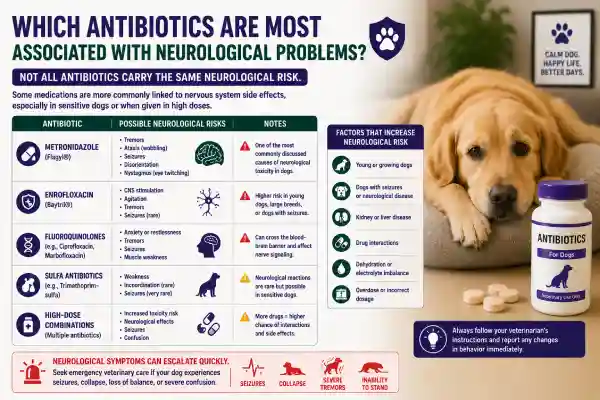
Not all antibiotics carry the same neurological risk.
Some medications are much more commonly associated with nervous system side effects.
| Antibiotic | Possible Neurological Risks |
|---|---|
| Metronidazole | Tremors, seizures, wobbling |
| Enrofloxacin | CNS stimulation, seizures |
| Fluoroquinolones | Agitation, neurological reactions |
| Sulfa antibiotics | Rare neurological reactions |
| High-dose antibiotic combinations | Toxicity risks |
Metronidazole is one of the MOST important antibiotics to discuss because veterinary neurologists frequently associate it with neurological toxicity in dogs.
This is why articles like Why Does My Dog Shake After Metronidazole?, Can Antibiotics Cause Shaking in Dogs?, and What Does Antibiotic Toxicity Look Like in Dogs? are extremely important for owners monitoring side effects at home.
Why Do Neurological Side Effects Happen?
Several mechanisms may contribute to neurological reactions.
Possible causes include:
- direct nervous system irritation
- medication accumulation
- overdose
- liver dysfunction
- dehydration
- electrolyte imbalance
- gut-brain axis disruption
- medication interactions
- increased sensitivity in senior dogs
Some antibiotics can cross into the central nervous system and interfere with normal nerve signaling.
This becomes MORE likely when:
- doses are too high
- treatment continues too long
- multiple medications are combined
- kidney or liver disease reduces drug clearance
This is also why articles like Can Antibiotics Interact With Anxiety or Pain Medications? and Can Dog Medications Be Given Together? are critical parts of medication safety education.
Can Metronidazole Cause Neurological Toxicity?
Yes — absolutely.
Metronidazole toxicity is one of the BEST documented veterinary antibiotic neurological syndromes.
Some affected dogs may suddenly appear:
- extremely weak
- mentally “off”
- unstable
- anxious
- disoriented
- severely lethargic
Owners often describe their dog as looking:
- “drunk”
- “confused”
- “dizzy”
- “not like themselves”
Possible Metronidazole Neurological Signs
| Symptom | Severity |
|---|---|
| Tremors | Serious |
| Wobbling | Serious |
| Eye twitching | Serious |
| Disorientation | Serious |
| Seizures | Emergency |
| Collapse | Emergency |
This connects closely with Can Antibiotics Cause Weakness in Dogs?, Why Does My Dog Sleep All Day After Antibiotics?, and Why Is My Dog Worse After Starting Antibiotics?
Can Antibiotics Cause Seizures in Dogs?

Yes — although uncommon, seizures may occur in severe reactions or overdose situations.
Higher-risk situations include:
- metronidazole toxicity
- enrofloxacin use
- accidental overdose
- pre-existing epilepsy
- medication interactions
- kidney or liver disease
Dogs already taking seizure medications may sometimes be MORE sensitive to neurological medication effects.
That makes articles like Phenobarbital vs Levetiracetam (Keppra) for Dogs, Signs of Medication Overdose in Dogаs, and What Happens If Dogs Take Too Much Antibiotic? highly relevant internal resources for readers.
Can Antibiotics Cause Anxiety, Restlessness, or Hyperactivity?
Surprisingly — yes.
Some dogs develop:
- pacing
- whining
- nighttime restlessness
- panic-like behavior
- agitation
- hyperactivity
- unusual clinginess
Possible explanations include:
- nervous system stimulation
- gut-brain axis disruption
- nausea-related stress
- medication sensitivity
- discomfort
This is exactly why owners searching topics like Why Is My Dog Restless at Night After Antibiotics?, Why Is My Dog Crying After Antibiotics?, and Can Antibiotics Cause Hyperactivity in Dogs? often discover overlapping neurological symptoms.
Can Antibiotics Affect Dog Behavior?
Absolutely.
Behavioral changes may sometimes reflect underlying nervous system involvement.
Owners may notice:
- hiding
- confusion
- aggression
- withdrawal
- unusual fearfulness
- staring episodes
- clinginess
- personality changes
Some dogs appear depressed or emotionally “flat.”
Others become hyper-alert or anxious.
That’s why articles such as Can Antibiotics Cause Depression in Dogs?, Why Does My Dog Hide After Taking Antibiotics?, and Can Dog Medications Cause Behavior Changes? naturally strengthen topical authority around this cluster.
Which Dogs Are Higher Risk for Neurological Reactions?
Some dogs are more vulnerable to neurological side effects than others.
Higher-Risk Dogs
| Dog Type | Why Risk Increases |
|---|---|
| Senior dogs | Slower metabolism |
| Dogs with liver disease | Reduced drug clearance |
| Dogs with kidney disease | Medication accumulation |
| Dogs with epilepsy | Increased seizure sensitivity |
| Small dogs | Higher overdose sensitivity |
| Chronically ill dogs | Lower physiological reserve |
Senior dogs especially may metabolize medications more slowly, increasing the risk of nervous system toxicity.
What Neurological Symptoms Are Emergencies?
This section is CRITICAL.
Some neurological symptoms should NEVER be monitored at home without immediate veterinary guidance.
Emergency Warning Signs
| Symptom | Emergency Level |
|---|---|
| Seizures | EMERGENCY |
| Collapse | EMERGENCY |
| Severe tremors | EMERGENCY |
| Inability to stand | EMERGENCY |
| Severe confusion | Serious |
| Unresponsiveness | EMERGENCY |
| Breathing difficulty | EMERGENCY |
| Repeated vomiting with weakness | Serious |
Emergency symptoms may overlap with severe reactions discussed in Why Is My Dog Breathing Fast After Antibiotics?, Can Dogs Have Allergic Reactions to Antibiotics?, and What Does Antibiotic Toxicity Look Like in Dogs?
Can Gut Bacteria Affect the Nervous System?

This is a HUGE emerging topic in both human and veterinary medicine.
Antibiotics may temporarily disrupt:
- healthy gut bacteria
- neurotransmitter production
- digestion
- gut-brain communication
Researchers increasingly study how microbiome disruption may influence:
- anxiety
- mood
- energy
- sleep
- stress response
- neurological behavior
This may partially explain why some dogs experience:
- pacing
- anxiety
- lethargy
- strange behavior
- hyperactivity
This connects naturally with Can Dogs Take Probiotics With Antibiotics?, Why Does My Dog Refuse Food After Antibiotics?, and Why Does My Dog Drool After Antibiotics?
How Veterinarians Evaluate Neurological Reactions
Veterinarians may evaluate:
- medication history
- dosage accuracy
- neurological signs
- hydration status
- liver function
- kidney function
- infection severity
- possible drug interactions
Possible testing may include:
- bloodwork
- neurological examination
- toxicity assessment
- medication review
- imaging in severe cases
What Should Owners Do If Neurological Symptoms Appear?
Important Steps
| Step | Why It Matters |
|---|---|
| Contact your veterinarian | Professional evaluation |
| Monitor walking ability | Detect coordination problems |
| Watch appetite and hydration | Detect systemic illness |
| Monitor for seizures | Emergency detection |
| Review all medications | Identify interactions |
| Observe symptom progression | Detect worsening toxicity |
Do NOT:
- increase doses yourself
- stop medications suddenly without guidance
- combine medications randomly
- ignore worsening symptoms
- delay emergency care
Owners reading Miss a Dose of Antibiotics in Dogs?, Can You Stop Antibiotics Early in Dogs?, or What If My Dog Misses Multiple Antibiotic Doses? should understand that medication changes should ALWAYS be discussed with a veterinarian.
When Should Owners Go to the Emergency Vet Immediately?
Seek emergency veterinary care immediately if your dog develops:
- seizures
- collapse
- severe tremors
- inability to stand
- severe wobbling
- breathing problems
- repeated vomiting with weakness
- severe confusion
- unresponsiveness
These symptoms may indicate:
- neurological toxicity
- overdose
- severe allergic reaction
- dangerous nervous system involvement
- worsening infection progression
FAQ — Can Antibiotics Cause Neurological Problems in Dogs?
Can antibiotics cause neurological side effects in dogs?
Yes. Certain antibiotics may occasionally cause tremors, weakness, confusion, anxiety, wobbling, seizures, or unusual behavior in sensitive dogs.
Which antibiotic is most associated with neurological toxicity in dogs?
Metronidazole is one of the most commonly associated antibiotics linked to neurological side effects in dogs.
Can antibiotics cause shaking in dogs?
Yes. Tremors and shaking may occur during neurological reactions or toxicity situations.
Can antibiotics cause seizures in dogs?
Yes. Severe reactions, overdoses, or certain antibiotics may occasionally trigger seizures.
Why is my dog acting strange after antibiotics?
Possible causes include nausea, neurological side effects, anxiety, toxicity, dehydration, or worsening illness.
Can antibiotics affect dog behavior?
Absolutely. Some dogs may develop anxiety, pacing, hyperactivity, confusion, hiding, or personality changes.
Are neurological reactions emergencies?
Seizures, collapse, inability to stand, severe tremors, or unresponsiveness require immediate veterinary care.
Can probiotics help during antibiotic treatment?
Some veterinarians recommend probiotics to help support gut health and microbiome balance during antibiotic therapy.
Should I stop antibiotics if neurological symptoms appear?
Never stop prescription medication without veterinary guidance unless instructed during an emergency evaluation.
Medical Disclaimer
This article is for educational purposes only and does not replace professional veterinary advice, diagnosis, or treatment. The content is written and pharmacist-reviewed to improve medication safety awareness and help dog owners better understand neurological side effects, antibiotic toxicity risks, nervous system reactions, seizure risks, medication interactions, and veterinary medication safety considerations in dogs. Always contact your veterinarian immediately if your dog develops tremors, seizures, severe weakness, confusion, collapse, or worsening neurological symptoms.Can Antibiotics Cause Neurological Problems in Dogs?
Sources & Scientific References
- Merck Veterinary Manual
- American Veterinary Medical Association (AVMA)
- Plumb’s Veterinary Drug Handbook
- PubMed Central – Metronidazole Neurotoxicity Research
- VIN (Veterinary Information Network)
- FDA Center for Veterinary Medicine (CVM)